Basics – Scones (Biscuits)

Devonshire Tea.

Okay. I give in. Just for the Americans among you, I’m going to refer to these as biscuits.

Scones!

Scones!

That’s only going to happen up here, mind!  For the rest of the post they will be known as scones (a word that rhymes with ‘on’, by the way). However, this mere mention at the outset will mean that some of you will find a recipe you are looking for and the rest of the readers will learn that Americans call scones, biscuits.

I don’t know why.

Anyway, these are one of the first things many of us learn to bake – or should. Try making these with your kids, they don’t take a lot of time and are a great way to fill a rainy afternoon.

Scones are also one of those wonderful recipes that lend themselves to variations, both sweet and savoury.

Learn how to make a good scone and you can whip up a batch and serve them within 30 mins of unexpected guests calling, or you can augment the recipe to create a sweet breakfast scroll or a lunch dish along the line of pizza. You could even fill your freezer with quick-bake lunch box fillers and finger food.

Once you’ve made plain scones a few times, then extend your repertoire and give these a go too:

But first, let’s start from the beginning.

Scones are a form of quick bread and may even be considered a type of pastry. They need the bare minimum of ingredients: flour, butter, milk.

They also work best if you handle them as little as possible. Do not use a rolling pin. Ever. I don’t care what you may have seen elsewhere. Just don’t.

Okay?!?!

Ahem.

Let’s just deem them delicious and get stuck in.

Preheat your oven to 230°C or 475°F.

Sift your flour, and a pinch of salt into a largish bowl.

I add a spoonful or two of sugar to my scones following a tip I was given many years ago. It helps to avoid a “floury” taste to the scones when eaten cold in the days after baking. (If any are left.) It really does seem to work, so I keep doing it.

You may, of course, use wholemeal flour if you prefer.
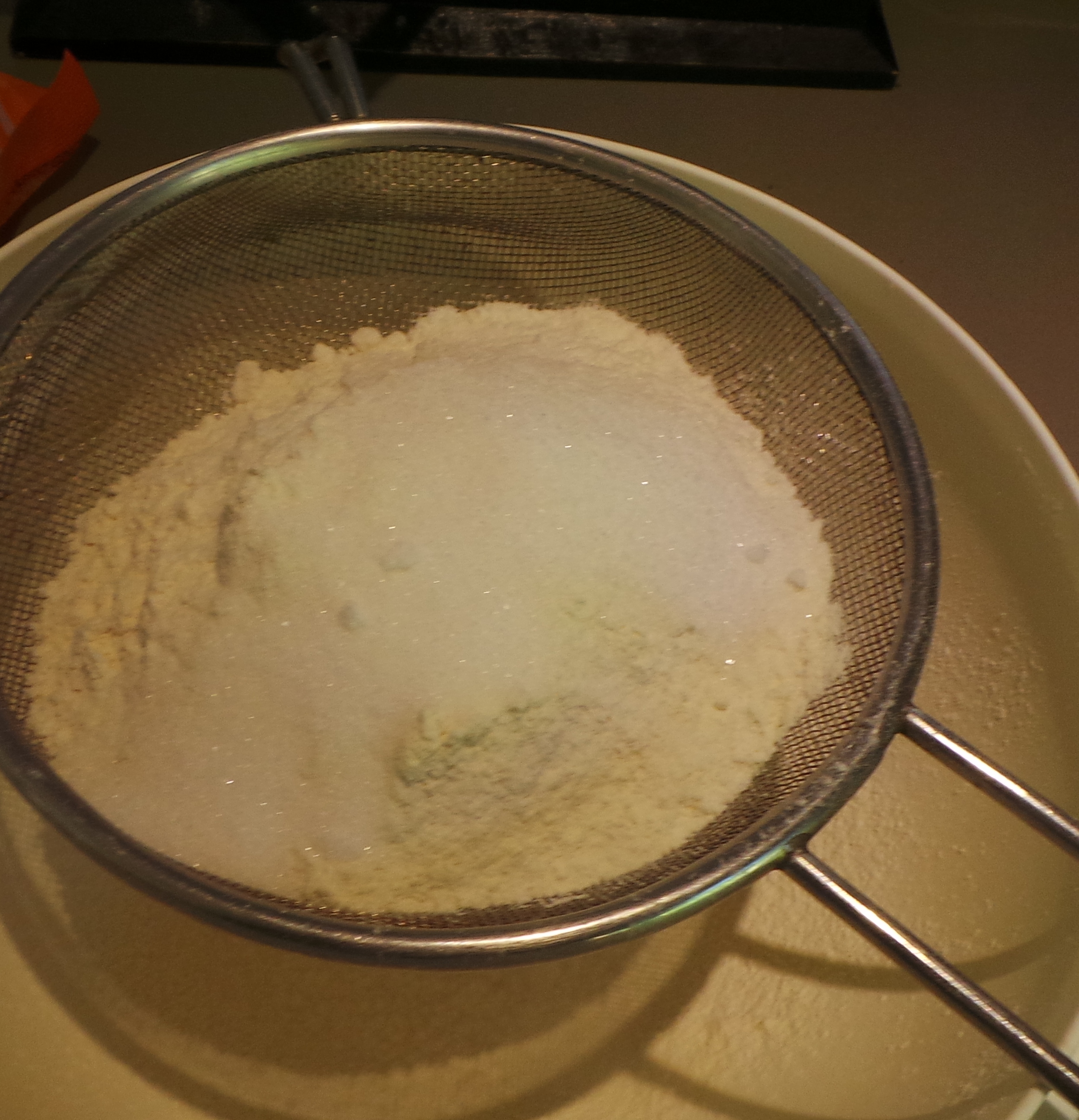
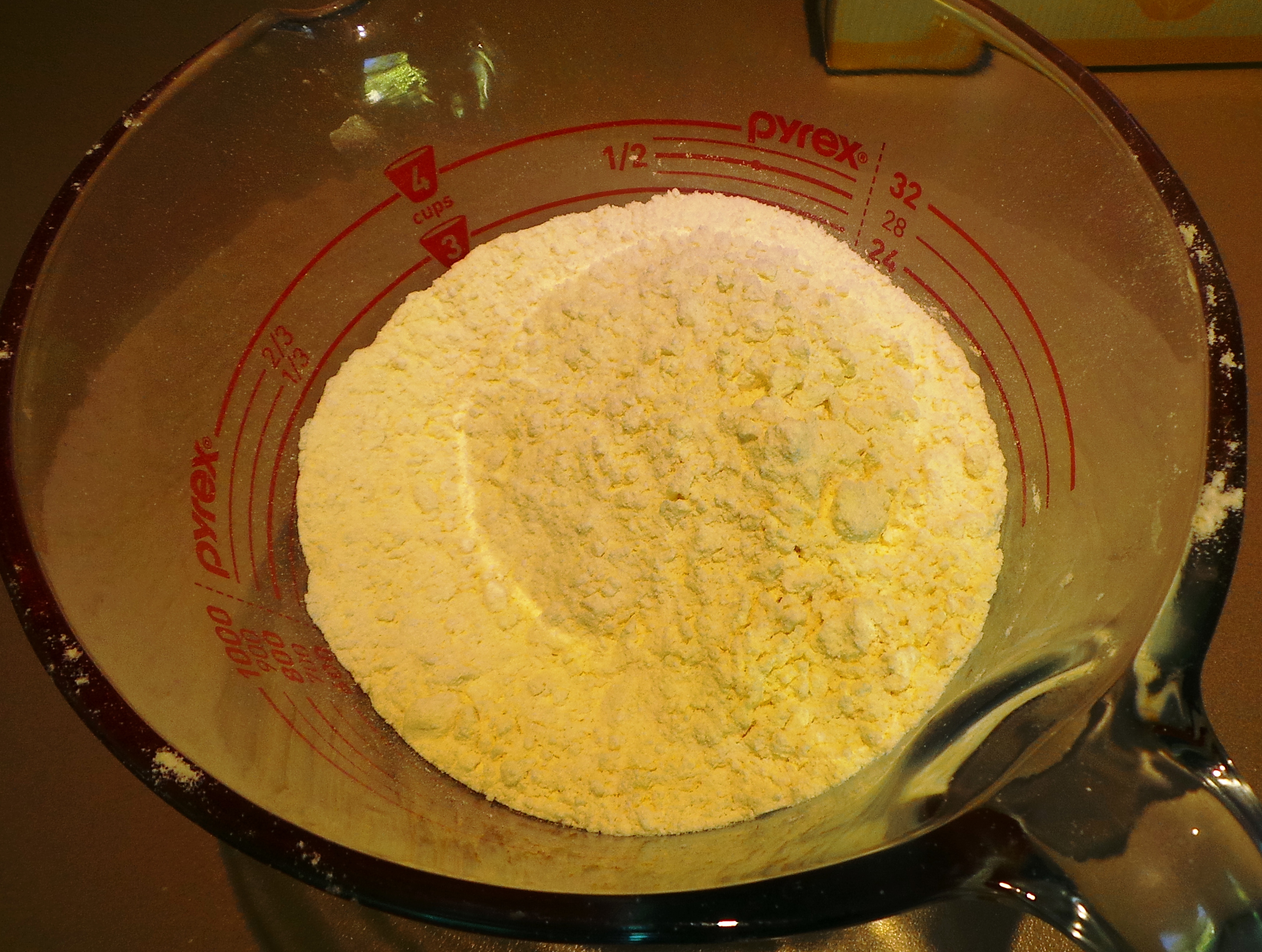
Sift your dry ingredients together

Sift your dry ingredients together.

Cut your butter into small pieces and then rub it into your flour.

add your shortening

Add your butter to your flour.

This stage may be done with something called a pastry blender. I’ve never been in actual physical contact with a pastry blender at any stage in my life, so I can’t tell you how to use one.

You can also use a food processor…apparently. However, this is a very simple, ancient recipe and fingertips are something one usually finds whenever one happens to be in one’s own kitchen – why create more washing up, people? Why??

Rubbing is a technique that is a little hard to describe, and I suspect I may have to make my first foray into YouTube to demonstrate it, however here goes…

Have your butter a little on the soft side, but not too close to melting. Plunge both your hands into the flour and, holding your four fingers together, rub your thumb across them as you lift them out of the flour. Aim to get pieces of butter between your thumb and fingers as you grab the flour. Repeat.

Continue rubbing the flour into the butter until there are no clearly visible pieces of butter left and the contents of your bowl resemble fine breadcrumbs.

Actually a quick questioning of Mr Google has revealed this YouTube clip. It’s not how I would demonstrate it, but it may help 😉

So, now we add our liquid. Milk works well, you may also use buttermilk, a mix of half yoghurt and half milk or all yoghurt.

In the pictures below I have done the latter.

Be aware that the measurement in the recipe is for milk. A greater quantity will be required for the buttermilk/yoghurt options.

Make a well in your dry ingredients and add 3/4 of the liquid all at once.
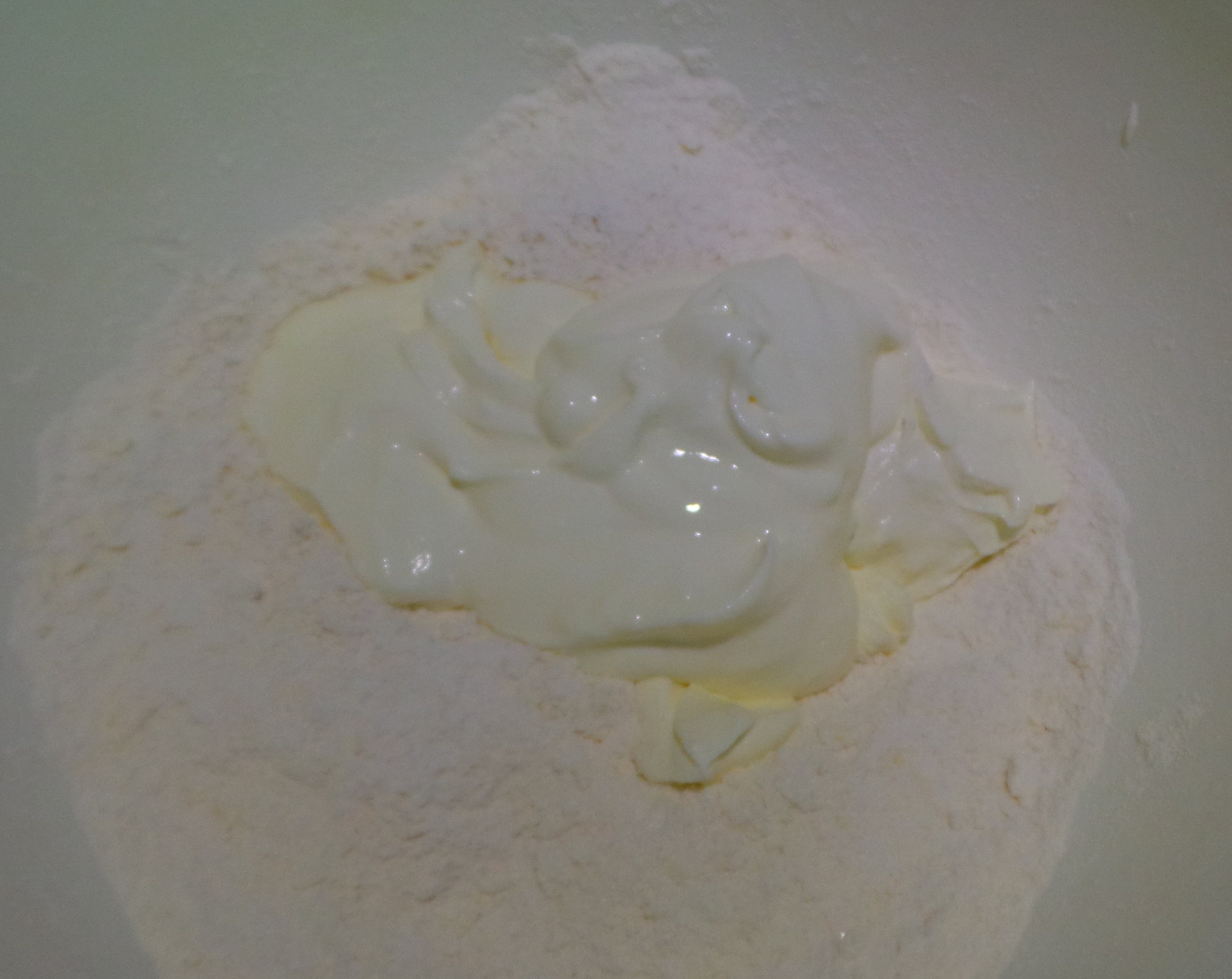
add your liquid

Add most of your liquid to the flour.

Now cut the liquid into your dry ingredients using a butter knife. Because my mother said so.

Actually, using a knife to mix in the liquid works a lot better than using a spoon, as it does away with any little hollows for flour to get trapped in.

If there is flour left in the bowl when the liquid has all been incorporated, then add more a tablespoon at a time until you have a bowl of dough and no loose flour.

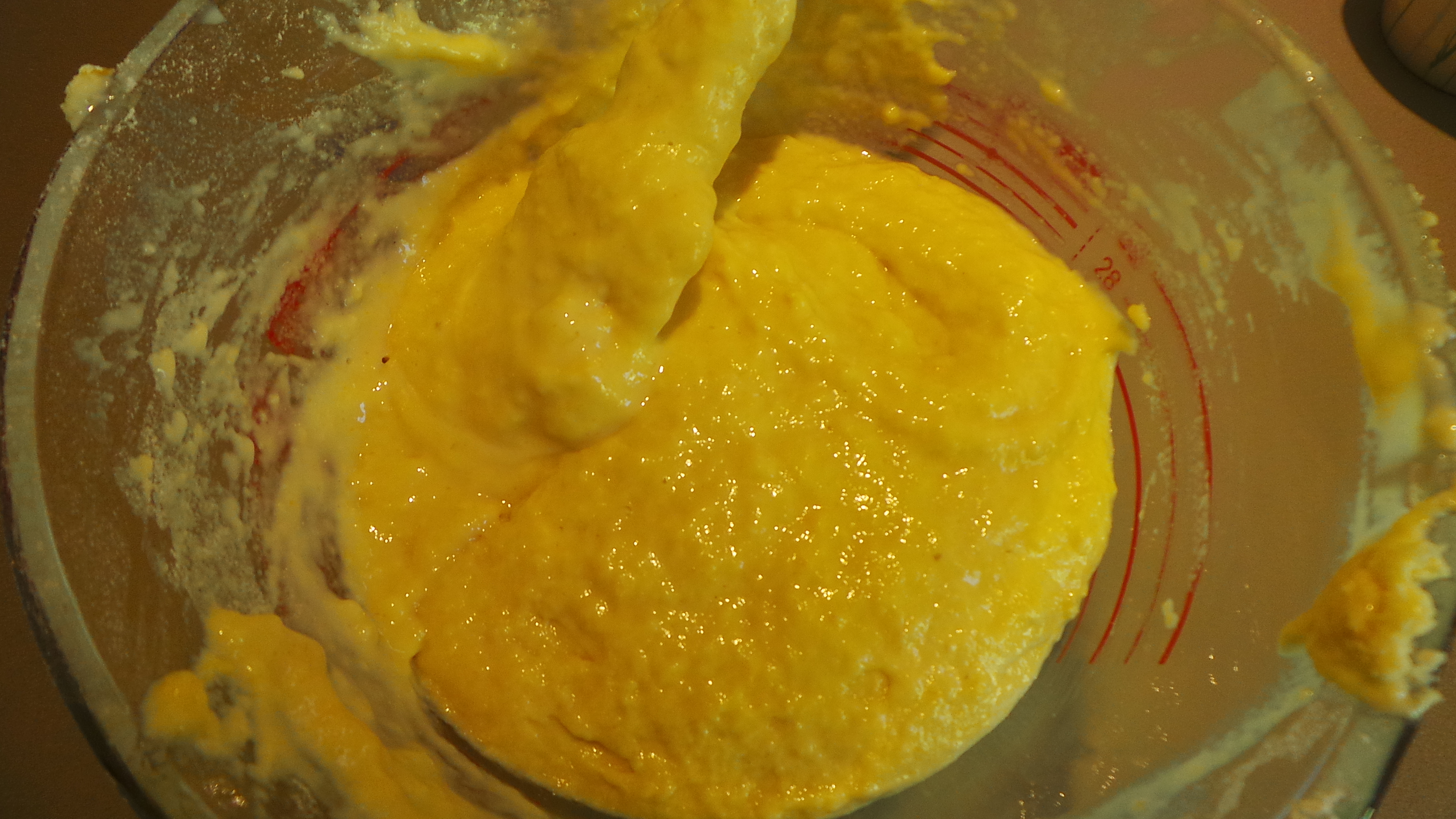
The mixed scone dough.

The mixed scone dough.

When your dough has all come together – if you are using milk it will be a lot smoother than the dough pictured – turn it out onto a floured surface.

Prepare a surface with flour.

Prepare a surface with flour.

Save yourself a lot of drudge work and cover your work surface first with either a silicon baking sheet -as I have done in the photos -or just with a strip of baking paper. Then, when clean up time comes, you can either shake all the leftover dusting flour into the bin or throw the whole piece of paper in.

No more gluey sponges.

Moving on.

Gently shape your dough into a ball, patting it with flour where it might be sticky, and then gently flatten it with your fingertips into a rough oblong shape about an inch or so thick.
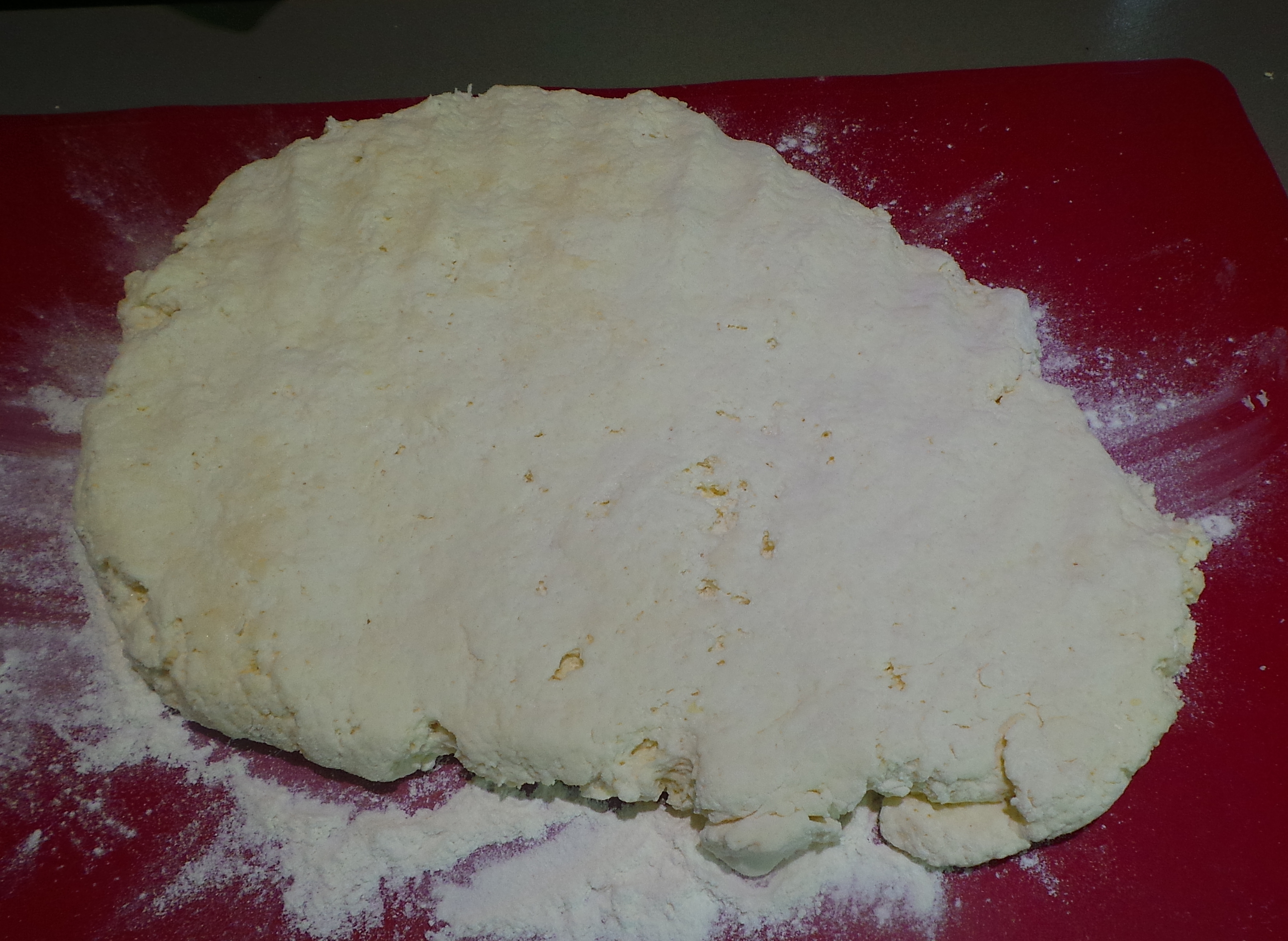
Shape and flatten your dough, using only your hands.

Shape and flatten your dough, using only your hands.

Don’t use a rolling pin, or you will knock all the air out of your dough, making it denser and  tougher.

Place a sheet of baking paper or parchment over a baking tray.

Then, using either a scone cutter or a small drinking glass dipped in some of the flour on your surface, cut the dough into rounds. Re-dip the cutter between scones.

Be as economical as you can with your cutting. Start on the side of the dough nearest to you and cut each piece as close to the last as you can. This way you minimise the need to re-form and re-roll your dough.

Any scones made with dough that has been reshaped will be less smooth than the first cutting, as you can see in the picture below.
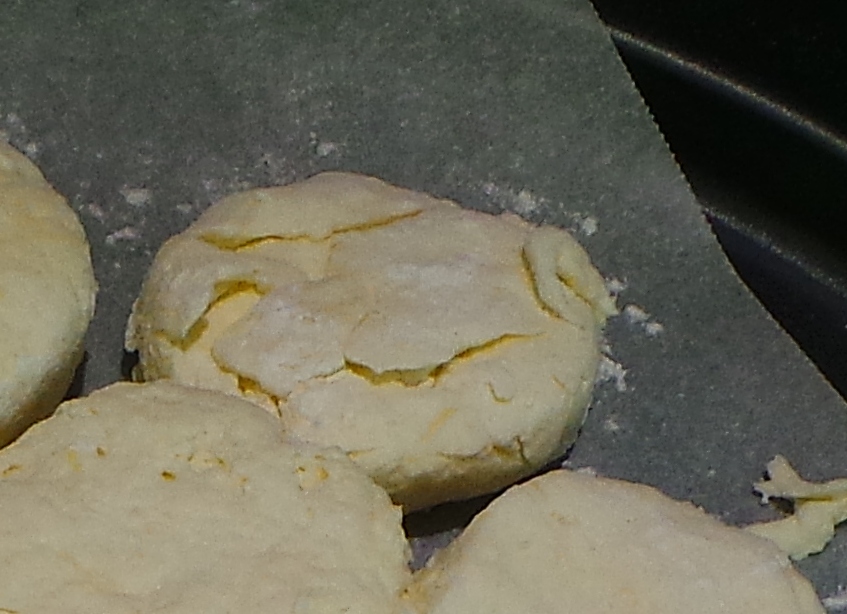
The result of reshaped dough.

The result of reshaped dough.

Place each scone on the tray as it is cut, starting in the centre and working your way around. Think in terms of making a daisy shape. Place your scones as close together as you can. This helps them to rise instead of spreading outward.

Any leftover piece of dough that is too small to cut into a scone should be given to any small child who may be “helping” and shaped into their own special creation for baking…
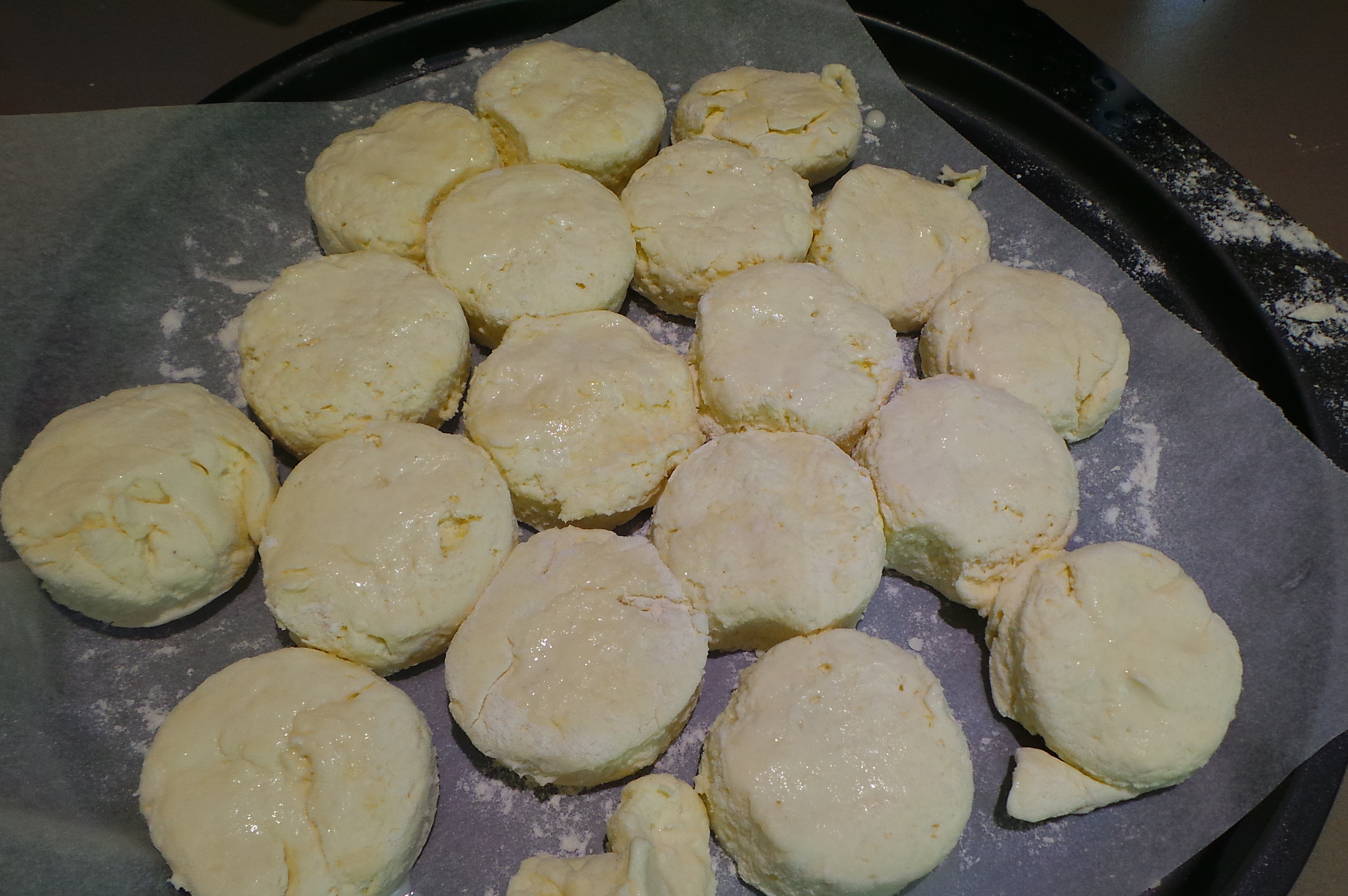
Place closely together on the baking tray.

Place closely together on the baking tray.

Using a pastry brush dipped in milk (or your finger) gently brush the tops of your scones. This will encourage a nice brown finish, but is not necessary.

Bake for 15 mins, until a toothpick inserted in the centre scone comes out clean. Again, yoghurt or buttermilk mixes may take longer to cook.

Now for one of those old-fashioned tricks: Scones wrapped in clean cloth as soon as they are removed from the oven will keep soft as they cool. I have this rather groovy cloth bread basket I bought on clearance at Ikea a few years ago, but two tea towels overlapping in a cross formation should do the trick equally well.
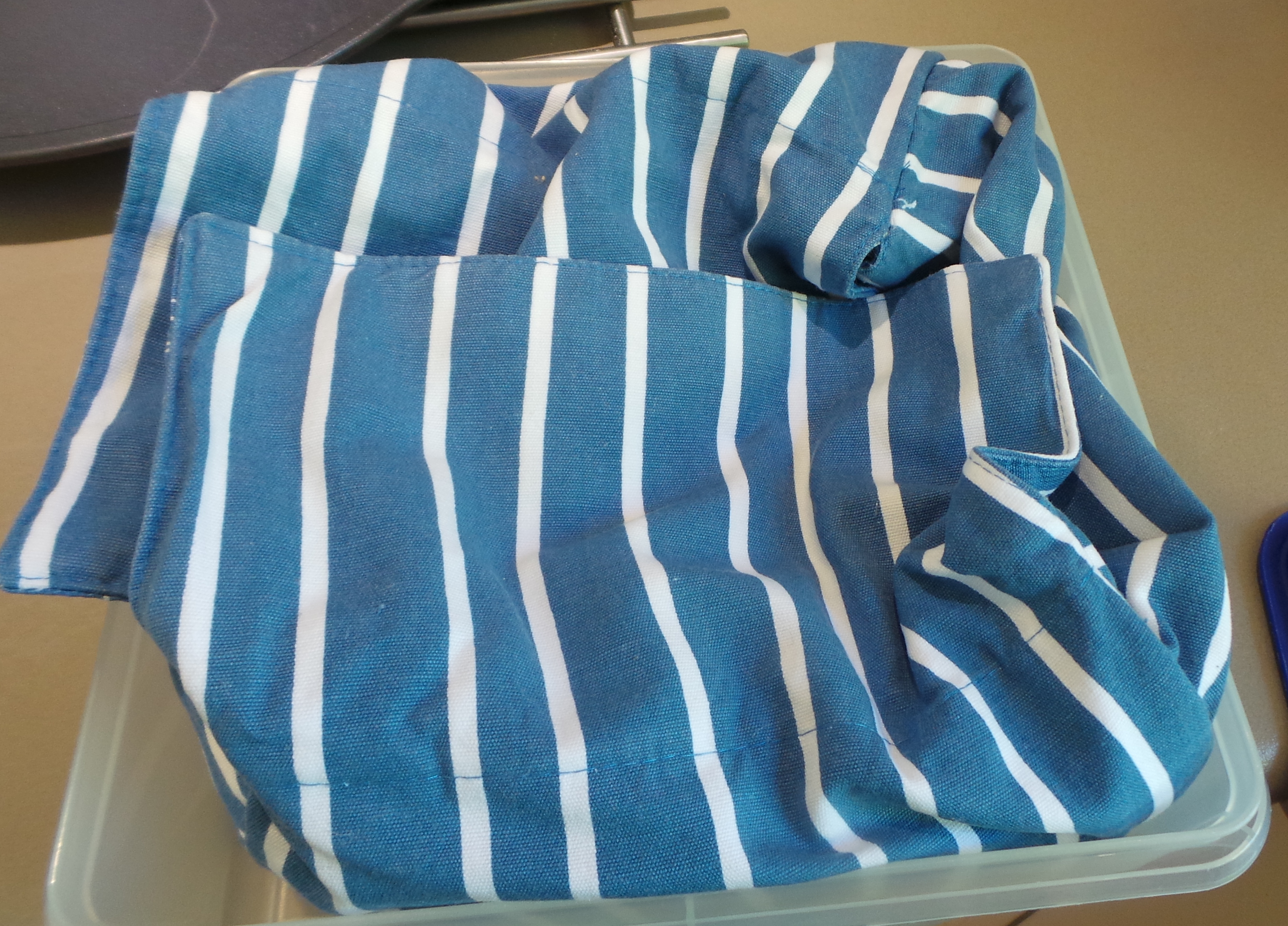
Wrap your hot scones in a cloth to cool.

Wrap your hot scones in a cloth to cool.

Serve your scones. Another tip, don’t cut them in half or they will become doughy. Instead use your fingers and gently break them apart.

And serve..

And serve..

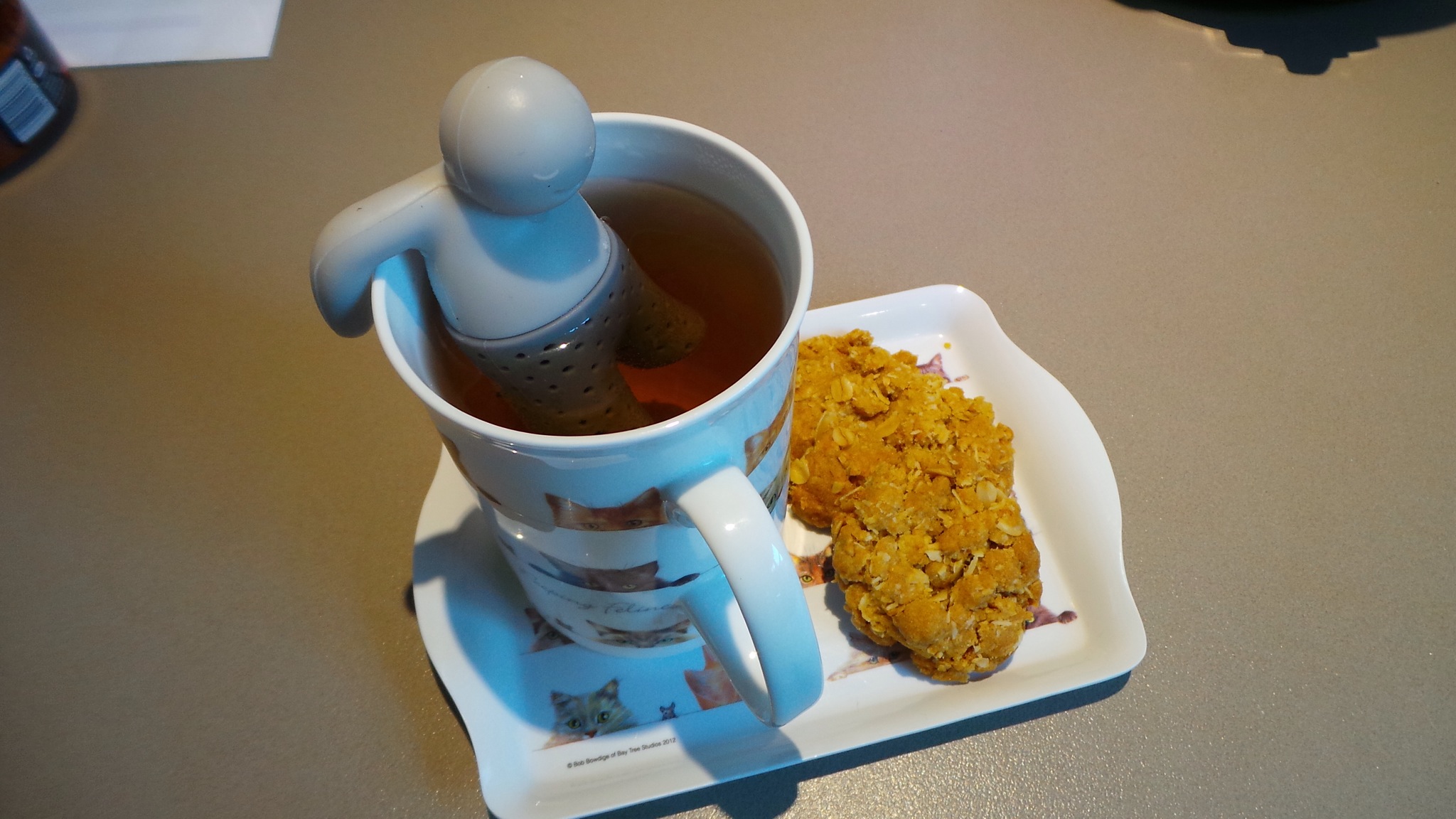
Serve with strawberry jam and whipped cream and a nice pot of Earl Grey for your classic Devonshire Tea, or you can serve them up with butter and any spread you darn well want: marmalade, vegemite, peanut butter. Knock yourself out.

Scones also freeze well and travel quite nicely in packed lunches.

Devonshire Tea.

Devonshire Tea.

Basic Scones

  • Servings: 12 scones
  • Difficulty: easy
  • Print

Ingredients

2 cups self raising flour (250g)

pinch salt

1 tbsp sugar

1 tbsp butter (30g)

¾ cup milk (187ml)

Method

Heat oven to 230°C or 475°F.

Sift dry ingredients into a large bowl.

Cut butter into small pieces and rub into flour until mix resembles fine breadcrumbs.

Add milk and cut in quickly and lightly with a butter knife until a moist dough is formed.

Turn onto a lightly floured board and shape into a smooth oblong about an inch thick using hands and fingertips.

Using a floured scone cutter or drinking glass, cut out scones and place close together on a prepared oven tray.

Glaze with milk.

Bake for 10-15 mins until a toothpick inserted in the centre scone comes out clean.

For soft scones, wrap in a cloth until cold.

 Variations to basic recipe:

Cheese Scones:

Add ¼ tsp mustard or a dash of Cayenne pepper to the flour before sifting. I like using a tablespoon of Old Bay Seasoning.

Add ½ a cup of grated tasty cheese before you add liquid.

Fruit Scones:

Add 2 tbsps of caster sugar to the flour before sifting.

Add 1/3 cup of dried fruit such as sultanas, currants, diced dried apricots or craisins before adding the liquid.

 

Basics – Pancakes (Drop Scones)

I heart pancakes...

Pancakes are one of those things that always seem special, no matter how they are served.

They really aren’t all that difficult to make, but may require some time on your feet and rather a lot of patience while you get your pan sorted out.

Learn how to make these and then learn to ring the changes and make a savoury version with fritters or a simple variation with sliced apple.

I heart pancakes...

I heart pancakes…

They can be made in adult-sized meal servings or as many ‘baby’ pancakes.

In Australia these baby pancakes are usually served cold and known as pikelets or even drop-scones. As a Queenslander by birth, I grew up calling them pikelets and taking them to school spread with butter and Vegemite. When my family moved to Victoria I discovered them dubbed drop-scones and served with jam and whipped cream

I must confess, I don’t make pancakes very often. They are one of those dishes that starts out a treat but can readily become too much of a good thing as your stomach starts to feel overwhelmingly full…

I’ve also had a lot of frustration with the glass cook top at my new home and had decided that they were just not going to be a thing while we live here. Then, on advice, I bought myself a little butane-powered camp stove and could suddenly fry at a reliable temperature again.

In the meantime there were many tears over many, many failed dishes.

Chocolate was eaten.

Hugs were required.

It doesn’t need to be hard though. If you have a reliable heat source and a good frying pan or skillet, you should be fine. Really truly.

Also, don’t worry about the whole flipping thing. These are pancakes and not crêpes, use a fish slice or spatula and relax.

I’ve made these so many times now that I don’t need a recipe anymore and simply mix everything together in a large Pyrex jug. You, too, can get to that level of confidence following the recipe at the bottom of this post. 😉

Print it off, laminate it and pin it to your fridge. Someone may see it and decide to spoil you with them for a special occasion some time. Ahem.

So, let’s begin.

Sift together your SR Flour, a pinch of salt and some sugar. Feel free to add a pinch of cinnamon or nutmeg, but don’t feel obliged.

Sift your dry ingredients together.

Sift your dry ingredients together.

Mix together your egg and milk. You might also try using buttermilk or a mix of half yoghurt and half milk. These last two will give your batter an extra lightness.

Mix in your wet ingredients.

Mix in your wet ingredients.

Melt some butter into a hot frypan, adding a dash of oil. The oil will stop the butter from burning.

You can use oil instead, if you wish, but I find butter gives a better result.

I confess to also having a can of spray oil on hand with which to lightly coat the upper surface of the pancakes before I turn them.

Cooking them solely in spray oil is not something I would recommend. Your pan will be on the heat for a longish time and this will change the flavour and scent of the spray oil. You have been warned.

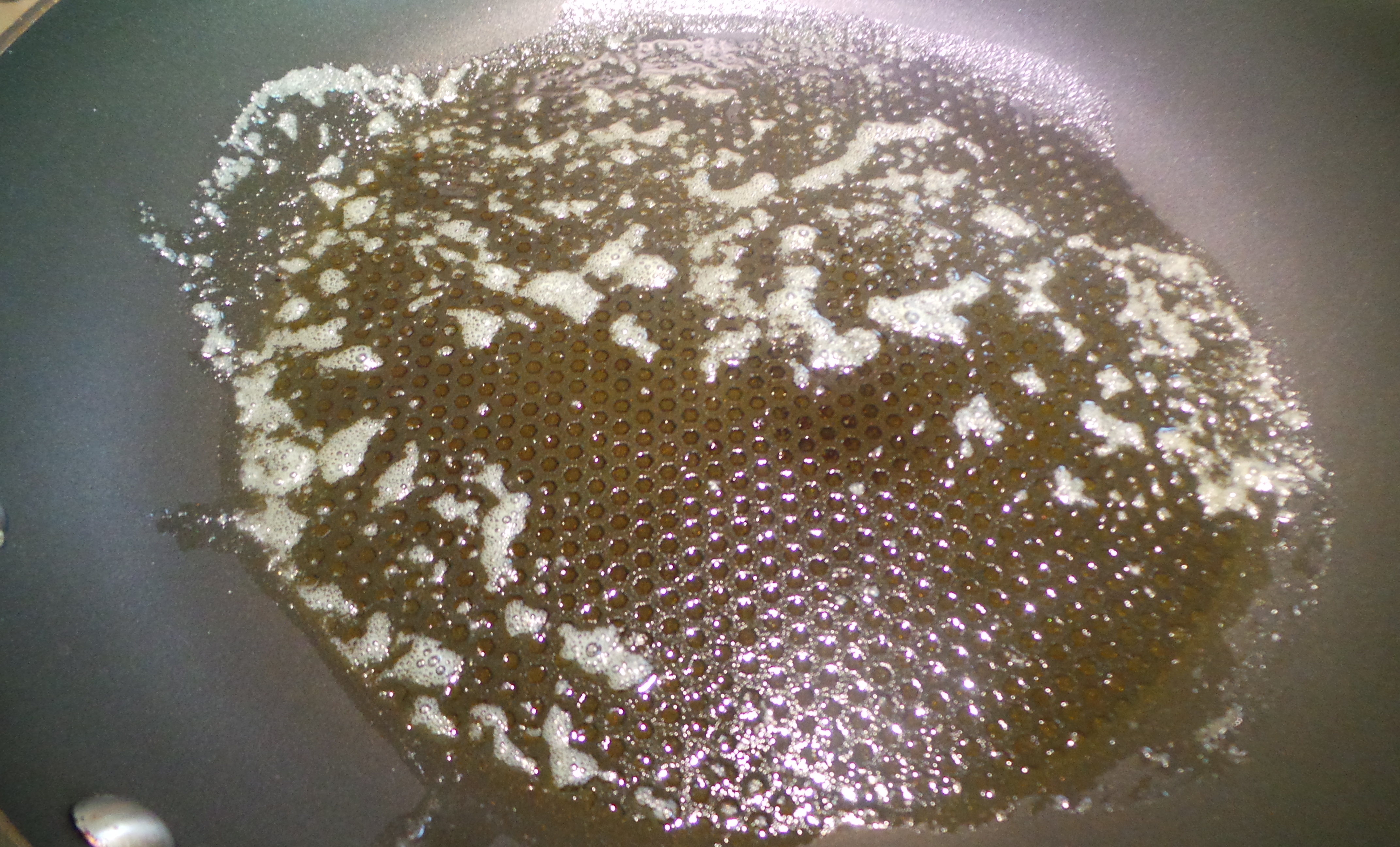
melt your frying fat.

Melt your frying fat.

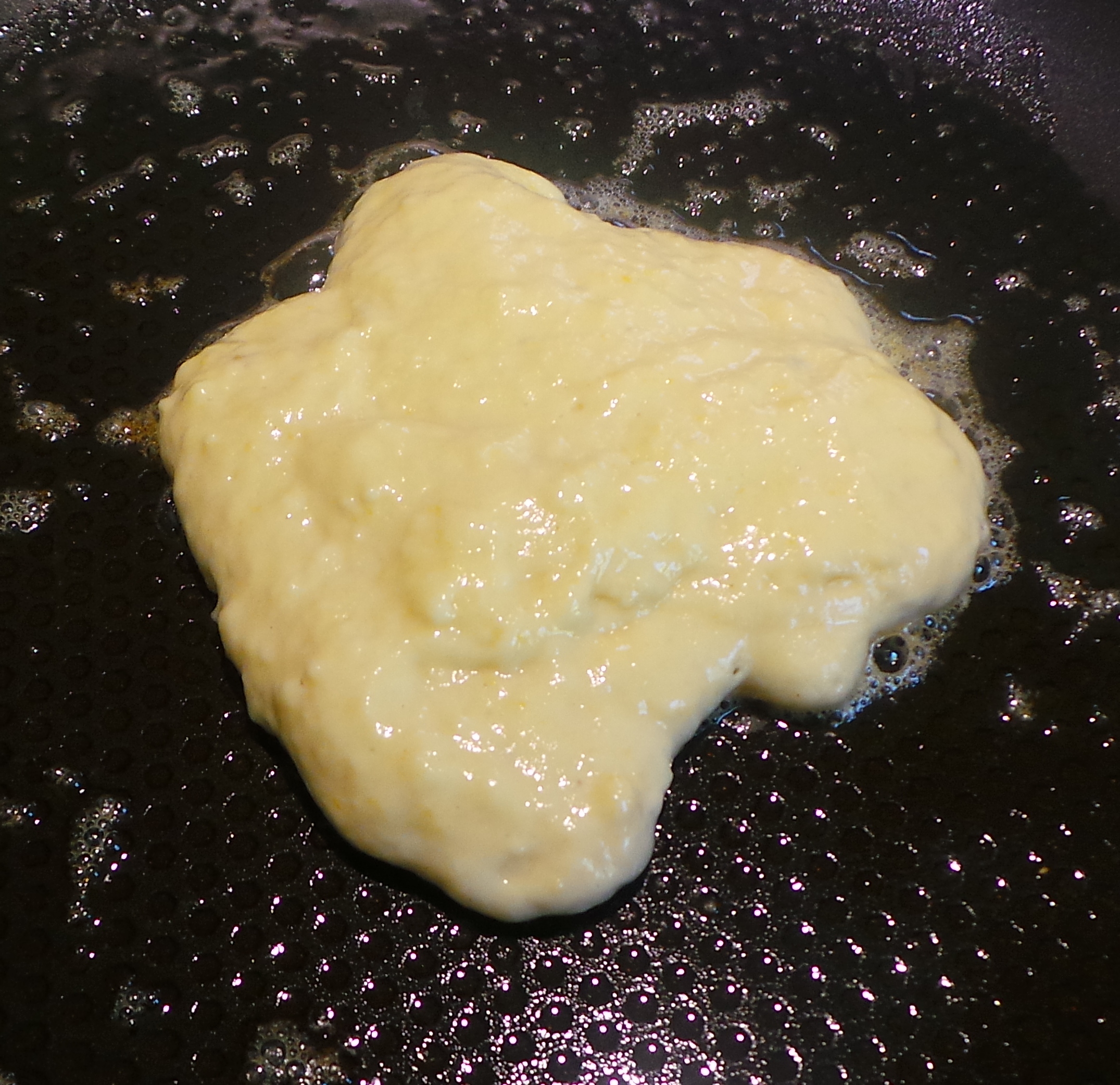
When your butter starts to foam, as pictured, add dollops of batter. If you want pikelets use a dessertspoon to measure it out, if you want pancakes use a ladle.

Dollop your batter into the pan.

Dollop your batter into the pan.

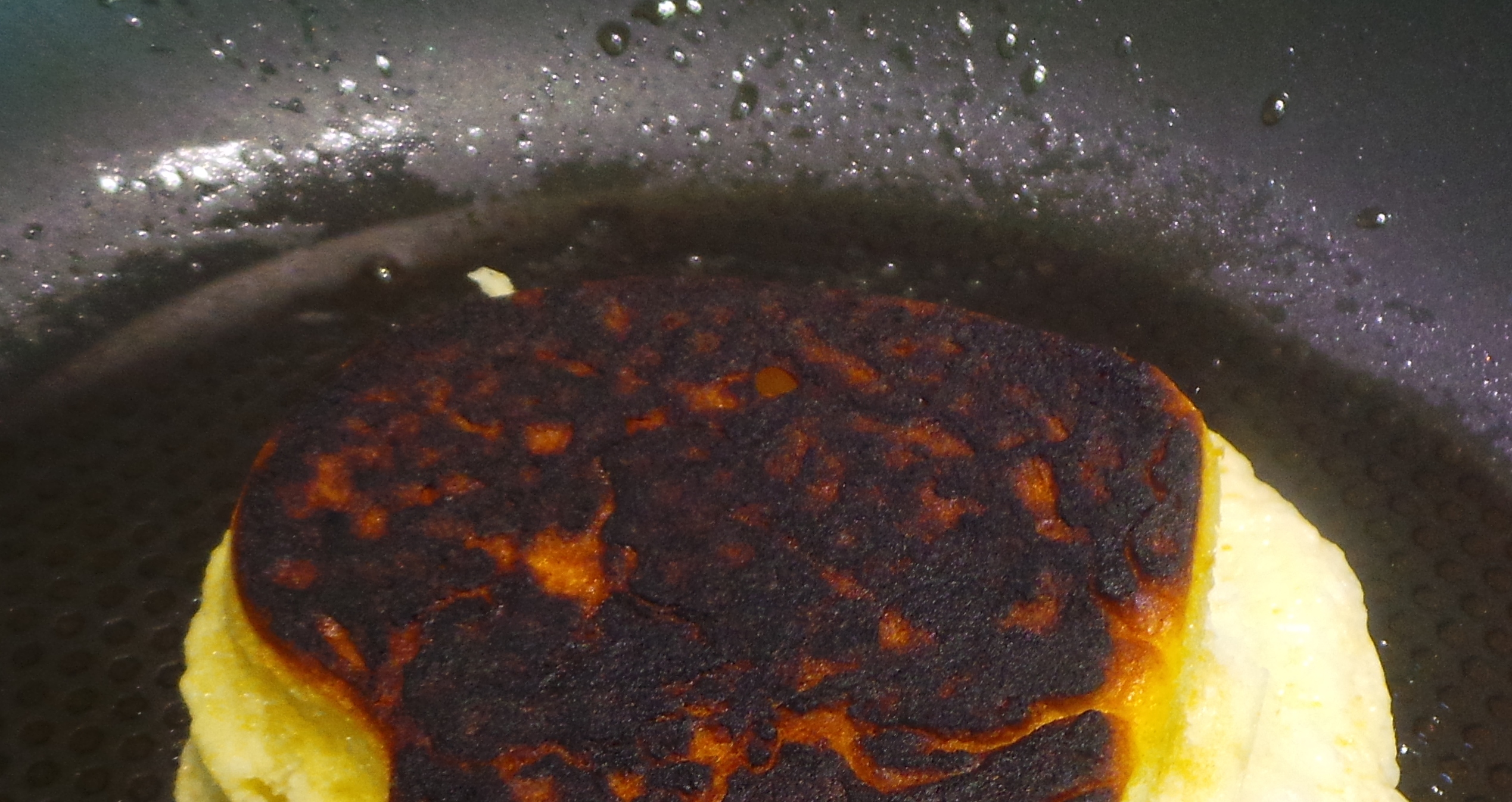
Once in the pan, leave it alone. Make sure the heat is not too high or you will end up with a burned pancake. Everyone burns their first pancake. Really.

First pancake = burnt offering to the breakfast gods.

First pancake = burnt offering to the breakfast gods.

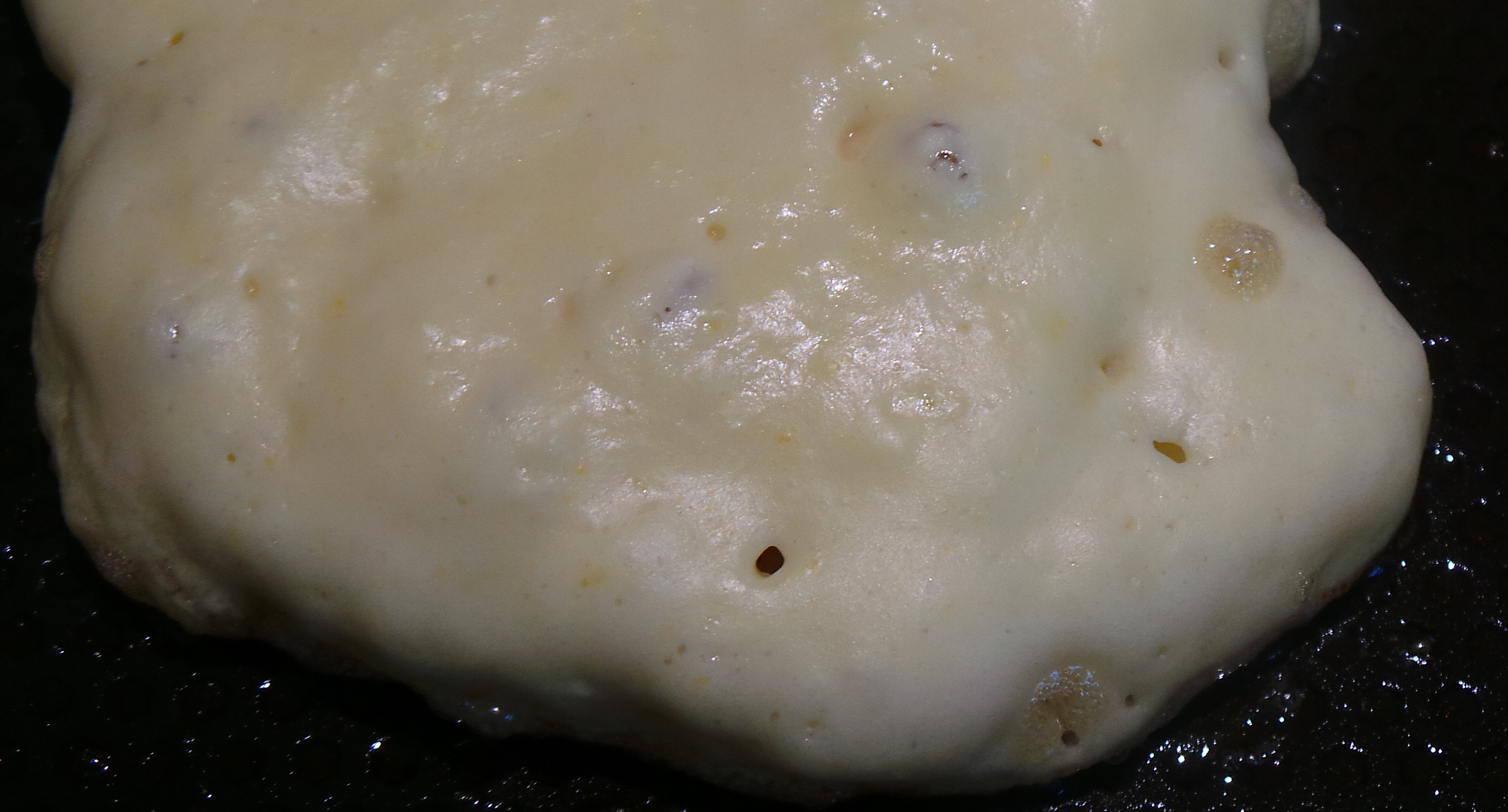
The pancake is ready to turn once small bubbles start to appear on the uppermost surface.

Bubbles will form in the batter.

Bubbles will form in the batter.

As mentioned before you may wish to give them a misting with spray oil, then flip them over. Leave for about three minutes and then remove to paper towel to drain. This won’t take long, basically you just want to absorb any cooking fat sitting on the surface to stop your pancakes from being greasy.

Drain on paper towel.

Drain on paper towel.

Serve immediately or store in one of those wonderful tortilla warmers I’ve spoken of before.

Sprinkle with lemon juice and sugar, douse with maple syrup or spread with your preferred preserves. This is yet another place to use your home-made lemon curd or dulce de leche as well.

This is a recipe that can be added to in many ways. You can try the savoury option and go for fritters (and tidy up the bits and bobs littering your fridge), or you can explore the sweet side of things.

Try adding a few choc chips if you have them, or mixing through dried fruits like sultanas or craisins.  Add these things to the dry ingredients, after sifting and before the milk and egg.

Fresh berries are fabulous additions when in season, but frozen work just as well when their seasons have passed. Again, stir into the flour before adding the liquid.
Try adding some fresh lemon or orange zest to all of the above suggestions and feel like a chef for a bit…

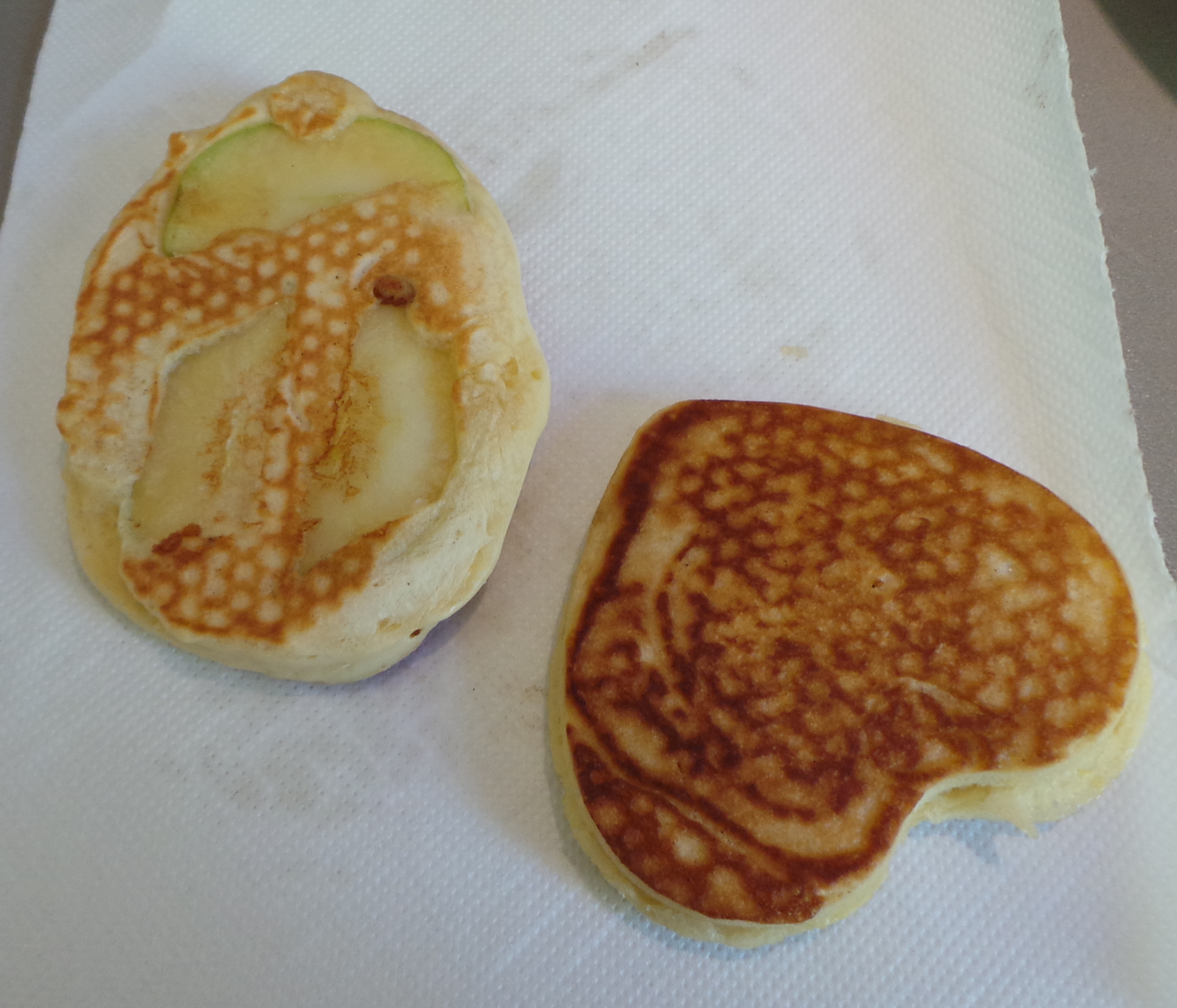
You may have noticed that last photo has a heart-shaped version and one with sliced apple. They’re both going to have their own posts, so stay tuned.

Pancakes

 Ingredients

1¼ cups self-raising flour (156g)

¼ tsp salt

3 tbsp sugar

1 egg

¾ – 1 cup milk or buttermilk

butter or oil for frying

Method

Sift flour, salt and sugar. Make a well in the center.

In a jug mix together the egg and most of the milk. Pour into the dry ingredients and beat together with a wooden spoon. Add remainder of milk if necessary. You are aiming for a thick batter.

The batter will also thicken upon standing.

Heat your frying pan and add butter to grease. To prevent the butter burning, add a touch of oil.

When your butter is melted drop dessertspoonsfull of mixture onto the hot pan – for drop scones or pikelets – or ¼ cup amounts for full pancakes. Try using a small ladle for measuring the batter into the pan.

When bubbles appear on the upper surface of your batter turn to cook the other side. This will take approximately 3 mins.

Remove from the pan onto paper towels to absorb any excess oil on the surface. Keep warm, or serve immediately.

May be served cooled with whipped cream and strawberry jam as a Devonshire Tea.

Basics – How to thicken sauces

You know how it is; you’ve made what is shaping up to be a rather delicious casserole, but the gravy just isn’t all it could be. How can a dish reach true Comfort Food status with a watery jus instead of a thick, unctuous gravy?

What do you do?

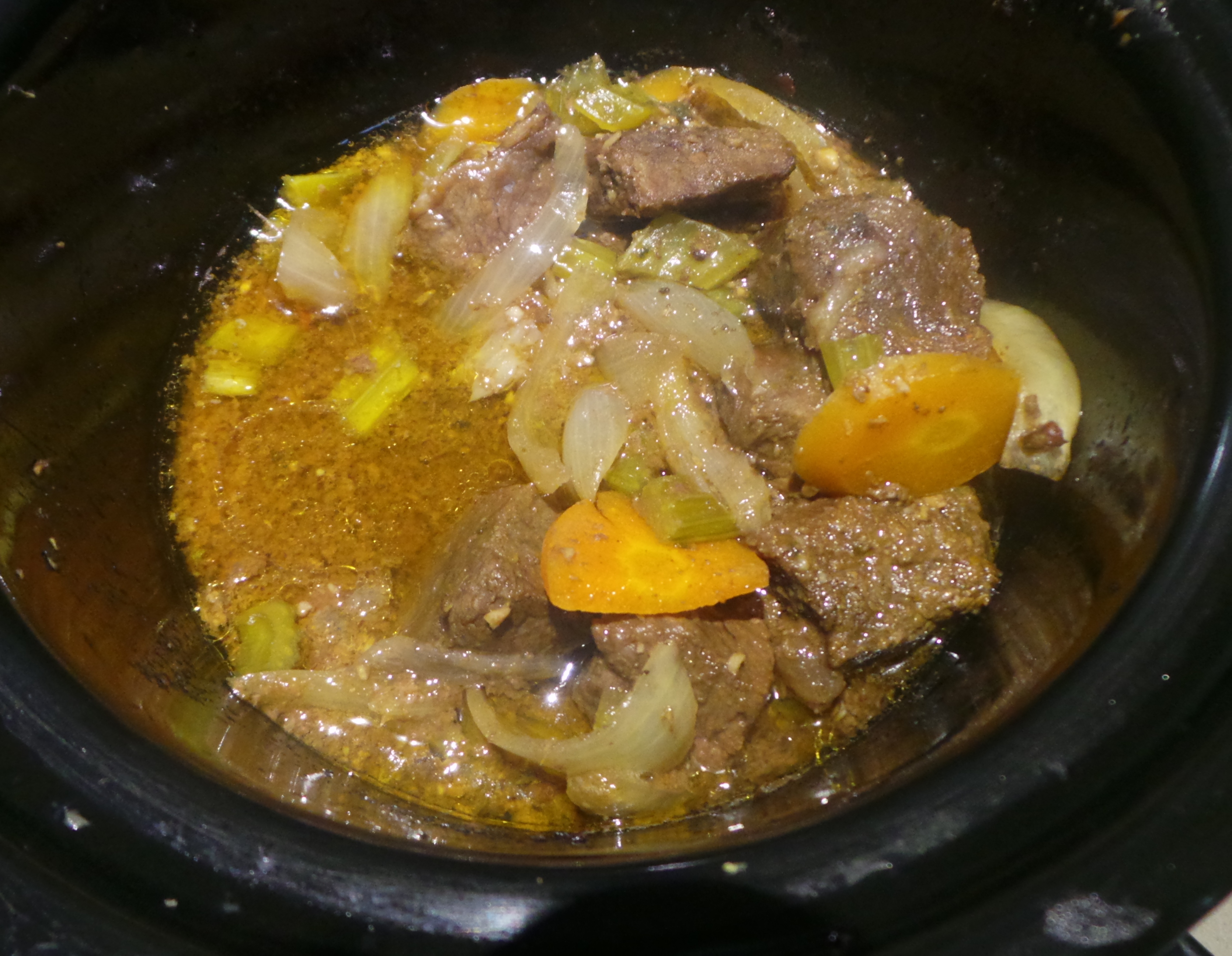
You can leave the lid off for a bit and let the liquid evaporate, but then you run the risk of over cooking your dish. Also, if you are using a slow-cooker, this could take some time indeed!

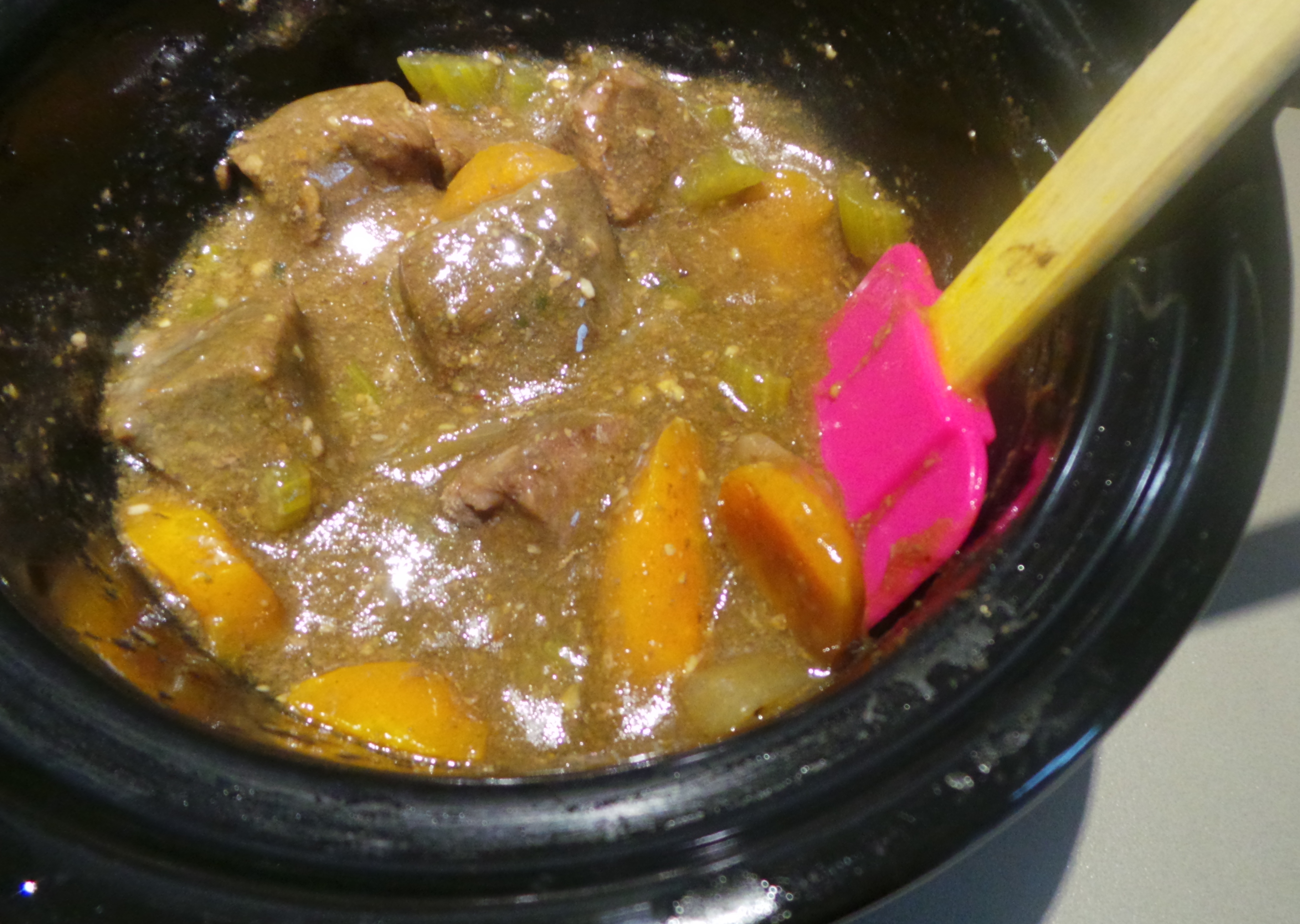
The liquid in this casserole needs thickening to reach "comfort food" status.

The liquid in this casserole needs thickening to reach “comfort food” status.

Try this instead.

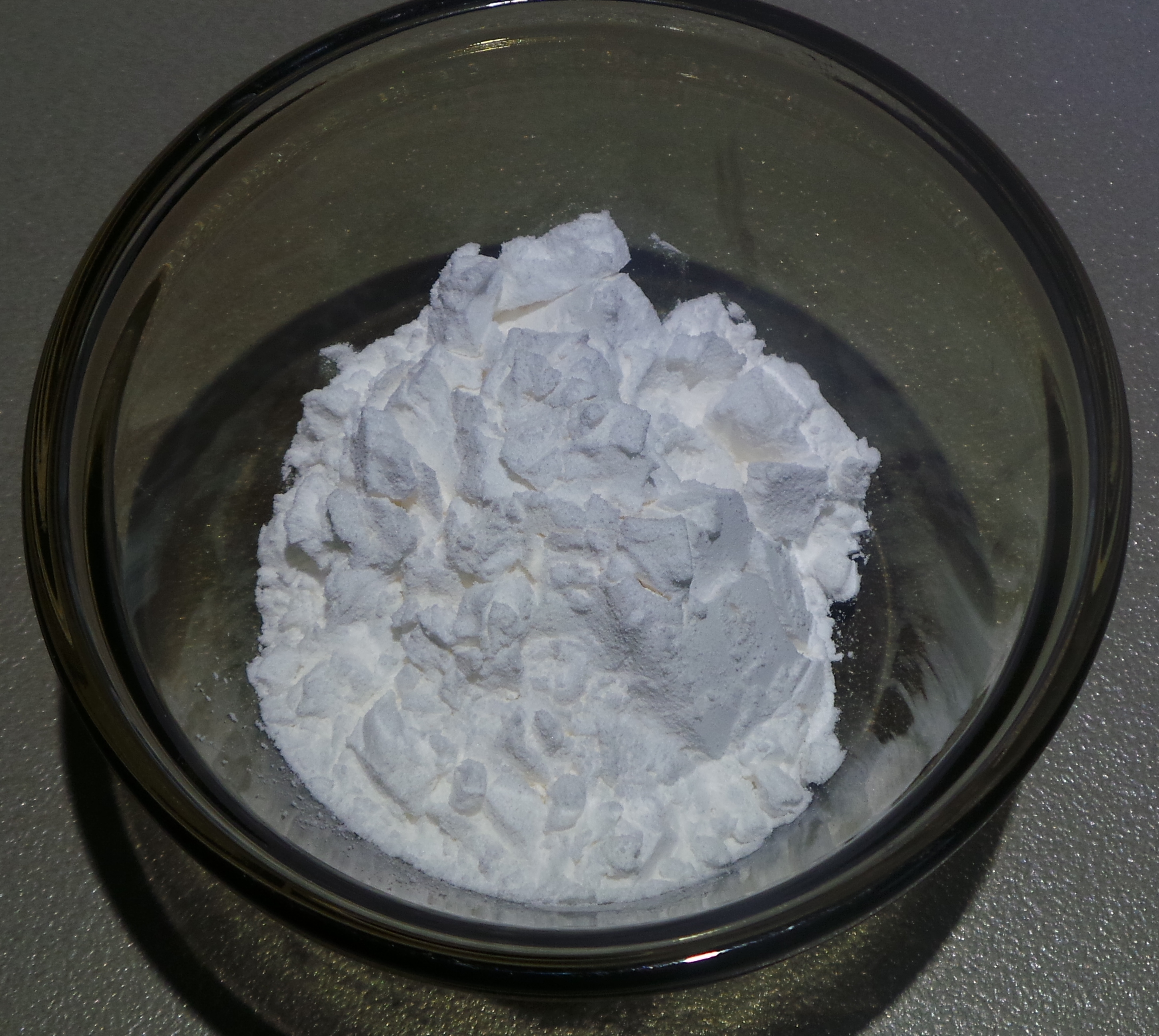
Take a few teaspoons of cornflour and place in a small bowl, glass or coffee cup. Break up any lumps with the back of a teaspoon.

Several teaspoons of cornflour

Several teaspoons of cornflour

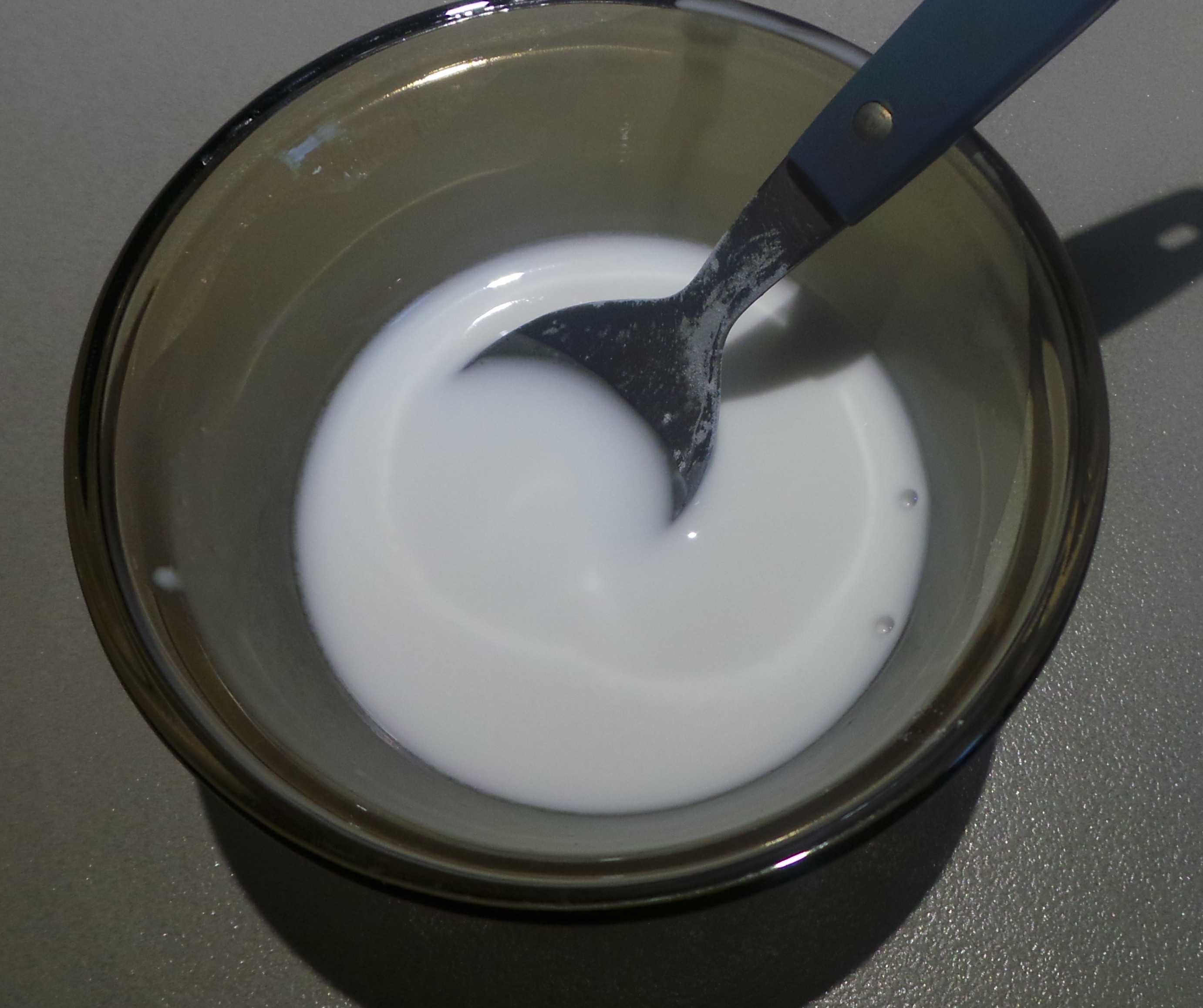
Add some cold water and mix to a paste. Make sure that it is cold or it will start to cook all on its own and you really don’t want that.

Add a little more cold water to loosen into a slurry. Mix well.

Using cold water, mix to a slurry.

Using cold water, mix to a slurry.

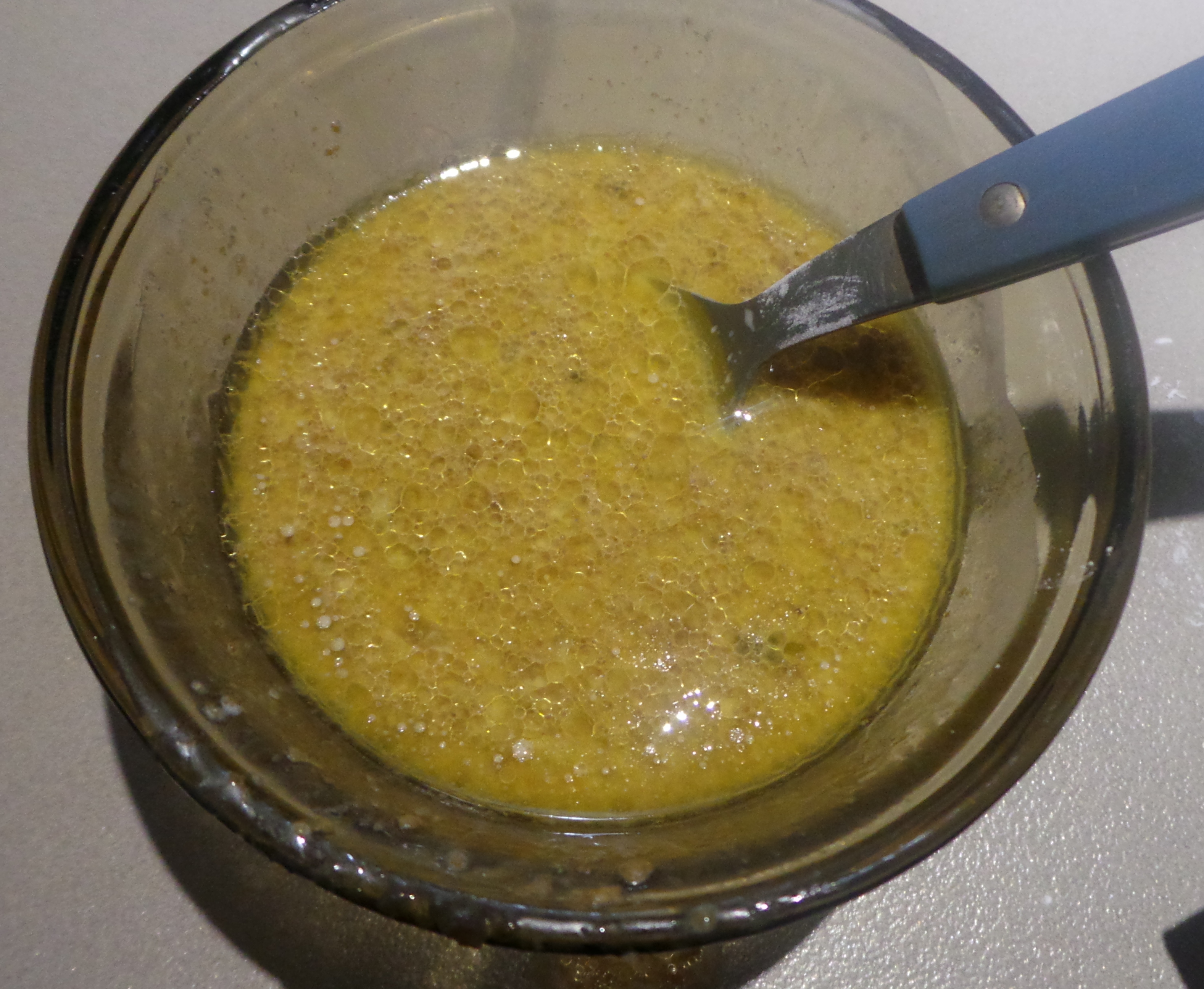
Then take a little of the liquid from your casserole and add it to the cornflour mix. It will start to change colour. You’ll end up with what looks like a really pale gravy.

Add some of the hot liquid from your casserole and mix through.

Add some of the hot liquid from your casserole and mix through.

Add as much of the warmer liquid as you can get into your container and mix well. Use the edge of your teaspoon to scrape any paste off the sides of your bowl and thoroughly incorporate it into your mix.

Now add the whole lot to the casserole and bring to the boil. Once a boil has been achieved (so the flour is cooked) reduce the temperature to wherever you need it to be.

Your sauce will thicken and may be a little lighter in colour, but not much lighter.

Comfort Food status reached. Achievement Unlocked.

Comfort Food status reached.
Achievement Unlocked.

This will not alter the taste of your dish, just make the liquid thicker and more viscous.

If your sauce has not thickened sufficiently, then repeat. However, it is better to start off with a smaller amount of flour and have a slightly ‘looser’ sauce than to use too much and have it turn into wallpaper paste!

Trust me.

If you have no cornflour but do have arrowroot, then that will work as well. The liquid will not become as opaque when cooked, but the flavour will not be altered using this method either.

I don’t enjoy using arrowroot, so I tend to use cornflour exclusively.

 Important!

If you are someone with gluten intolerance issues or are serving your dish to a celiac, then make sure your cornflour is not “Wheaten Cornflour.” You want cornflour that is actually made out of corn (or maize) and nothing else.

How to cook plain old rice (without tears or a rice cooker)

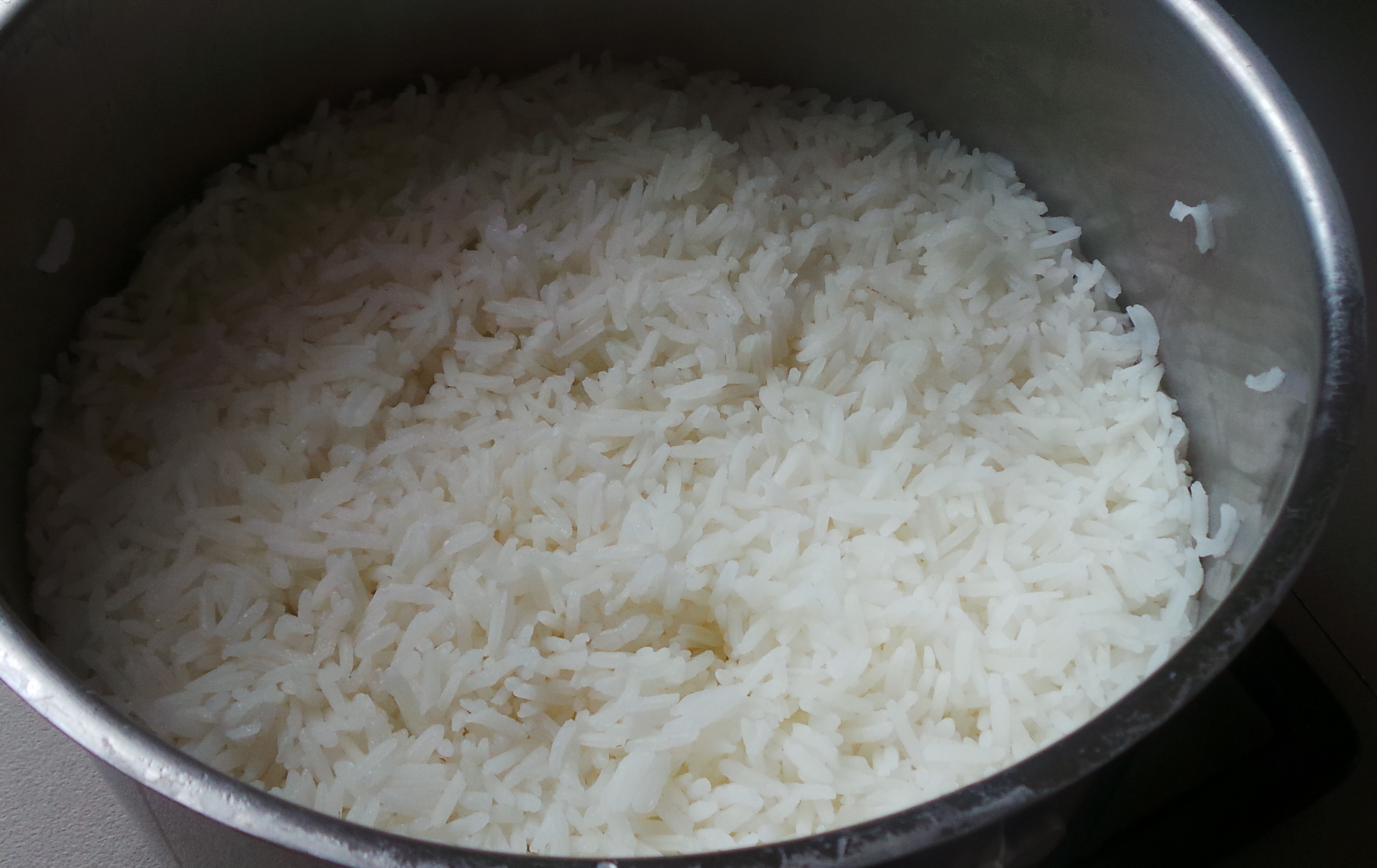
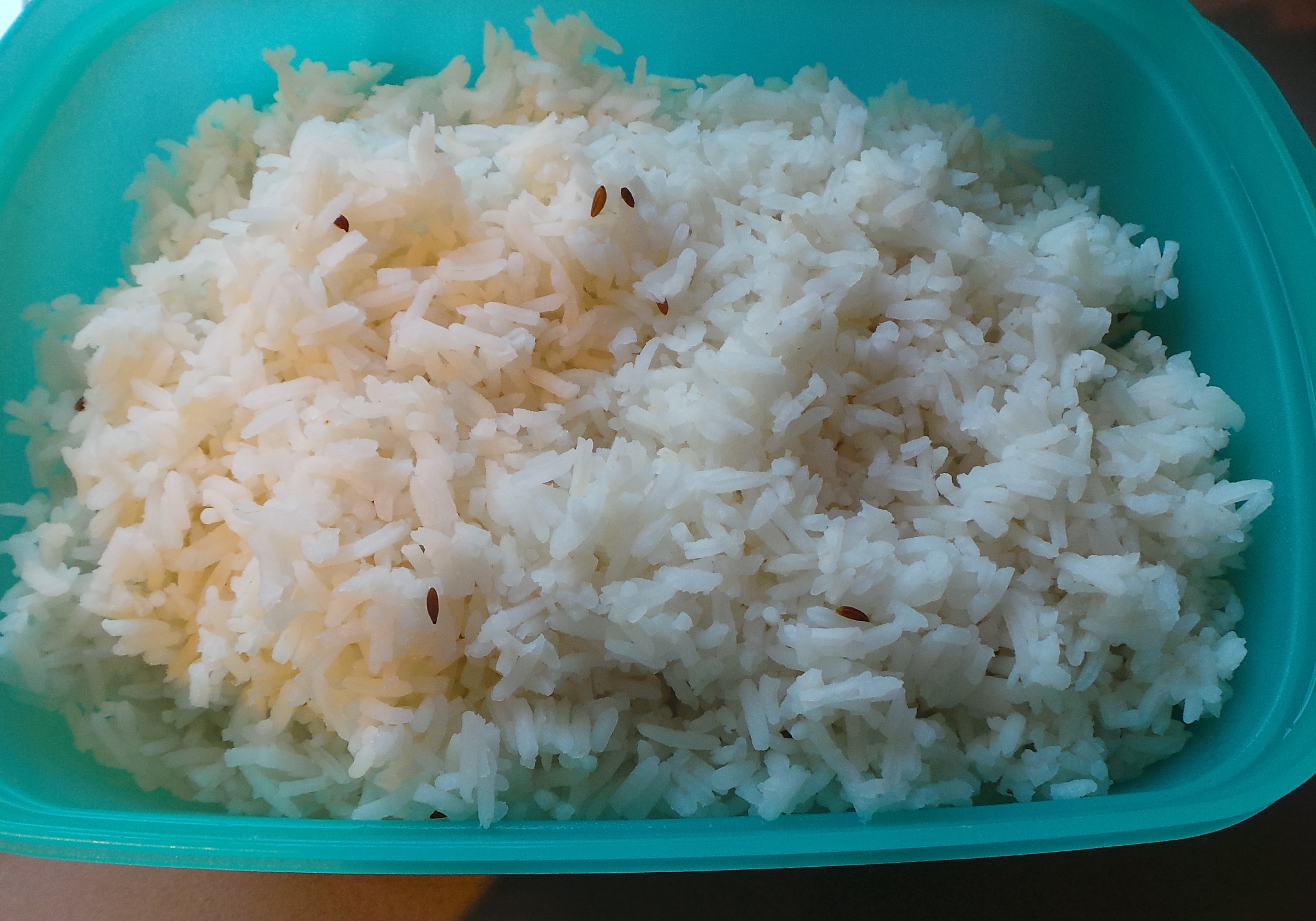
Fluffy rice with flecks of spice.

Rice is one of those things that seems much harder than it is.

It makes the perfect accompaniment to umpteen million (actual measurement) other dishes, requires little to no thought or skill to pull off and can be incorporated into other dishes which make you look like an absolute star.

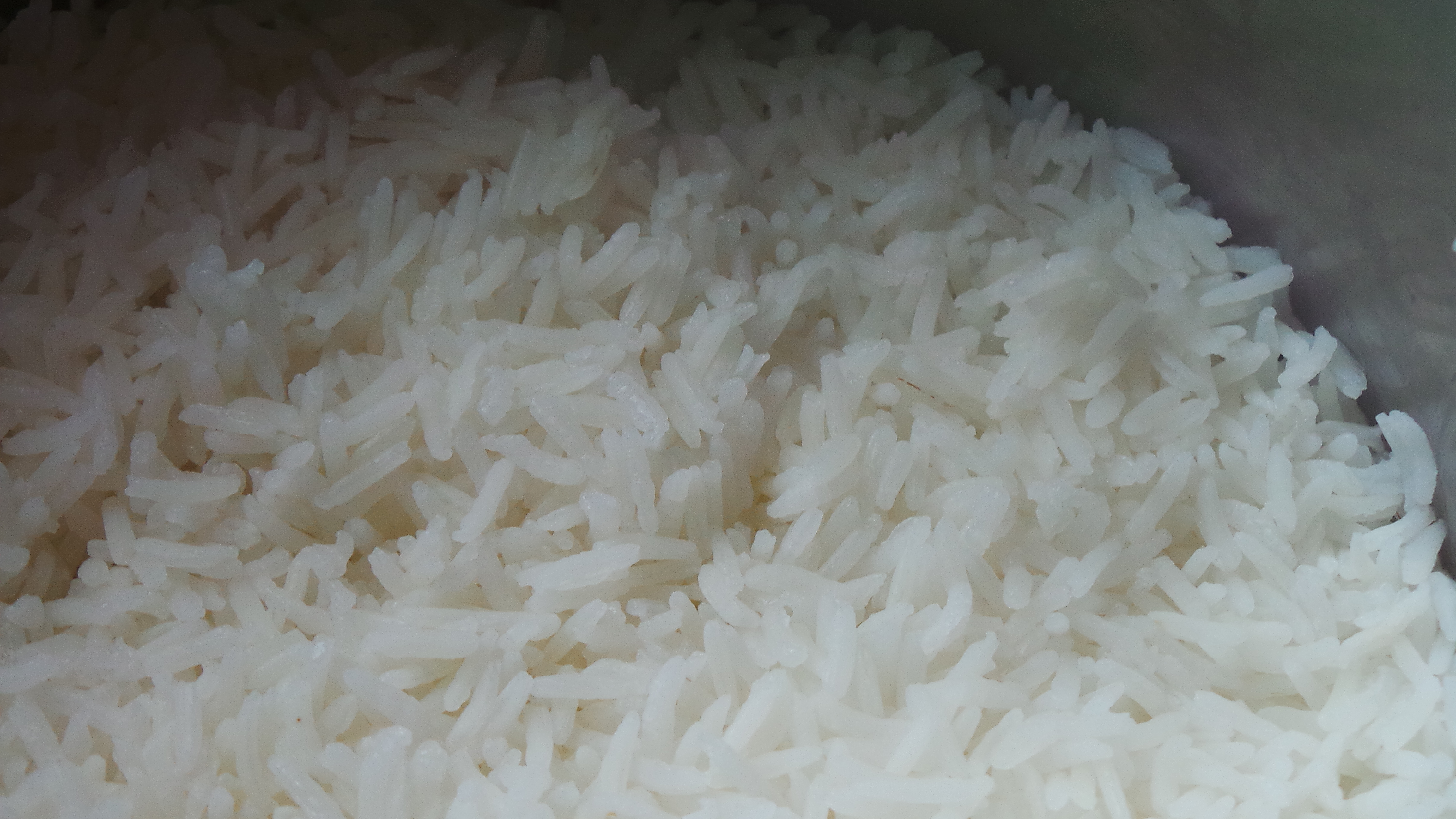
Perfectly cooked long grain rice  - without using a rice cooker.

Perfectly cooked long grain rice – without using a rice cooker.

I like to cook more than I need when I do a pot. Cooked rice keeps well in the refrigerator, reheats easily in the microwave and can be the foundation stone for other dishes like fried rice, rice salads, etc. It also makes a handy filler for things like meatloaf and rissoles (meatballs).

It’s also one of those budget booster ingredients. A kilogram of rice will only cost a few dollars but will give you three times its weight in cooked product and store in its uncooked state indefinitely if treated properly.

It can also be an absolute pain in the neck.

Pots that boil over (ugh!), rice that burns, or rice that resembles glue are all elements of everyone’s respective rice nightmares.

It doesn’t have to be that way.

Really.

It’s not rocket surgery folks and with just a little care and attention you can cook perfect rice each and every time without even using a measuring cup.

Although – if I know you guys – someone out there will *demand* that I give an actual measure somewhere. Sigh.

Not gonna. Nyah.

Take your largest pot. Fill it a quarter full of rice, cover with water to a depth that reaches halfway up your first finger joint, cover, bring to a boil, then cook on a really low heat for 15 minutes.

There. Hard innit?

Okay. Here we go again, but more slowly.

Rice triples in volume when cooked. If you want to cook a cup of raw rice, you’ll end up with three cups worth at the end. Make sure your pot will hold the finished volume of rice. That’s important.

Some may tell you that you absolutely must wash rice before you cook it. I very rarely do. If I were making rice for sushi or for something that required precise levels of starchiness, I might.

However, if your rice is processed in clean facilities, then I shouldn’t be too bothered with it for the purposes of cooking it as a side dish. It may have a few clumps in it, but they can be rectified with a fork…

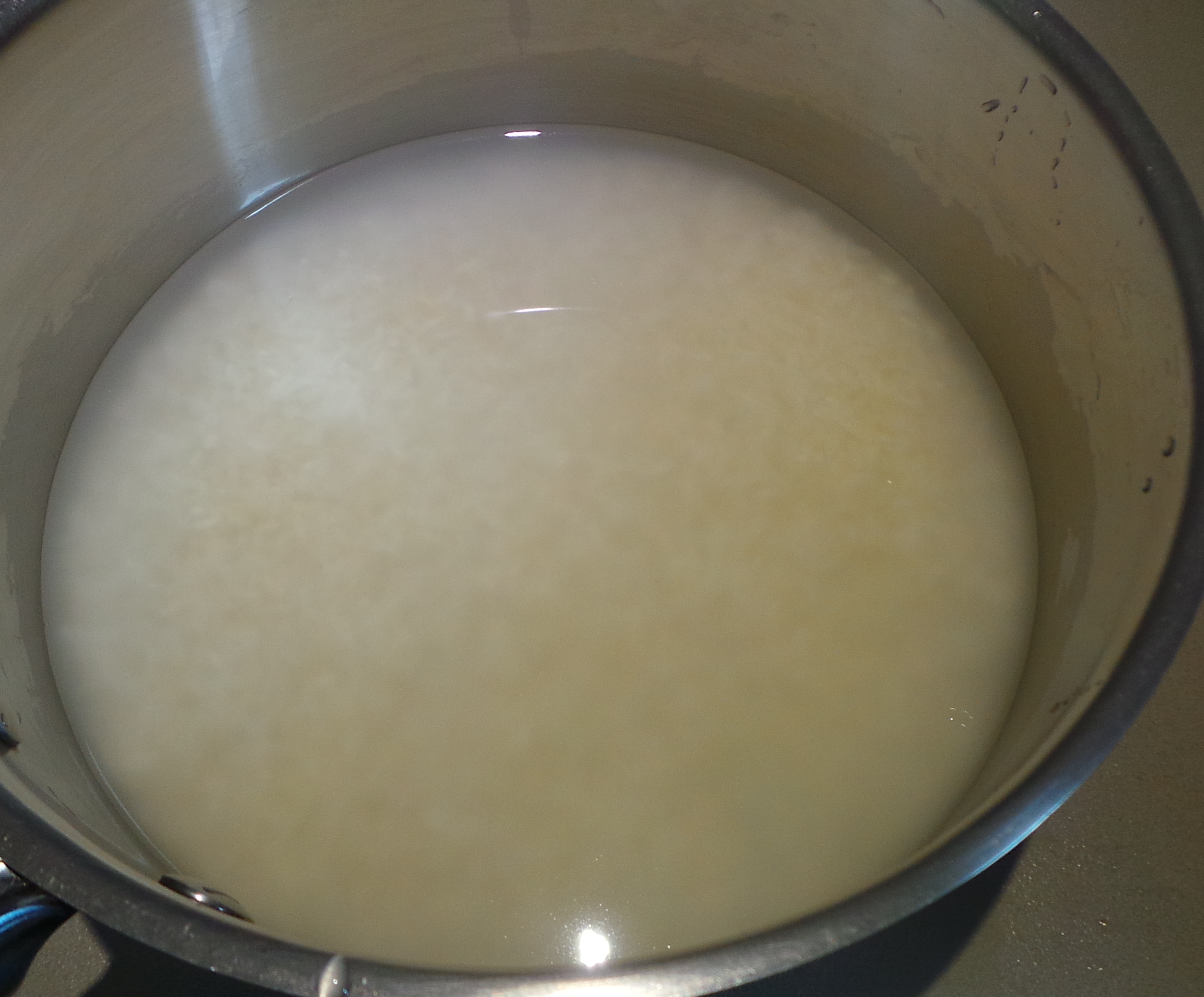
Here is what the water will look like on unwashed rice…

Water added to unwashed rice is cloudy.

Water added to unwashed rice is cloudy.

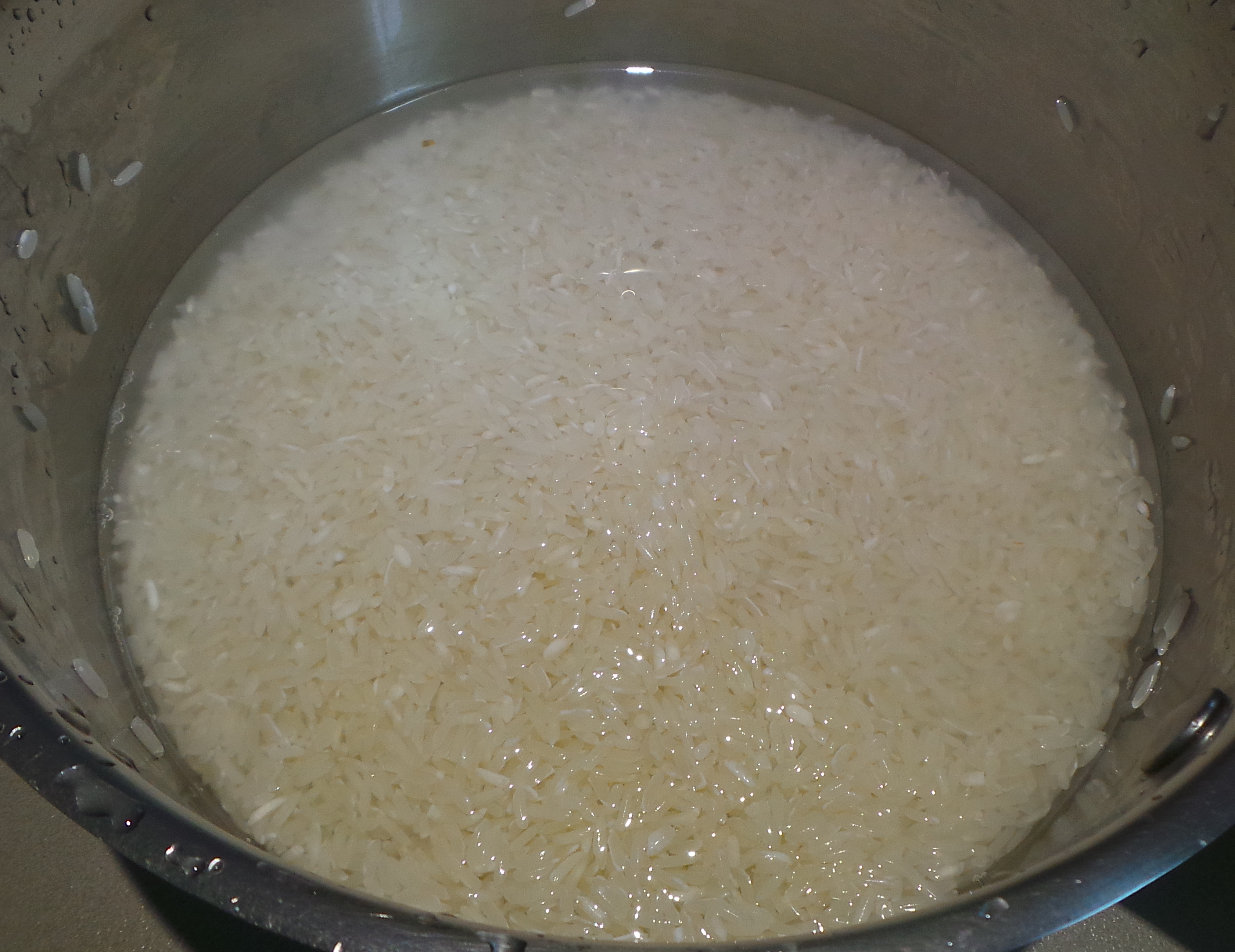
When it’s been rinsed a few times it becomes clearer.

The water becomes clearer with each rinse.

The water becomes clearer with each rinse.

Not washing it will save you a colander to wash too…. (just sayin’)

You will need a saucepan with a tight-fitting lid. Don’t fret overly if it’s not completely snug – we’ll deal with that soon.

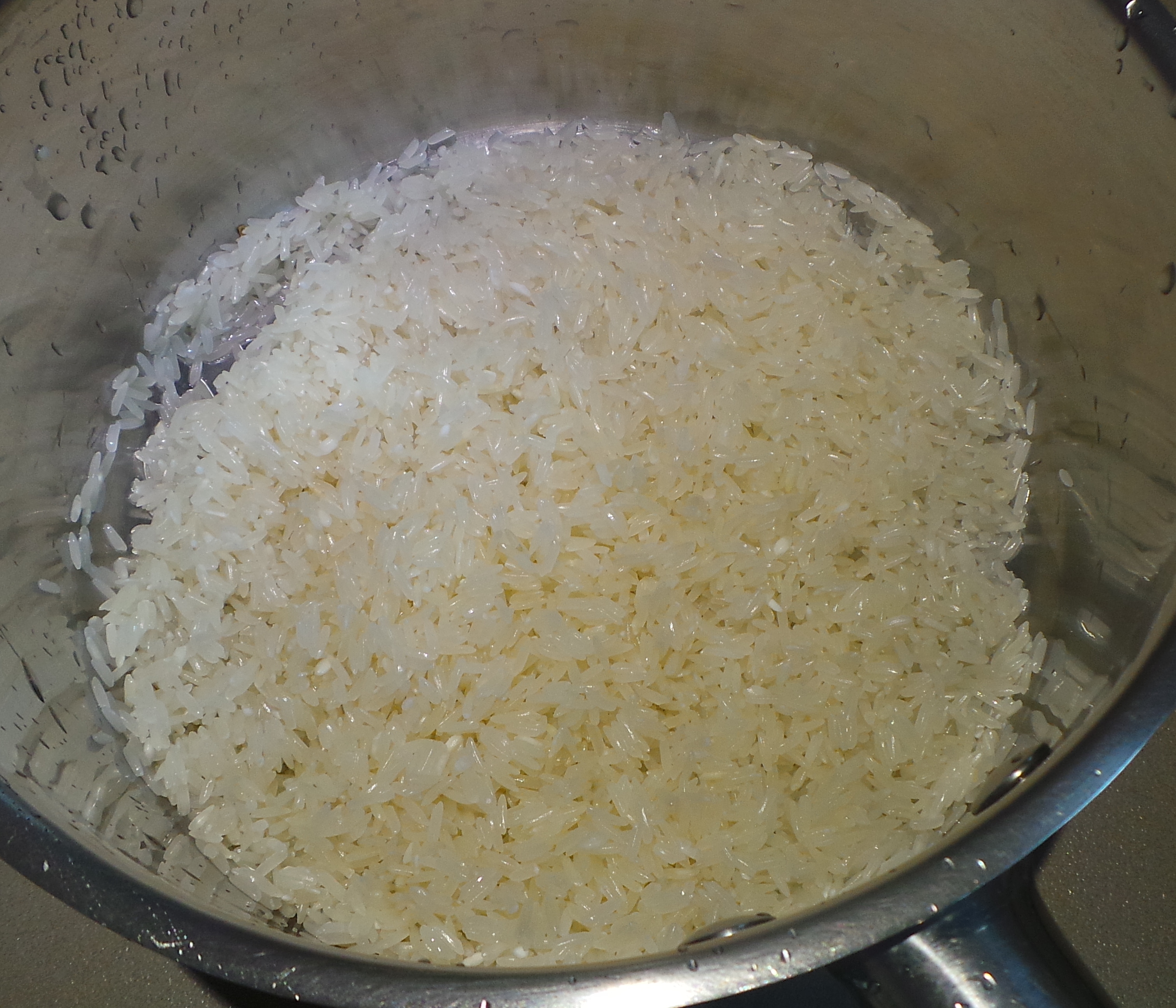
In my largest saucepan, I usually place a layer of long grain rice about an inch deep.

Put your rice in the pan

Put your rice in the pan (it’s wet because I just demonstrated the effects of washing it. Keep up.)

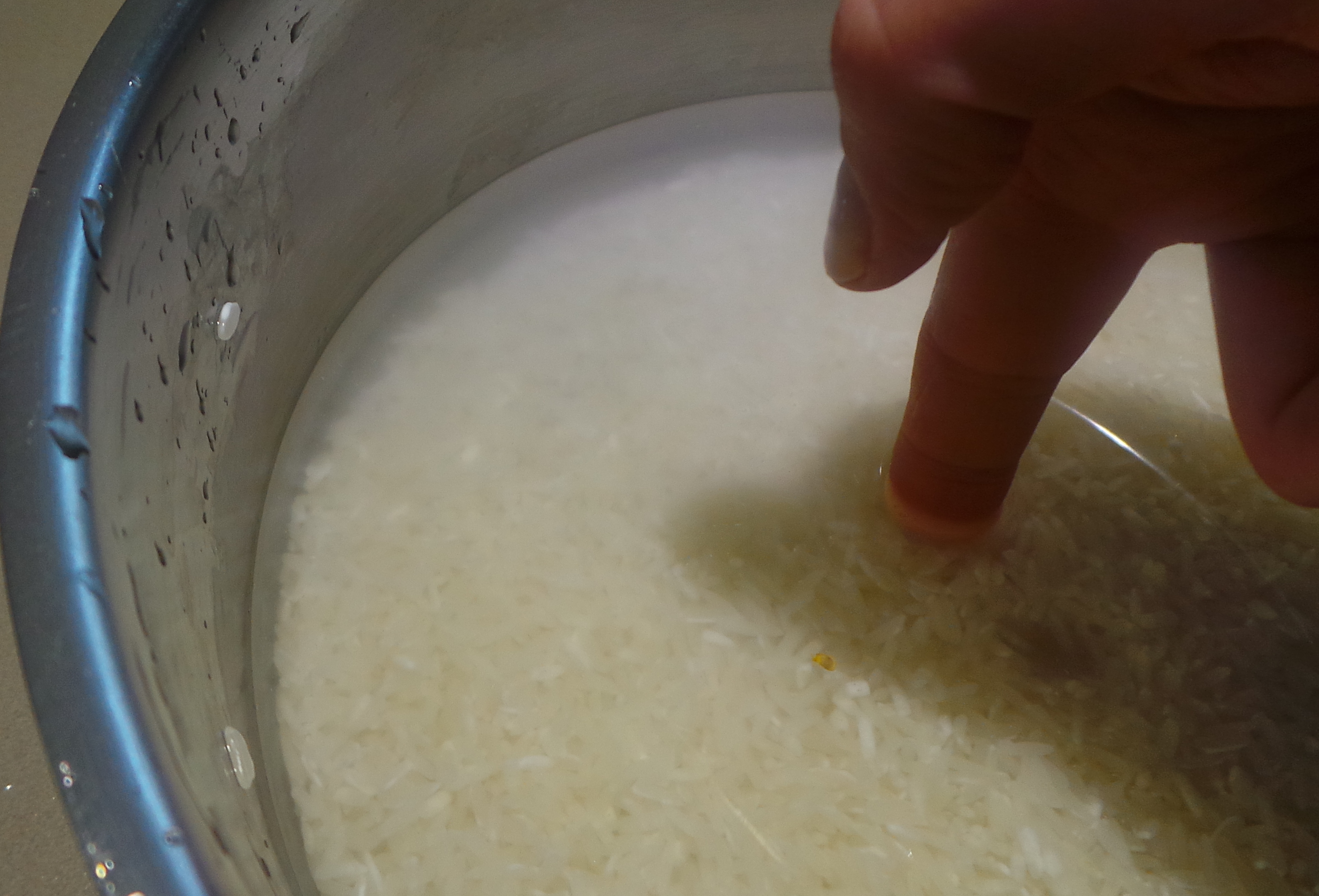
To this I then add cold water. To measure the level, I place the tip of my index finger on the top of the rice and add water until it reaches halfway up the first joint of the finger.

Like this:

Measuring the water

Measuring the water

Then place your lid on your pot and make sure any vents are closed.

The lids of my saucepans have small holes in them to vent steam. I want to keep the steam in, so I place a sheet of baking paper or parchment over the pan and under the lid.

Use a sheet of parchment paper to seal off any leaks of heat and water.

Use a sheet of parchment paper to seal off any leaks of heat and water.

Then jam the lid on as securely as possible.

Put the lid on firmly and resist moving it until the rice is cooked!

Put the lid on firmly and resist moving it until the rice is cooked!

Do not move it from here on.

I mean it!

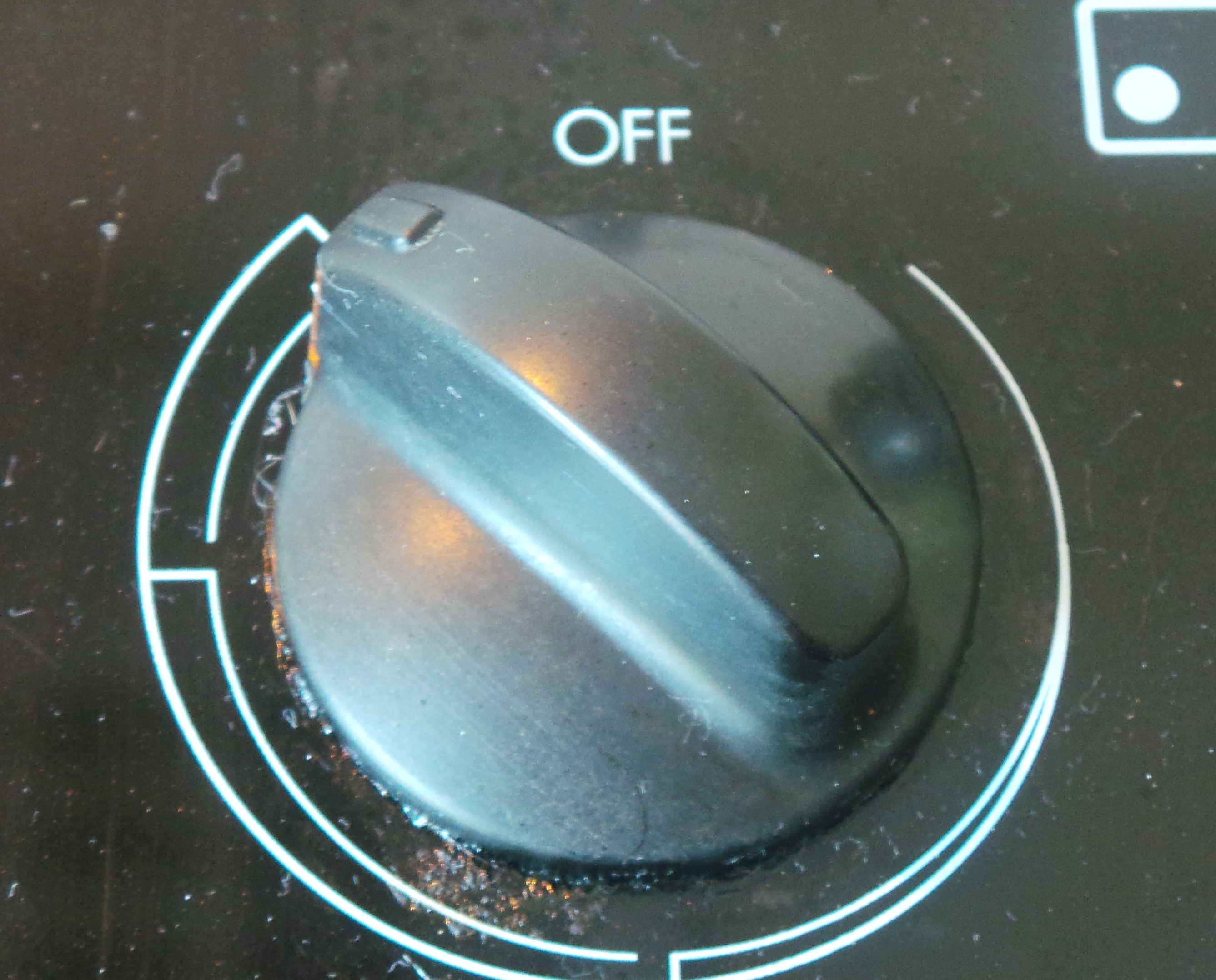
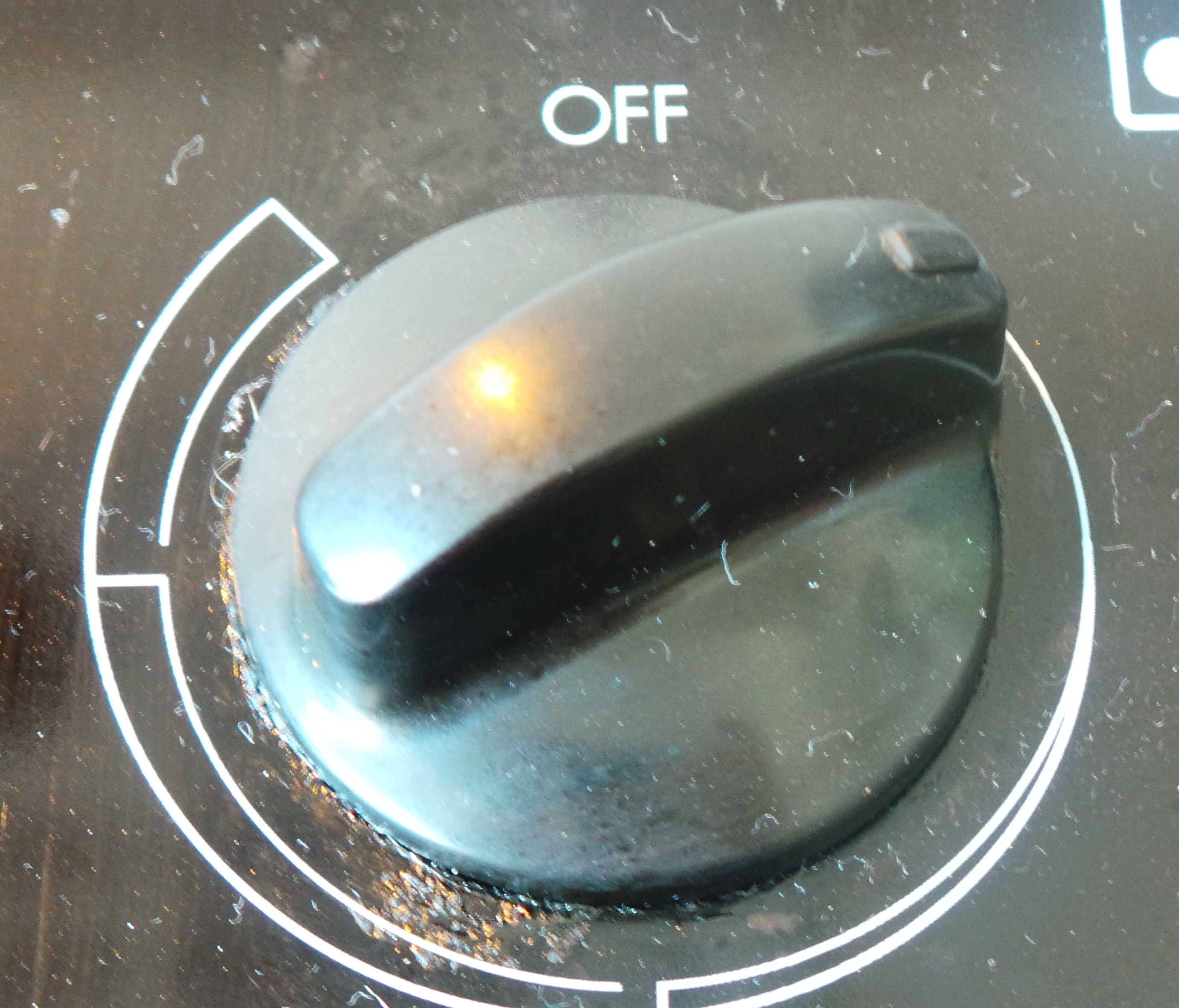
Place it on the hob and turn the heat to full. Do not walk away.

Turn your heat to full.

Turn your heat to full.

You are waiting for the rice to come to the boil at which stage you will turn it down to the lowest heat possible on your stove.

So…how do you tell if it’s boiling if you can’t lift the lid?

It’s actually very easy. Place the tips of your fingers gently on the lid handle. As the heat increases you’ll feel a slight vibration that grows as it gets closer to the boil. If you are using parchment and have a glass lid like mine, the paper will inflate as boiling point is reached.

Regardless, if you miss all these signs, you’ll know for sure as the lid tries to rock and rattle its way off your pot.

Turn the heat to the lowest point you can without turning your stove off.

Turn your heat to the lowest level you can.

Turn your heat to the lowest level you can.

In fact, you could probably remove it from the heat altogether and not have any problems. It would just be a little less fluffy.

Not kidding.

Just don’t lift the lid!

Set a timer for 15 mins and walk away. Have a cup of tea, put away the dishes on the drainer or start prepping whatever you want to serve with the rice.

When your timer goes off, take it off the heat and leave the lid on for a further 5 minutes. If you wish, place a folded wet tea towel under your saucepan to further minimise any risk of sticking.

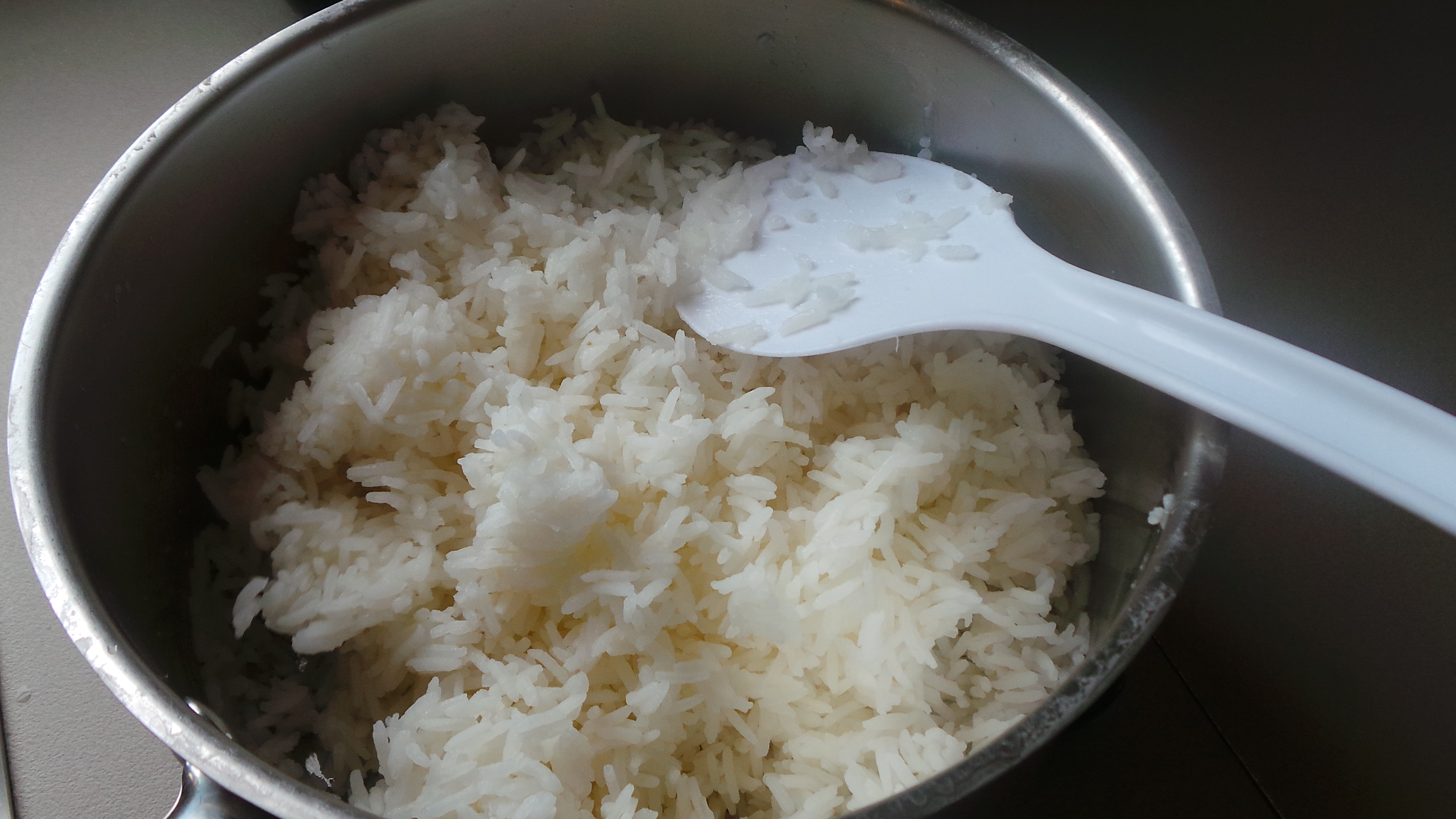
Lift the lid and stir with a rice paddle if you have one.

Perfectly cooked rice - without a rice cooker.

Lift your lid…


Stir your rice.

Stir your rice.

If you don’t have a rice paddle, then just use a fork. Don’t use a spoon or you will end up creating a mushy, claggy mess.

Remove the rice to a serving bowl or to a storage container as quickly as you can.

Filling your saucepan with hot water and dish soap as quickly as possible after the rice has been removed will make it a breeze to clean after you have finished your meal.

Ring the changes:

Once you feel confident in your ability to cook rice, try some very simple variations.

When you add your water also add a teaspoonful of Caraway Seeds. This makes a lovely accompaniment to rich meat dishes, especially those containing pork.

A sprinkle of caraway for flavour and fragrance

A sprinkle of caraway for flavour and fragrance.

Fluffy rice with flecks of spice.

Fluffy rice with flecks of spice.


Or try a dash (maybe a ½ tsp) of turmeric instead. This will turn your rice a lovely yellow and add a beautiful, warm fragrance to the air…

Indeed, adding a touch of almost any spice will transform your rice. Try cracked Cardamom Pods, fennel seeds, star anise or – if you are feeling particularly affluent – soak a few saffron threads in warm water for 5 mins before adding them in the same way.

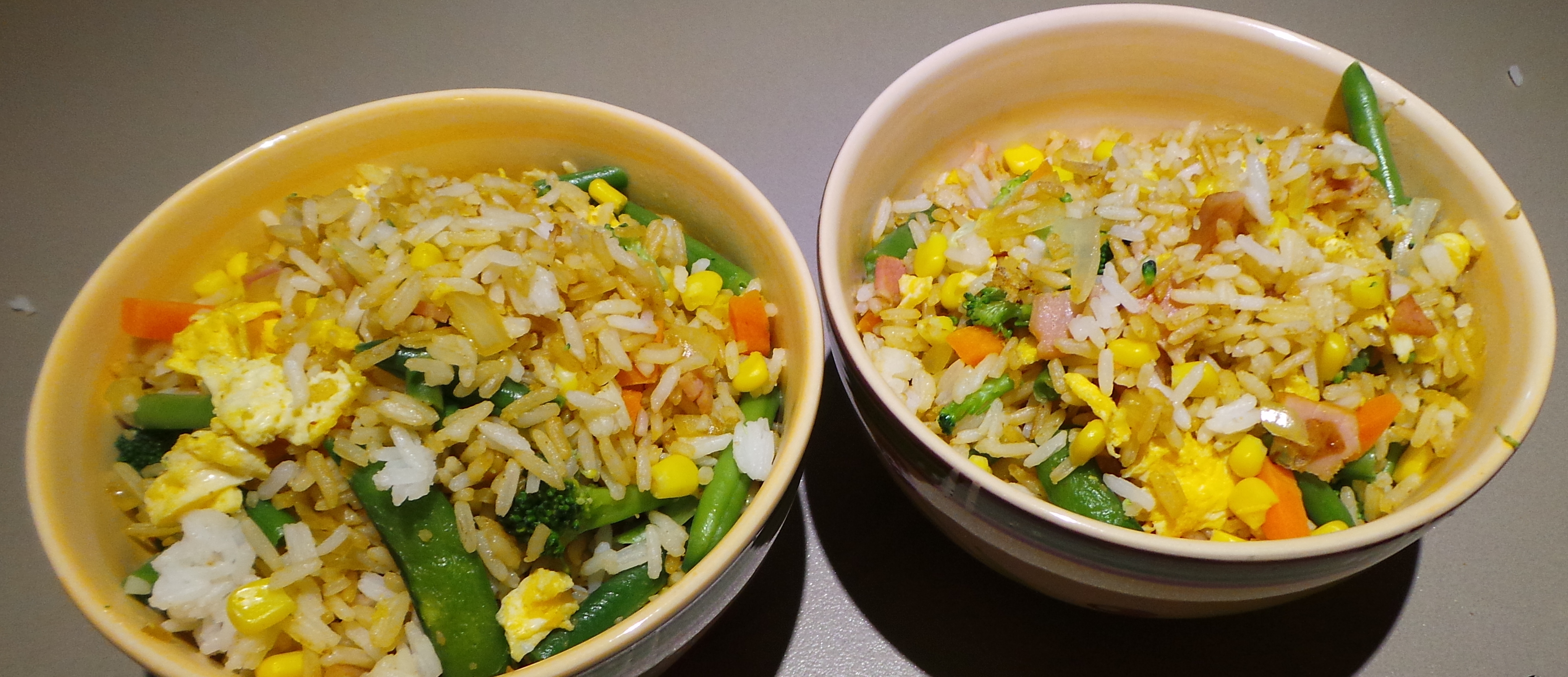
Use any left over rice in my Almost Genuine Fried Rice dish.

Almost Genuine Fried Rice

Almost Genuine Fried Rice

Let me know how you go!

Low-Fuss Macaroni and Cheese (Slow Cooker)

I think I mentioned some time ago that I lived in Texas for a bit and that, when I was there, I cooked mostly with a little 1.5 litre (1 Quart) slow cooker.

Many wonderful things emerged from that device (and were eaten with gusto), but one that I still continue to make is Mac and Cheese.

Now, during my residency of San Antonio, I discovered that Americans have a plethora of magazines devoted to slow cookers and slow cooking – it was quite startling just how many there were when I’ve yet to see one such thing here in Oz. No doubt we will soon catch up given that Diabetes specific magazines are appearing here now too and they had oodles of those.

Remember the Alamo.

Remember the Alamo.

Anyway, I bought one or two and was off. It was in one of them that I discovered that Macaroni and Cheese could be prepared all-in-one-pot and cooked slow. Unfortunately, I didn’t bring my copies of the magazines back with me (excess luggage dontchaknow) so I can’t attribute this with an original source. However, I have fiddled with it and made it often enough now that I can honestly say that I don’t think it actually resembles the original all that closely.

The original held something called Velveeta – which didn’t agree with me at all, and several cheeses containing the word “Jack” in their names. This is another American phenomenon that has yet to reach our supermarkets (along with the orange food colouring in cheeses!)

So, here is my low fuss version of Mac and Cheese à la Slow Cooker. The recipe I will give you to print at the bottom of the post will contain specific instructions for making it in a 5 litre slow cooker and will make enough to serve a very hungry family. Probably with leftovers.

The photographs, however, will be of my current (Australian-wired) 1.5 litre slow cooker being used to make a smaller amount. The process is the same, as are the results, but the two of us do NOT need several weeks worth of leftovers!

Also, what you see will not have been measured precisely. I tend to do this using the patent-pending Sharon’s Handfuls method of measuring, other wise known as a handful of this and a handful of that.

Let us begin.

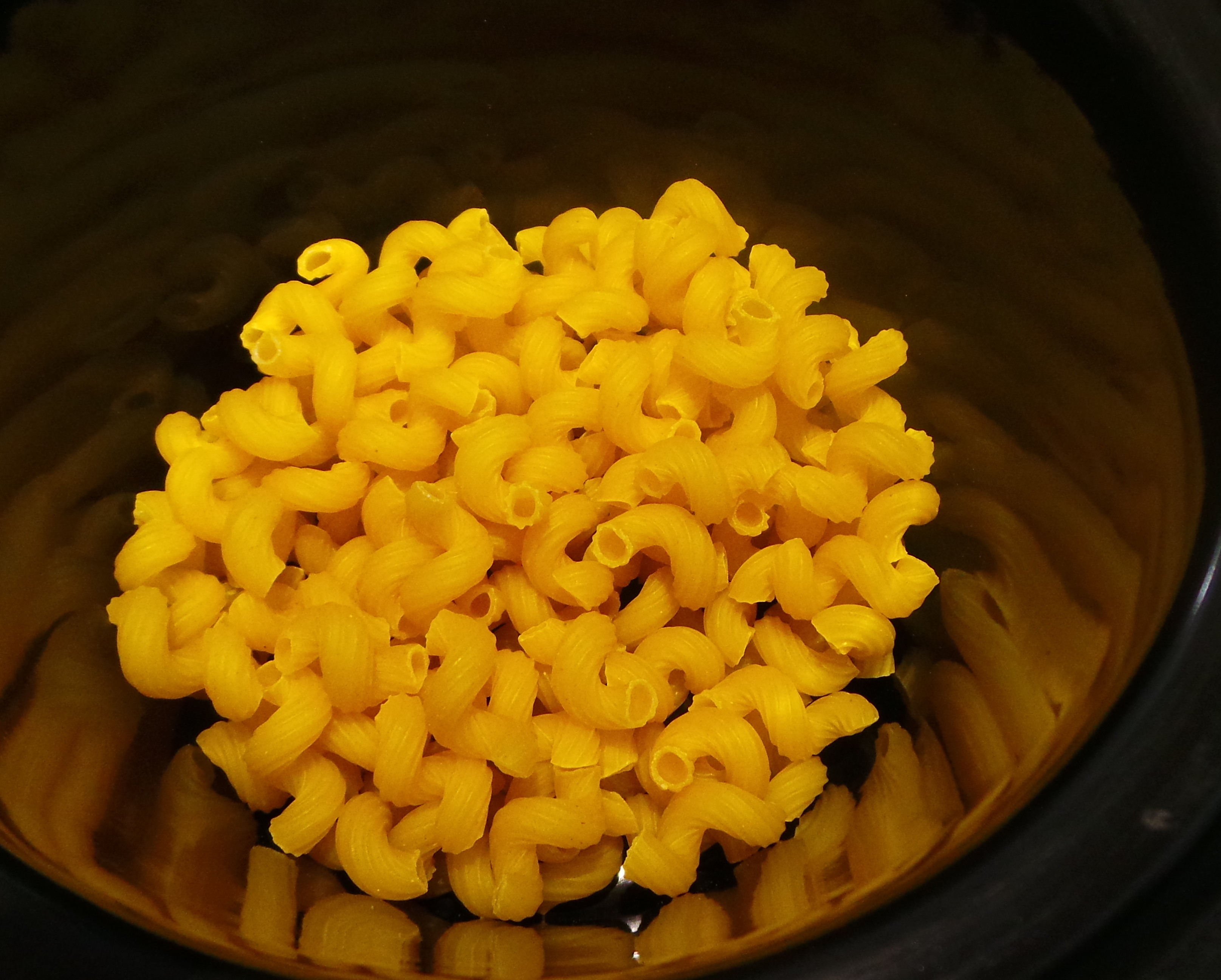
To the bottom of your crock add your uncooked pasta. This may be elbows, it may be spirals or it may even be tiny tubes – think macaroni rather than spaghetti and you’ll be fine.

Place your uncooked macaroni in the crock

Place your uncooked macaroni in the crock

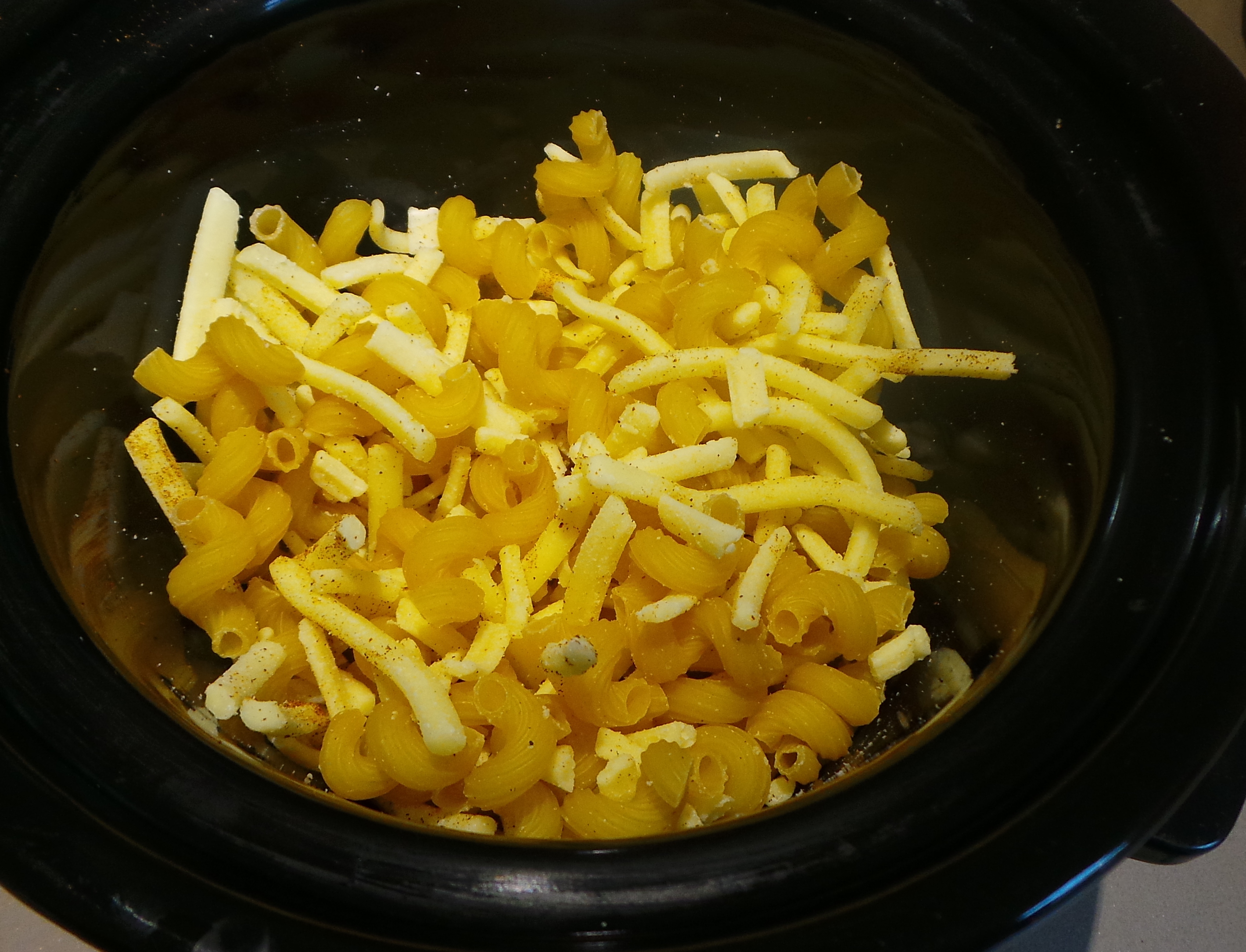
Next, add your cheese. This may be one type of cheese or a mix of several. This is a dish that lends itself well to using up the odds and ends of cheeses that may be lurking in the corners of your refrigerator. In the past I have used mixes including cheddar, fetta, parmesan, edam, gouda, brie, camembert, mozzarella and once I included a smidgen of a blue cheese. (Which doesn’t mean that I used all of these at once!)

I would limit your choice of cheese to one strong-tasting one among other milder flavours or you may find yourself with something that smells too confusing to eat.

You have been warned.

Plain old cheddar works fine, so don’t panic if that’s all you’ve got. The recipe calls for grated and cubed, I had pre-shredded cheeses in my fridge so that’s what I used – along with a good twist or two of black pepper and a sprinkling of paprika.

Add your cheese and seasonings

Add your cheese and seasonings.

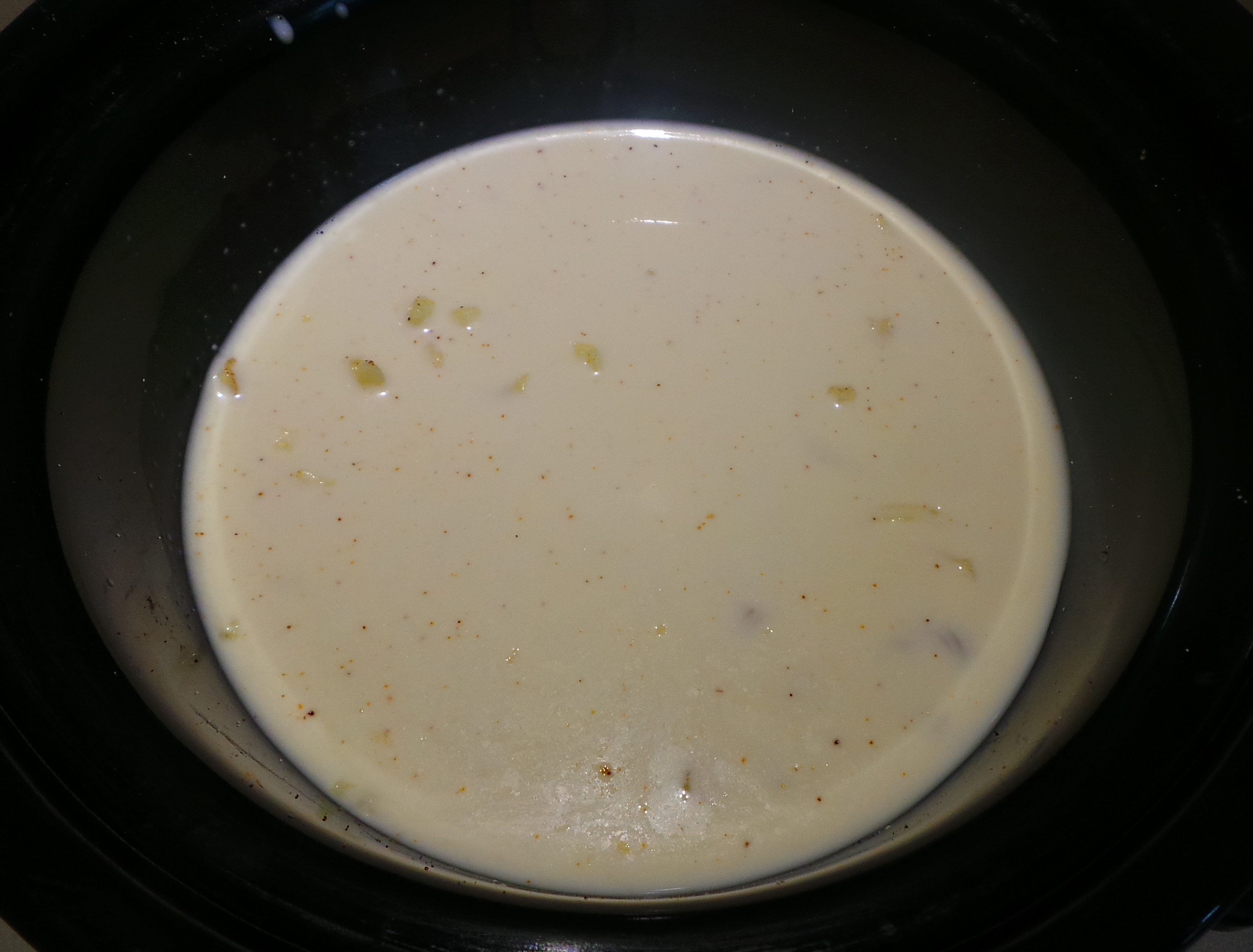
Now, cover your mixture with milk. This may be cow’s milk, goat’s milk, soy milk, almond milk – get my drift? Pasta cooks in liquid and it doesn’t much care what that liquid is. In my baby slow cooker I tend to use a tin of evaporated milk and then add enough of whatever milk is in the refrigerator to cover the pasta.

That’s the important bit. You want your pasta to be completely submerged.

Cover with milk.

Cover with milk.

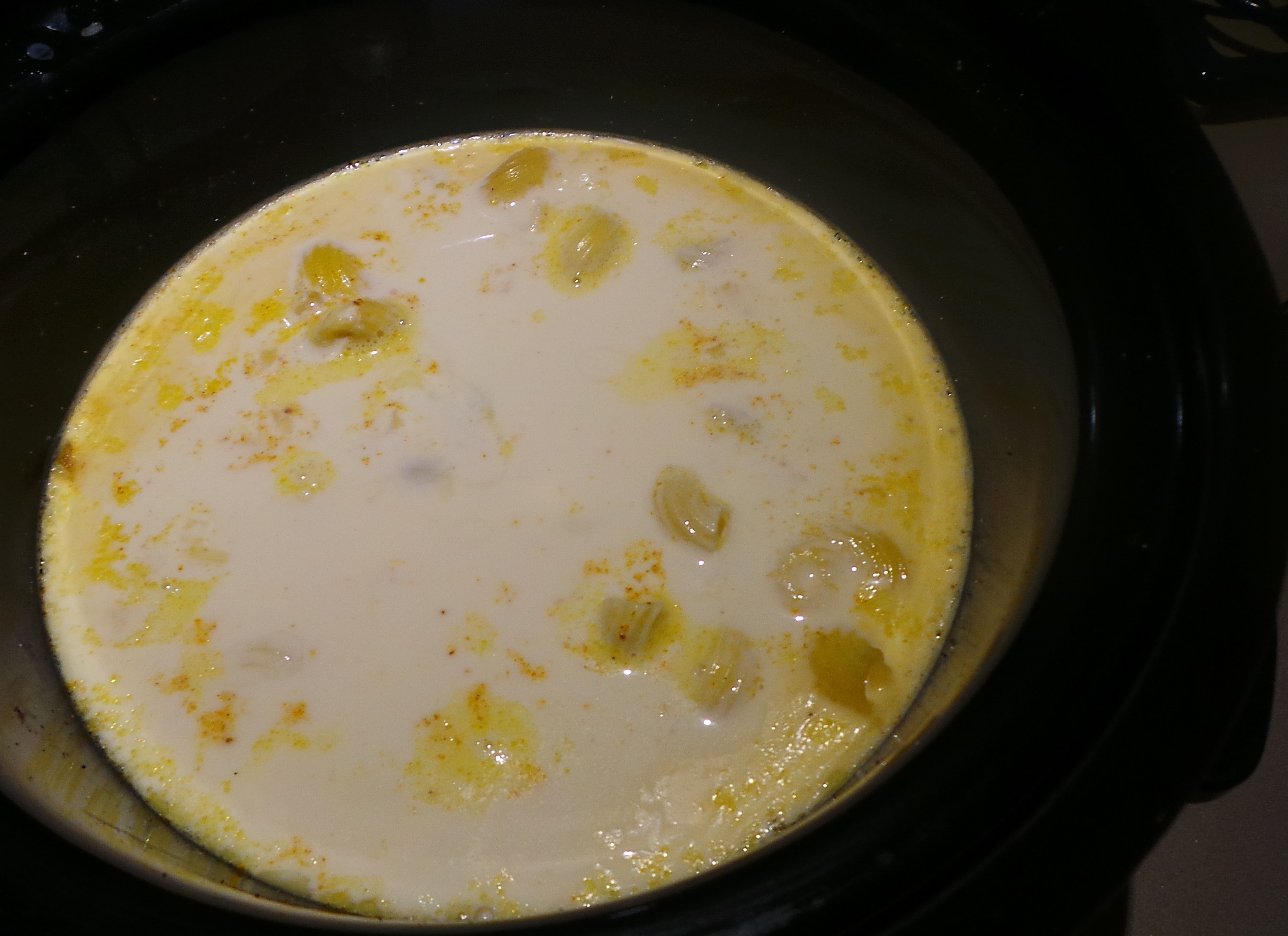
Now cover it and cook it on low for 2 to 3 hours. It doesn’t take that long in a tiny slow cooker, so keep an eye on it.

After 30 mins or so, you’ll notice your cheeses melting.

Melting cheeses...

Melting cheeses…

This is good and eminently desirable. Keep up the good work. If you feel the need to stir, then do so. This dish is quite forgiving and will let you remove the lid once or twice without slowing things down immensely.

When your pasta is cooked to your liking, serve it up.

All done.

I, however, like to fiddle. I also am very much of the meal-in-a-bowl school of catering. So I always add stuff to my mac and cheese.

This is not mandatory.

If you have them, frozen peas can add a change of texture as well as a burst of both flavour and colour – as can frozen corn. The heat of the dish will thaw them so there is no need to cook separately first. Use whatever vegetables you have to hand.

Asparagus has just come into season here, so I cut two stalks up and stirred them through my pot. Asparagus is best cooked lightly and here it steamed in the heat of the pasta.

asparagus

A stalk or two of asparagus adds a touch of colour and a burst of flavour.

I also had two lonely continental frankfurters sitting in my fridge and – as they, too, just need reheating and not cooking – sliced them up and popped them in.

Some sliced frankfurters

Some sliced frankfurters

I prefer to use fewer of these more expensive frankfurters, instead of more of a cheaper hot dog, as I like the taste and texture better. The flavour is head and shoulders above that of a hot dog and the filling doesn’t have that ‘mushy’ texture you often get in hot dogs. It’s one of those cases where it is absolutely worth spending more to buy less – but you’ll be so much more satisfied with the finished dish.

Feel free to use whatever you have to hand to add flavour and nutrition to your dish. For a vegetarian option, try adding half a tin of drained chickpeas.

Anyway, mixed through and plated up, our meal looked like this, and it was glorious. Given that it was put together at the last minute on what had turned into a very cold and gloomy day, it was ‘perfick’.

Slow cooker mac and cheese with extra added flavour and colour.

Slow cooker mac and cheese with extra added flavour and colour.

This is very filling. Trust me. Serving sizes do not need to be large.

Should there be any left in your slow cooker after plating your meals, then remove it immediately into a storage container for refrigeration. Then fill your crock with hot water and a squirt of dishwashing liquid before you sit down to eat. The slight delay will save you a world of frustration.

If you let the macaroni cool in the pot, it will set solid as melted cheese tends to do. This makes it a little more difficult to divide into … lunch containers for work the next day, just say…

Also, cheese can be difficult to clean off pots. By soaking it you will be getting a head start on the washing up and making the process a lot easier when you get to it.

Low Fuss Macaroni and Cheese (Slow Cooker)

  • Servings: 6-8
  • Difficulty: easy
  • Print

Ingredients:

2 cups (250 g) uncooked elbow macaroni

250 g light cheddar cheese, cubed

250 g tasty cheddar cheese, grated

500ml milk

salt and pepper to taste

Method:

In a 5 litre slow cooker, combine macaroni, cheeses and seasoning.

Cover with the milk.

Put the lid on the pot and cook on LOW for 2 to 3 hours, stirring after 20 minutes.


Hidden Treasure Muffins

Allow to cool completely before storing in an air-tight container.

So, you’ve made yourself some Dulce de Leche, or even some Lemon Curd – now what?

Make these.

Simple, tasty, made from things you’re likely to have already and hiding a sweet(er) surprise, what’s not to love about these morsels?

You now you want one.

You know you want one.

A batch or two of muffins mixed up on a Sunday afternoon and stored in an air-tight container can provide you with a week’s worth of school/work lunch treats. That can save you quite a bit of money over the medium to longer term, especially if you provide your own beverage as well.

They taste better than most mass-produced cakes (there’s a certain floury taste to things made from a premix) and you get to look mysterious when people beg you to tell them where you bought them…

Get picky. Eat only the best, and that usually means things made from scratch – it doesn’t mean things that are too difficult to make yourself. I promise.

These particular muffins make use of things you’ve already learned how to make here: dulce de leche and/or lemon curd.

Before I start to guide you through it, though, just a quiet word. Muffins are sensitive souls. They need a gentle touch – one that will let them know they are loved and then leave them alone…

In other words, don’t overmix them!

As soon as all the flour is incorporated, stop. Just stop. That is all.

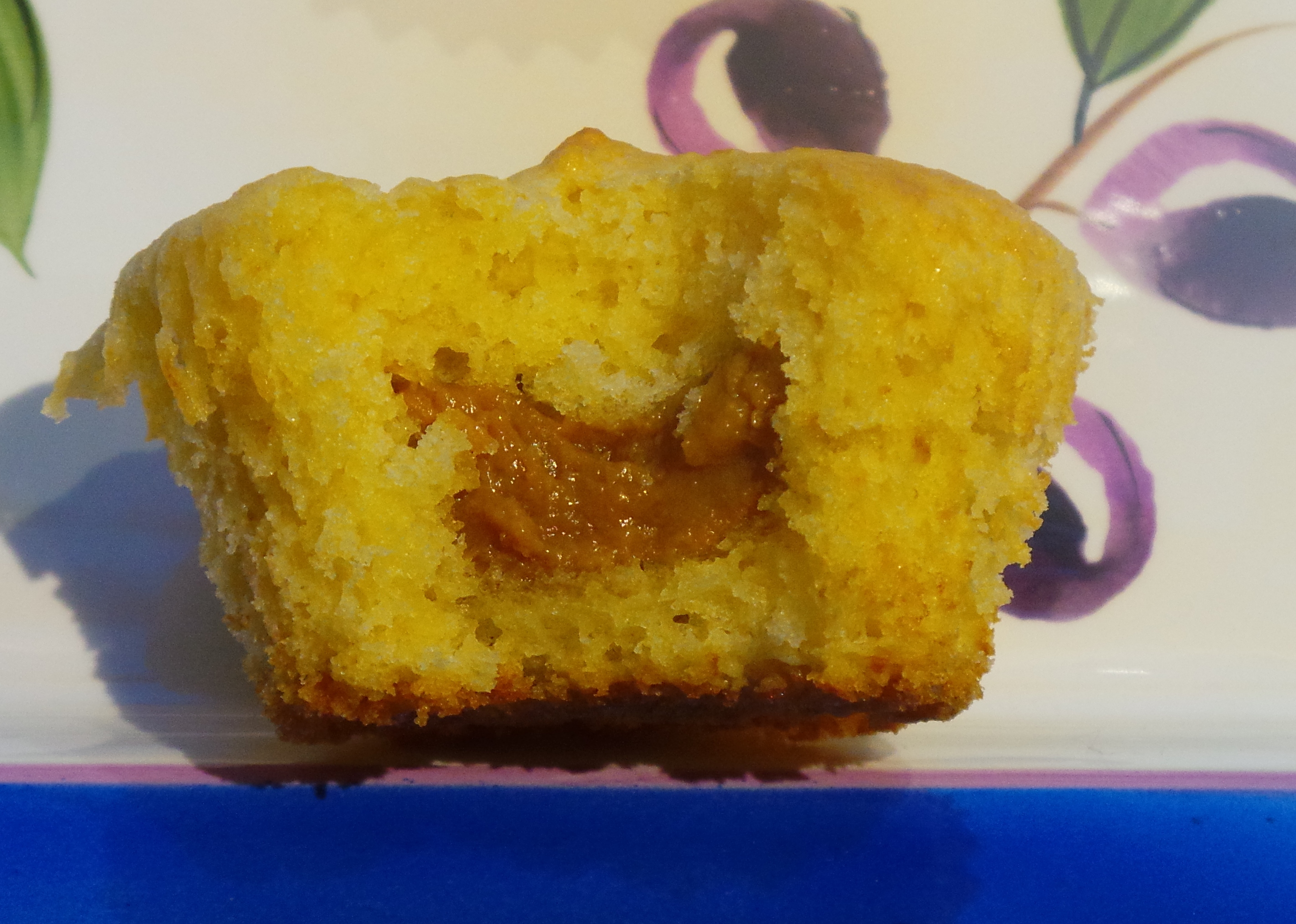
Treat them gently, and you too could have a platter that looks like this.

A veritable treasure trove.

A veritable treasure trove.

If you do happen to overmix them, it simply means your muffins won’t rise as much and will be slightly denser in texture.

This is not a tragedy.

This is a reason to try again and see if you can improve your results.

Shall we begin?

Preheat your oven to Moderately Hot.

Start by sifting your Self Raising flour and baking soda together into a large mixing bowl.

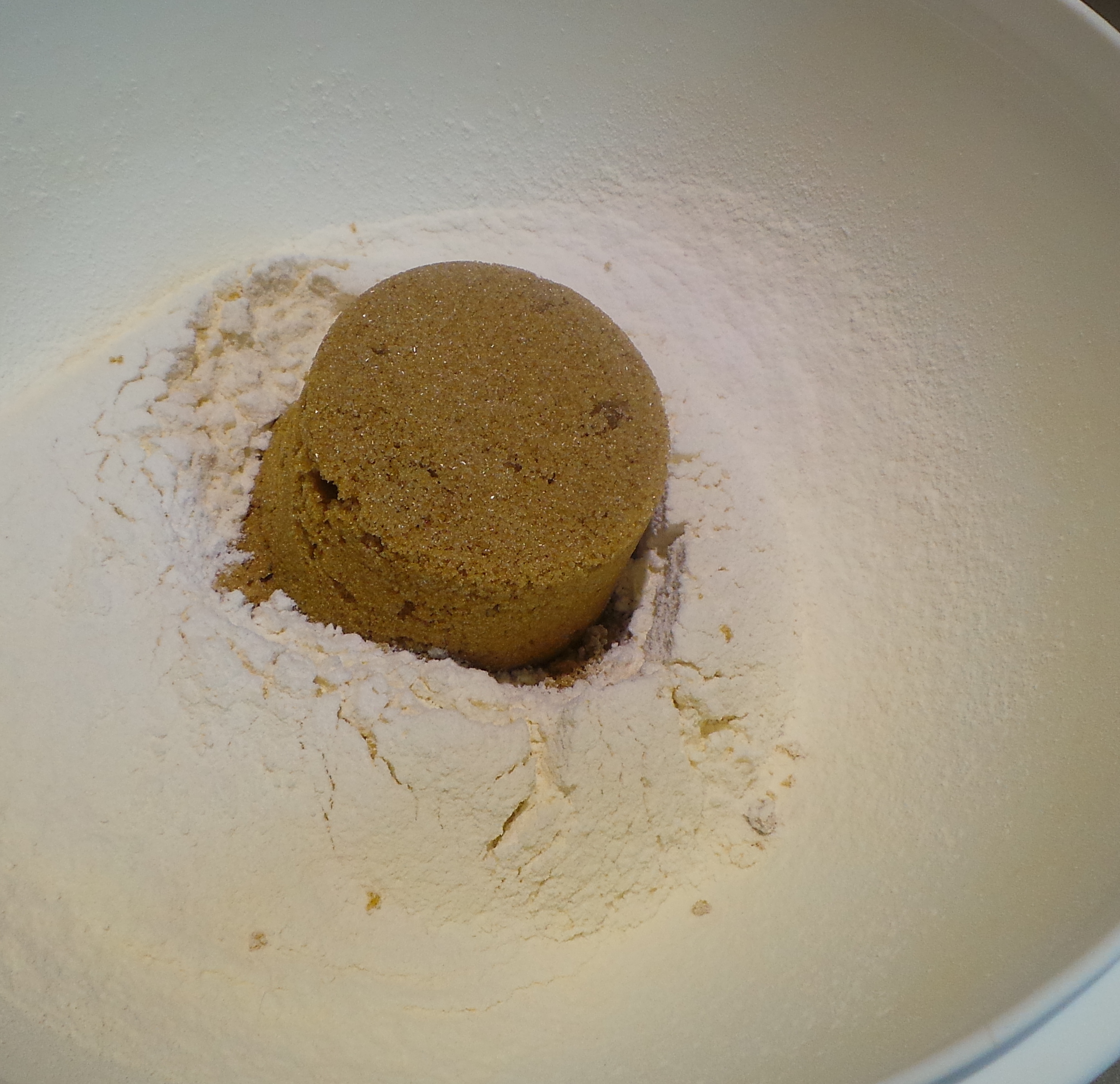
Add your brown sugar, but be careful to pack it into your measuring cup first! When you tip it into the mixing bowl it will look like those sand castles you used to make with your bucket at the beach.

This is a brown sugar sandcastle.

This is a brown sugar sandcastle.

Mash it up with your spatula or wooden spoon to get rid of lumps and stir into the flour.

How are you doing so far?

Believe it or not — you’re nearly done!

Melt your butter. This can be done in a small saucepan over a low heat on the stove, or in a microwave.

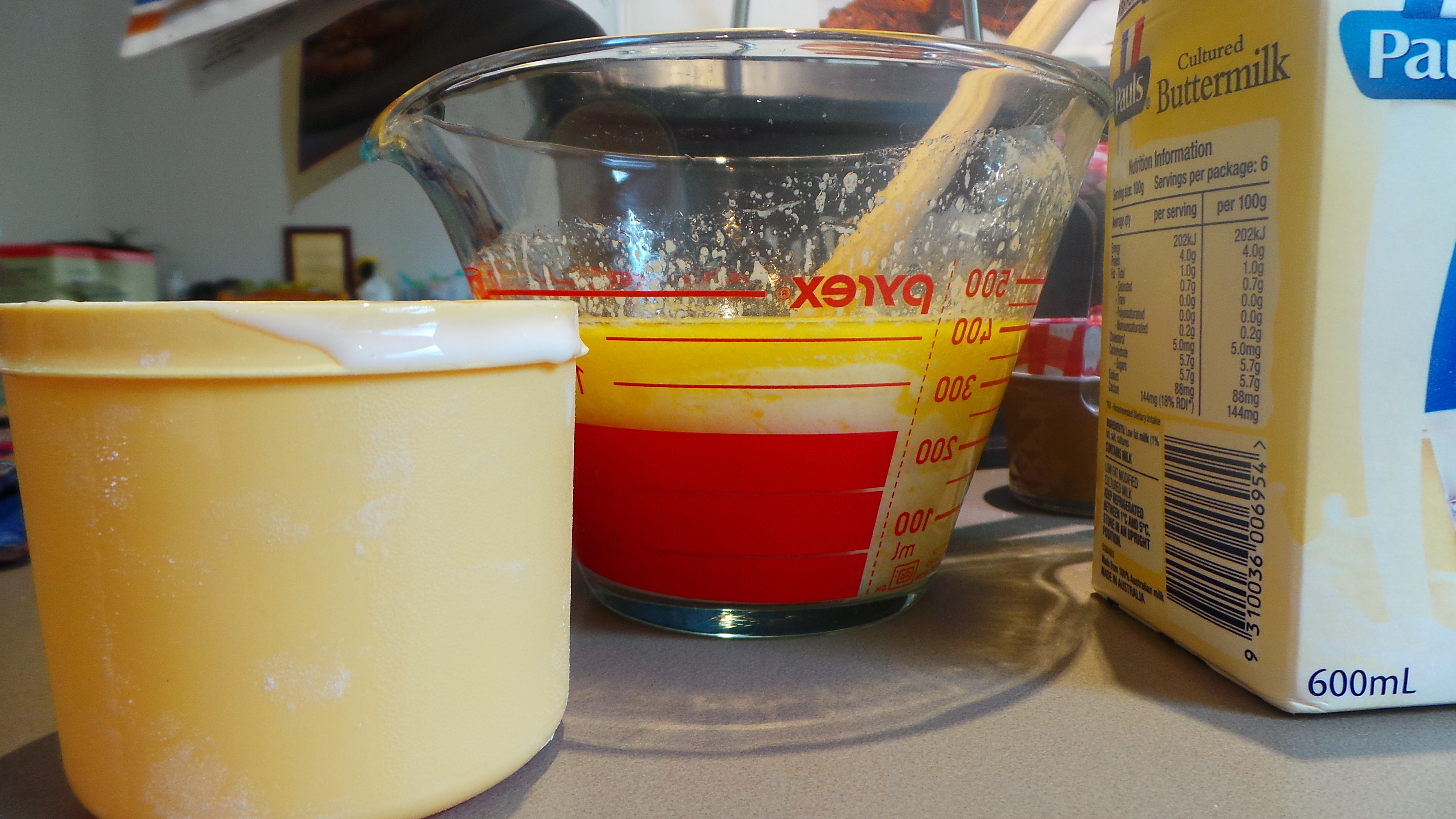
I use a pyrex jug for mine and zap it at 50% for a minute and then repeat until it’s liquid. Then I stir the buttermilk into the milk.
Mix your butter and buttermilk together.

Mix your butter and buttermilk together.

If you can’t find buttermilk anywhere, then a 50/50 mix of plain yoghurt and milk will also work; alternatively add a tablespoon of lemon juice or white vinegar to a cup of milk and wait 5 minutes.

Break your egg into your butter mixture and whisk well with a fork.

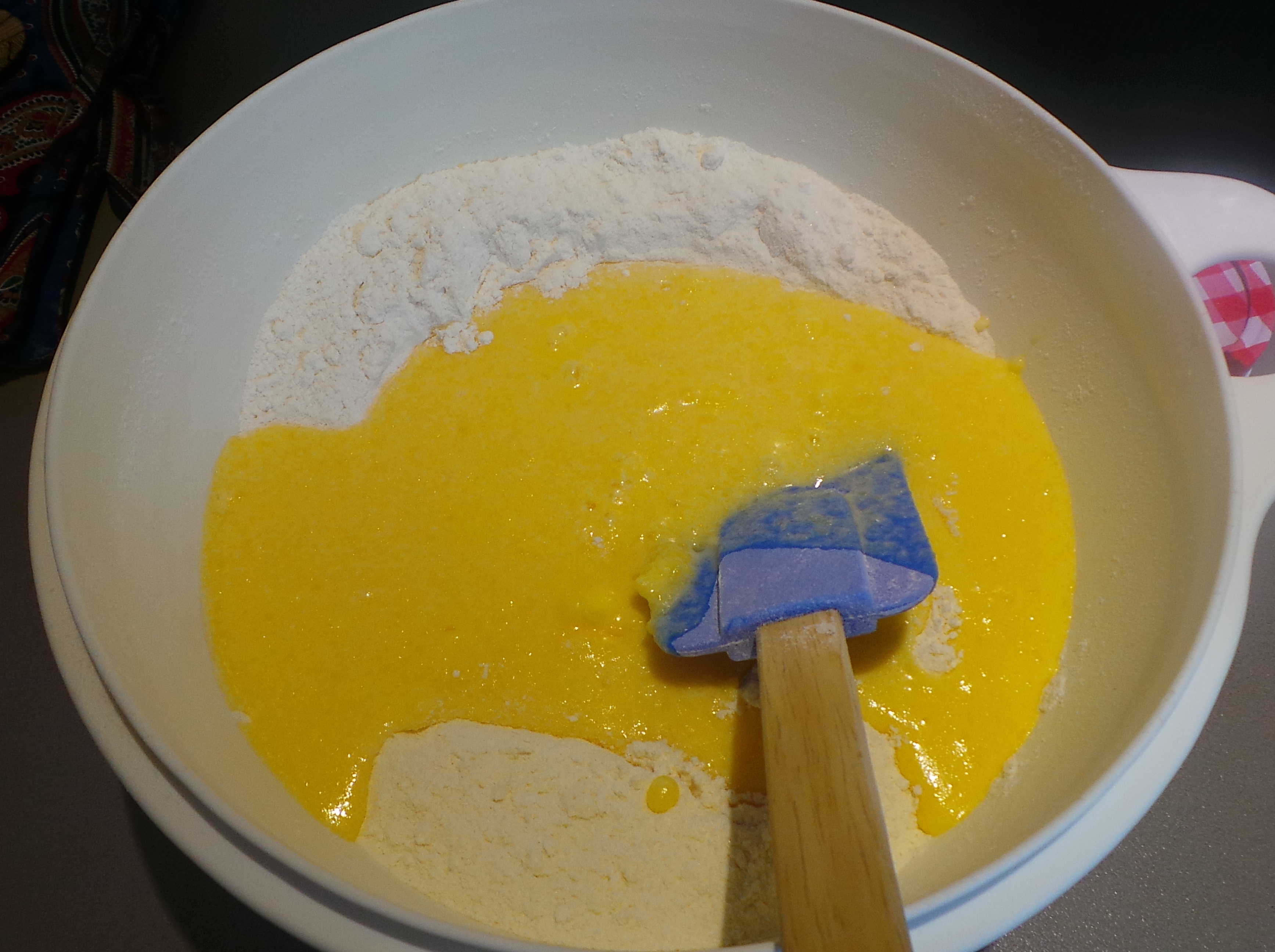
Then make the ever-necessary well in your flour and pour the liquid into it.

Add the wet to the dry

Add the wet to the dry

Then stir – quickly and gently. Try stirring around the outside and then slicing underneath. It’s hard to describe and I think I may need to post a video at some stage.

In the meantime…just don’t beat the life out of it.

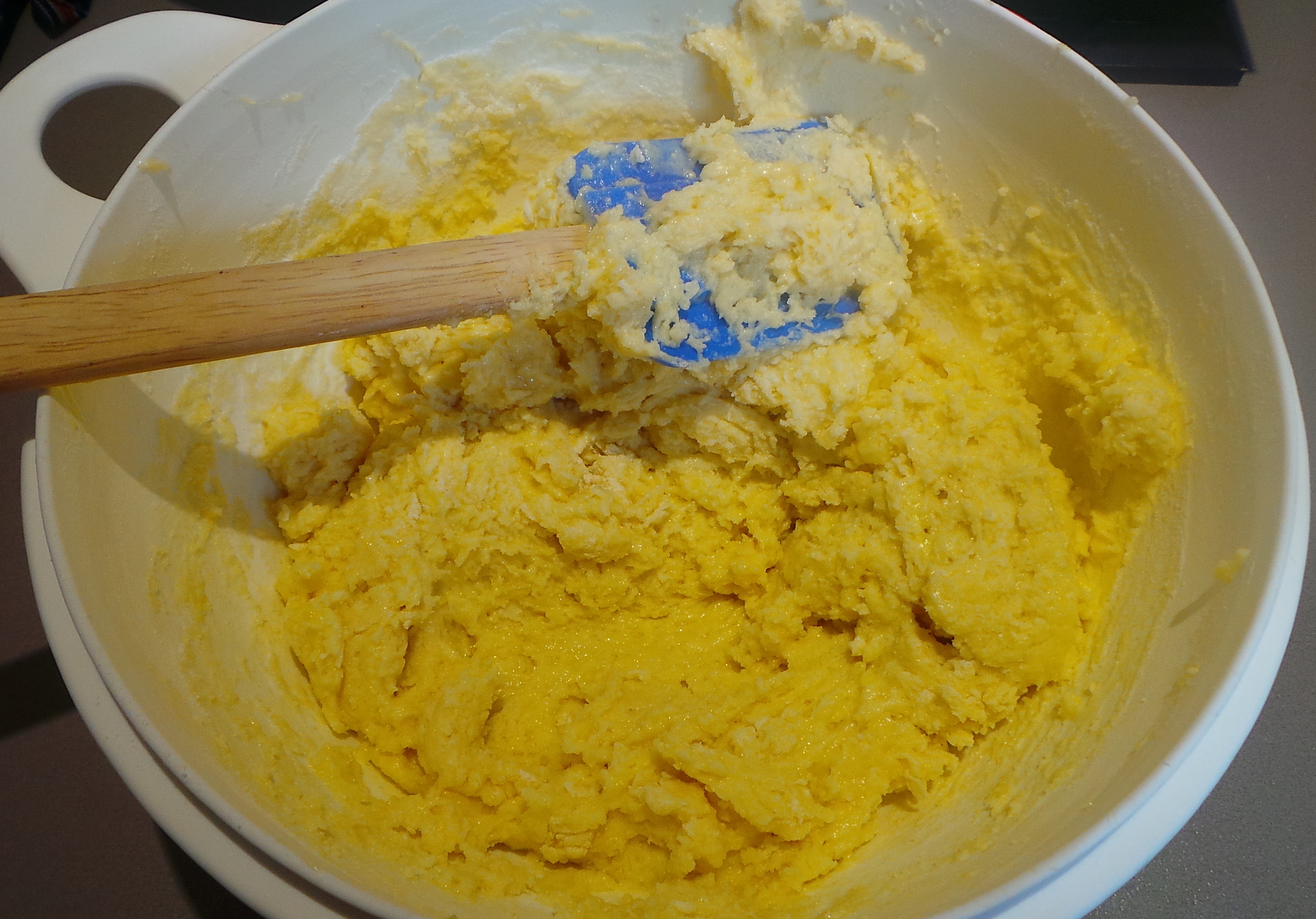
When all the ingredients are just combined. Stop. This is not a cake batter, it will not be smooth and liquid. It will look lumpy – like this.
Stop when it is just mixed together.

Stop when it is just mixed together.

Place some muffin cases into your muffin tray. You could just grease the cups, but the paper cases make eating your snacks a much cleaner experience, means they don’t stick together when stored and also make it easier to pack them for lunches.

If you don’t own a muffin tray (I’ve had mine for nearly 20 years, add it to your list.) then use a flat baking sheet or pizza tray and place double thickness muffin cases on top and close together. You could even do this in a cake tin, if you wished.

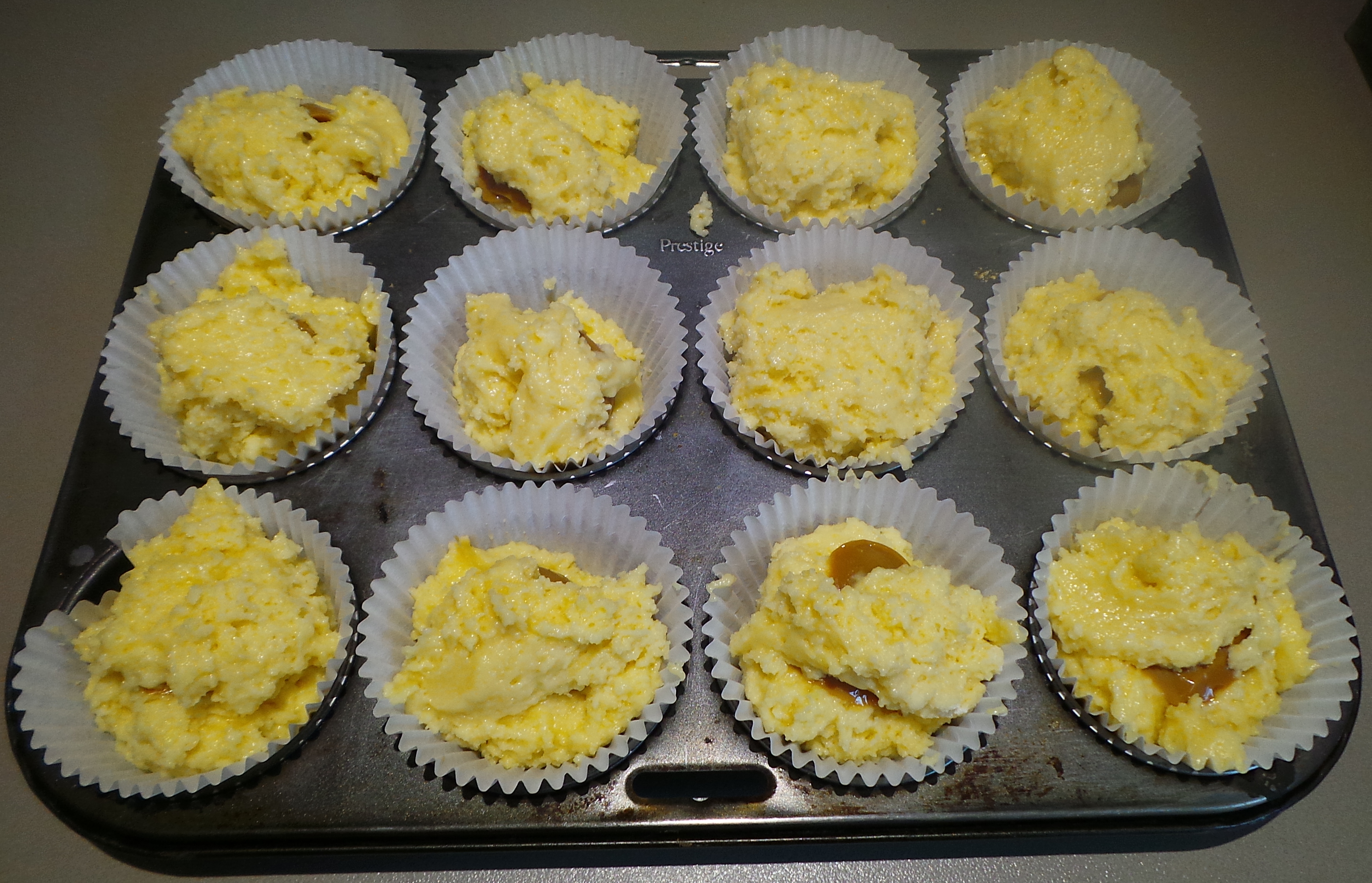
Dollop spoonfuls of the mix into the bottom of your muffin cups. Don’t spread or smooth the batter, just leave it as it falls.

Fill the bottom of your muffin cups.

Fill the bottom of your muffin cups.

Now for the fun bit. Deploy your fillings. I used a teaspoonful of dulce de leche per muffin in this example. It’s quite sweet and I thought that would be sufficient. You may use more, of course!

I would use a tablespoon of Lemon Curd for this purpose, but it’s still up to you (and how much you have to hand!)

It helps to fill a coffee cup with boiling water and dip your metal spoon into it before dipping it into your cold filling. The heat will cut through the cold caramel and help it to slip nicely off into the cups. There is no need to dry your spoon between dunkings.

Use a cup of hot water to help spoon out your filling.

Use a cup of hot water to help spoon out your filling.

Now cover your caramel with the rest of the muffin mix.

Hide the treasure.

Hide the treasure.

Pop into your hot oven to bake for 20 mins, while you wash up ;-).

If your oven is not fan-forced, you may wish to rotate the tray at the half-way point to ensure even browning.

When done, test by inserting a toothpick or skewer into the center of the thickest muffin. If it comes out clean of raw batter, it’s cooked. Just remember you may hit caramel or lemon curd too!

Allow to cool in the tray for 10-20 mins and then move to a cake rack to cool completely. Set up a guard if you wish to keep them for lunches during the week to come…

Allow to cool completely before storing in an air-tight container.

Allow to cool completely before storing in an air-tight container.

Chocolate-Hazelnut Muffins: If you tire of using your Dulce de Leche or Lemon Butter in these, and the budget permits, then try sifting a ¼cup of cocoa in with your flour and using a cup of Nutella to fill with.

You’re welcome.


Hidden Treasure Muffins

  • Servings: 12
  • Print

Ingredients:

2½ cups self raising flour

½ tsp bicarbonate of soda (Baking Soda)

½ cup brown sugar, firmly packed

125g butter, melted

2 eggs, lightly beaten

1 cup (250 ml) buttermilk

2/3 cup Dulce de Leche or Lemon Curd

Method:

Grease a 12 hole muffin pan, or line with paper cases. (I find this makes transporting them a lot easier.)

Heat your oven to Moderately Hot – 200°C or 400°F.

Sift flour and bicarb into a large bowl.

Add brown sugar and break up any lumps as you stir them together.

In a pyrex measuring jug (for ease) heat your butter in a microwave for 1 minute at 50% power. Repeat until melted. (This step can be done in a small saucepan over low heat if a microwave is not available.)

Add butter milk to jug and whisk together, then add eggs. Mix liquid thoroughly.

Make a well in your flour and pour in all the liquid at once.

Fold together until just mixed. DO NOT BEAT!

Cover the bottom of your muffin cups with a tablespoon or so of the batter.

Place a spoonful or so (it is up to you how generous you wish to be…) of your caramel or lemon curd on to this and then top with the rest of the batter.

Bake on the top shelf of your oven for 20 mins, rotating the tray halfway through.

Test for doneness by inserting a toothpick or skewer through the thickest part of a muffin. If it comes out clean of batter, it’s done.

Leave to cool in the muffin tray for 20 mins or so, before removing to a cake rack to cool completely.

Store in an airtight container.

Enjoy!


Slow cooker beef with Asian flavours (from scratch)

Asian-flavoured slow-cooked beef

Okay, so some of you may have clicked over from here. You may find some repetition in this post, so bear with me. Please?

This little concoction is my answer to the “I don’t know what to cook, but I’ll probably be hungry later —and tired—, so this will do” situation.

I’m sure you know what I mean.

Asian-flavoured slow-cooked beef

Asian-flavoured slow-cooked beef

This is something I can get into the slow cooker in minutes and serve a few hours later – filling my home with gorgeous smells in the intervening period.

I own several slow cookers but the one I use the most has got to be my smallest one. It’s a 1.5 litre or 1 quart sized appliance and it’s perfect for meals for two. All the photos in this post have been taken with this device.

Feel free to double or triple what I do here and then cook it in a larger slow-cooker. It will take longer than the few hours a small one would use to cook the smaller portion, but not much longer.

Start with half a kilo or a pound of chuck steak and cut into large cubes.

Cut into large cubes.

Cut into large cubes.

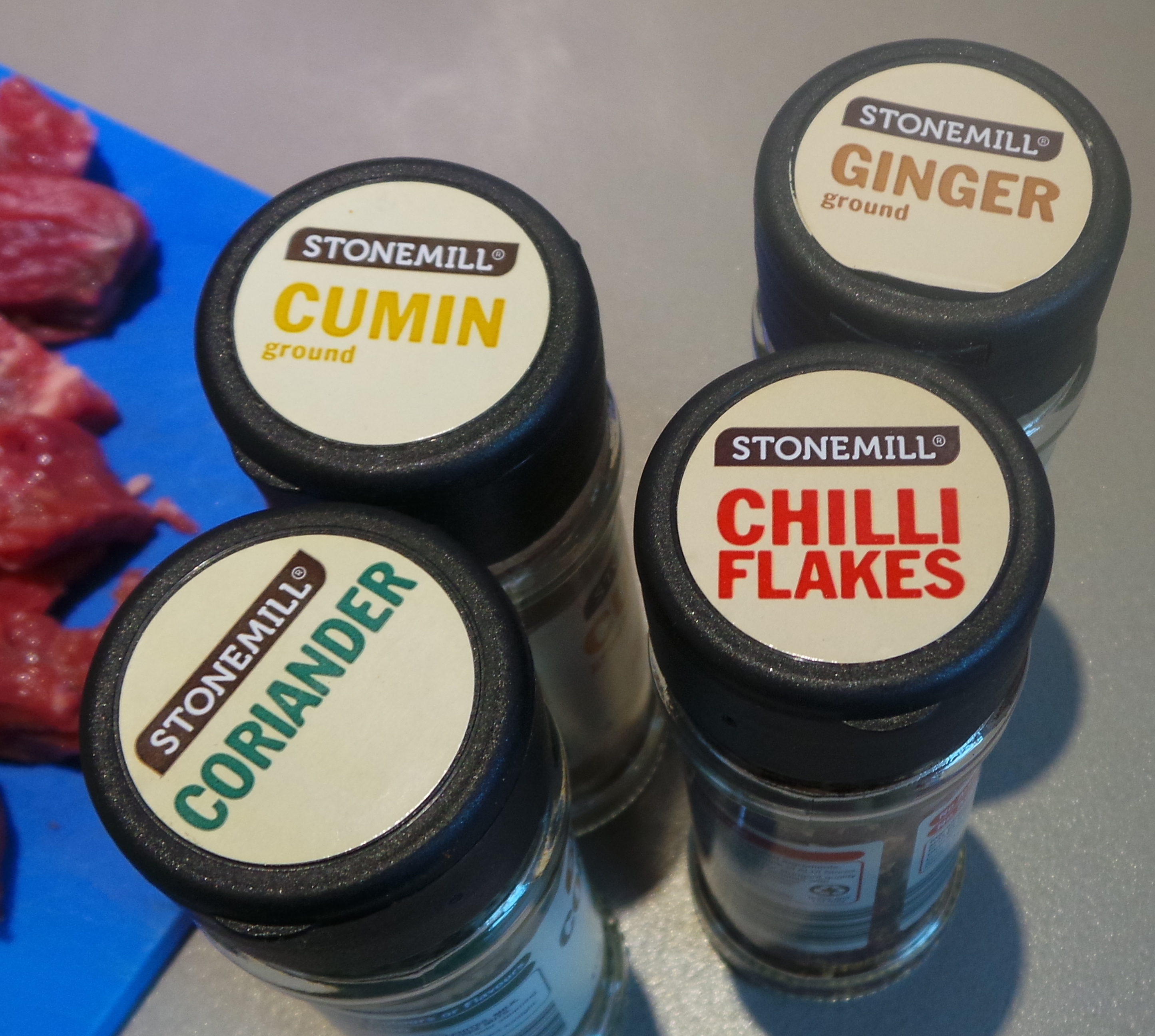
Add your spices to the meat on the cutting board. You can measure them carefully if you wish, I just tend to give each a good shake until I think the meat looks covered enough. I’ve had readers *demand* I give an actual measurement though, so start with a teaspoon of each and then decide if future versions need more or less. It’s completely up to you.

I used these spices:

This is a nice blend of flavours

This is a nice blend of flavours

I find ground cumin, ground coriander and ground ginger combine really well as an accompaniment to beef. It’s a combination that you’ll find often on these pages, but that doesn’t mean you have to use them. If you don’t like ginger, leave it out, it’s your meal after all.

On the other hand, if you are new to this cooking lark, give it a shot and see how you go. You never know, it may win you over.

I add a smattering of chilli flakes just to add a little heat without taking over the dish. I find it easier to control how much I dispense by shaking when I use flakes, chilli powder can be disastrous …

Spice your meat

Spice your meat

Now, I prepare some vegetables for the pot. It’s a very simple, very traditional combination of an onion, a carrot and a little celery.

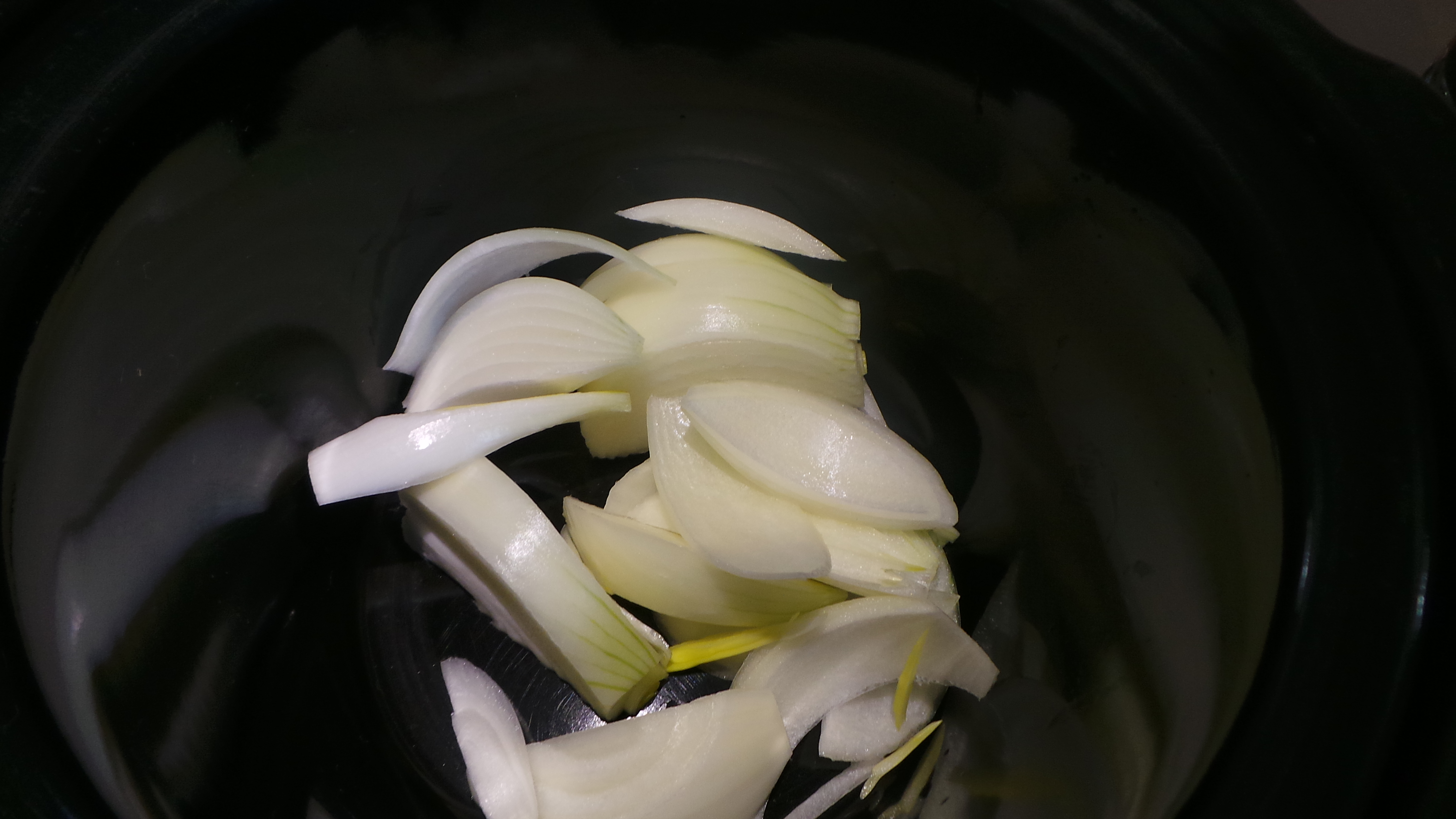
Cut your onion into crescents.

Little crescent moons of onions

Little crescent moons of onions

Add to the base of the slow cooker.

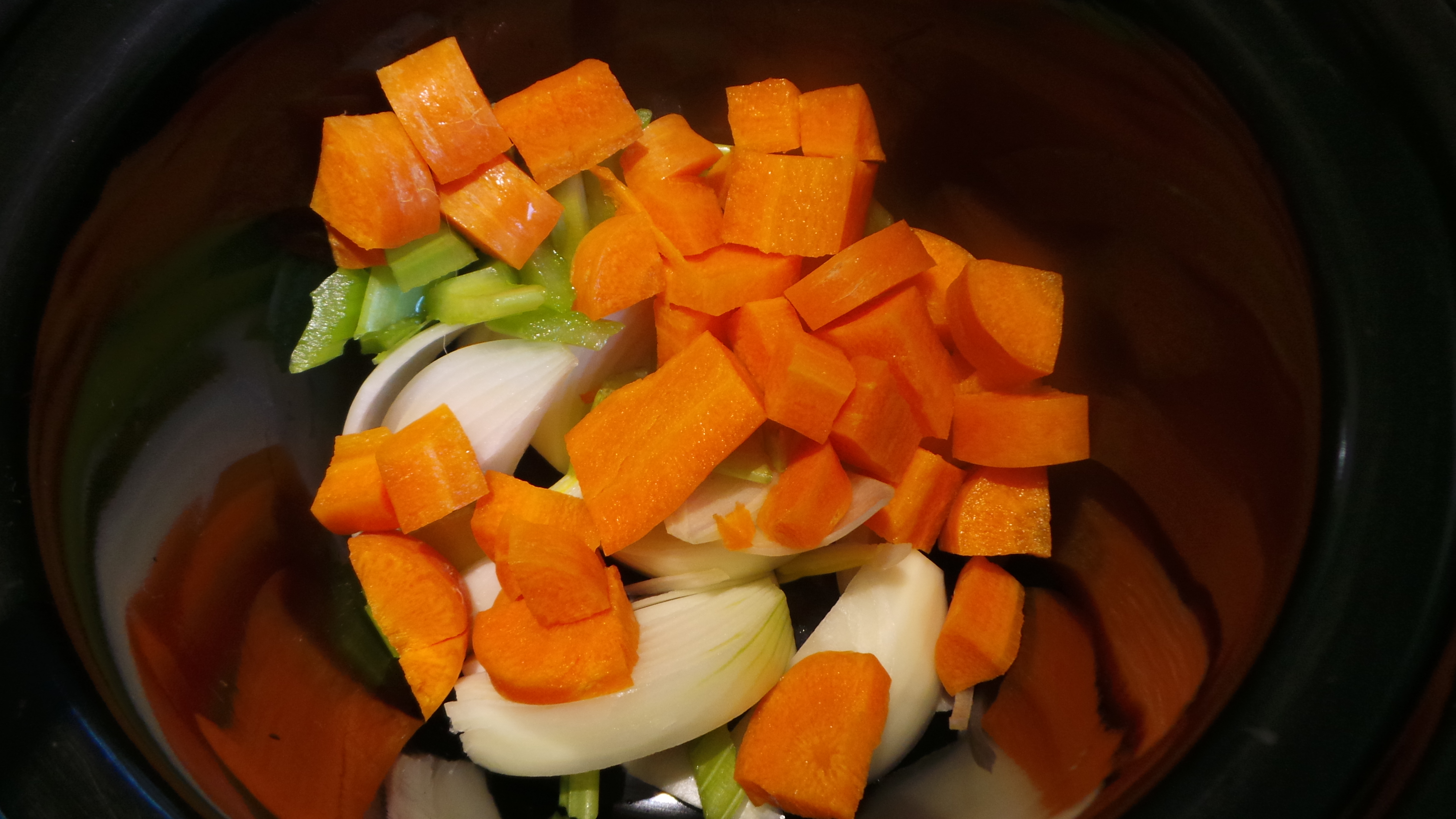
Dice your carrots and celery and add them as well.

Add carrots and celery.

Add carrots and celery.

Again, you can use whatever combination you like. However, I find that these are three that I always have to hand and they form a very good base for most main meal dishes. It’s a mix that is often referred to as the ‘Holy Trinity’ of cooking, so let’s just go with the flow…

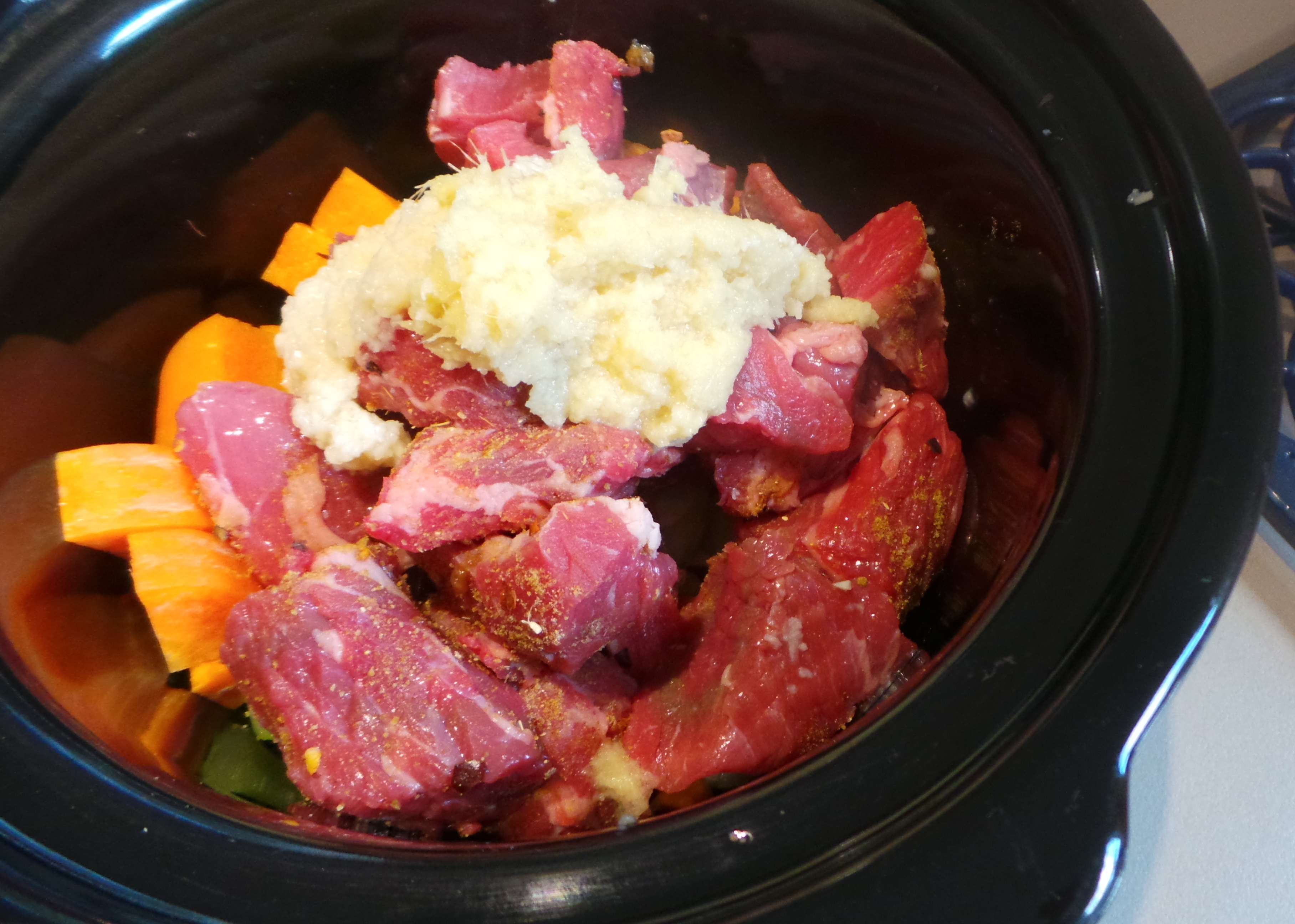
Now place your spiced meat into the pot, on top of the vegetables. Don’t stir yet!

I always keep these guys in my refrigerator, add a good teaspoonful of each to the pot.

Refrigerator staples.

Refrigerator staples.

Up the flavour with some fresh ginger and garlic.

Up the flavour with some fresh ginger and garlic.

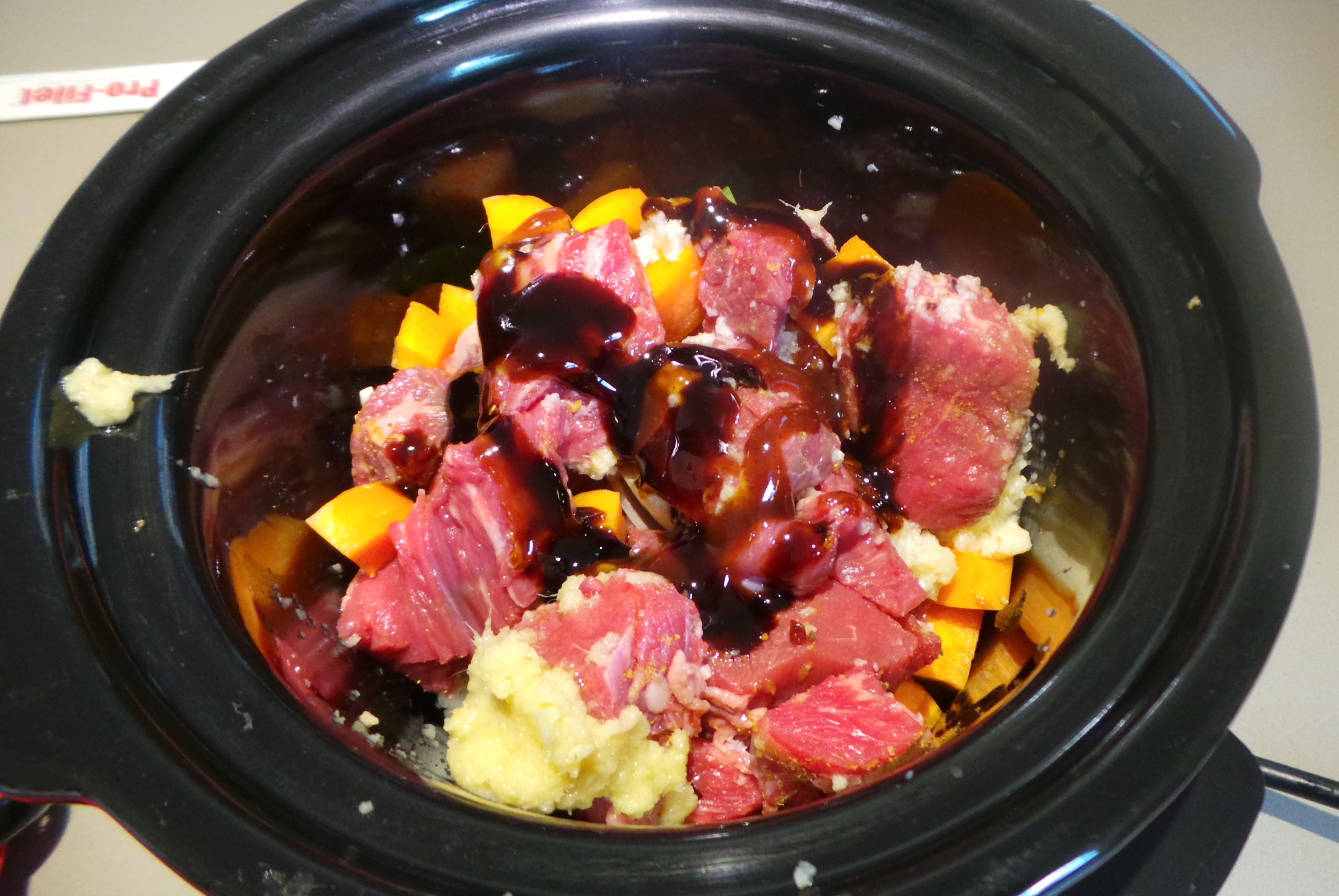
Now add a good glug of the sauces you’d like to use.  On this occasion, I had these in my refrigerator door: Soy & Honey sauce, Hoi Sin and some sesame oil.

*A ‘glug’ may be translated as a tablespoon or so. You’re just adding flavours, not creating a cooking medium.

Choose your sauces

Choose your sauces

Add some glugs to the pot

Add a few glugs of whatever sauces you wish to the pot.

You may wish to use plain soy sauce, black bean, teriyaki, sweet chilli, oyster sauce, kecap manis…the list goes on. You don’t have to use a mix, you may use just one if you prefer (or if that is all you have).

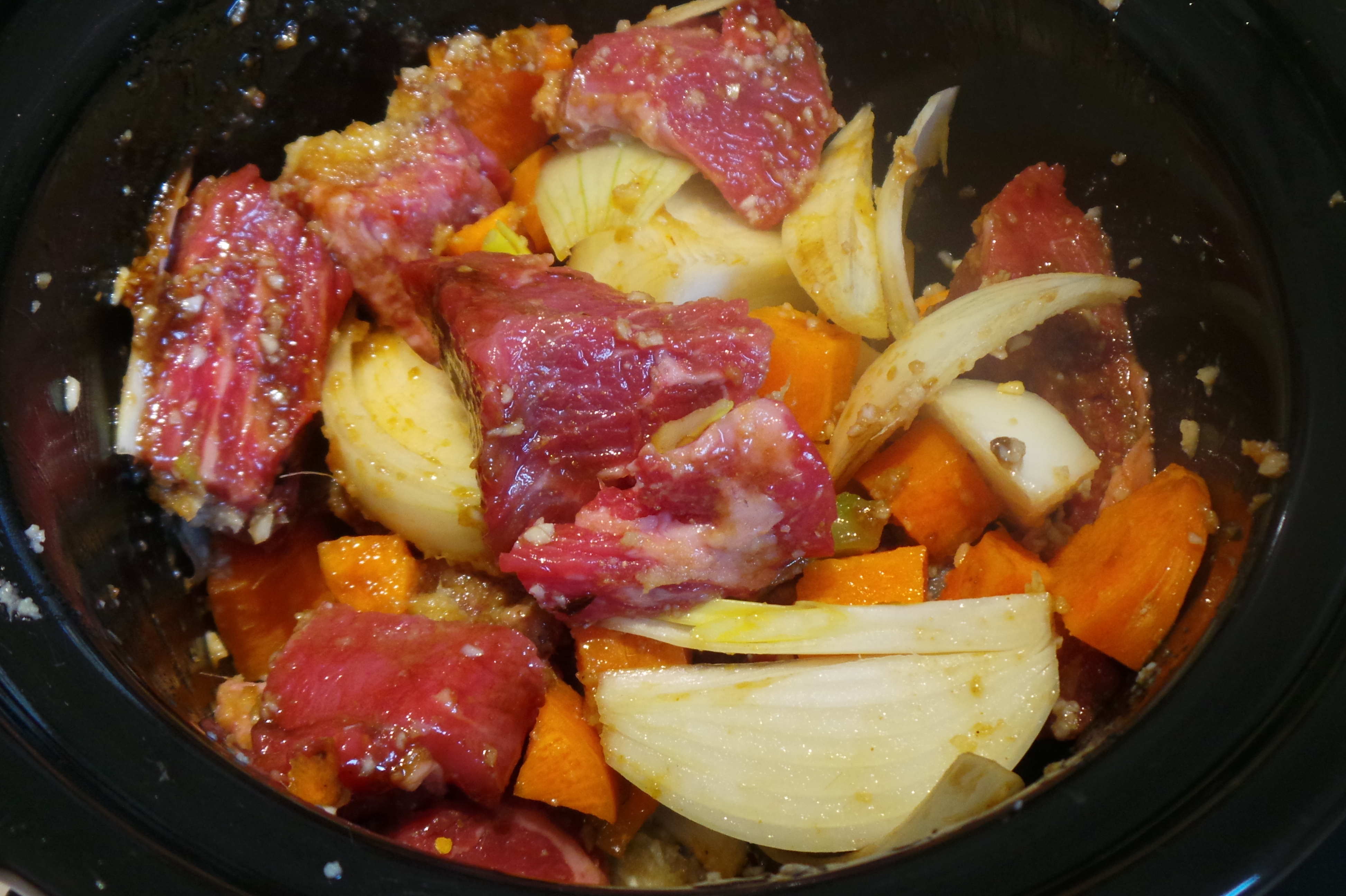
Now stir.

Stir it all together.

Stir it all together.

As you can see from the picture above, the meat and other ingredients are only lightly coated by the sauces and spices.

Using a slow cooker is a very ‘wet’ method of cooking. As the ingredients release their own juices, they are captured via condensation on the lid and then drip down into the pot to further aid cooking. Think of it as your very own little Greenhouse Effect…

Place your pot on either low or high, depending on how quickly you wish to eat. This took my small slow cooker only 2.5 hours on low. If you are making a larger amount of this in a larger slow cooker, it will take longer – possibly 4 -6 hours on low.

Several hours later...

Several hours later…

As you can see, there is quite a bit of liquid in the bowl. This can be left as it is, or thickened with some cornflour. Instructions on how to do this can be found here.

I felt that I’d like a few more vegetables in this, so I stirred through a handful each of frozen peas and frozen corn and popped the lid back on the pot for 30 minutes while I steamed some jasmine rice.

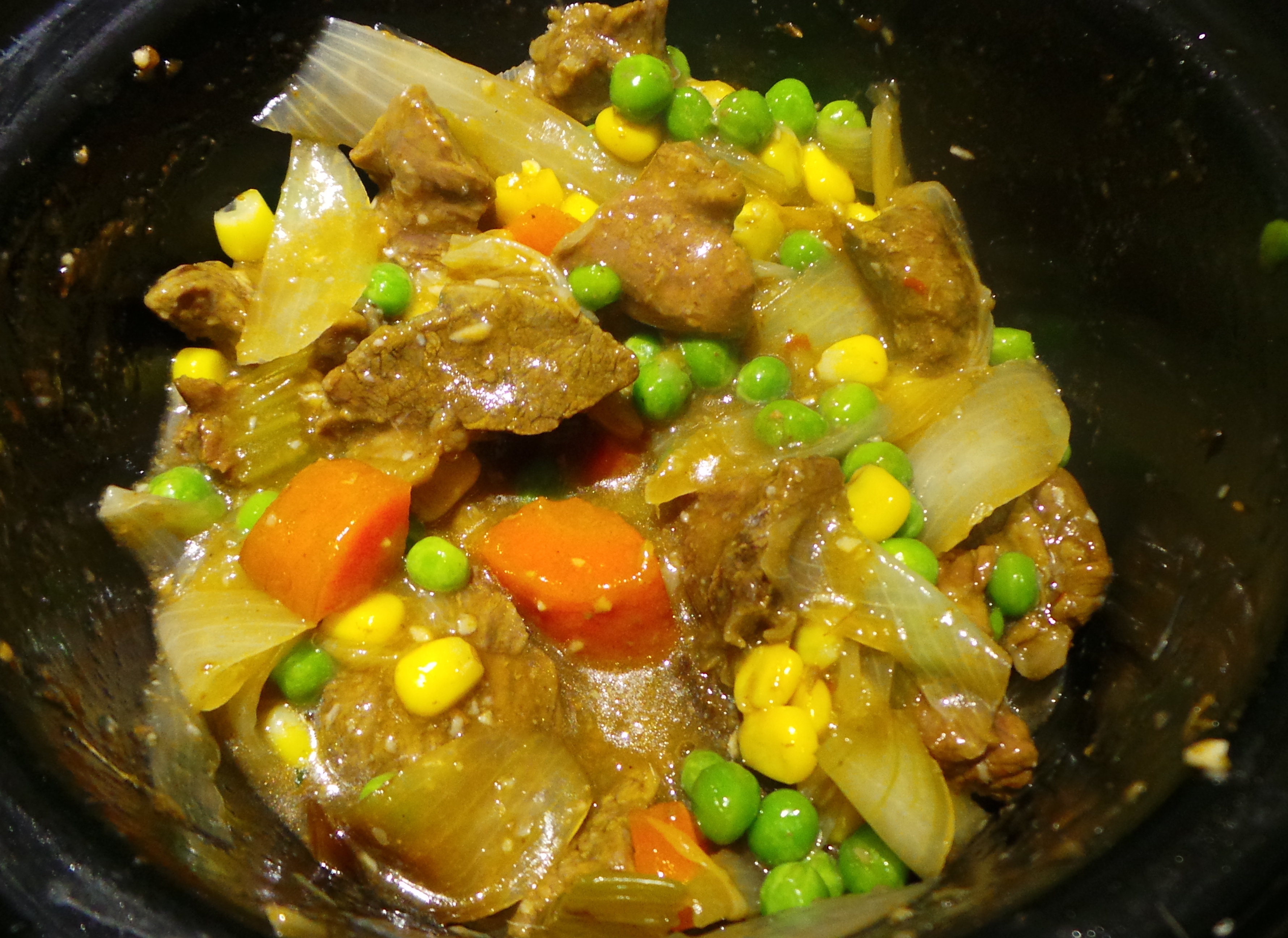
And this is the final result:

The final result

The final dish served with rice.

If you wish for a more tender version (although this is fab!) follow the instructions here and leave it overnight in the refrigerator before cooking.

Enjoy!

Freeze ahead slow-cooker beef with asian flavors

Asian-flavoured slow-cooked beef

Asian-flavoured slow-cooked beef

You know, sometimes you just can’t be bothered cooking.

Sometimes, you don’t have much to cook with

This is something that can be prepared in minutes and then left to its own devices for several hours, OR prepped in a few minutes and frozen for one of those times when you just can’t be bothered, etc.

It tastes amazing.

It smells divine.

It also costs next to nothing.

All of which is fabulous.

I like to buy chuck steak, toss it with a few spices, stir in some Asian sauces and then walk away and leave it alone.

This is how it’s done:

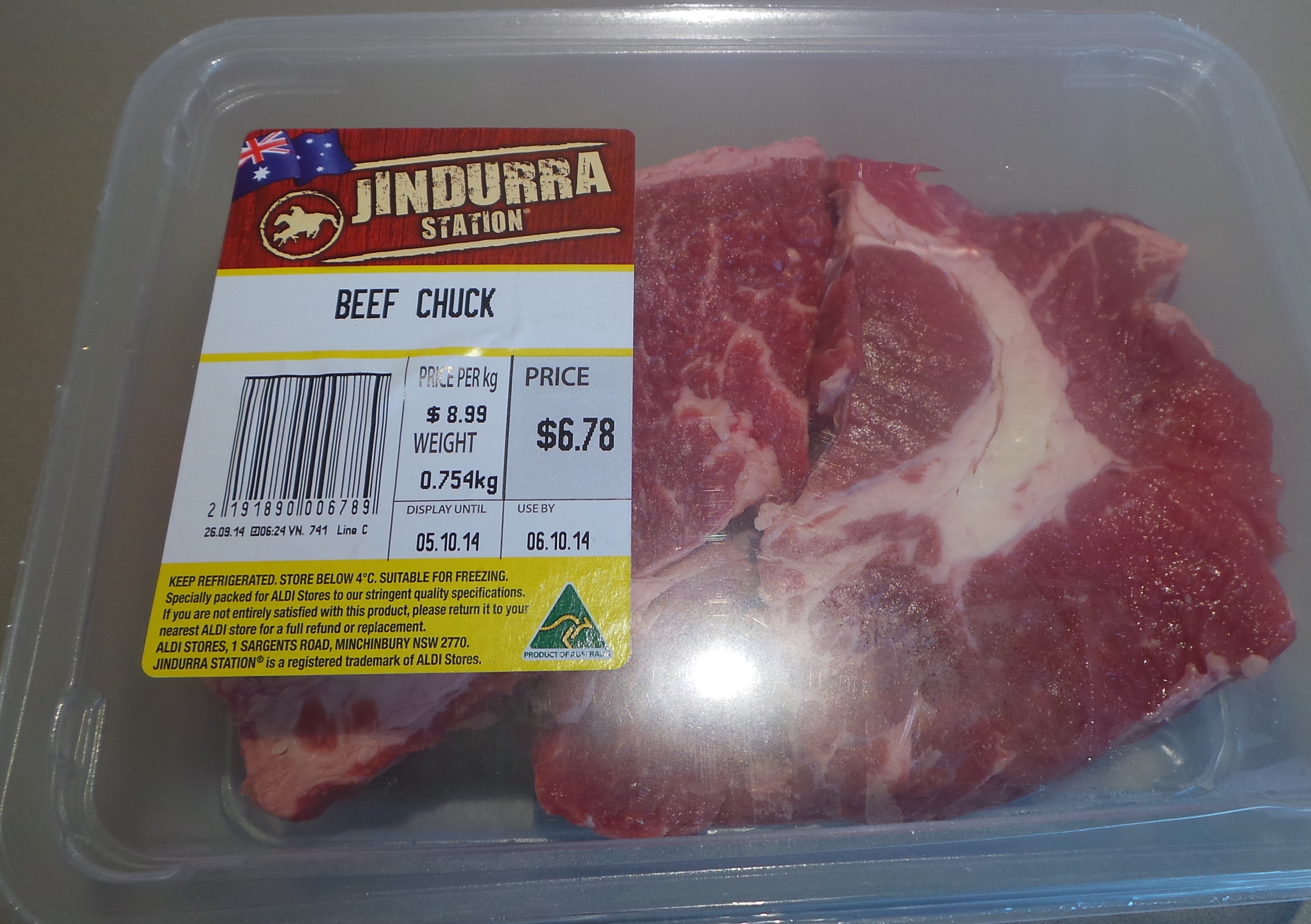
Firstly, get yourself some nice pieces of chuck steak. You don’t need much, really truly. For today’s efforts I used around 750g or 1½ pounds. That will make 2 meals for us or feed four – whichever math you prefer.

I’m going to cook half now and freeze the rest for a future I-don’t-wanna-cook-day. The rest of this post will be about the preparation for freezing.

Chuck steak

Chuck steak

I like to buy whole pieces and cube them myself, it saves a little money over buying pre-diced, but also lets me control which bits get kept and which don’t. For example, while I want the marbling in the meat on the left, I really don’t want to keep the thick streak of fat in the piece on the right… so I discard it.

The rest I cut into large cubes (about an inch a side) and divide into two portions.

Cut into large cubes.

Cut into large cubes.

Please use a sharp knife for this, chuck is not a tender cut and it can be frustrating to slice something that just won’t behave nicely on a bluntish blade.

Then I have a little fun.

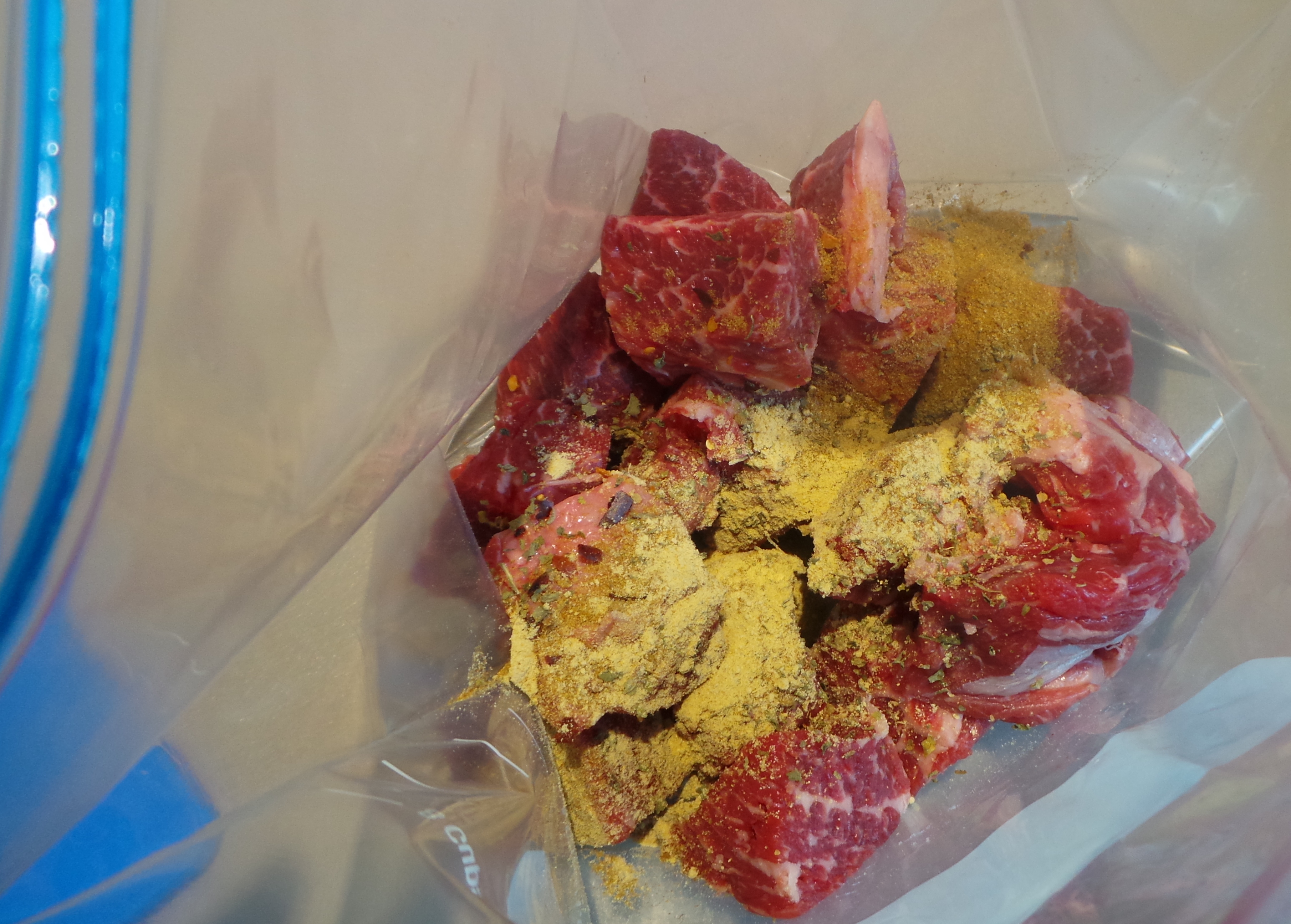
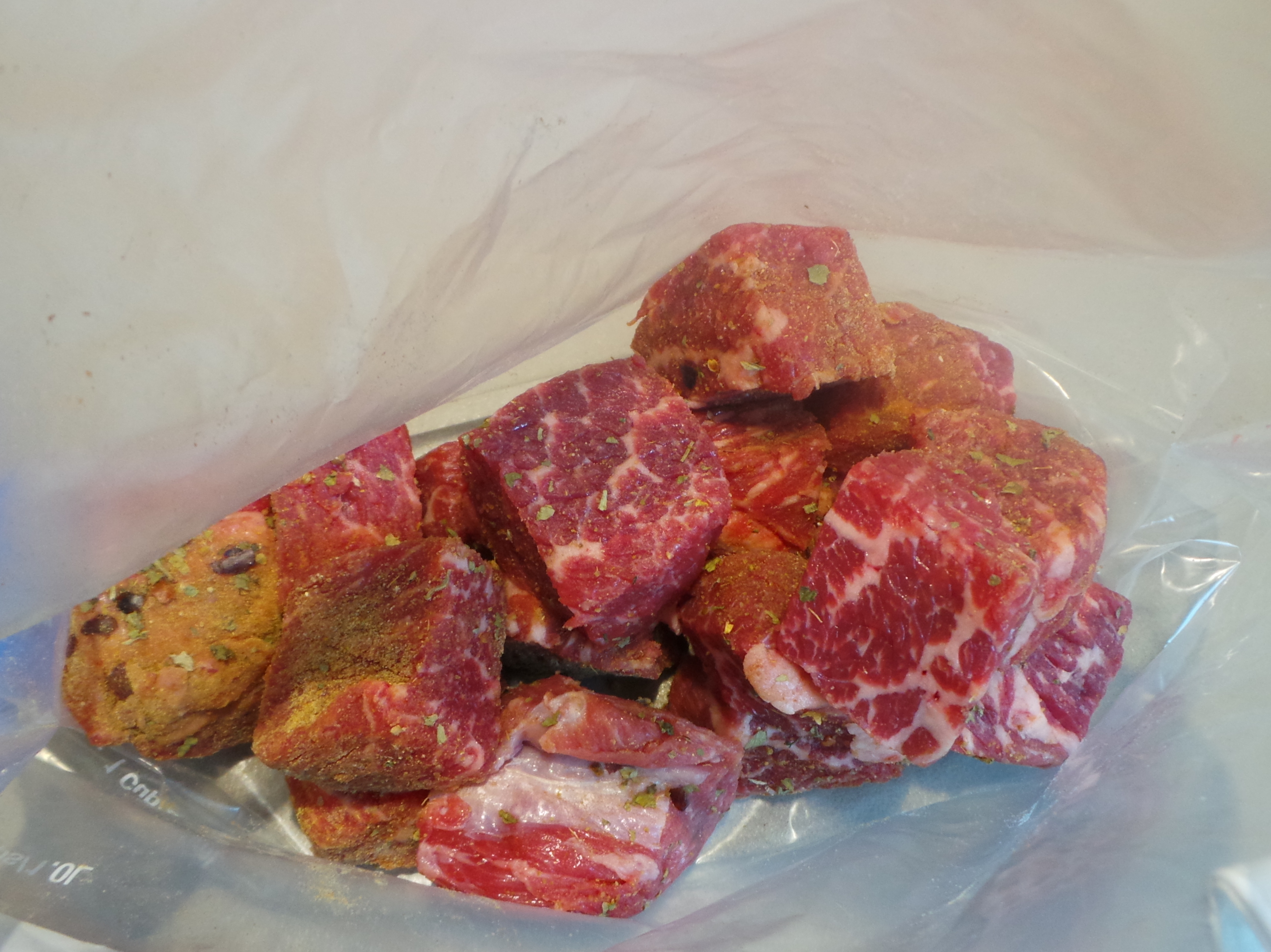
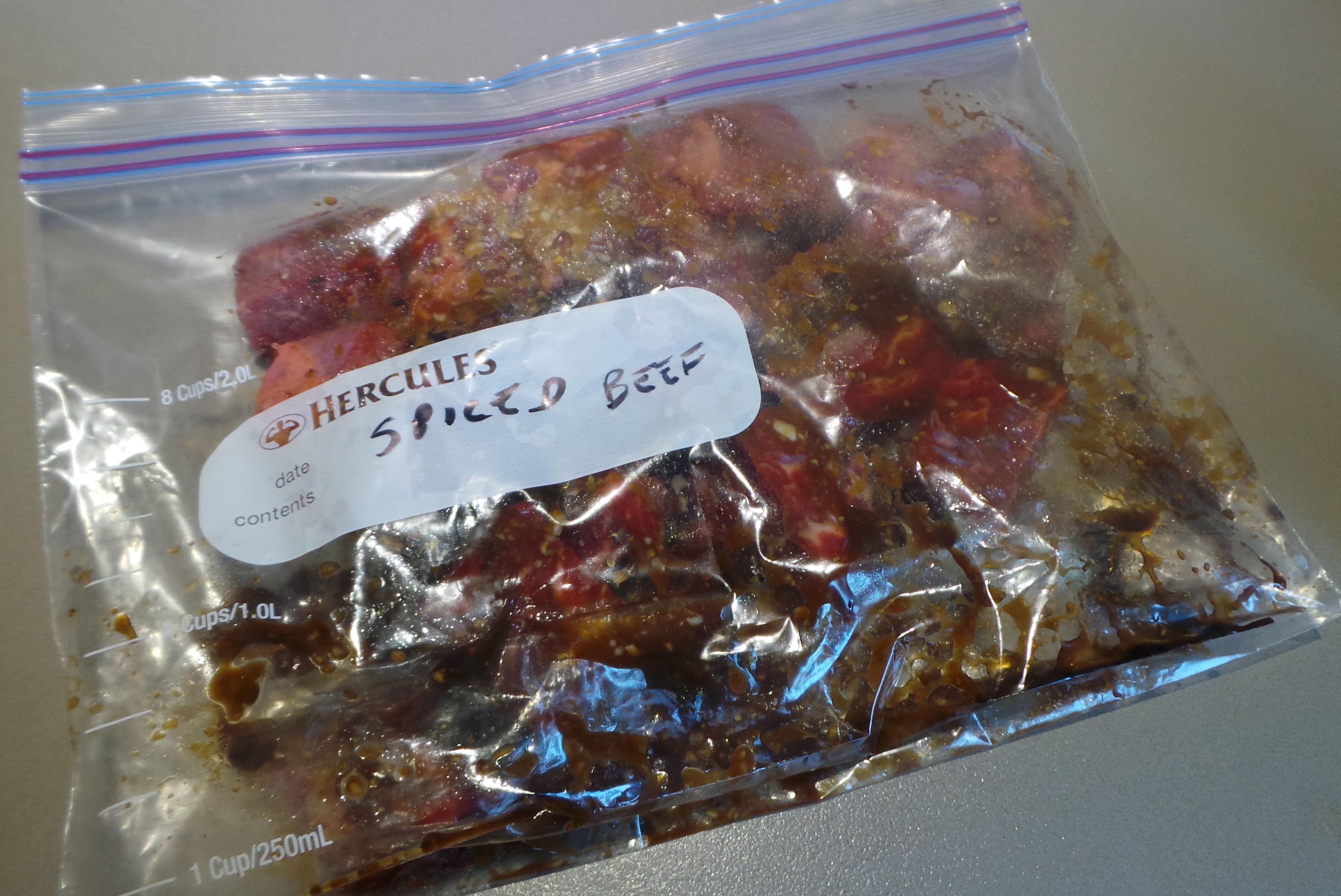
Half of the meat I pack away into a zip-lock bag for freezing and, as I do this I add a good sprinkling of whatever spices I have to hand and that I think might go well together. In this case I used ground ginger, ground coriander, ground cumin and some chilli flakes.


Add a good shake of whatever you have.

Add a good shake of whatever you have.

Seal up the bag and massage the spices through. It’s better to do it this way than to use an implement in the bag as you may pierce it and accidentally lay a path for freezer burn. That would be bad.

You can, of course, do this and all the following steps in a bowl and then bag it, but then you’d have to wash the bowl…up to you really!

Give the bag a good massage to mix the spices through the meat.

Give the bag a good massage to mix the spices through the meat.

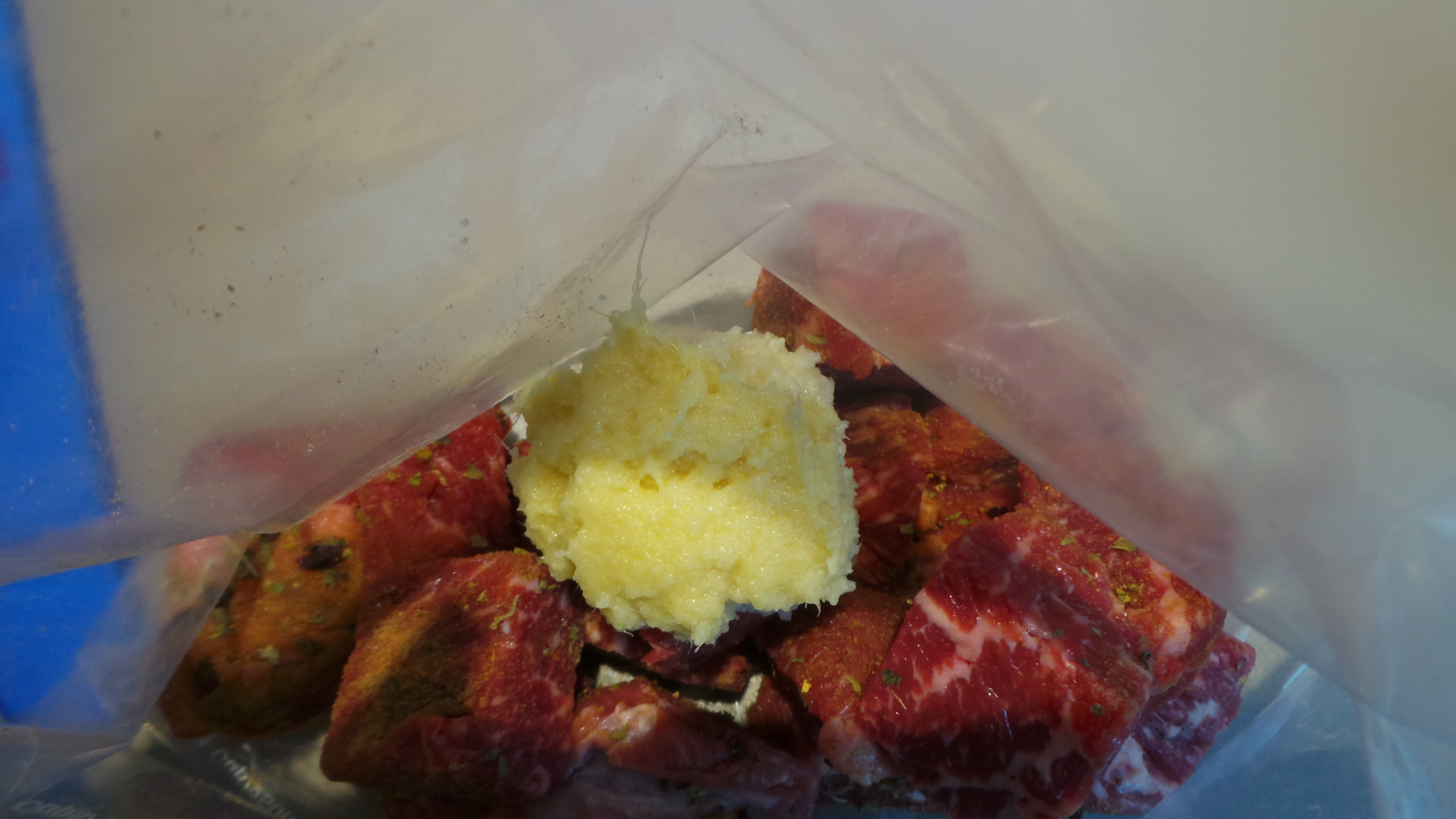
I like to then add a good teaspoon of grated ginger and crushed garlic – out of a jar.  I always have a small jar of each in my refrigerator, it saves time and it saves frustration on those days when my fingers simply won’t behave.

Add a good teaspoon each of grated ginger and crushed garlic.

Add a good teaspoon each of grated ginger and crushed garlic.

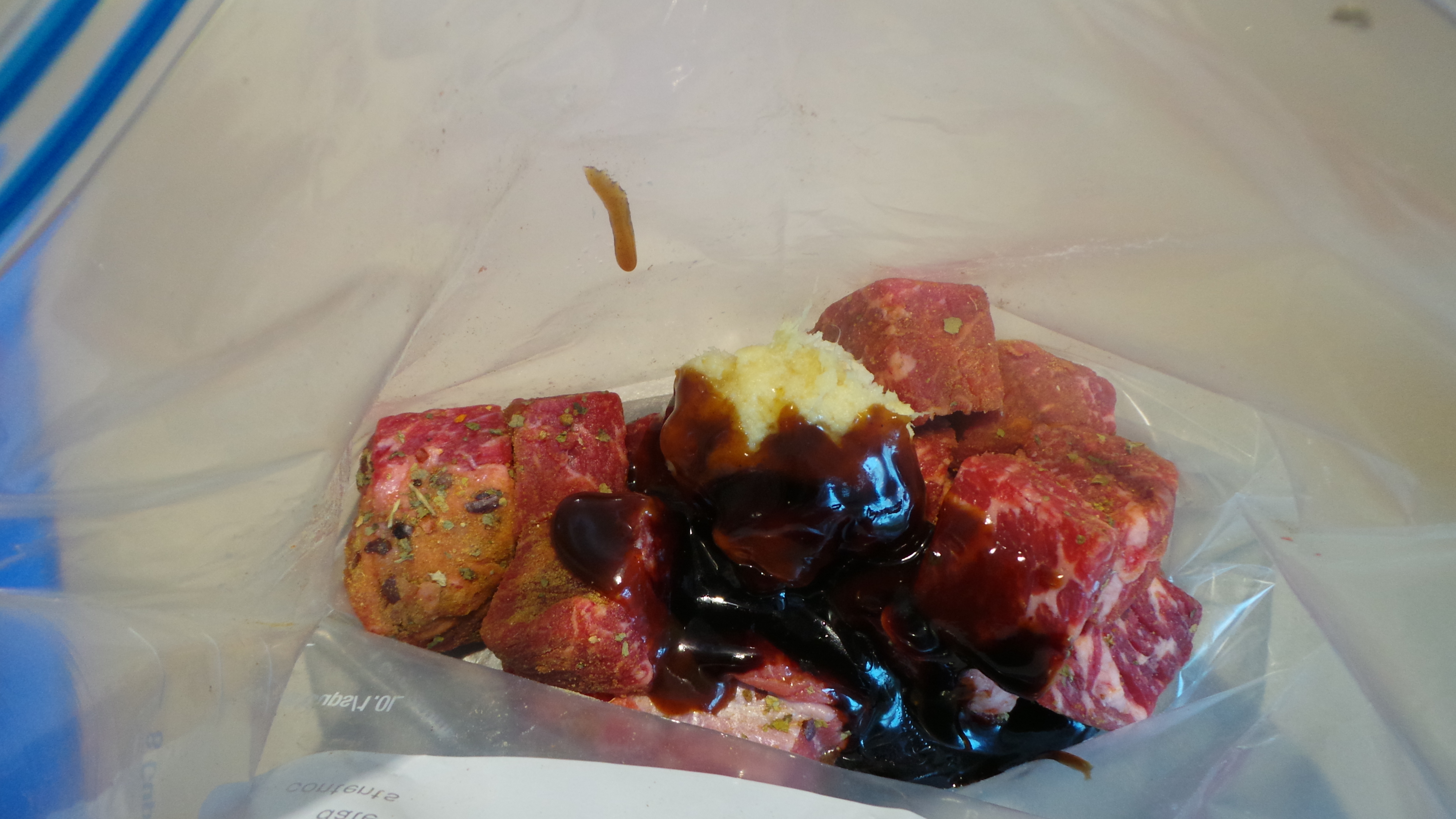
Now, grab whatever sauce tickles your fancy. You can use one sauce, or you can use several, It’s completely up to you. I used Honey Soy sauce, Hoi Sin and a glug of toasted Sesame oil; simply put a bit into the bag and repeat the massaging.

Add some minced ginger, crushed garlic and a few glugs of sauces.

Add a few glugs of sauce.

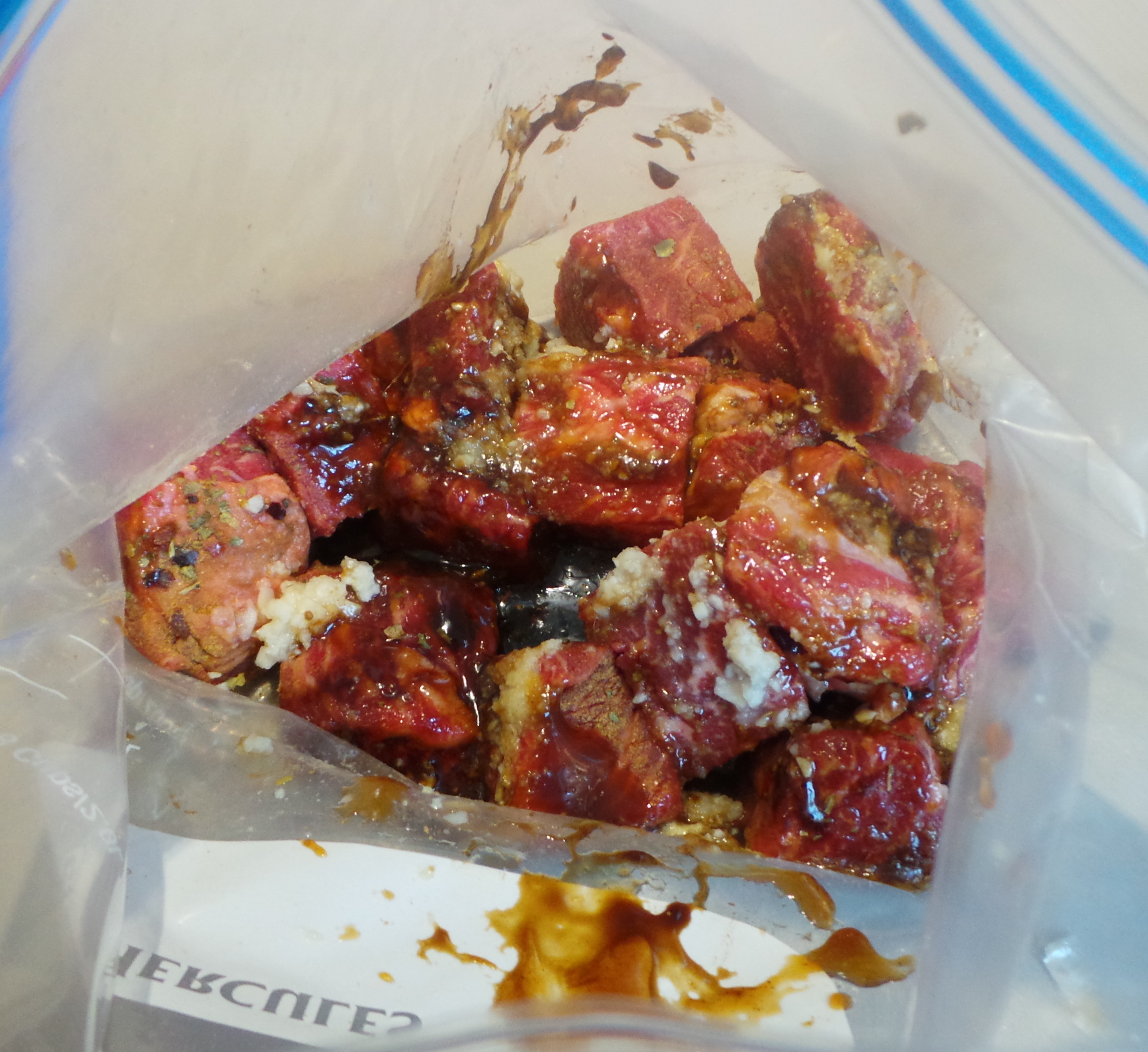
Seal the bag, excluding as much air as possible, flatten for easier storage, label and freeze.

Massage your flavours through.

Massage your flavours through.

That was traumatically difficult, wasn’t it?

Ready to freeze Asian Spiced beef

Ready to freeze Asian Spiced beef

Then, when you are ready to cook it, add a few chopped veg to your slow cooker, stir in your beef mixture, place it on low heat and leave it for around 3 hours. Serve with plain rice, or mashed potatoes.

You can add the meat mixture frozen, or let it defrost overnight in your refrigerator. The latter option will allow the meat to marinate for a few hours in all the gorgeous spices and sauces you have added.

I was going to include detailed instructions for assembling the casserole, but the post would be rather long… so, there will be another post here that describes the same recipe but cooked from fresh.

Please forgive me and click on. xx

Dulce de Leche (Milk Caramel)

Dulce de Leche!

I have a confession to make.

A few years ago, I spent some months in San Antonio, Texas. While I was there I saw many things, including the Alamo, and tried some new tastes. Most of the latter didn’t really do much for me I have to confess.

Optical Illusion from the River Walk, San Antonio

Optical Illusion from the River Walk, San Antonio

However, there were two… two that I admit I still dream about on occasion… especially when we are in the peak of summer here….

… and they were both ice creams.

One was Moose Tracks ice cream. O.M.G.

I think I might need a moment right now… ahem.

The culprit

The culprit

The other was Breyer’s Dulce de Leche ice cream. Now, at the time, I had no idea what dulce de leche was – then I found out. It gave me pause — until the Texan summer really kicked in and then there was no stopping me. My greatest regret at leaving Texas was that I was leaving these two wonderful concoctions behind.

Sigh.

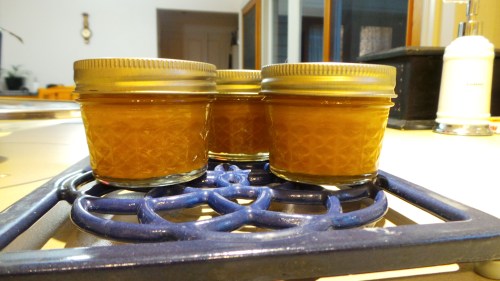
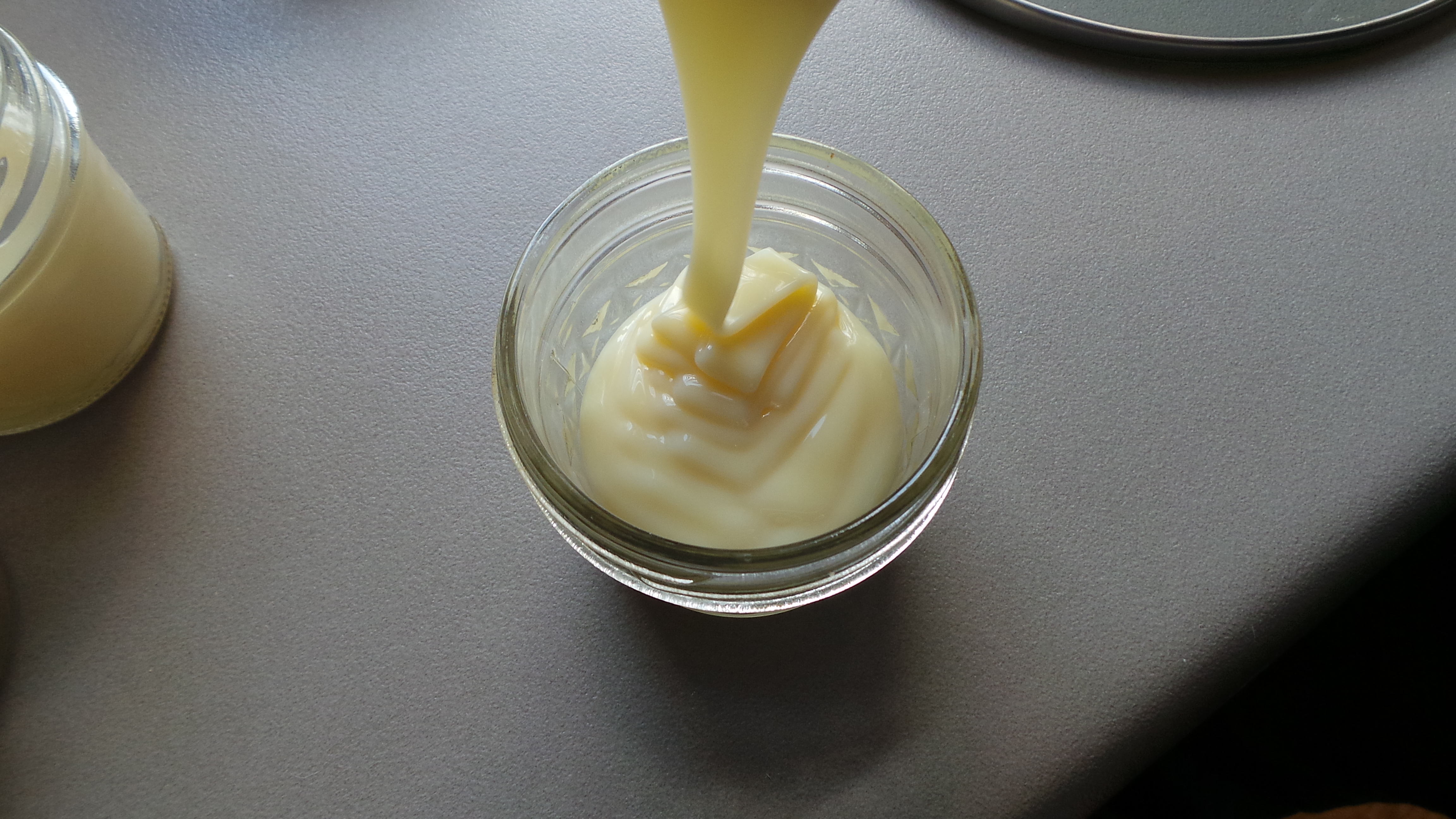
Place your condensed milk in clean jars and seal

Place your condensed milk in clean jars and seal

I haven’t been able to recreate either of these mouthfuls of gorgeousness, but I HAVE learned how to make Dulce de Leche. In my own home. Really easily. My hips hate me. Occasionally my Blood Glucose Levels also go through the roof as a direct result.

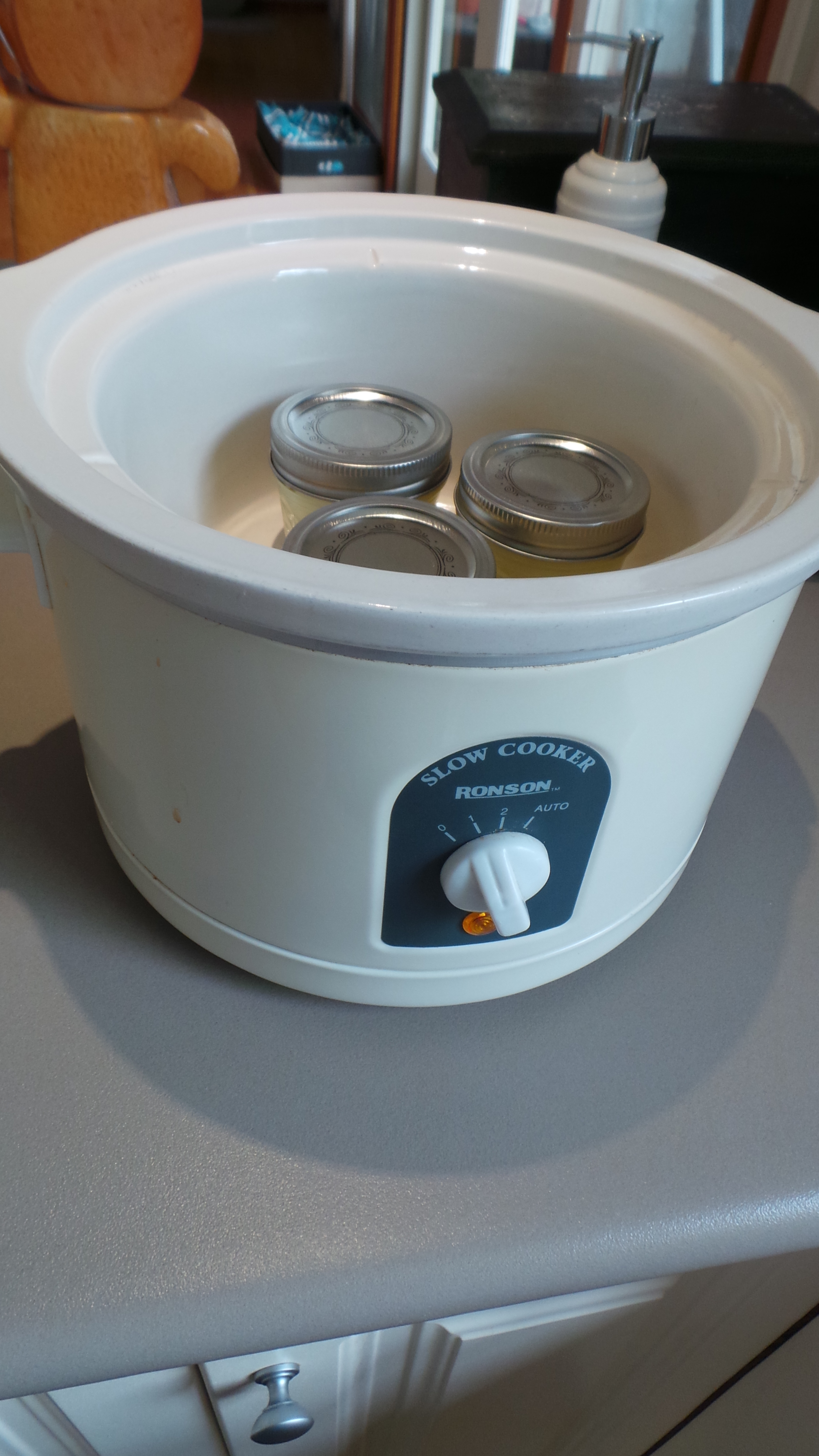
Place your jars in water in a slow cooker...

Place your jars in water in a slow cooker…

I don’t care.

Here. Let me corrupt you.

Dulce de Leche!

Dulce de Leche!

This doesn’t really need an official looking recipe layout, but in case you want to print it:

Dulce de Leche

  • Servings: depends on how generous you feel
  • Difficulty: ridiculously easy
  • Print

Ingredients:

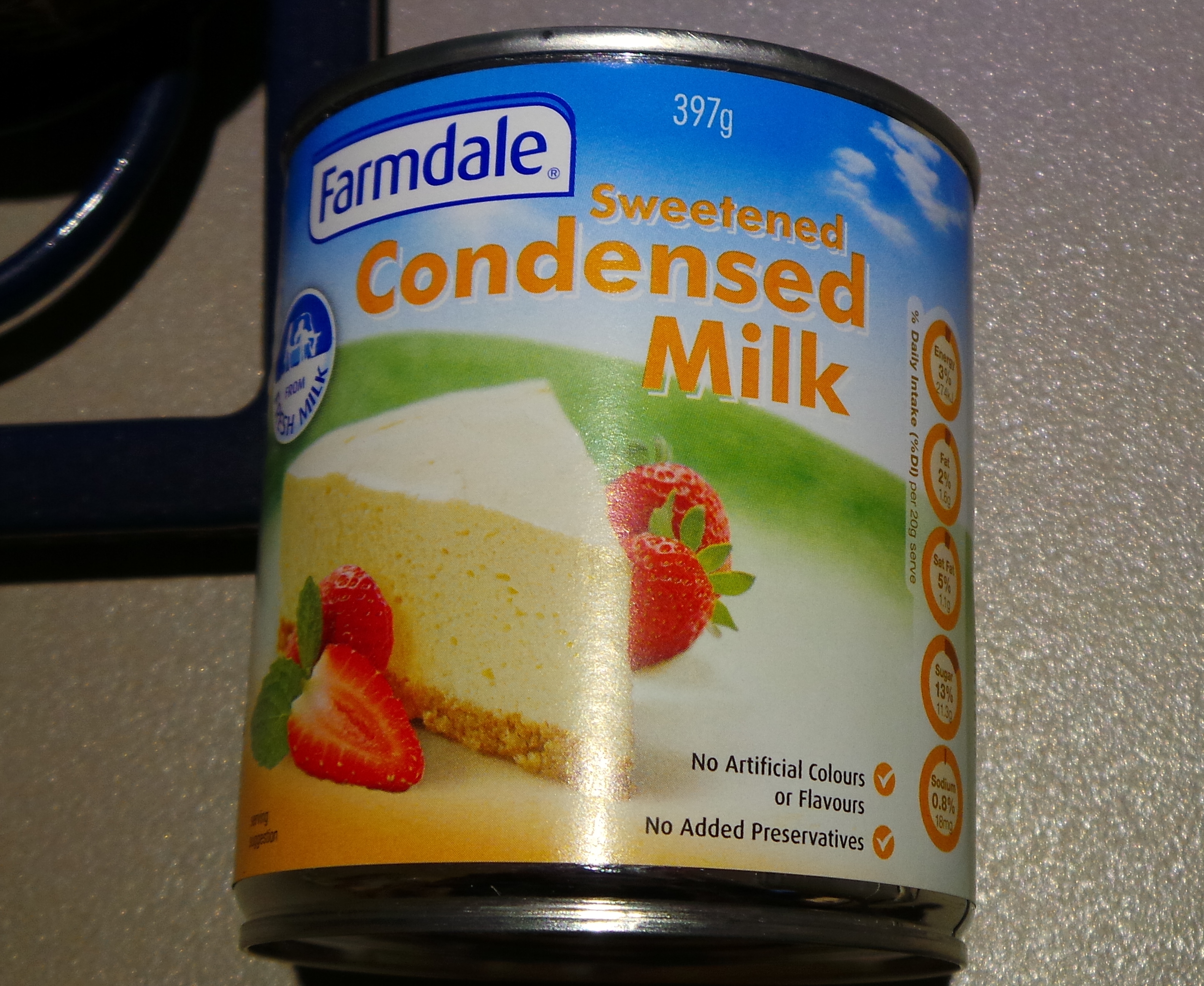
1 x can sweetened condensed milk (around 375g)

Method:

Place contents of can in small, sealed sterilised jars.

*Be careful not to fill them all the way to the top, you’ll need to leave some “head room” so the mixture can expand as it heats up. I find it best to fill to just below where the screw band on the jar begins.

Place in a large slow cooker.

Cover with at least an inch of water. I like to fill the crock with boiling water from the kettle just to speed things along…

Place on High heat until boiling point is reached and then switch to Low.

Wait 3 hours or until desired level of colour is reached. The darker the mix, the harder the caramel.

Remove from heat.

Eat.

You can, of course, use this as a filler in pies – Banoffee Pie being a prime example.

You can drizzle it over ice cream, use it in slices or in cookies.

Or you could eat it out of the jar with a spoon. Just sayin’!

Update: a Filipina friend has just told me she would make this a little thicker, roll it into balls and then into shredded coconut. I think this may be happening soon here on www.budgetbounty.com.

You have been warned.