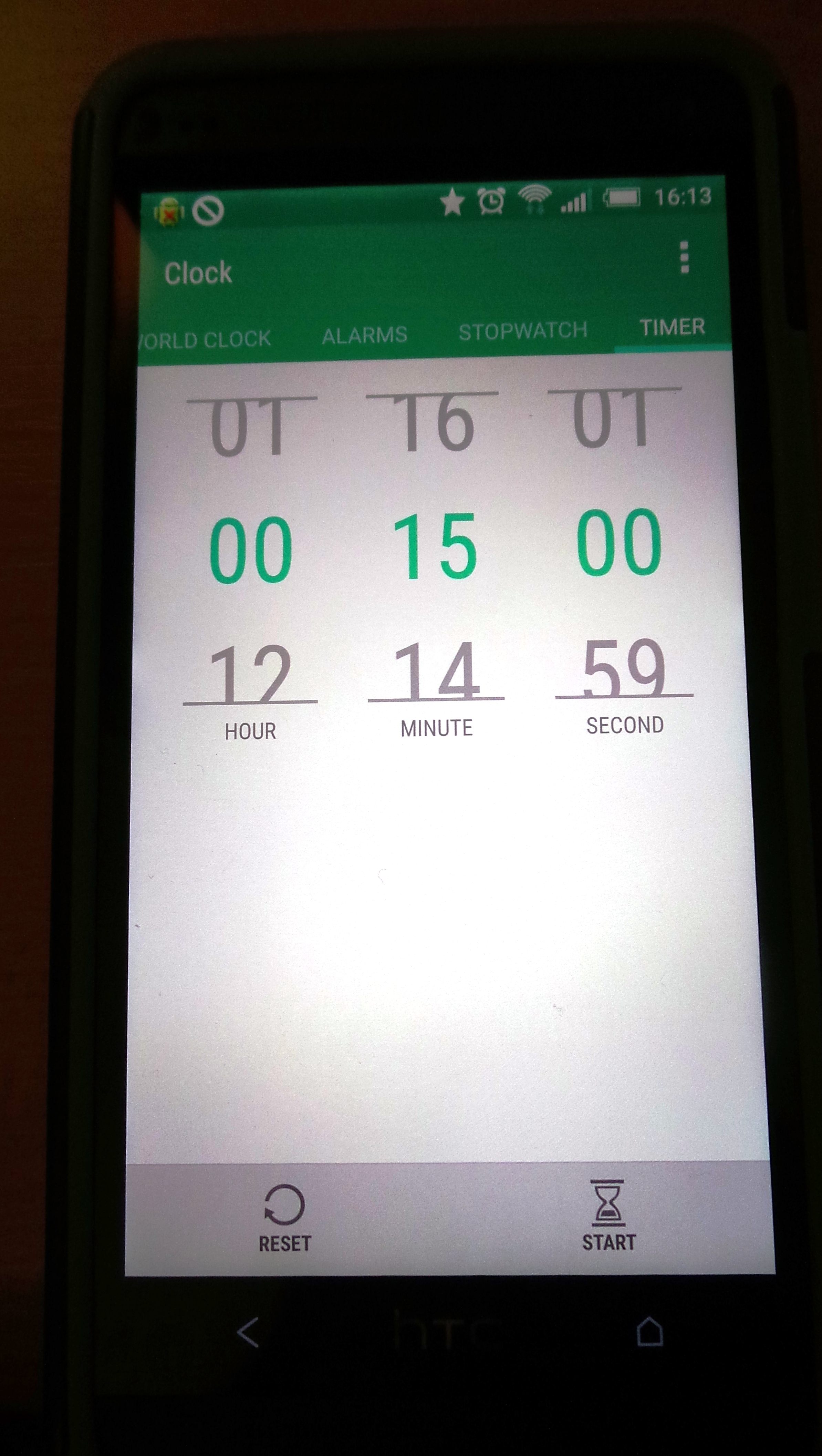
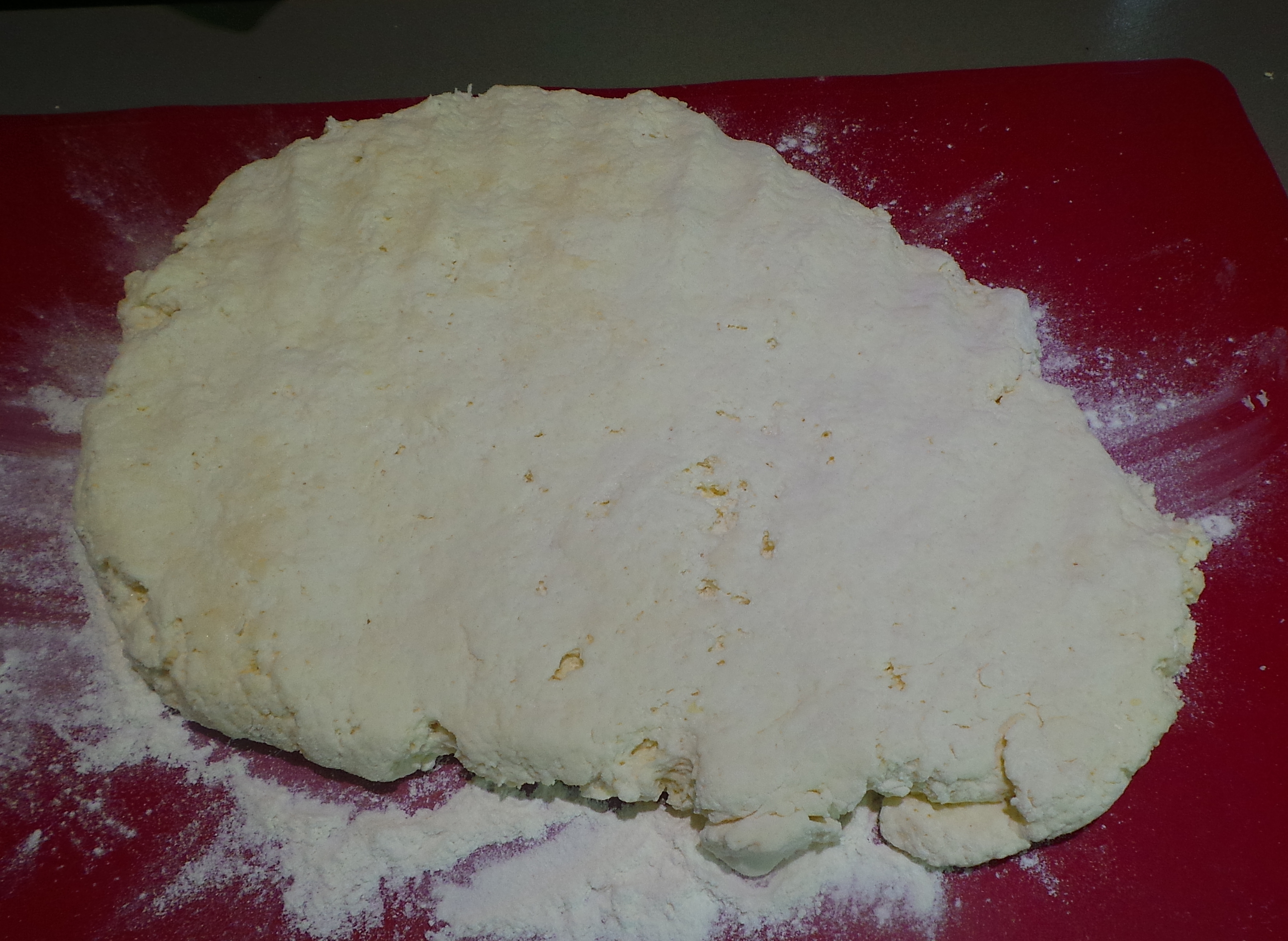
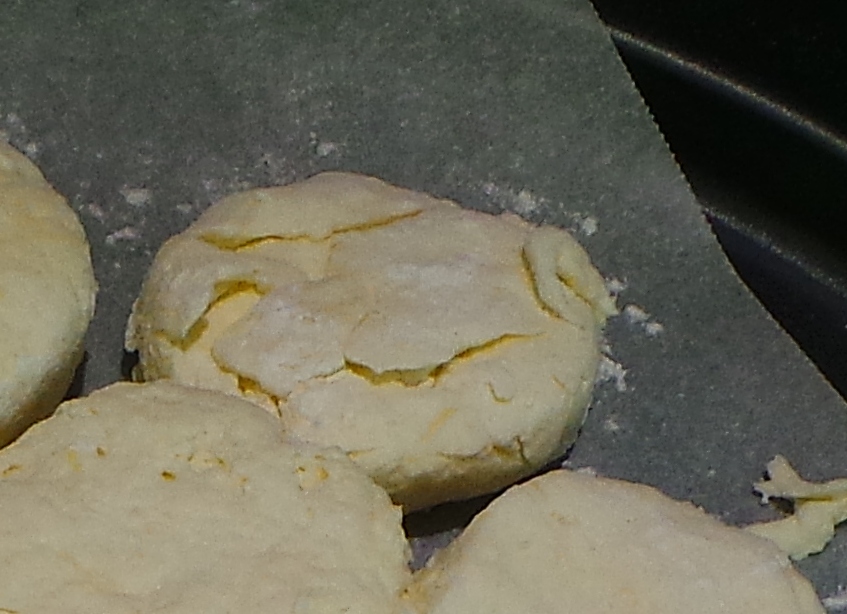
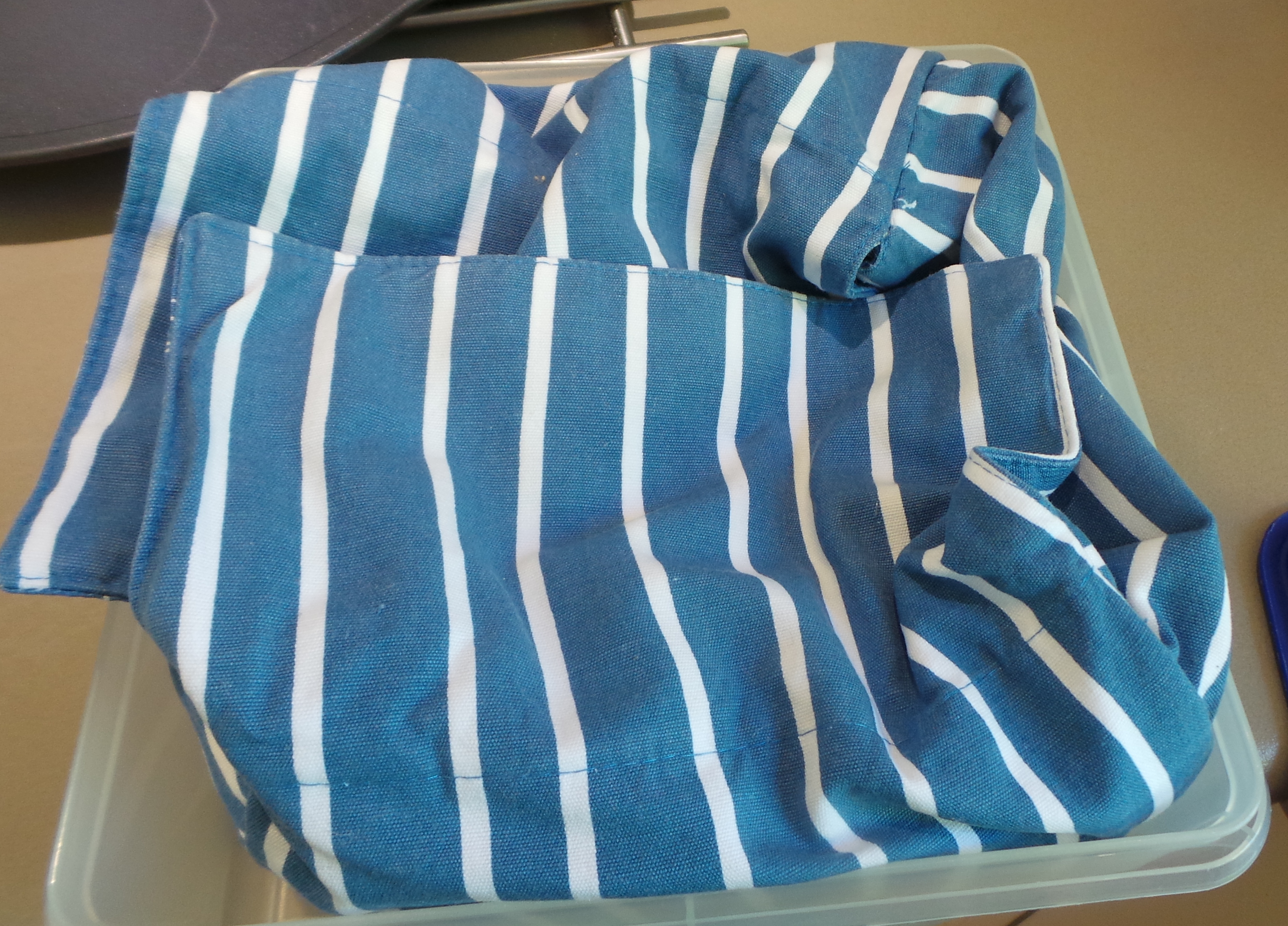
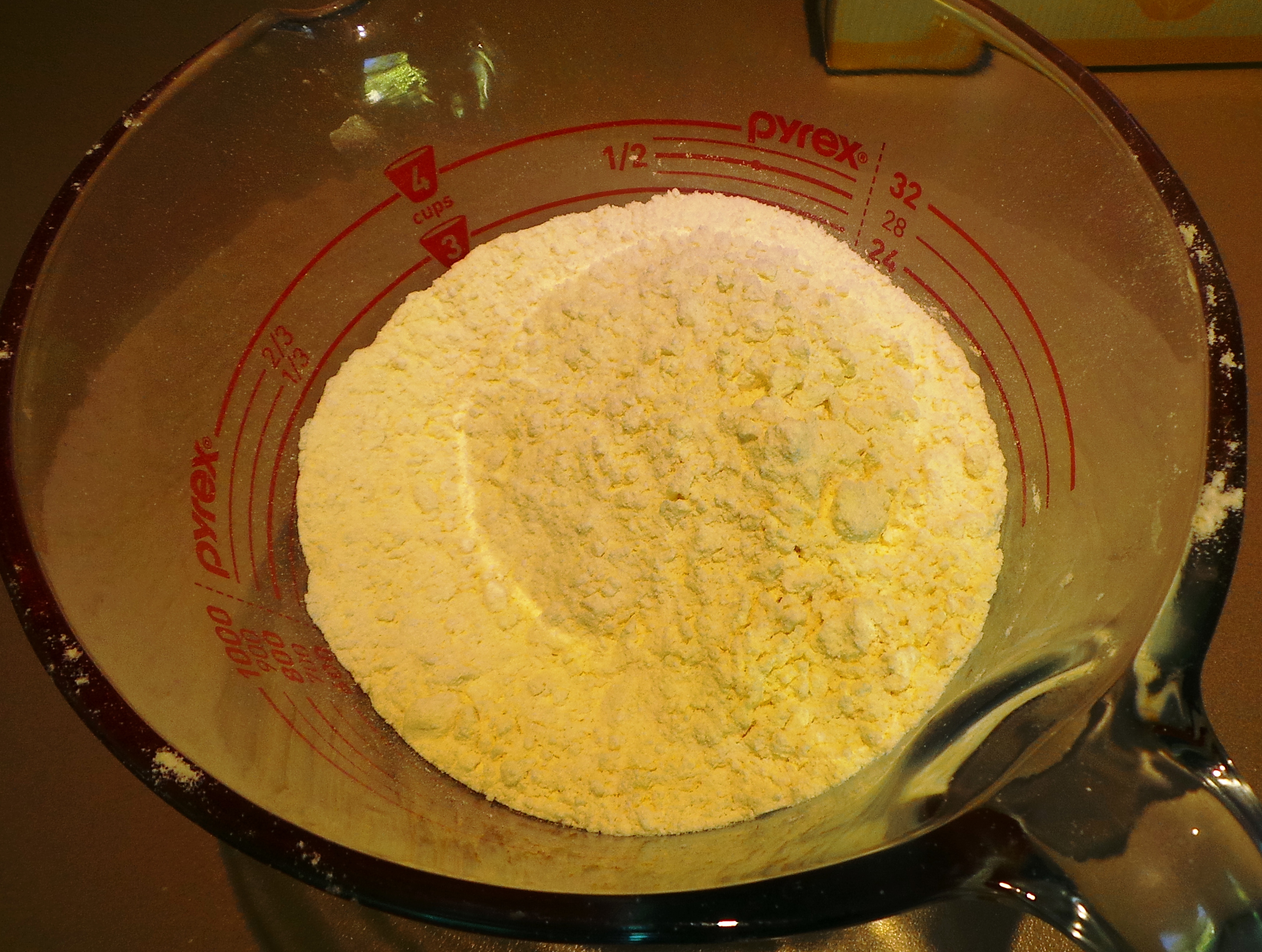
The most important tool in your kitchen.

This is a post without a recipe.

Sorry.

Instead, I’m going to talk about something close to my heart. Something that makes life just that little bit easier and multi-tasking a breeze. Something that every – and I mean *EVERY* – kitchen should have and cook should use.

A timer.

Yes, I said a timer.

A kitchen timer will save your sanity.

Use the timer on your oven

Use the timer on your oven

My mother was a great cook. She also burned things regularly. This was because usually she was trying also to stop my brother and I from killing each other, trying to stop the cat from killing the dog, doing the laundry and everything else that mums do – all at once – while cooking.

It could only end badly, really. And it did. Often.

A kitchen timer means that, if you put a pot of rice on to steam and the doorbell/phone rings, then you will get a reminder when it is done.

It means that pasta can be put on to boil, a timer set to let you know when it’s cooked, and you can go about making a quick sauce without losing track of your noodles.

You can pop some biscuits into the oven, go to hang some washing out and be reminded that there is something else that you are also doing…

Delegate keeping track of time to something else that won’t mind doing the job.

You have a timer if you have a microwave. Use it.

Just between you and me, the most use my microwave timer gets is when I am cleaning my kitchen.

Years ago when I was still working, my energy levels were pretty much nil when I got home from work, because MS fatigue. I would have just enough energy to go to work but none for anything else. One day, I came home to find my front door open. It took about 30 mins before I could tell if I had been burgled or not as my home was in such disarray!

This is just between us…right?

Anyway, I came upon a link to the Flylady.net site and slowly started getting on top of everything again. I did this 15 minutes at a time, using my kitchen timer. I haven’t visited the site for many years now, but when any part of my home looks like it’s going to take several days to get habitable, I set a timer for 15 mins and just do what I can. Then I have permission to stop.

Try this at your place. You don’t have to get it all done, but you’ll have more done than you would have otherwise. I’ll often have the kitchen spotless in that quarter hour.

In the same vein, I often find that when I’m gardening I’ll overdo things (good old MS again!) and end up paying for it for many days after. So, I manage my energy by taking a portable timer into the garden. I work for 15 mins, rest for 15 mins and repeat.

It works.

If you have small children, a timer can help you with kid-wrangling. Tell them they have to pick up their toys for 15 mins and then they get to stop. Stick to your word. They may drag their feet and muck around a bit at first, but after you’ve repeated the exercise on several days and they know you’ll keep your word (no fair setting the timer again immediately after!) they’ll start to play nice. Trust me.

Your timer can follow you into your bathroom in the morning. I always lost time in the mornings and found myself suddenly running 5 minutes late after a leisurely warm shower…you know what I mean, right? It’s not just me, is it?

A timer set for 5 mins when I got into the water kept me on track. Try it yourself, try it on your kids. Save your sanity while saving water.

If your teenagers have their own mobile/cell phones then they have a timer

Use the tools available on your phone

Use the tools available on your phone

If you have a tablet, you have a timer. If you have neither, then they can be bought quite cheaply at dollar stores, in supermarkets, pretty much anywhere – really truly.

Change your life, use your timers.

I suspect that I may be required to buy one of these. Sigh.


Frozen yoghurt

In Australia at the moment – to quote Robin Williams’s character in Good Morning Vietnam – “It’s hot! Damn hot!”

It's hot Down Under.

It’s hot Down Under.

Which means it would be nice to have something to cool down with, especially with the kids home from school for another week.

Even better, it wouldn’t be so bad to have something the kids could participate in actually making. Something which takes minutes and which wouldn’t end with them climbing the walls on added sugars and artificial colours and flavours.

Ta da!

Ladies and gents, if you’ve been following my latest posts about making yoghurt, then I’m guessing there’s some lurking in your refrigerator right about now. How about using it to make some fruit-flavoured frozen yoghurt with – wait for it! – real fruit and real yoghurt?!

Well, why not?

All you’ll need is some frozen fruit, some yoghurt and something to sweeten it with.

Mango frozen yoghurt.

Mango frozen yoghurt.

Unfortunately, this is one of the rare recipes on this site that actually requires a particular appliance. Sorry. You’ll need a food processor.

You could try making this in smaller batches using a stick blender, but I give no guarantees.

So, find yourself some fruit. If you are in a screaming hurry to do this, you can easily purchase bags of frozen berries from the supermarket. If you must. However, it’s summer, there are oodles of different fruits in season right now and going for a song. My local green grocer is selling mangoes for 50 cents each.

A gorgeously ripe, in-season mango.

A gorgeously ripe, in-season mango.

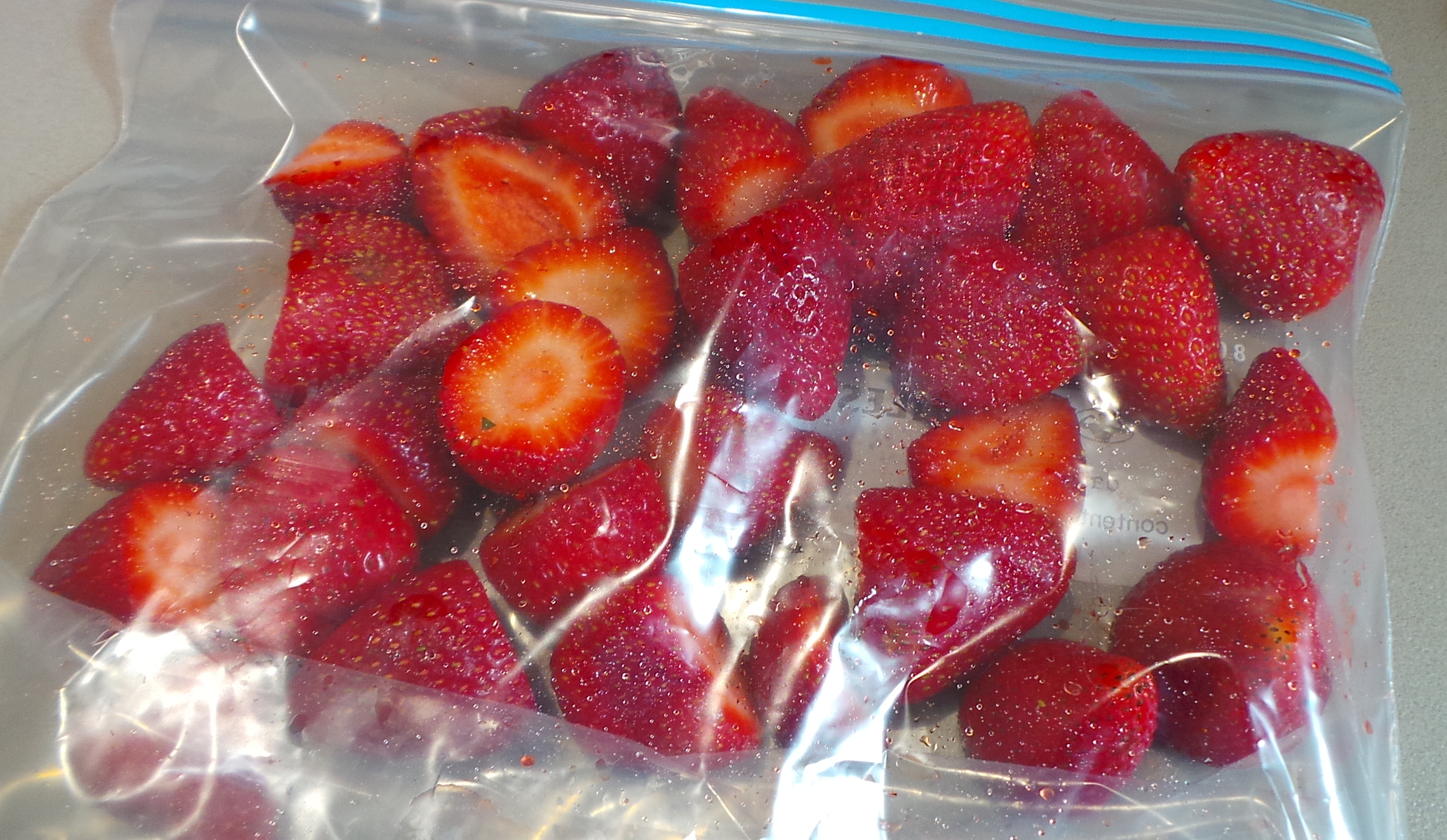
So, I bought a few, peeled and sliced them up and popped them in a ziploc bag in the freezer overnight.  Just before Christmas I did the same with a punnet of strawberries I found on sale. Here’s how to go about it if you’ve never done it before.

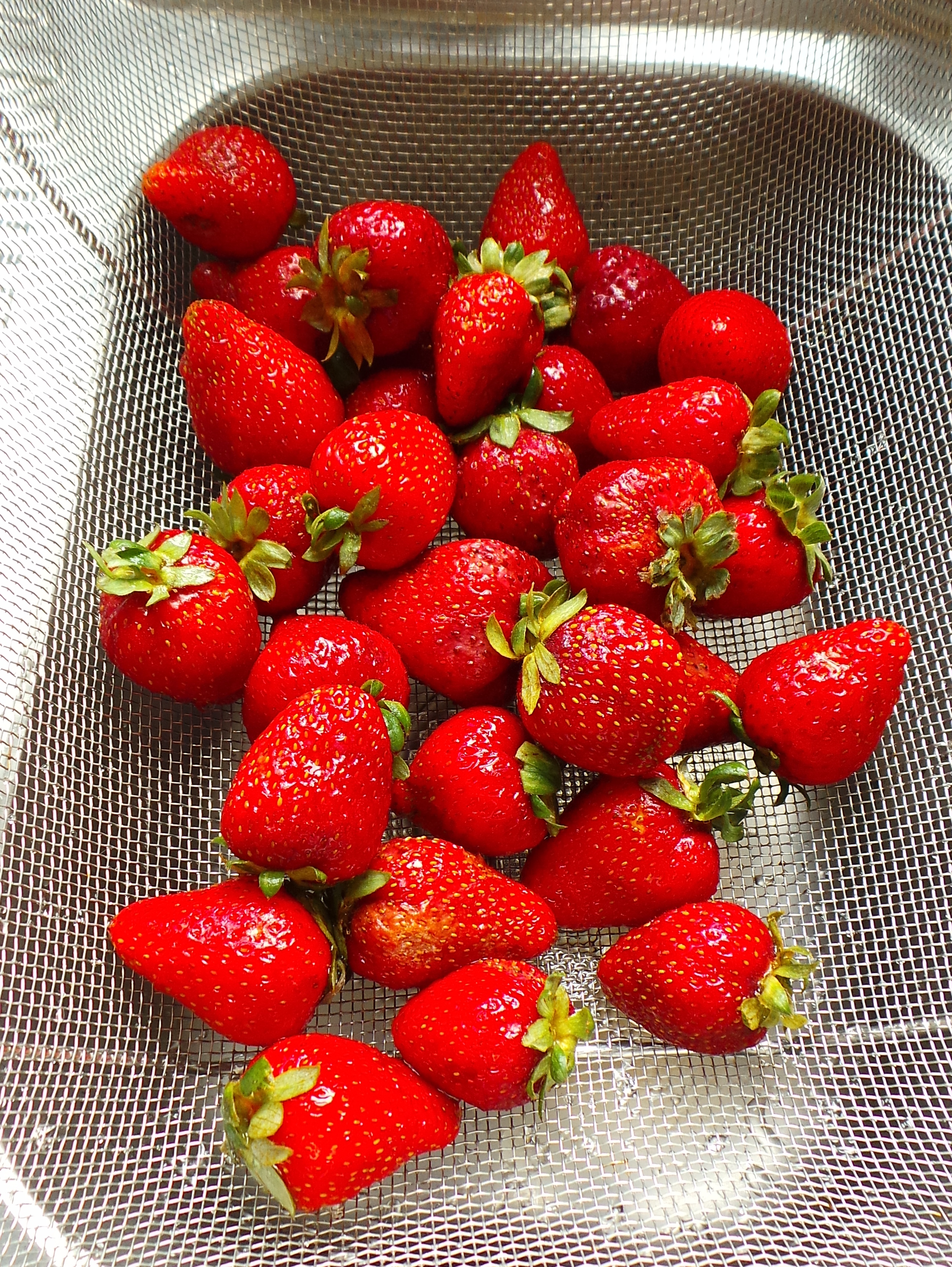
1. Wash your fruit.

Wash your fruit well and allow to drain.

Wash your fruit well and allow to drain.

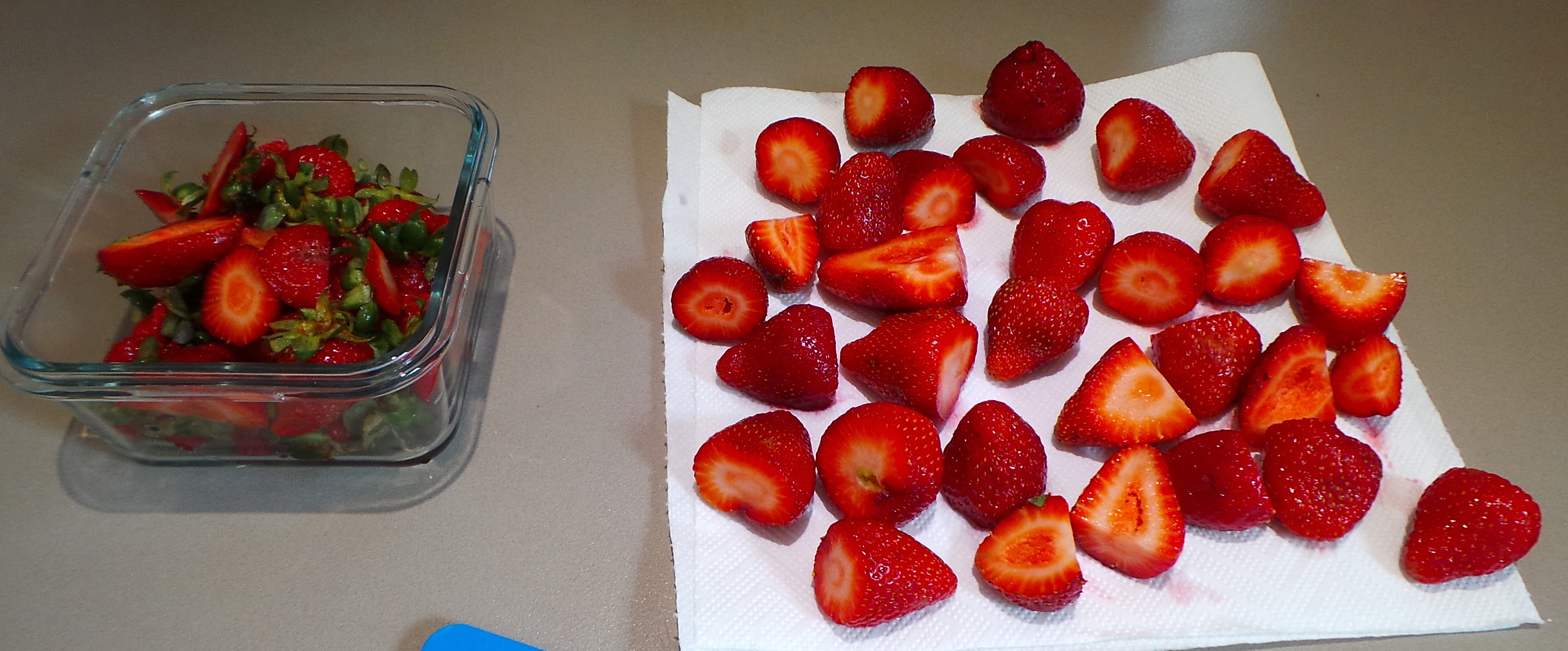
 2. Cut out any soft bits (especially with strawberries) and slice up larger fruits, like mangoes.
Prepare your fruit so you freeze only the best bits.

Prepare your fruit so you freeze only the best bits.

3. Put them into something you can seal well. A tupperware freezer container or ziploc bag will do nicely. Squeeze out all the air you can from bags, if using. Then freeze.

Seal into an airtight container and freeze.

Seal into an airtight container and freeze.

Simple.

Now to make your frozen yoghurt you’ll need to set up your food processor with the metal blade. The plastic one won’t work.

Trust me on this.

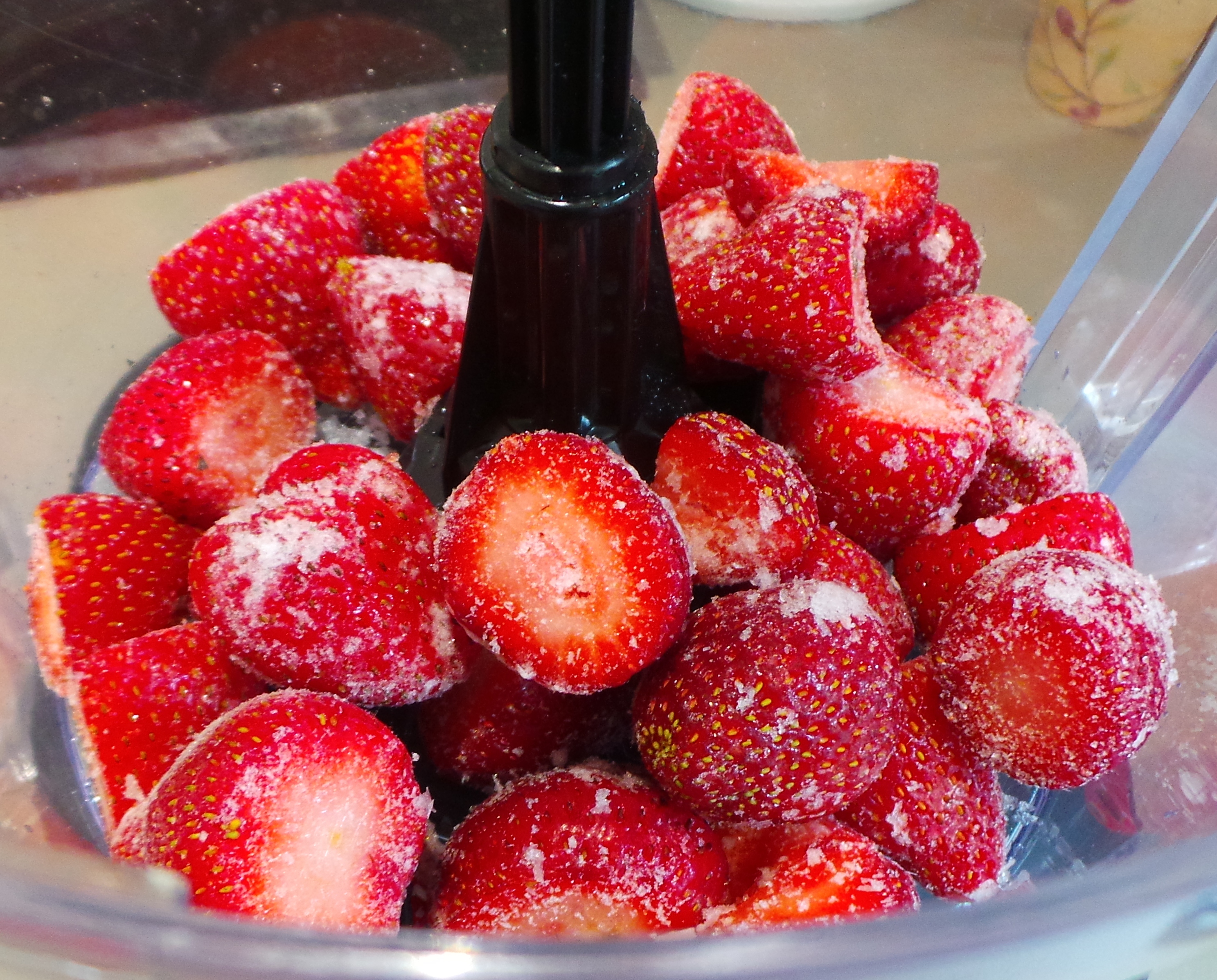
Add your frozen fruit.

Place your frozen fruit in the food processor bowl.

Place your frozen fruit in the food processor bowl.

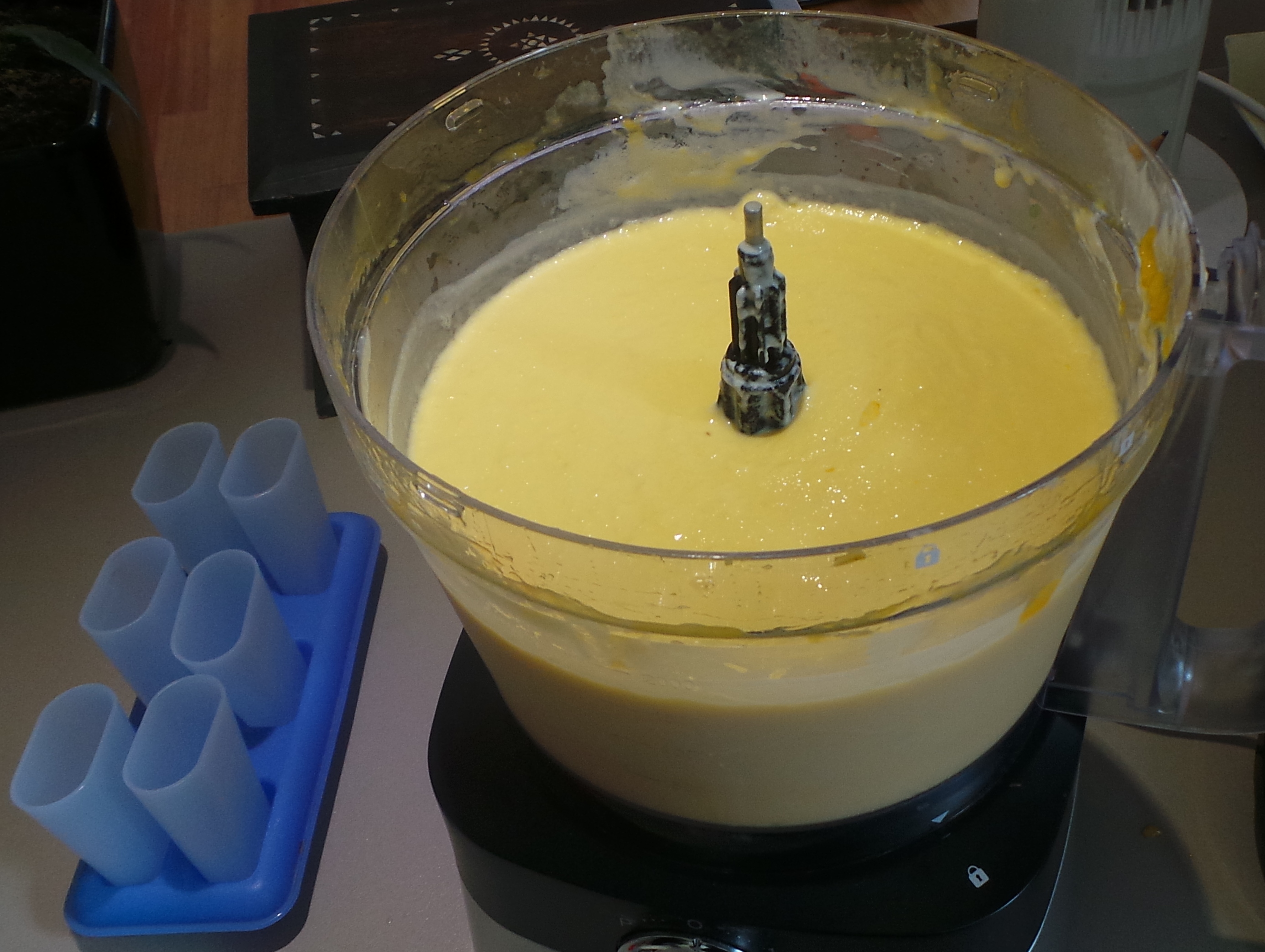
Blitz for about 30 seconds, or until decently pulverised. Add a good drizzle of sweetener: this can be honey, maple syrup, agave syrup, golden syrup or even a few heaping spoonfuls of brown sugar.

At this point, it’s important to bear in mind the properties of your fruit. The coldness of the dish will affect your perception of its sweetness, it will seem much less sweet. The strawberries in the pictures were passing sweet at room temperature (the way I like them) but were pretty tart in their frozen state. They needed a fair whack of honey to make them palatable at sub-zero temperatures.

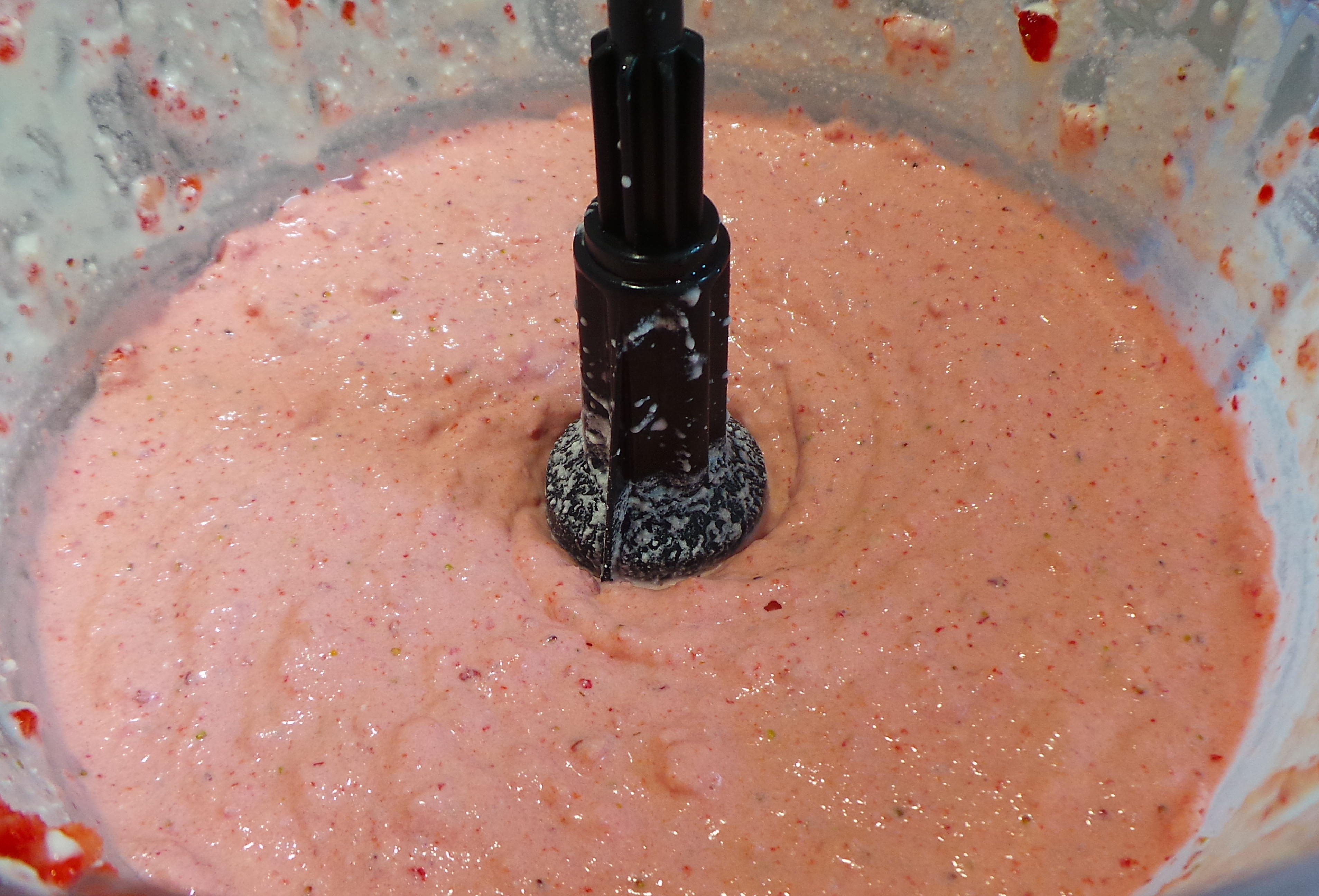
Now add your cold, straight-out-of-the-refrigerator, yoghurt all at once and blitz again for about a minute.

Add your yoghurt and blitz.

Add your yoghurt and blitz.

Taste for sweetness.

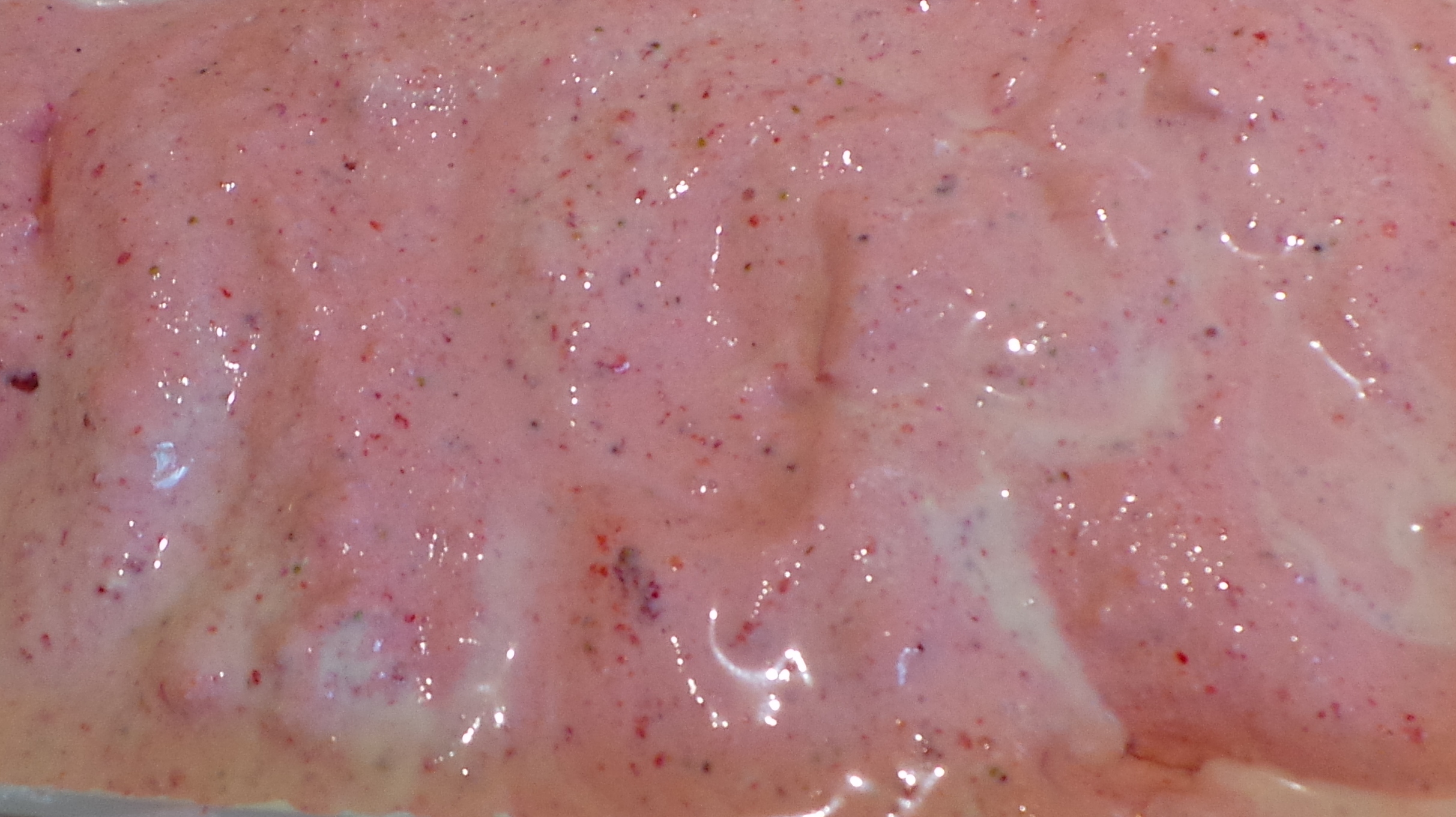
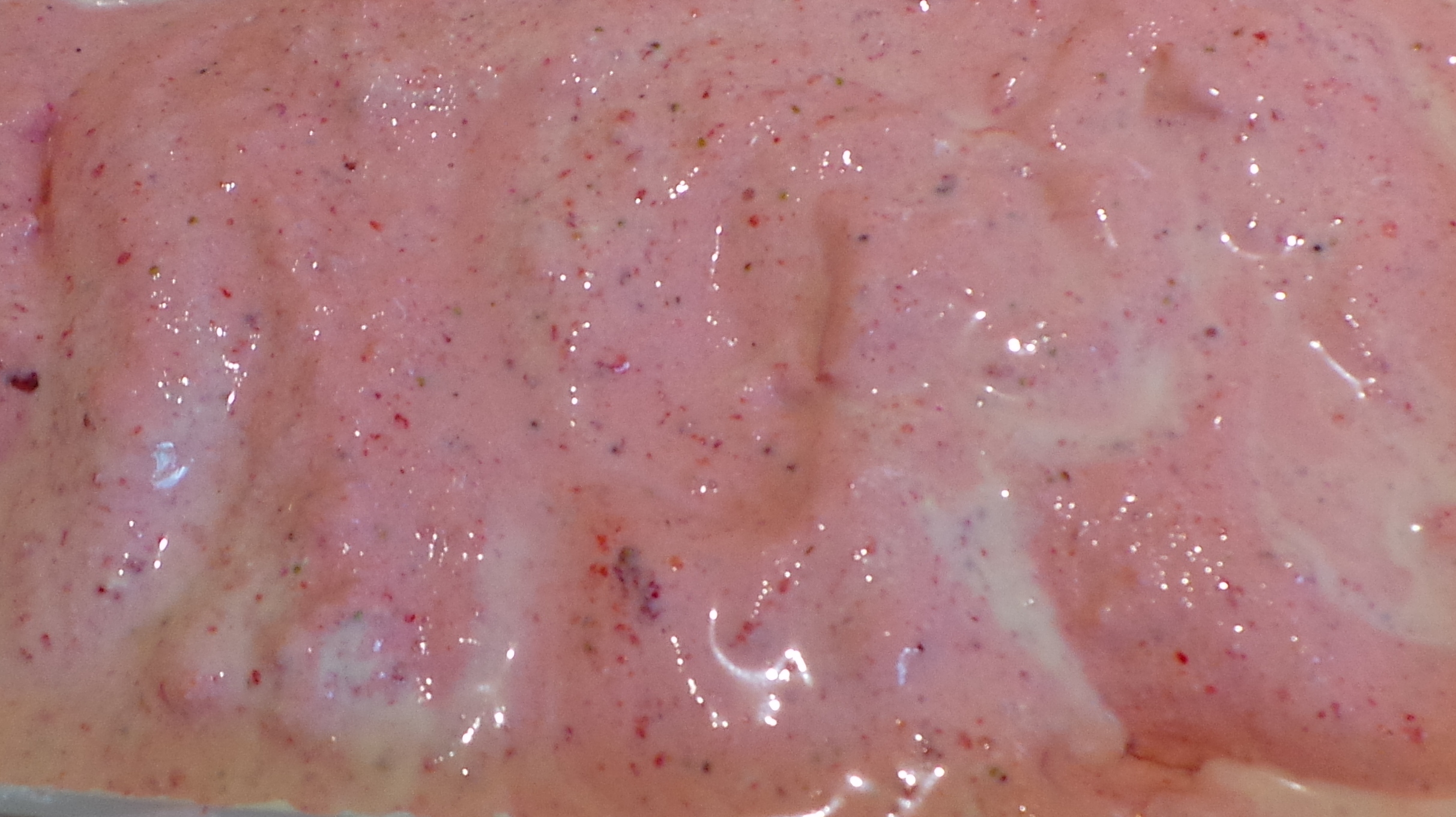
The frozen fruit will have caused the yoghurt to start to freeze and your mixture should resemble soft-serve ice cream already. Feel free to eat it immediately. 😉

The finished product.

The finished product.

Alternatively, place it in a container in your freezer. This mixture will set quite solidly as it is lacking the additives that commercial blends have and which make them scoop-able straight from the freezer.

Take it out of the freezer about 20 mins before you are wanting to serve it. So, if you want it for dessert, take it out as you serve up your main meal…

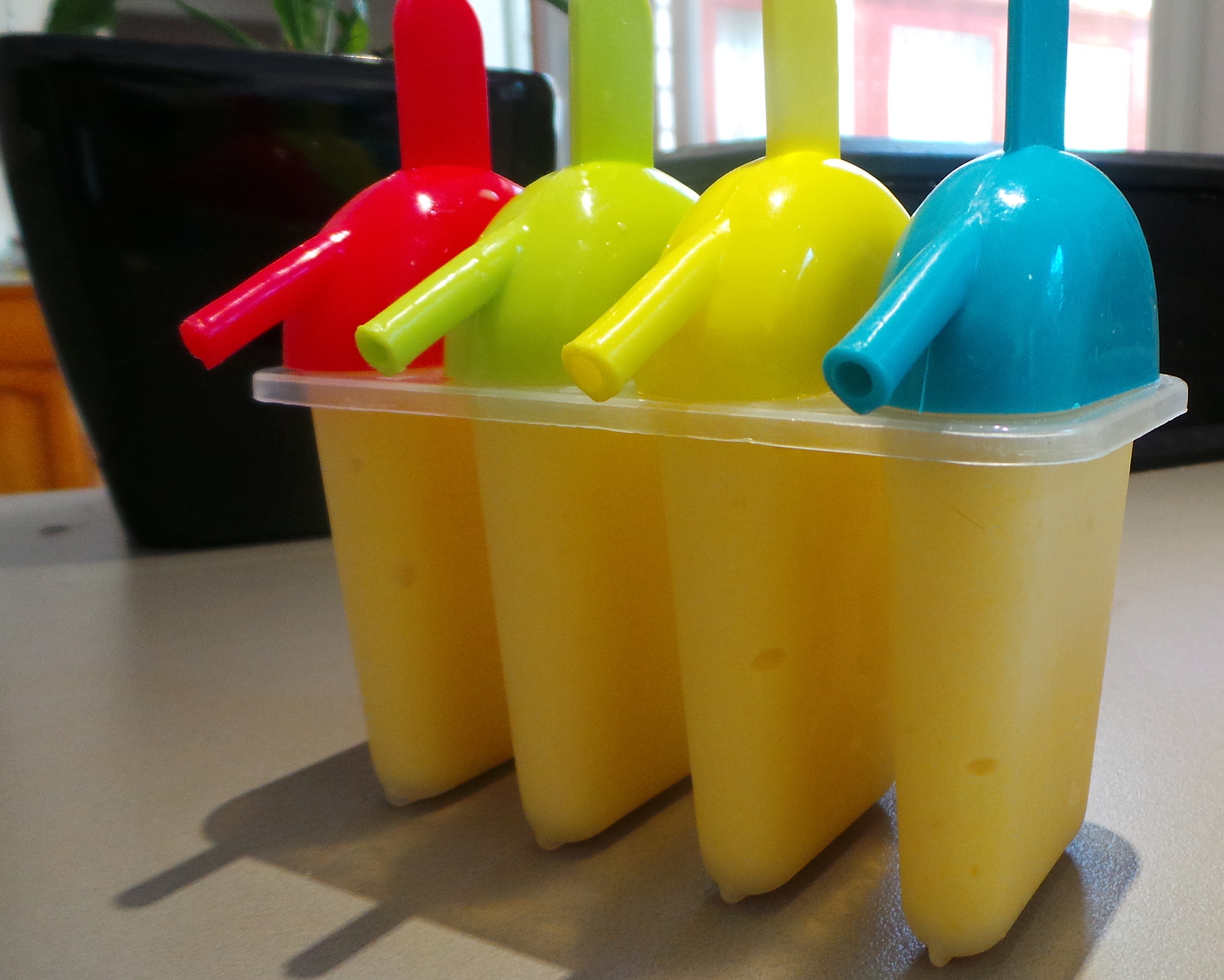
This firm setting property makes it ideal for popsicles, paddlepops or ice lollies though! Pour your mixture into moulds and you’ve got the ideal cool down when your kids come back from their first stinking hot days of an Australian school year.

The popsicle moulds were bought at Aldi...

These popsicle moulds were bought at Aldi…

Better yet, they can help with pretty much every aspect of making the things – short of using the food processor. Just be prepared for some mess…

Frozen Fruit Yoghurt

  • Difficulty: easy
  • Print

Ingredients

300g frozen fruit

500g chilled yoghurt (Greek, full fat, skim, soy, whatever…)

3 tablespoons honey or to taste. (You can substitute maple syrup, agave syrup, golden syrup or corn syrup if you wish)

Method

Fit the metal chopping blade into a food processor.

Add your frozen fruit and pulse for around 30 seconds or until the fruit has a relatively even texture. One or two larger pieces just add interest to the finished product.

Add your sweetener and pulse briefly.

Add all your yoghurt and blend until smooth.

May be served immediately, or frozen for several weeks in a sealed container.

Remove from the freezer at least 20 minutes before serving (or risk tears and sprained wrists).

Variation: Pour into popsicle moulds for individual treats. If you don’t have any moulds, then try using small plastic cups or tumblers with a paddle pop stick inserted into the mixture.

Run hot water around the outside of the mould to help release the treat.

How to make Yoghurt

My latest batch of homemade yoghurt

Making yoghurt is one of the simplest things you will ever do. Trust me.

If you have a large family that loves the stuff, it will also be one of the most frugal things you ever do. Indeed, once you’ve got the process down, you can start getting them to take over from you.

The key to all of this is to remember that yoghurt has been around since the Stone Age.

It’s not complicated.
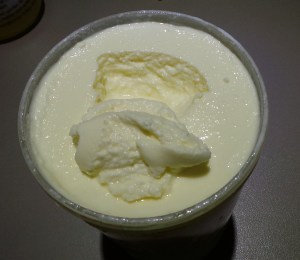
My latest batch of homemade yoghurt

My latest batch of homemade yoghurt

Mind you, there’s a few things we do for safety now, that weren’t done then – and our implements look a little different – but it’s still pretty much the same. All of which means that it’s pretty much idiot-proof.

To make yoghurt, you will need milk (cow’s milk, goat’s milk, soy milk) and either culture or starter. This post will use starter.

Find a plain yoghurt you like and that can be your starter. Hard, isn’t it?

Okay, I’ve been told to be more serious. Ahem.

All yoghurts contain bacteria which have digested the natural sugars in the milk and helped to transform the proteins. (For more detail read Yoghurt 101.) When you decide that you wish to try making this all happen under your roof, you’ll need to start by getting yourself some yoghurt.

In the chiller section of the supermarket you will find myriad yoghurts ranging from low-fat to sugar-free and everything in between. What you need to look for is a small tub of natural yoghurt.

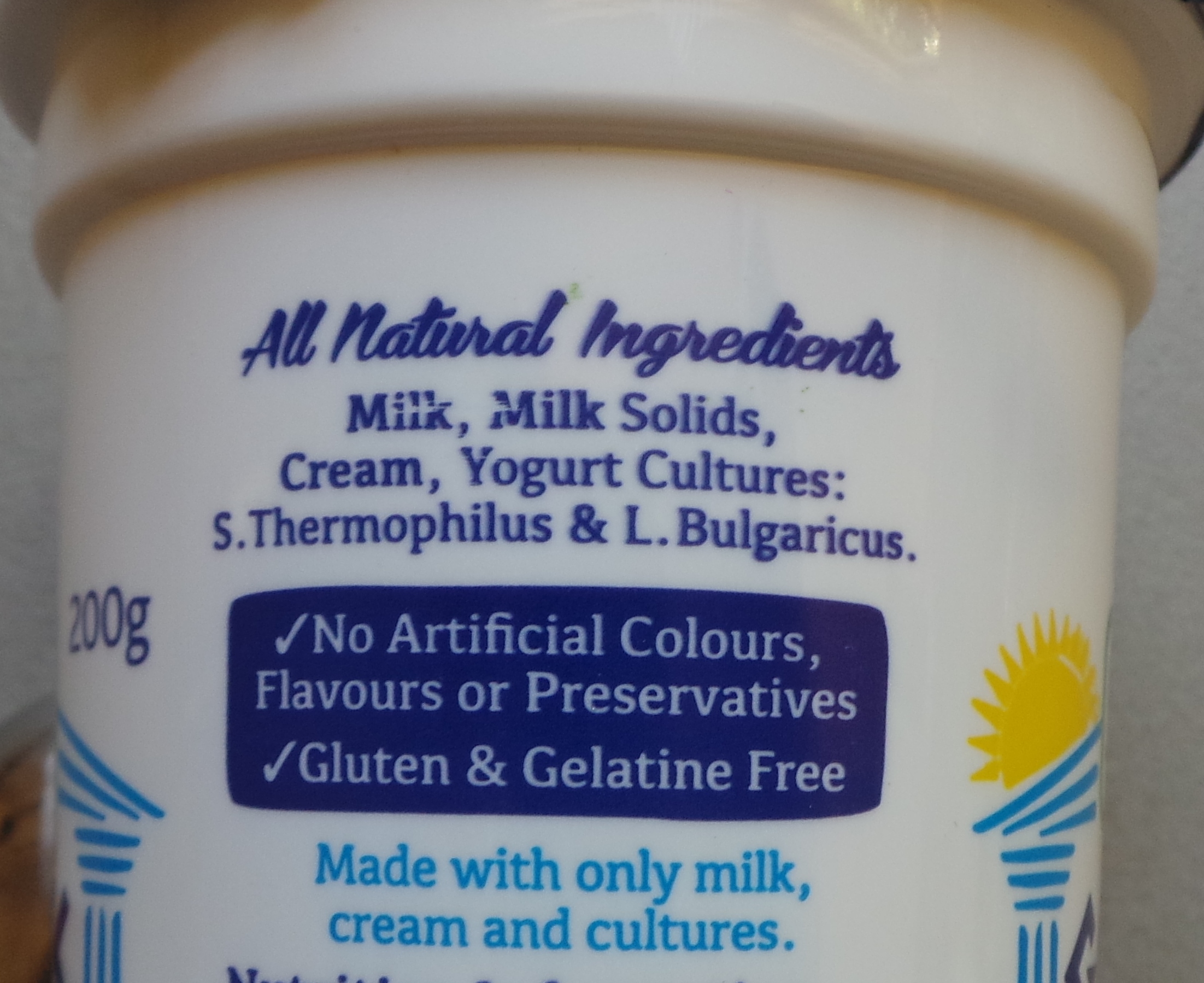
When you find one, look at the ingredients label. It should contain nothing more than milk, milk products and cultures.
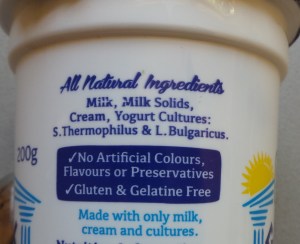
Greek yoghurt label

Greek yoghurt label

If your label says live cultures, then that’s even better.

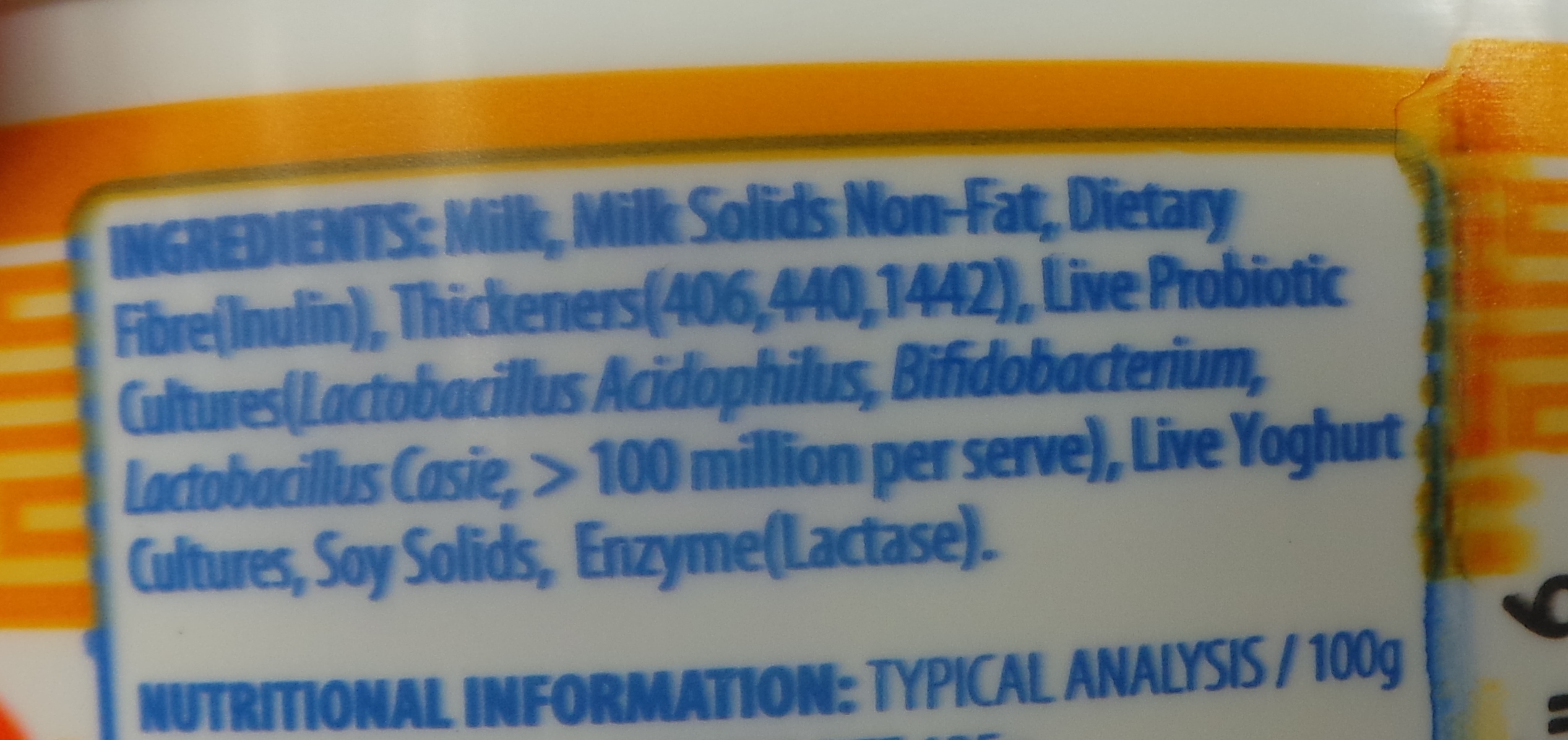
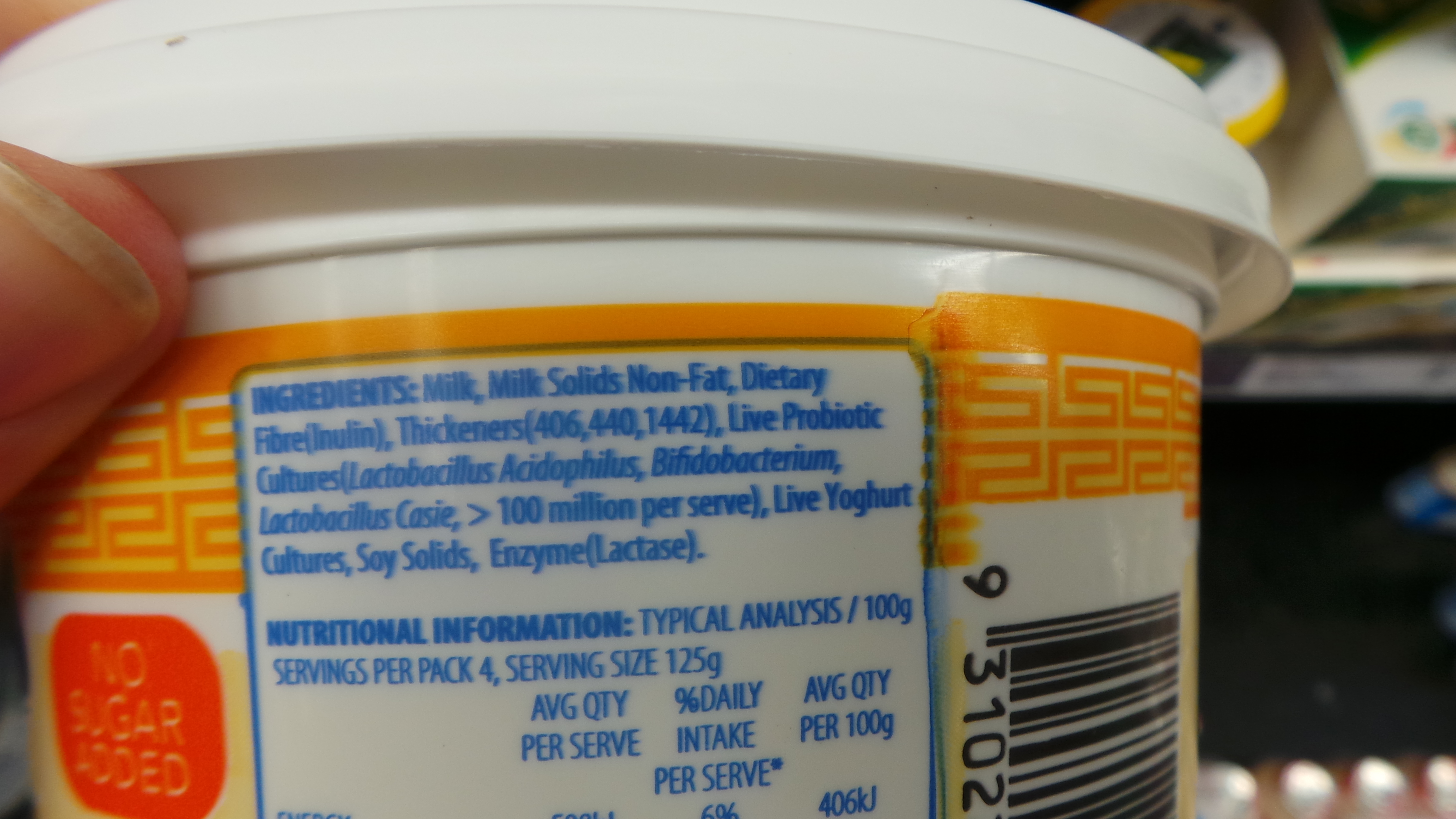
You don’t need anything that has stabilisers or food numbers on it. Those ingredients are used to thicken the final result. They often do not have the required numbers of bacteria in them and, if you were to use that product as your starter, you would end up with something that resembles cultured buttermilk and you would hate me forever. Don’t do that.
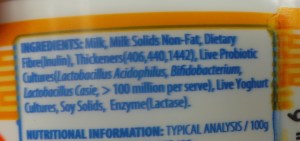
See the additives. Avoid. The blurring is the label, not my photography...

See the additives. Avoid. The blurring is the label, not my photography…

Also, be aware that Greek yoghurt is not only a type but is also a method of making yoghurt. Use it as your starter by all means, but it will not set firmly. If you prefer the taste of Greek yoghurts to those formed with L.acidophilus then make your yoghurt from it, but know that it will require straining to achieve the firmness of the yoghurt in the tub you have purchased.

This isn’t at all difficult, but you may wish to try something that will give setting satisfaction first. 😉

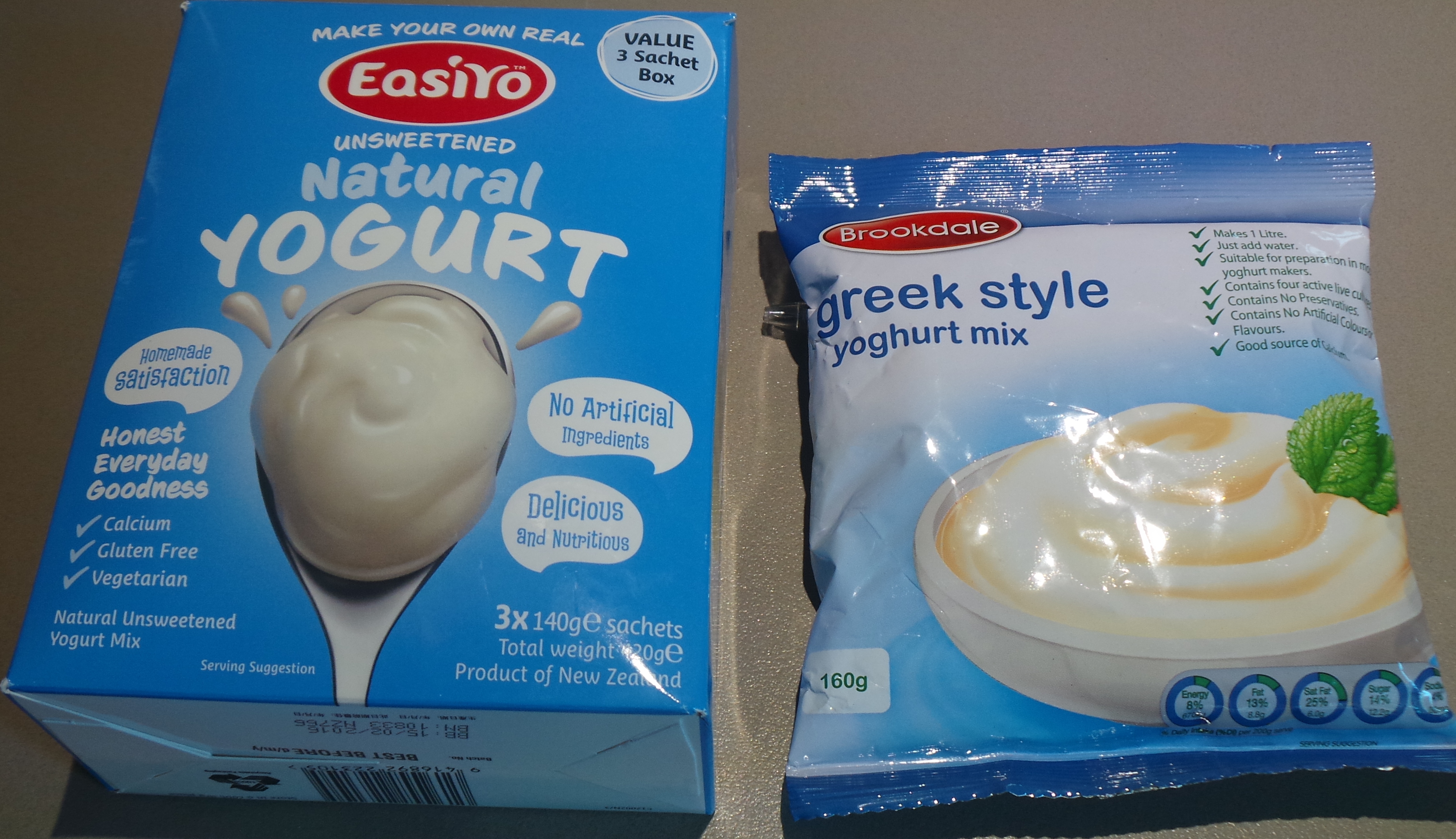
If you find locating something this simple and unadulterated difficult to do, then try using a packet mix yoghurt for your first shot and putting aside some of that as your starter. Be pragmatic.
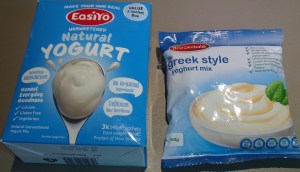
Packet yoghurt mixes can be handy but not terribly economical...

Packet yoghurt mixes can be handy but not terribly economical…

As an aside, there is nothing intrinsically wrong with using powdered mixes like these. Just be aware that they also use stabilisers – which can exacerbate some allergies. Also, there is no budgetary advantage to doing so. A packet of yoghurt mix costs around AUD$4.50 as does a litre of yoghurt at the supermarket. A litre of milk costs $1 or so. If you have several children eating several kilograms of yoghurt a week, making your own from scratch is much more economical.

Yoghurt will last for quite some time when properly stored in a refrigerator, but you need your starter to be relatively fresh so check the dates on any fresh yoghurt you may buy.

Next, you will need to get your milk and equipment all in the one place.

You will need:

  • a large saucepan or pyrex jug,
  • a thermometer (or your clean finger),
  • a small bowl,
  • a dessertspoon,
  • a whisk or fork,
  • a large bowl or covered container,
  • something to keep your yoghurt warm in.

Make sure everything is as clean as possible. The only bacteria you want to grow is that in the yoghurt culture.

Now, heat your milk. If it is raw milk it is safest to bring it to a boil (at least 85°C or 180°F) and then let it cool to the desired temperature. If you do this on the stove top, use a large saucepan and watch it carefully to avoid having the milk boil over.

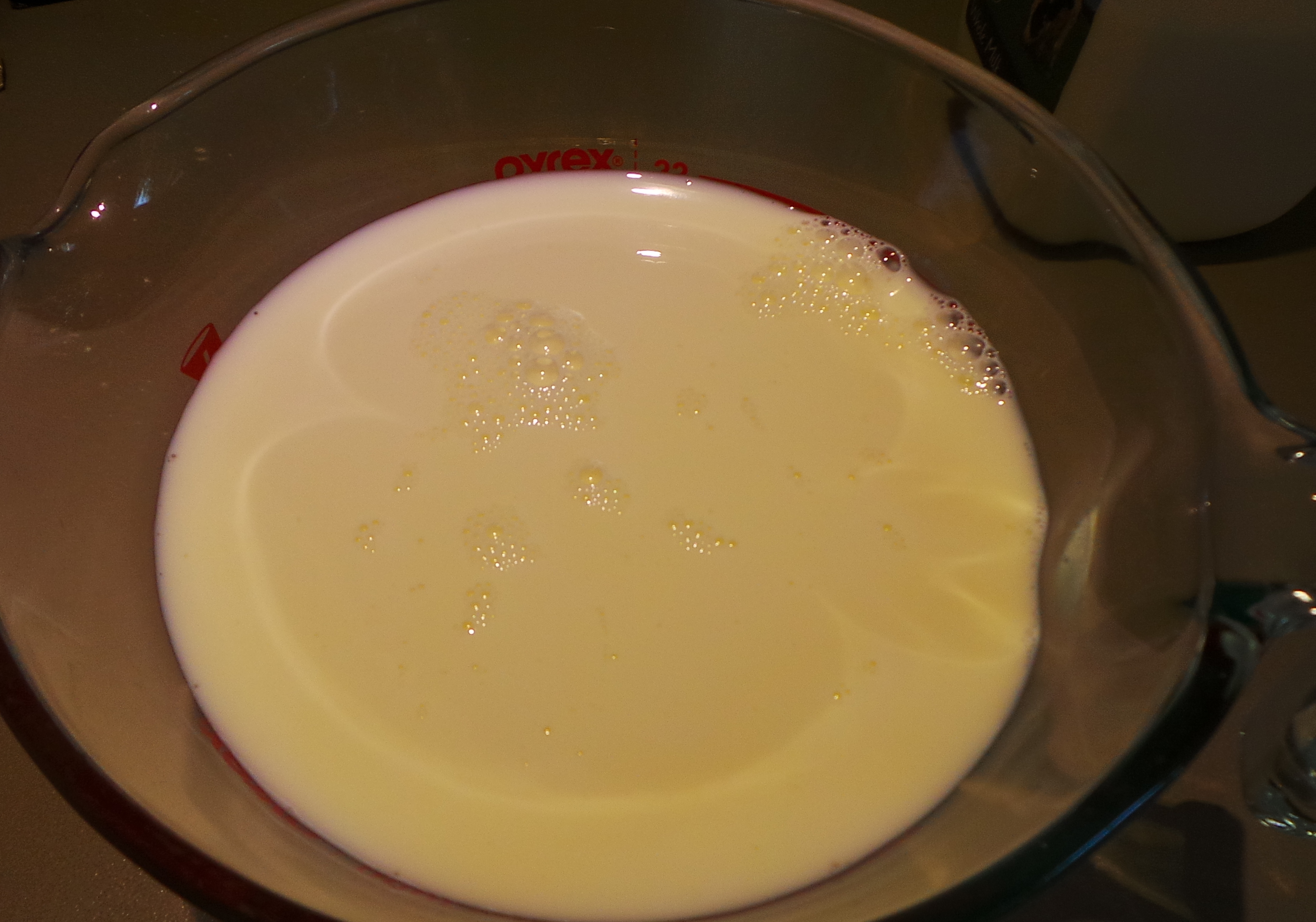
Otherwise, you can heat your already pasteurised milk in the microwave using a large Pyrex jug – which is my preferred method.
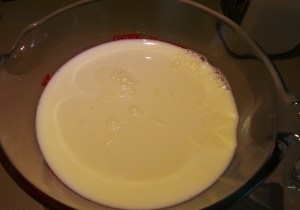
I heat my yoghurt in the microwave, using a large pyrex jug.

I heat my yoghurt in the microwave, using a large pyrex jug.

It’s much easier to wash up the jug, I find, and then pouring it into the container in which I want it to ferment is much easier than pouring it from a saucepan. One litre of milk straight out of the refrigerator needs only 3-4 minutes on HIGH in my microwave and then I can place it on my counter and wait for it to cool down.

Allow your milk to cool to between 47°C (116°F) and 32°C (90°F). You can use a thermometer to test this or wash your hands and use a finger – since the Stone Ages, remember? – dip in a finger and count to ten, the milk will feel uncomfortably hot, but bearable.

This is important. Yoghurt bacteria are like yeast.  Too hot and the bacteria will die, too cold and they will remain dormant.

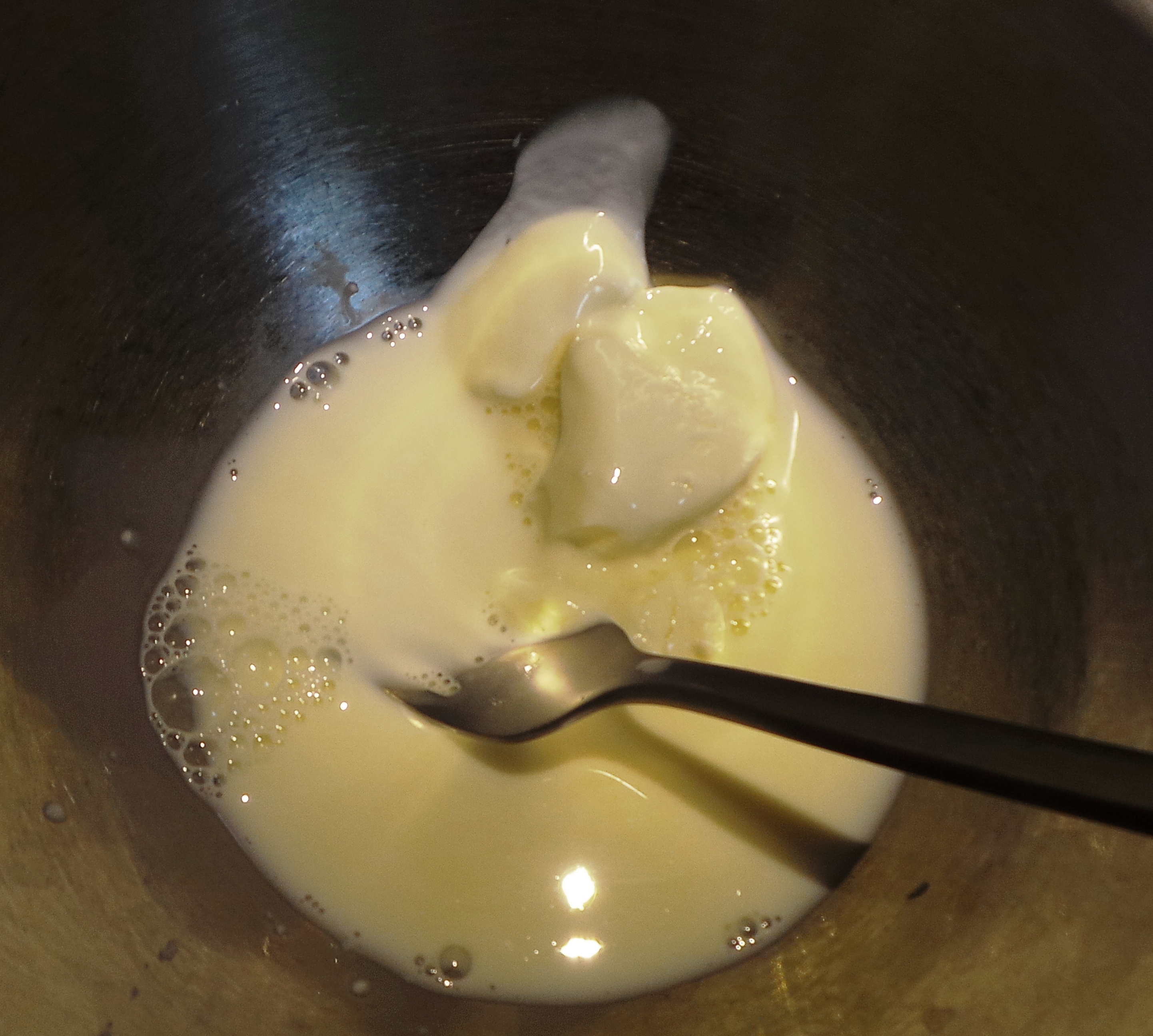
While you are waiting for your milk to cool, place two dessertspoons of your starter culture into a small bowl. A good rule of thumb is one dessertspoonful (2 teaspoons) of starter for each 500ml of milk.

Pace your starter culture into a small clean bowl.

Pace your starter culture into a small clean bowl.

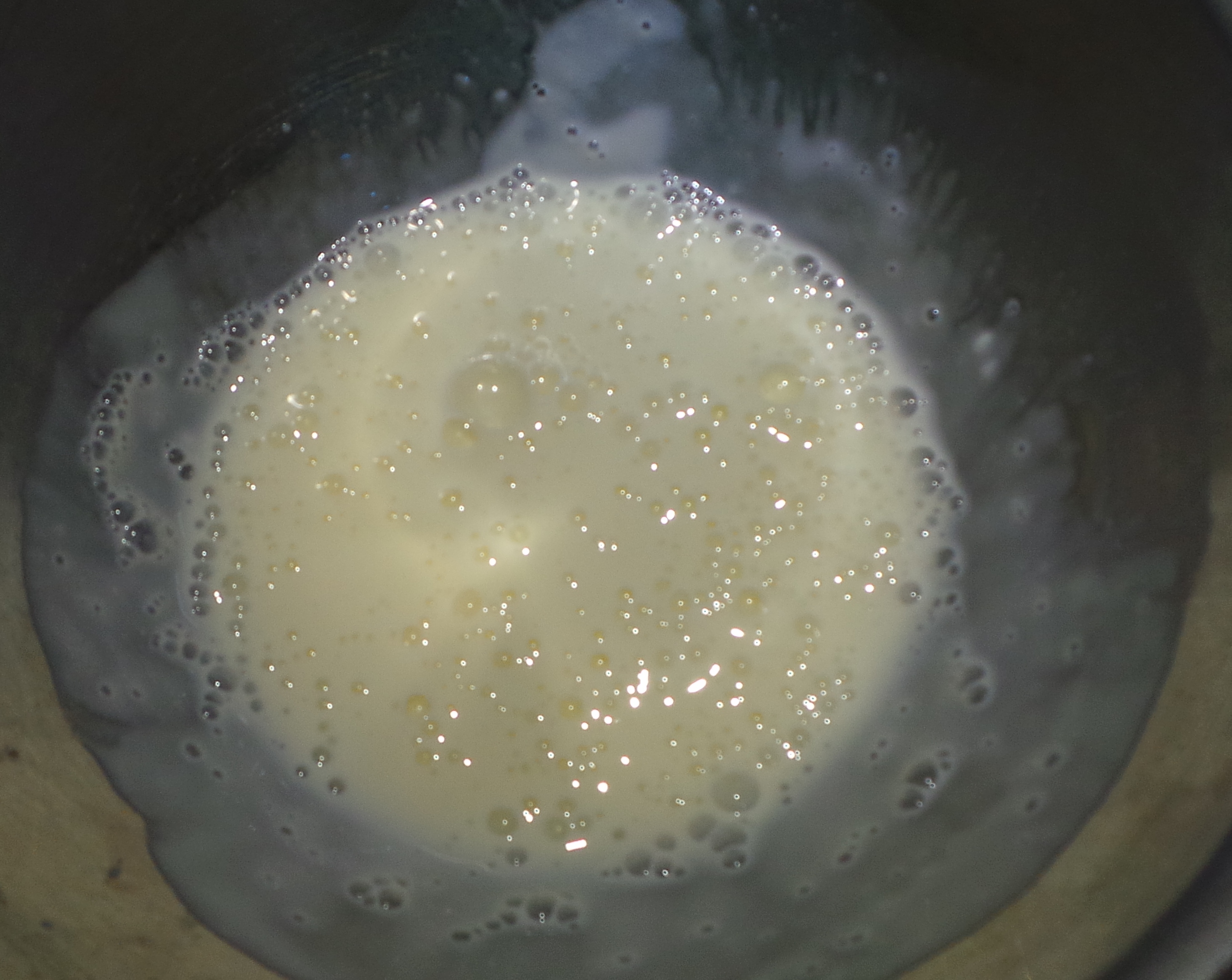
Then, when your milk has cooled sufficiently, place half a cup or so into the bowl and whisk well.

You want the result to be quite smooth.
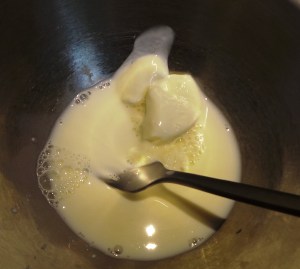
Blend your culture thoroughly into a small amount of warmed milk.

Blend your culture thoroughly into a small amount of warmed milk.

It won’t break, there’s no need to be delicate.
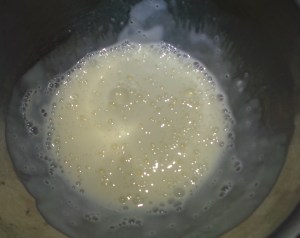
Blend well.

Blend well.

Now reintroduce the liquid in the bowl to the rest of the warmed milk, again blending well.
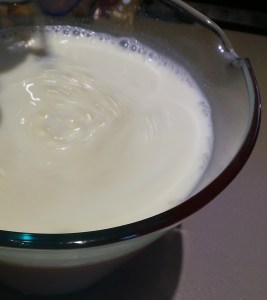
Introduce your culture mix to the rest of the milk and blend well.

Introduce your culture mix to the rest of the milk and blend well.

You’re pretty much done. Now all you need to do is maintain the temperature for 6 to 8 hours. My mother used to put the mix in a bowl with its own lid, wrap it in a towel and place in on the internal water heater overnight. I know some people swear by placing their yoghurt into an oven with just the pilot light on.

You could place it into a thermos or vacuum flask.

Some place their heated milk into a preheated crockpot or slowcooker. To do this preheat your slow cooker on High but switch it off when you add your yoghurt mixture and then wrap the whole thing in a towel overnight.

You could place your sealed container into a foam insulated box, esky, cooler box or chilly bin with a filled hot water bottle for company.

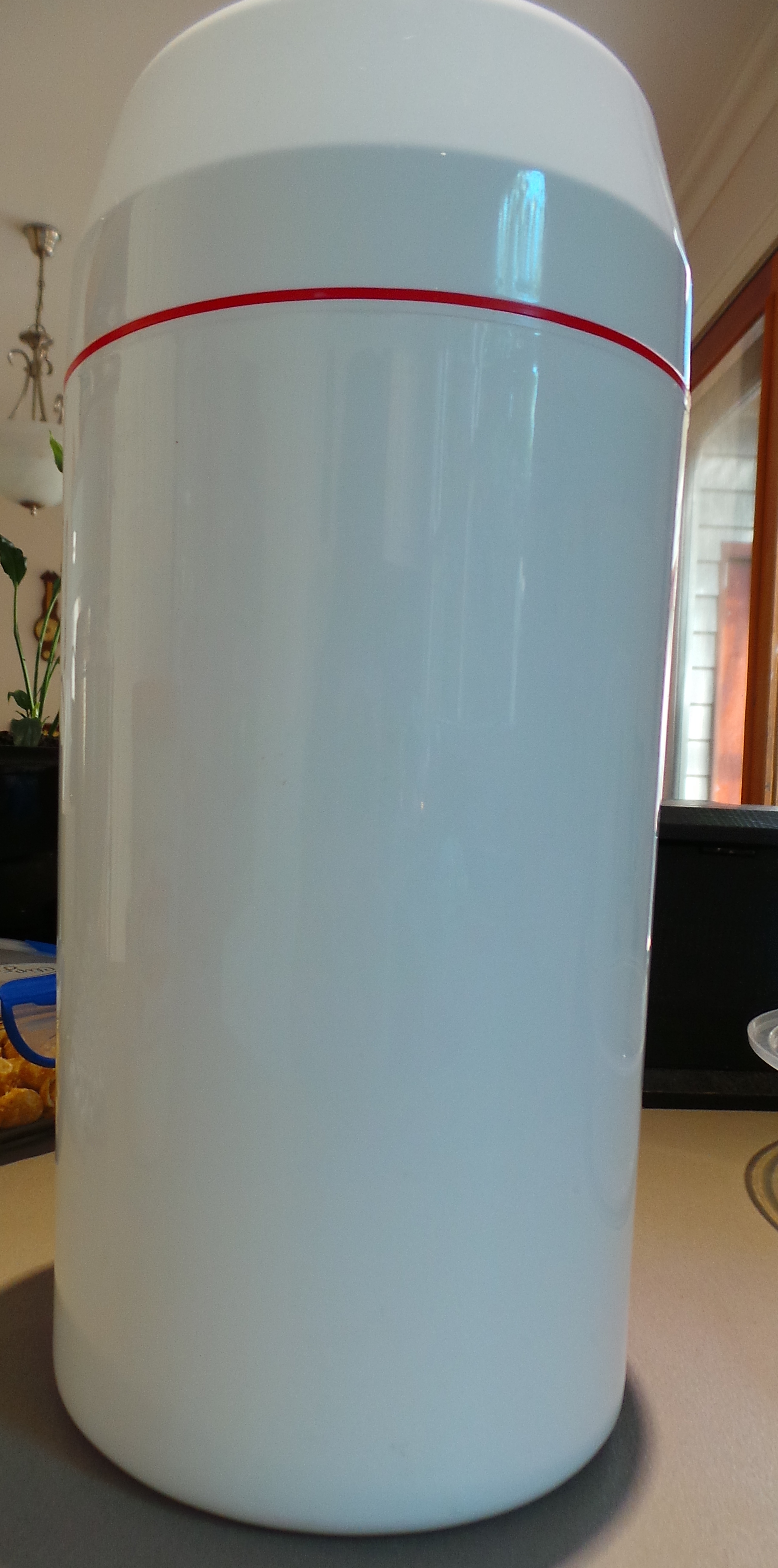
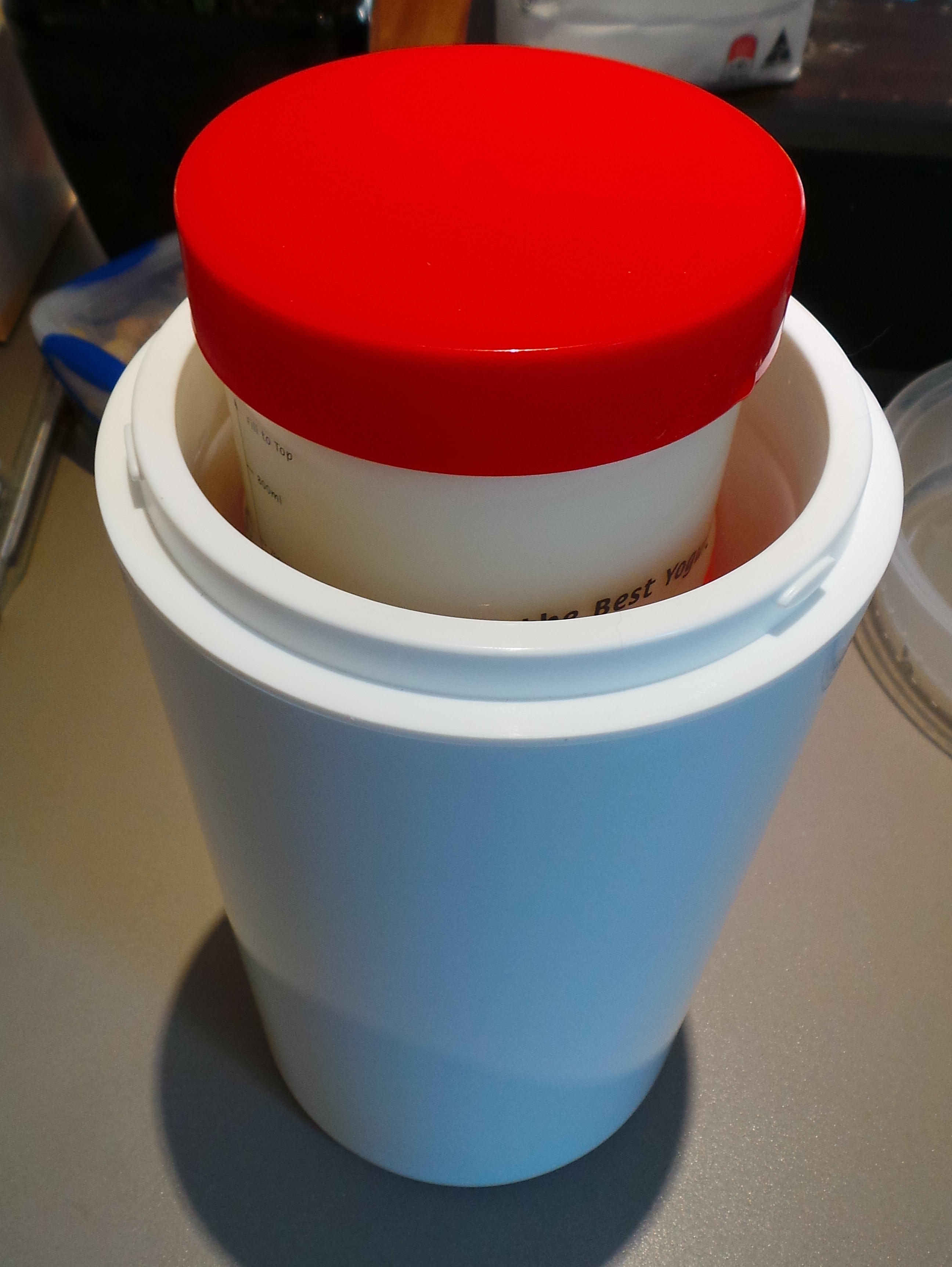
I use a commercial yoghurt making device that is a simple, plastic-covered foam flask.

The yoghurt 'flask'

The yoghurt ‘flask’

I place my yoghurt mix into a plastic container with a screwtop lid, half fill the flask with boiling water, pop the container in, put on the lid of the flask and leave it overnight.
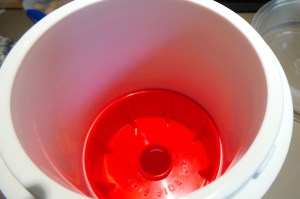
You simply half fill it with boiling water.
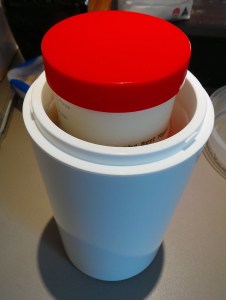
You simply half fill it with boiling water.

Add boiling water and then your yoghurt mixture.

Add boiling water and then your yoghurt mixture.

I like using this because it’s so convenient. Firstly, I can simply take the set yoghurt out in the morning, wipe off the container and put it in the fridge as it is. Secondly, the flask itself takes up very little room and can be popped in a corner, on the dining table or anywhere else with very little trouble.

I will be offering one of these in a competition for my readers in the next few days.

I also like not having large containers of warm liquid to juggle (and most likely spill everywhere).

It is far better to make smaller amounts of yoghurt often, rather than large amounts infrequently. Your yoghurt depends on the freshness of the starter culture so, if you keep your own stocks ticking over, you will be able to continue using your own yoghurt as a starter for longer.

It’s also easier to cope with a litre or two at a time in your refrigerator than it is to cope with a gallon of it. Trust me.

Make up your yoghurt of an evening and it will be ready for the refrigerator first thing in the morning. Try not to leave it to ferment for any longer or it will become quite sour. Go about your day and let it set – leave it alone.

That evening it will be ready for you to strain off the whey, divide for portable lunches or breakfasts, flavour or use in other recipes.

Just remember to put a few spoonfuls aside to start off your next batch!

You may wish to enrich your yoghurt with milk powder or cream. This isn’t necessary, but it can give you a much firmer yoghurt. I shall include instructions for how to do this in the recipe below, but plain old milk is fine. 🙂

I will be posting a few ideas for how to use your yoghurt in the near future.

How to make Yoghurt

Ingredients

I litre fresh milk

¼ cup skim or full cream milk powder

1-2 tablespoons fresh commercial yoghurt

Method

Rinse all equipment in boiling water to sterilise.

Heat-proof glass mason jars with loose fitting lids are ideal for incubating and storing your yoghurt.

Pour  milk into a saucepan and then blend in the powdered milk until thoroughly dissolved.

Bring gently to a boil.

Remove from the heat and allow to cool until tepid – 45°C.

Place your culture into a small bowl and add ½ a cup of your cooled milk. Blend well with a fork or a whisk.

Reintroduce this mixture to the rest of your heated milk. Again, stir well.

Pour the culture mix into an incubating container and keep warm for at least 6 hours.

Do not disturb your yoghurt while it is setting!

When the yoghurt is set it will have a thin layer of clear, yellowish liquid surrounding it. This is whey and is perfectly normal (and edible).

Place your containers into the refrigerator to cool and set more firmly.

When you wish to eat the yoghurt, you may stir in the whey (it is high in protein) or strain.

Reserve several tablespoons of your yoghurt to act as your starter in your next batch.

Looking for things to make with your yoghurt? Try these:

Frozen yoghurt
 

Yoghurt 101

A Potted (Yoghurt) History

Yoghurt is a food that has been with us for millennia – at least since we started collecting milk from animals and storing it for any length of time.

It’s a foodstuff that started out big in Central Asian cultures back in the Neolithic (ah, the good old days!) and which has really only spread into the Western world since the 1900s.

I know. Weird, eh?

Coz it feels like it’s always just been a thing.

Basically, someone (somewhere) kept some milk at a warm enough temperature that the bacteria it carried started to multiply and change the proteins of the milk. They then tasted it and decided it was good.

They were right.

Make your own yoghurt in next to no time.
Make your own yoghurt in next to no time.
What is yoghurt?

It’s highly nutritious and endlessly delicious. High in protein, tolerated well by people who may usually have difficulties with ingesting dairy products and full of microbes that may help a gut worn down by living and digesting in the modern world.

That last bit, my friends, means that eating yoghurt can help you, as a denizen of the modern-day,  get some of your zing back while adding a tang to your diet.
It’s also incredibly easy to make  – takes me 5 mins work and a few hours waiting – and can be made at a marked saving from buying commercially produced stuff.

Which is also good, because you can never be quite sure just what is in that tub of yoghurt you’ve just brought home from the supermarket, especially when food numbers get involved.
More on that later…..

Yoghurt is the child of bacteria. Certain desirable strains of lactobacillus are cultivated in a portion of milk to act on the lactose (or milk sugars) the by-product of which is lactic acid. The lactic acid then acts on the caseins or milk proteins and changes your milk into a thick custard-like liquid instead, which is – in turn – rich in many, many more of those bacteria than there were at the start of the process.

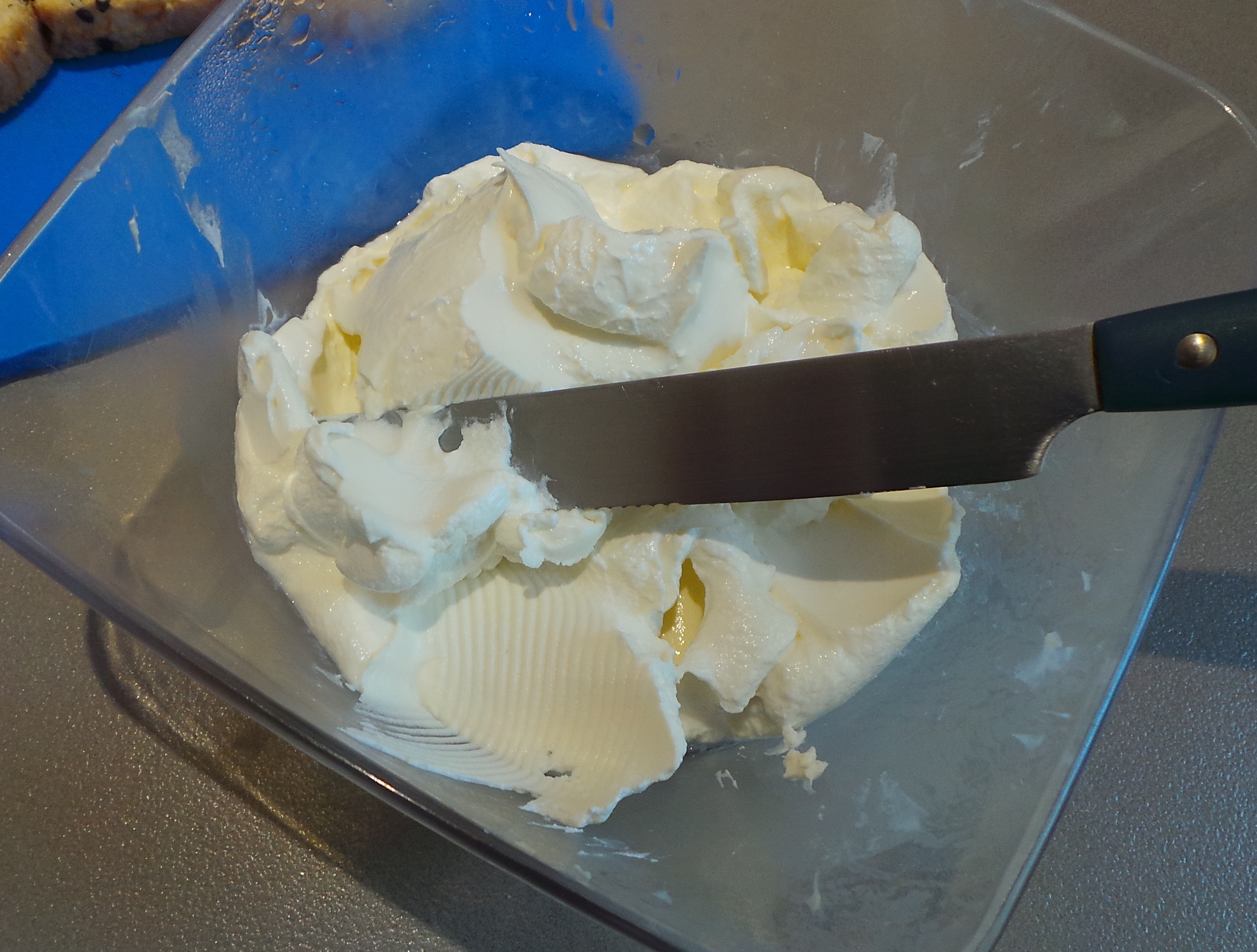
Yoghurt cream cheese
Yoghurt cream cheese
SAfety concerns

This last bit is really very important. Milk naturally contains many different types of bacteria – there are the ones that make yoghurt and there may also be the ones responsible for listeria, salmonella, tuberculosis, typhoid fever, diphtheria, brucellosis, and Q-fever as well as your good, old-fashioned e coli. Milk is a highly pathogenic liquid, keep it warm enough and all of those bacteria will grow – right alongside the beneficial bacteria that turn it into yoghurt.
In Australia, all commercial milk is pasteurised to render these bacteria harmless and thereby extend the life of the milk and protect the population from preventable diseases.

So, in ancient times, one could simply have left a bowl of milk somewhere warm and it would have become yoghurt all on its own without any real human intervention. Equally, it could have turned into yoghurt with a strong TB flavour and just a soupçon of salmonella. This can also happen today with raw milk.

All raw milk must be heated to kill the native bacteria. Boil it and then cool before adding your culture.

Strawberry Frozen Yoghurt

Strawberry Frozen Yoghurt

Why make your own?

Umm…because?

Yoghurt is one of those things that can save you a small fortune if you are a large user. A litre of milk costs $1 in many supermarkets at the moment and a kilogram of plain, natural or Greek  yoghurt can cost between $4 and $5.

Flavoured and diet yoghurts often contain more stabilisers and sweeteners than they do actual nourishment in the form of milk proteins.

Check out this video from our wonderful consumer advisers at the ABC’s The Checkout.

Apart from the sugar or artificial sweeteners, you are also looking at maize thickeners, and other thickeners made with soy-based lecithin, agar agar (406)  and caraganeen(407). Not to mention a whole host of other things I could not hope to cover adequately here.

Note the numbers on this supposedly natural yoghurt. 1442 is hydroxypropyl distarch phosphate. Apparently.

Note the numbers on this supposedly natural yoghurt.

These are often added to low or no fat yoghurts to remediate the texture of the product once the fats have been removed. The fat gives it the thick creamy texture that feels so good in your mouth, remove that and it becomes a somewhat thinner liquid with a greatly diminished taste.

However, if you make yoghurt with skim milk there are other ways to make it thicker without adding emulsifiers or stabilisers – and I will show them to you.

This is what the ingredients list on natural yoghurt should look like:

Greek yoghurt label

Greek yoghurt label

As you can see it contains milk, milk products and some latin words which name the cultures it contains.

You can use this yoghurt to make your own at home. You can then go on to make flavoured yoghurt for school lunches etc.

How to make your own yoghurt.

In order to make your own yoghurt, you need milk. This can be Cow’s milk, goat’s milk or even Soy Milk. You may wish to enrich your milk by adding cream or well-dissolved powdered milk.

You also need cultures. The four main commercial bacterial strains used in this country are: Lactobacillus acidophilis, L. bifidus, L. thermophilus and L. bulgaricus.

The last two are most often seen together in Greek yoghurts.

You can buy cultures online, or you can buy a tub of natural yoghurt at your supermarket and use a few spoonfuls of that. The fresher the culture the better your chances of achieving a good set.

You will need something to heat your milk in, something to measure the heat of the milk with and something to store your yoghurt in as it ferments.

Basically, you warm your milk, stir in the culture and leave it to sit overnight.

So, you will also need either a warm place or a way to maintain the heat of your yoghurt for at least 6-8 hours.

My mother used to mix her yoghurt in a bowl, wrap it in a towel and place it on the (internal) hot water heater overnight.

You could place your yoghurt in a thermos or vacuum flask, in a small foam cooler with a hot water bottle, you might even use a slow cooker turned to low, or place it in the oven with just the pilot light on. There is no need for fancy electronic yoghurt-making gadgets that make it all seem so very difficult.  Really, truly.

The yoghurt 'flask'

The yoghurt ‘flask’

I actually use a yoghurt maker that is nothing more than an insulated flask. It’s meant to be used with powdered yoghurt-making mixes, but works just as well with the technique I will describe in my next post (this one has been long enough!).

Add boiling water and then your yoghurt mixture.

Add boiling water and then your yoghurt mixture.

I’m planning on giving one of these away shortly, so stay tuned. There will also be quite a few posts to come which will show many different uses of your yoghurt that go beyond a breakfast item.

My latest batch of homemade yoghurt

My latest batch of homemade yoghurt


Basics – How to boil an egg

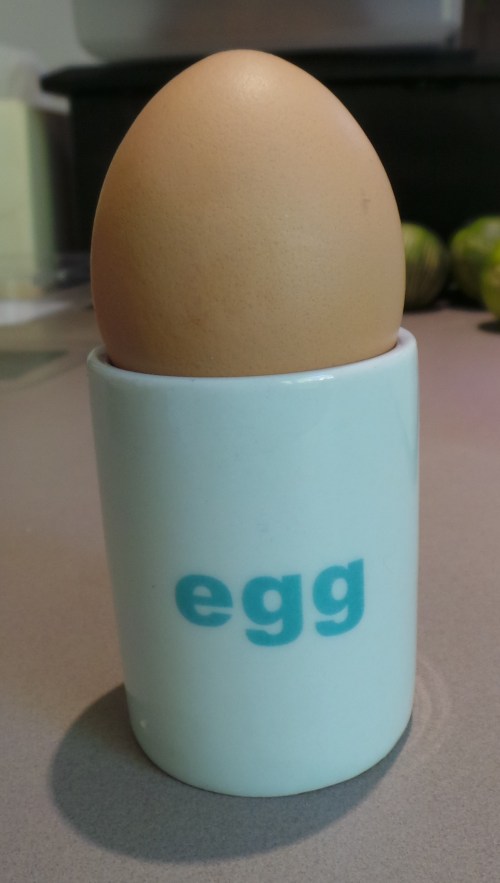
Egg cups don't have to be fancy and can help build vocabulary...

If someone had told me a year ago that I would be writing about boiling eggs, I should have declared them mad, MAD I tell you!

I hated boiled eggs with a passion. The smell mostly. The texture of the whites was also quite off-putting.

Apparently, it all harks back to when I was an infant and my mother was advised to feed me coddled eggs. In our particular case it was a raw egg, just heated.

Eww.

However, I decided a year or so ago that I was now quite a long way from being an infant and really should demonstrate my adulthood and try again.

It took quite some time to find a method that worked and didn’t result in broken shells, or rubbery eggs. Or stink the house out.

Mind you, I still can only palate them if they are accompanied by Vegemite toast.

Anyway, here goes. This method is the one I have settled on. It results in much less – ahem – aroma and the shell stays intact until I want it broken.

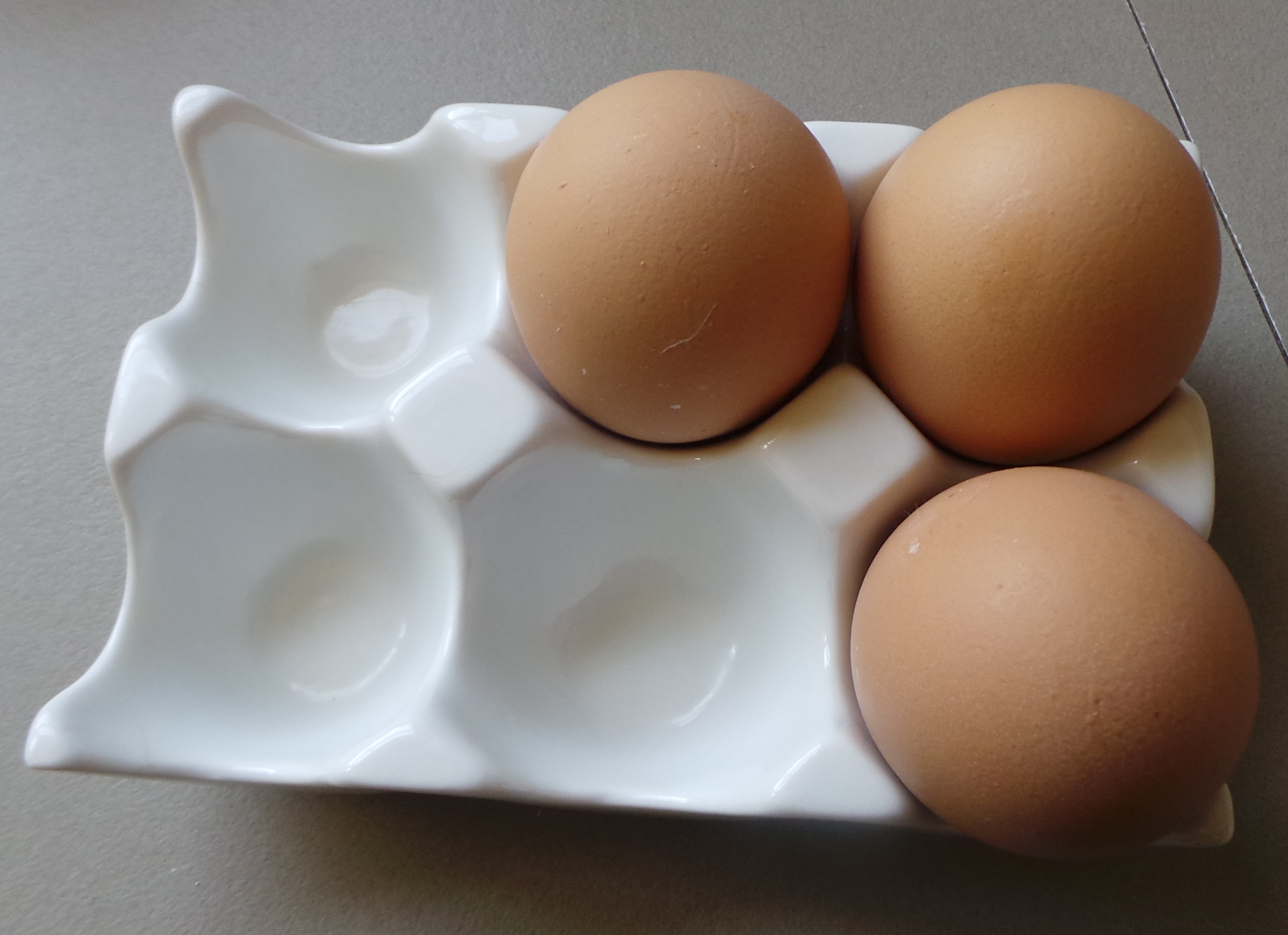
I keep half a dozen eggs on my counter in a cute little china egg carton thingy I found at 70% off in a kitchen wares shop.

A frippery.

A frippery.

This way, I always have a room temperature egg to begin with (reduces risk of breaking) as well as some ready for spur-of-the-moment baking.

If you live in America, this may not be advisable, read this article for why. If you wish to have one for breakfast though, try making a note to get one out of the fridge the night before…

So, place your egg in a small saucepan and cover with tepid water.

Cover your egg with coldish water

Cover your egg with coldish water

Place the lid on your saucepan and bring it to a boil.

Once it reaches boiling point, and by this I mean a nice rolling boil and not just a simmer, take the whole thing off the heat. Put your saucepan elsewhere and leave the lid on.

Set a timer for three minutes, for well set whites and soft but not runny yolks. If you are having toast, put it on to cook now. 🙂

When your timer goes off, retrieve your egg from the water. The water will still be hot. Please be careful. Sigh.

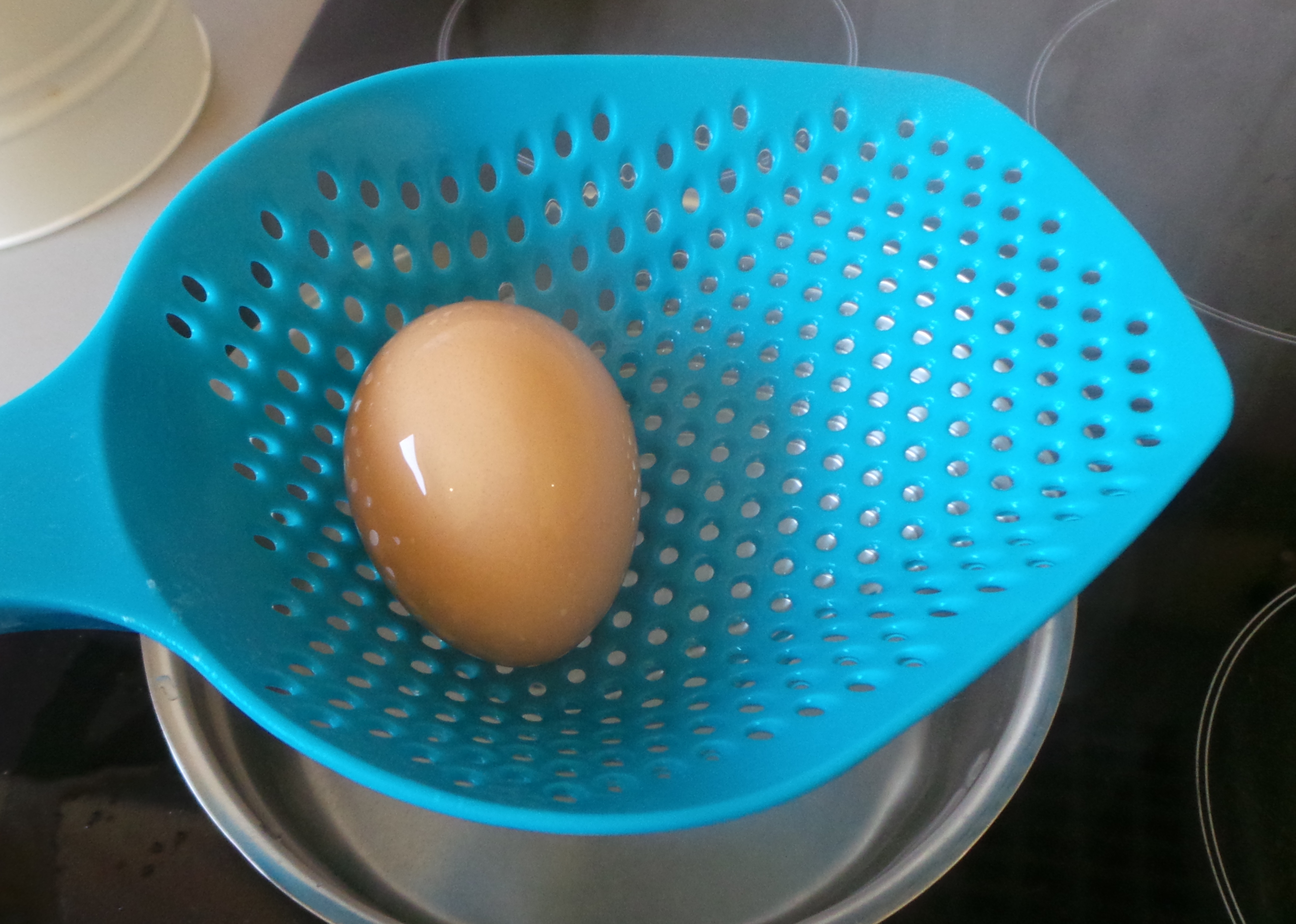
I bought myself this rather nifty scoop from Kmart for $2. It saves my fingers every time. I scoop my egg out and roll it into a waiting tea towel – because it’s HOT.

Scoop out the egg.

Scoop out the egg.

I place the scoop straight into the cutlery holder to dry and simply empty the saucepan and place it onto the rack to drain. If you wish to do the full washing up thing with them though, then by all means feel free…

Now you can go about getting into your egg however you want. I’m going to describe my boiled egg ritual for those who are also uncertain and for those who know nothing of this strange foodstuff.

I’ve invested in a few ‘egg only’ gadgets in the last year. I’m quite clumsy with my MS and that often doesn’t exist comfortably alongside delicate items like, oh I don’t know…eggs, maybe? Hot eggs?

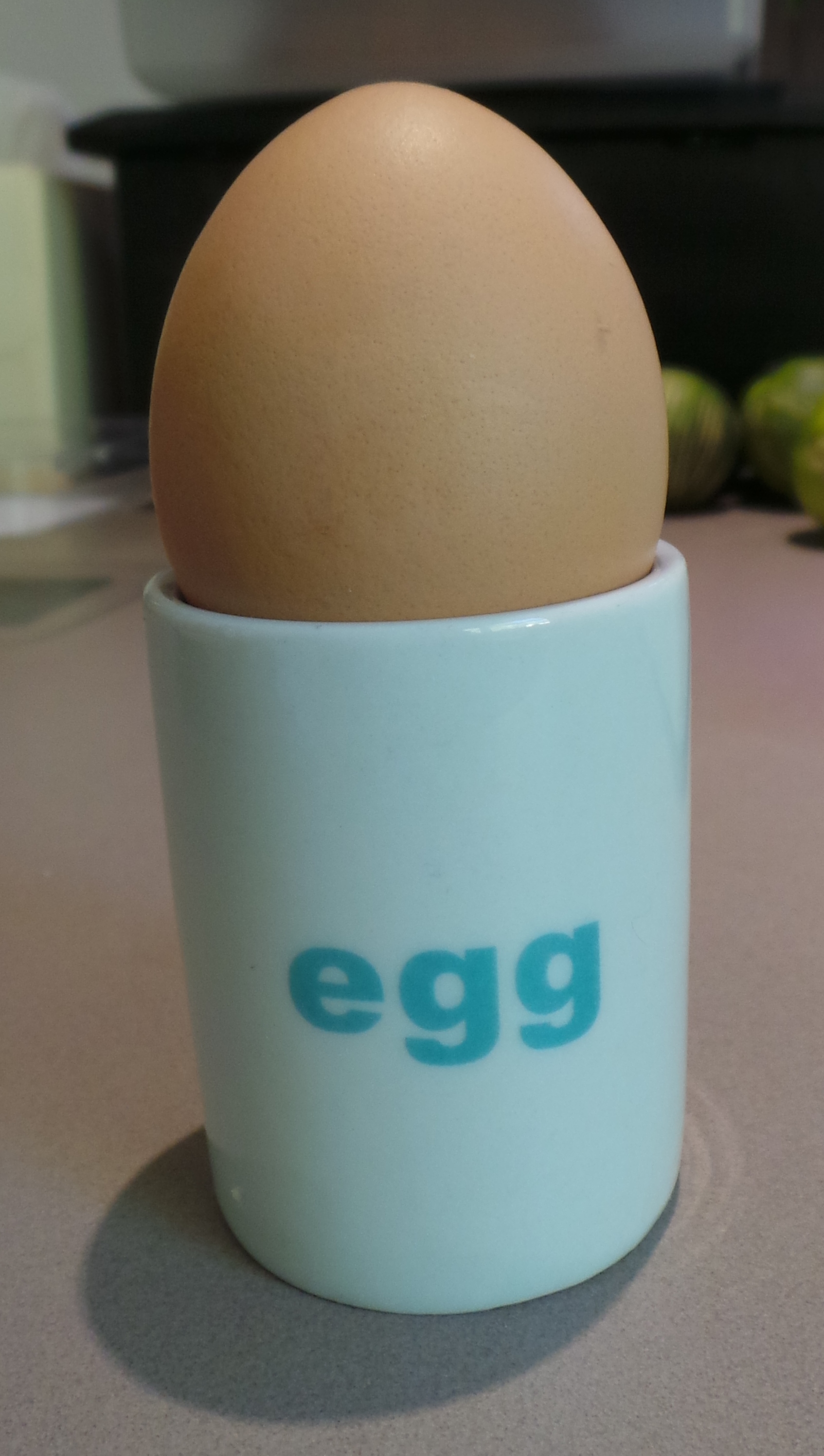
Egg cups don't have to be fancy and can help build vocabulary...

Egg cups don’t have to be fancy and can help build vocabulary…

Also, I had that whole not liking them thing and anything to make the process more pleasant really helped me get over the ick factor.

And I can work eBay. ‘Nuff said.

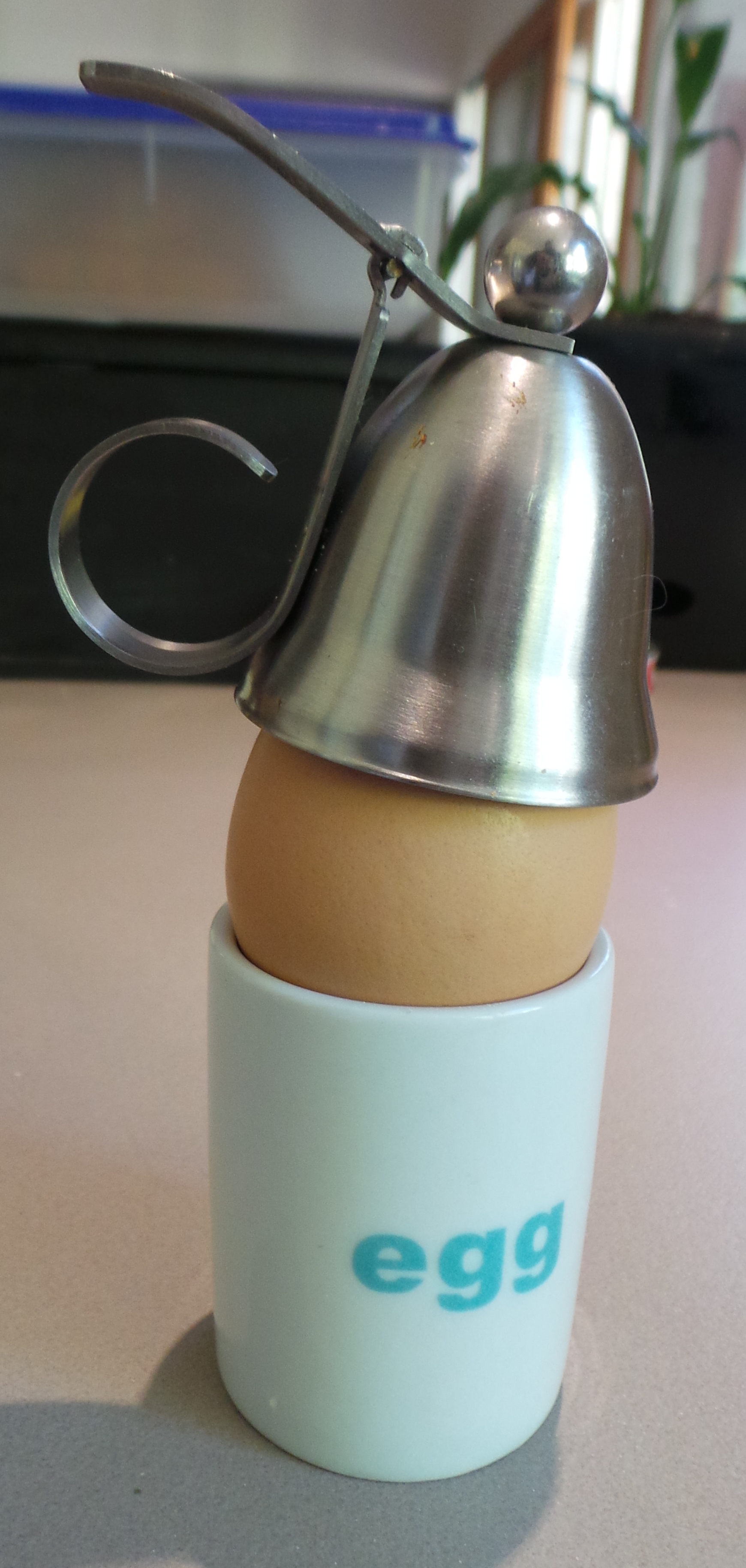
So, I pop my egg into an egg cup that I got from the great emporium that is Kmart and then cut off its top with this egg topper thing that makes the world a nicer place to be – especially first thing in the morning.

My MS-proof egg topper

My MS-proof egg topper

It basically cracks the shell all the way around, without piercing the egg itself,

2014-12-13 10.09.00enabling you to insert a knife into the break and cut the top off, without getting shell all the way through your egg.

This is important to the boiled egg phobic amongst us. Really.

2014-12-13 10.10.03

Once my egg has lost its cap,

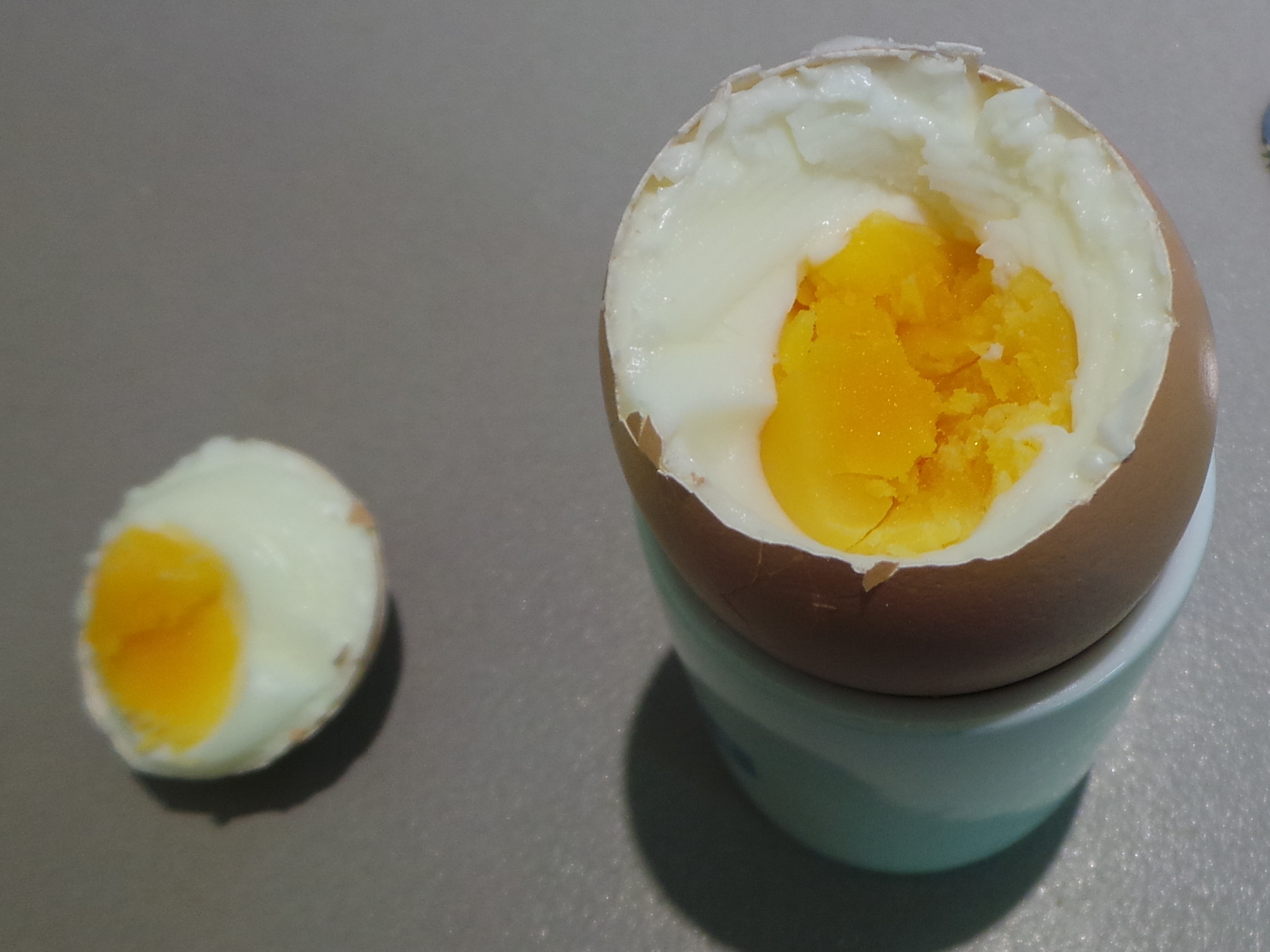
My ideal 3 minute egg

My ideal 3 minute egg

I remove it from the shell using a little egg spoon I found on the aforementioned eBay.

2014-12-13 10.10.57That would be the one on the left. It fits perfectly inside the shell, scooping out the egg easily without crushing the shell to pieces and getting it all through the egg.

One shell without its egg

One shell without its egg

I’m sure you could just eat the egg straight out of the shell with it, but I use it to scoop the whole thing out and put it on my plate with my toast. Then I mash it onto my toast with a fork.

Because I can.

Breakfast: Boiled egg and Vegemite toast fingers.

Breakfast: Boiled egg and Vegemite toast fingers.

You may wish to dip your toast fingers (soldiers) into a runny soft boiled egg. Try only cooking it for 2 minutes.

Experiment to find the timing that works best for you. Larger eggs will take longer to cook, as will eggs that are straight out of the refrigerator; you be the judge.

If you want a hard-boiled egg for a cold lunch, cook it for at least 4 mins and then put it into a bowl of cold water immediately afterwards. It will be a lot easier to peel and not have that green circle around the yolk that happens sometimes.

Oh… and if you happen to be eating on your deck and then you happen to end up with just a touch of Vegemite on your fingertip, then I suggest sharing it with your cat¹. The B vitamins are great for their coat – and their tongues tickle.

Truffles's daily vitamins.

Truffles’s daily vitamins.

Good kitty.

¹I’m sure this will work just as well for dogs.

Sugar Body Scrub

A non-food item from the Budget Bounty kitchen today.

Two reasons:

  1. It’s too hot, and
  2. I’m tired of cooking.
  3. So there.

Instead, here’s something to contribute to a bit of self-pampering. It’s also a great DIY gift idea for kids to make for future Christmas or birthday gifts.

Sugar Scrub...

Sugar Scrub…

A few years back, sugar scrubs were on sale everywhere.

A few years back I was wondering why anyone would buy something that was so simple and inexpensive to make

At this time of year skin suffers.

Whether you are in the summer of the Southern Hemisphere, or in the winter of the Northern Hemisphere, you are more than likely to be having some dry skin issues right about now. Dull, itchy skin does not a good holiday season make.

Take a few minutes and some affordable ingredients and make yourself a nice exfoliating/moisturising scrub for your morning tub.

All you need is some sugar and some Sorbolene.

Really truly.

Sorbolene is a great all-round moisturiser as well as often being recommended for treating dermatitis and eczema. It is quite affordable and I can usually buy mine in 2 litre bottles for less than AUD $10. These bottles last for years at a time…

It also works far better here than more expensive lotions. These tend to separate; you will end up with a container half-filled with a concrete-like sugar substance and half-filled with water.

Don’t do that.

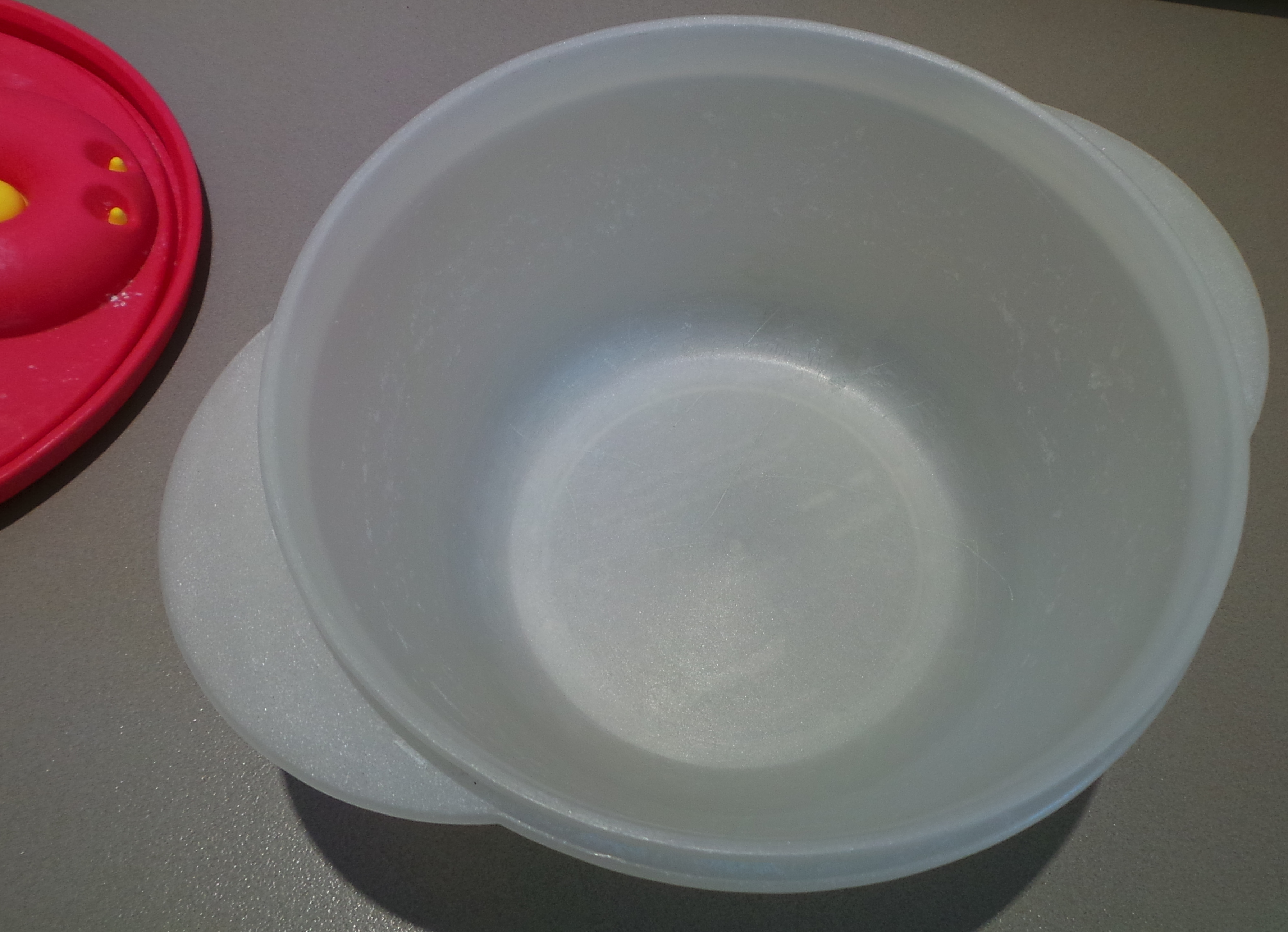
Get yourself a container in which to put some sugar. You want something with a wide mouth that you can fit your hand into. I use an old Tupperware microwave container, but a wide-mouthed jar or a plastic takeaway container would also do.

A very old Tupperware microwave container.

A very old Tupperware microwave container.

Whatever you choose, make sure it has a tight-fitting lid. This will be living near your shower if you are anything like me, and you will be wanting to keep it relatively water free.

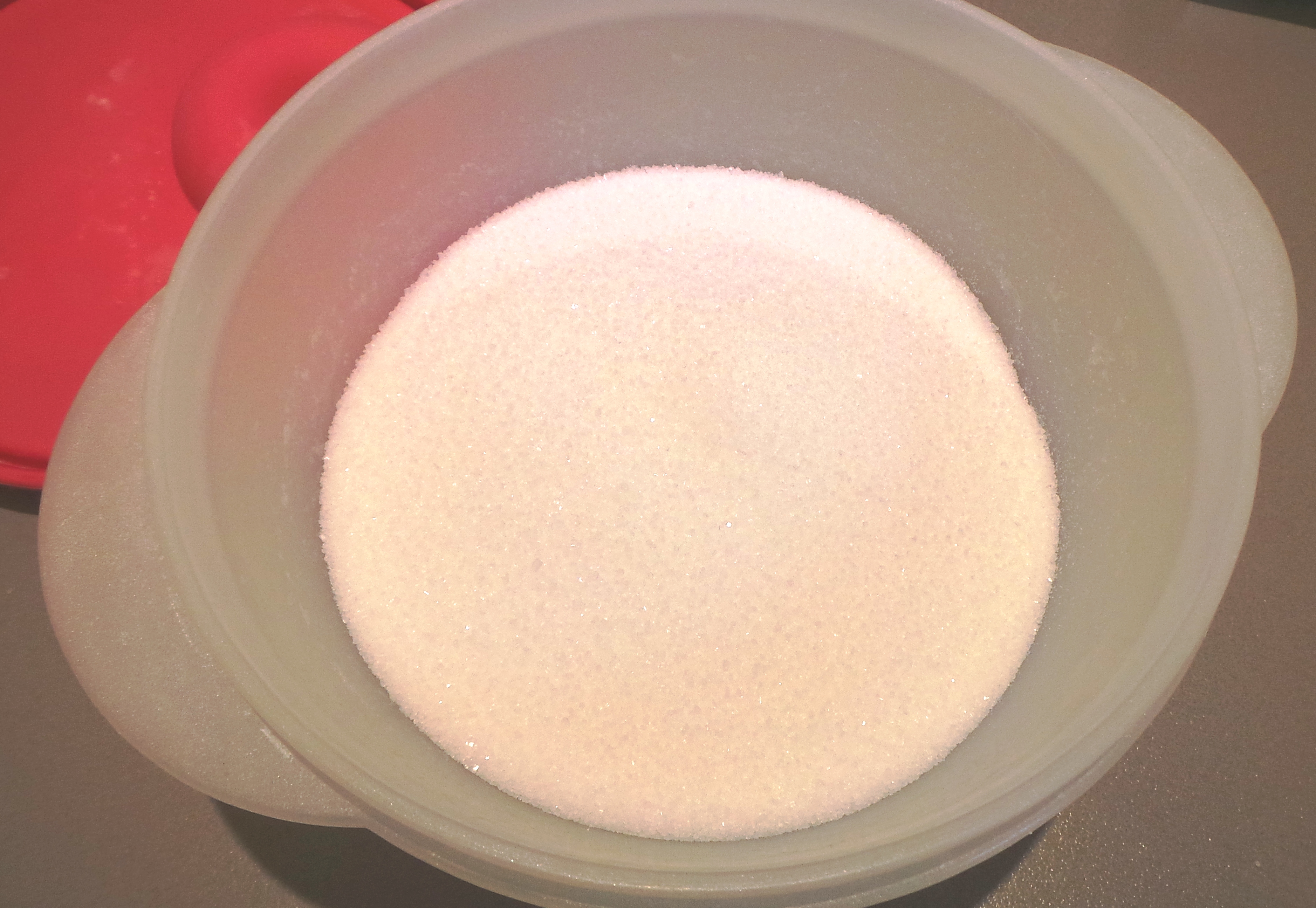
Fill your container ¾ full of plain, white, table sugar.

Put some sugar into your container.

Put some sugar into your container.

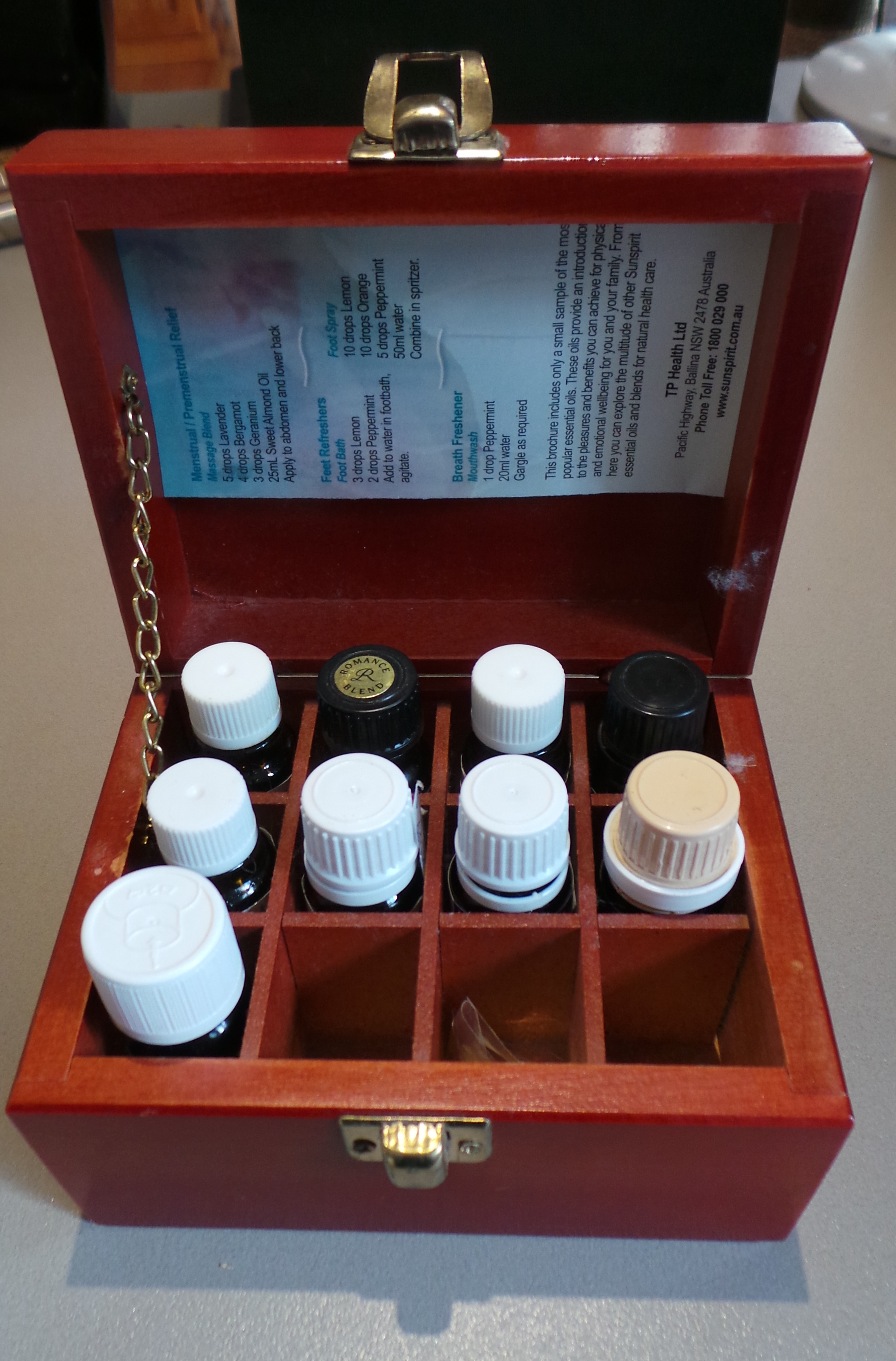
Now, if you wish, you might want to add a few drops of essential oil. I don’t particularly like the smell of Sorbolene, so a few drops of a scented oil make this a much nicer product for me.

Don’t compromise and use any old scented ‘oil’ that you’ve spent mere dollars on here. Essential oils are expensive, but you use them a drop or two at a time and they will last for years if stored correctly. In my small collection I have a bottle that I’ve had for 20 years; it’s only half full now but still smells as wonderful as the day I bought it.

Go to a local health food shop or similar and look at the range – both scents and prices. A lavender oil isn’t going to cost you as much as a Damascus Rose oil, and Peppermint Oil will cost even less.

It’s up to you which scent you get. Do a bit of research on aromatherapy using the interwebz, if that’s something you think you’d like to pursue. One school of thought has it that citrus scents help us to wake faster and feel happier, so if you are a morning grump some grapefruit oil in your morning shower scrub might help you along…

My little stash of essential oils.

My little stash of essential oils.

Also, be aware that some oils may interfere with medications when absorbed through the skin and some should not be used in certain situations such as pregnancy. Check with the person you are buying them from.

If you can’t make up your mind, try sandalwood oil. It’s a nice starting scent and has been used as a perfume since forever (actual archaeological term).

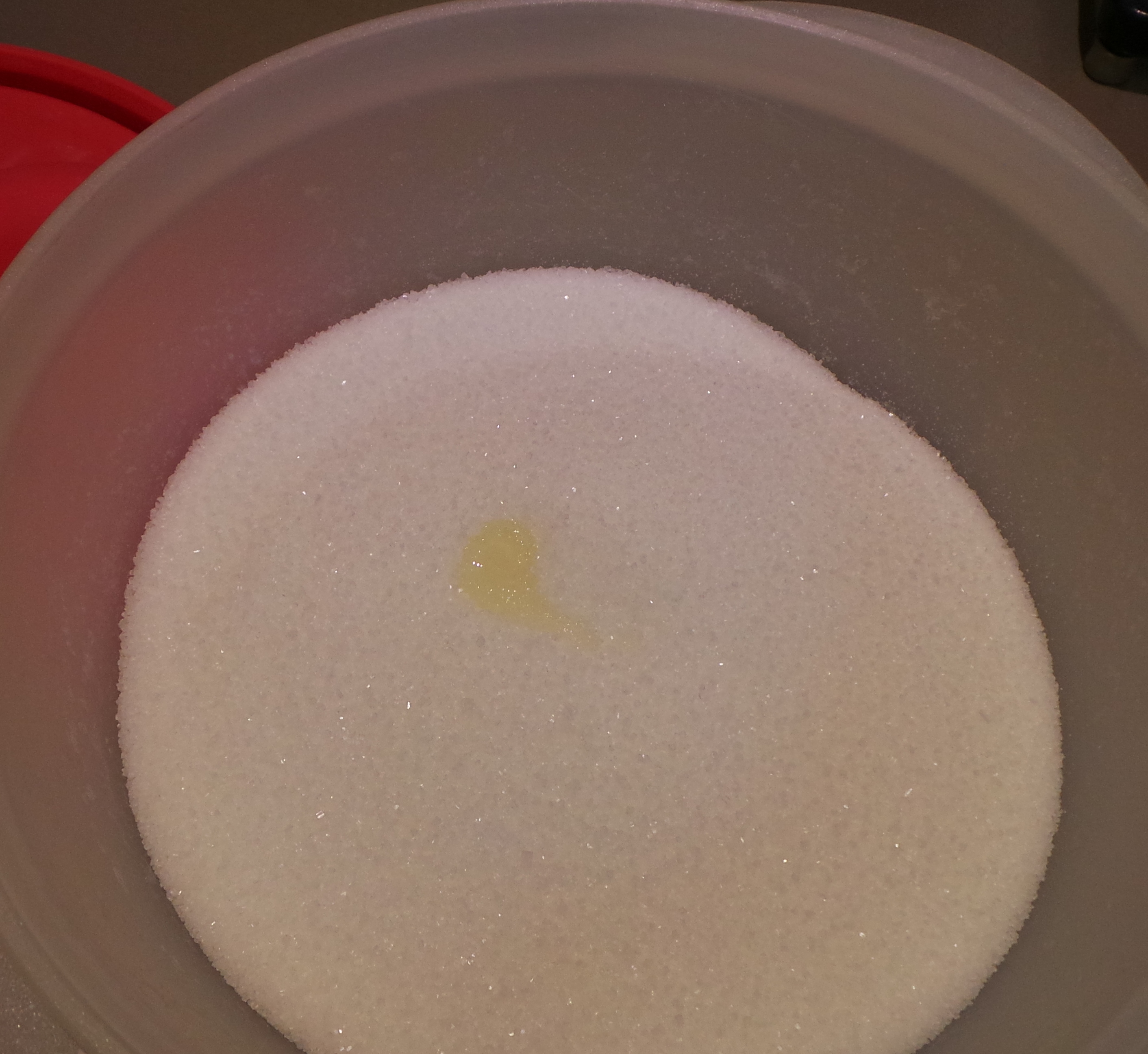
So, shake a few drops of oil onto your sugar. I mean a few. These oils have a very strong scent.

Add a few drops of scented oil to your sugar if you wish.

Add a few drops of scented oil to your sugar if you wish.

You’ll be able to see the oil against the sugar as in the photo above.

Use a fork to break up the lump that will form with the oil and mix it through the rest of the sugar.

Now add your Sorbolene a tablespoonful at a time, mixing thoroughly with your fork.

Add your Sorbolene bit by bit...

Add your Sorbolene bit by bit…

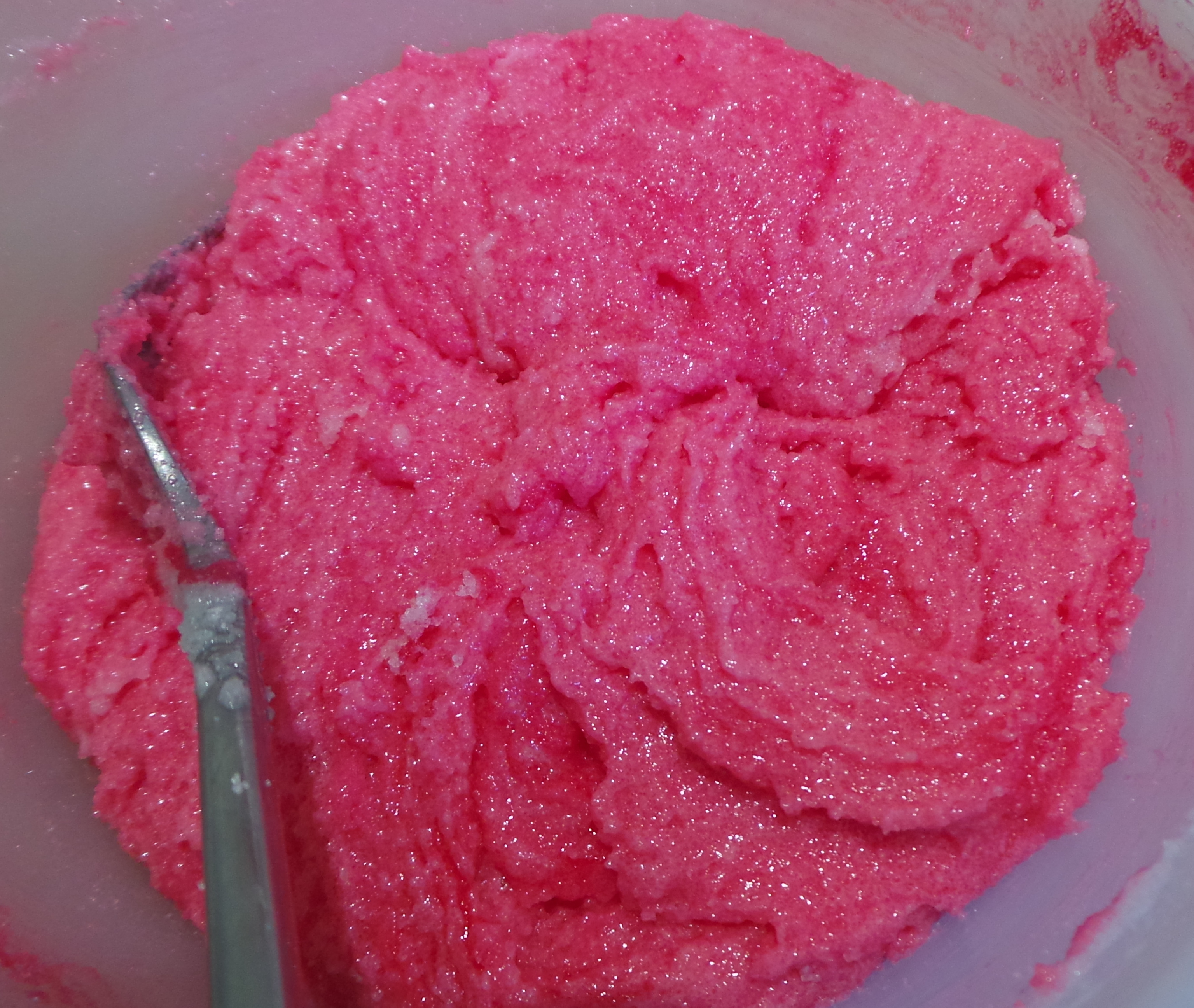
It will start to come together. Continue adding the lotion until you have something that resembles toothpaste in consistency.

You're looking for something that looks like a gritty toothpaste.

You’re looking for something that looks like a gritty toothpaste.

And you’re done.

If you are making it as a gift, feel free to add some food colouring to pretty it up a bit. See the pic at the top where my hand slipped and too much colouring went in…

To use, simply get under the shower and apply by rubbing onto your wet skin. The sugar will exfoliate and remove any rough or dry skin patches and the sorbolene will trap moisture and leave you feeling silky smooth all day.

The best part is that you won’t have to skimp on using it because it is so simple and affordable to make!

This scrub can also be made using oil instead of Sorbolene, but that will add considerably to the cost and may make your bath/shower quite slippery and dangerous for you (or anyone who uses it after you!).

You may also wish to try using table salt instead of sugar. This is NOT something that everyone could tolerate. Make a small test sample and try it somewhere that isn’t too sensitive before you go making a big batch for all over use.

You have been warned.

And a brief reminder, this is a Body scrub. It’s not advised to use this on the delicate skin of the face…

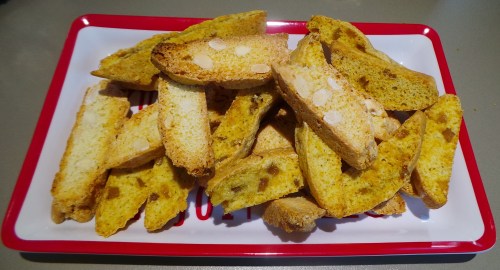
Christmas biscotti platter

Christmas is the time of year I start baking hard, thick, crunchy, chunky, seemingly inedible biscuits and giving large amounts of them to my friends.

No. I’m not mad.

Christmas biscotti platter

Christmas biscotti platter

Biscotti is an Italian word that shows the origin of the English word ‘biscuit.’ Basically it means cooked twice, like rusks or zwieback (also meaning cooked twice), which is why the American use of the word continues to confuse me…

Moving on from etymology, these things are wonderful. Really truly.

They started out in the dim, dark pages of history as a way of making food travel-proof. Dry out your bread and it won’t go mouldy. Simple. Think, ships’ biscuits and Horatio Hornblower. Which means you can make them now and happily eat them in a month’s time.

Biscotti came into my life about 8 years ago and, from then on, I just wanted to share the joy.

A thick, sticky dough is mixed, shaped into logs, baked in a moderately hot oven for a bit, allowed to cool, cut into thick slices (about ½ an inch thick), baked in a slightly cooler oven for a second time until thoroughly dried out and then kept in an air-tight container until dunked into a warm beverage – usually coffee, but tea and hot chocolate rock too – and then delighted in tremendously.

first baking...

first baking…

Italian friends tell me that they also work well dipped in a glass of vin santo …

They usually contain nuts, like whole blanched almonds, hazelnuts or pistachios, dried fruit, like cranberries and, sometimes, coconut. They are also quite low in fat as most recipes contain neither butter nor oil. They do contain lots of flour and quite a bit of sugar though, so don’t go thinking of them as anything resembling a health food.

That said, a biscotto is not something you would inhale in the way you might a sweet biscuit or cookie, so you are less likely to start scoffing them down in large quantities. One will usually be sufficient.

There are endless variations. It all depends on your imagination and your knife.

To make biscotti you need a good, serrated knife.

Now, that's a knife...

Now, that’s a knife…

If you don’t have one, then tears will be the inevitable outcome. I speak from experience.

You are baking something so that it will be crunchy; if you then try slicing that it will simply disintegrate into (delicious) crumbs under your blade. That is bad.

A serrated knife is the only thing that will save your biscuits and your sanity.

Slicing biscotti

Slicing biscotti

Get one. That is all.

Once your biscotti are thoroughly baked and cooled, they will keep for Aeons in an airtight container.

Really!

Well, quite a number of weeks anyway.

Which is why they make such great Christmas gifts.

I figure that most of the people I know already have all the ‘stuff’ they could possibly need and don’t really need to find the space for yet another knick knack they don’t really like. Probably they will be overloaded with sweet biscuits/cookies, cakes and chocolates as well.

Managing mass biscotti baking like this on a budget can be quite doable. The flour and sugar is something that I already have in store, but I buy a bit extra. Then, in the months leading up to baking, I add one packet of special ingredients to my shopping each fortnight. A packet of blanched almonds one week, a packet of crystallised ginger the next shopping week and so forth. Then, in the week before I start to bake, I buy 2 dozen eggs and I’m set to go.

Second baking

Second baking

I make a different batch (recipe) of biscotti for each person on my Christmas run. So, if I’m wanting to give them to 5 different people, I make 5 different types of biscotti. Then I divvy them up, wrap in cellophane and deliver on Christmas Eve or roundabouts.

Because they store so well, I can easily make a different batch each day for a week instead of having one huge baking day. They all go into a large Tupperware Cake Taker until it’s time for them to leave the premises.

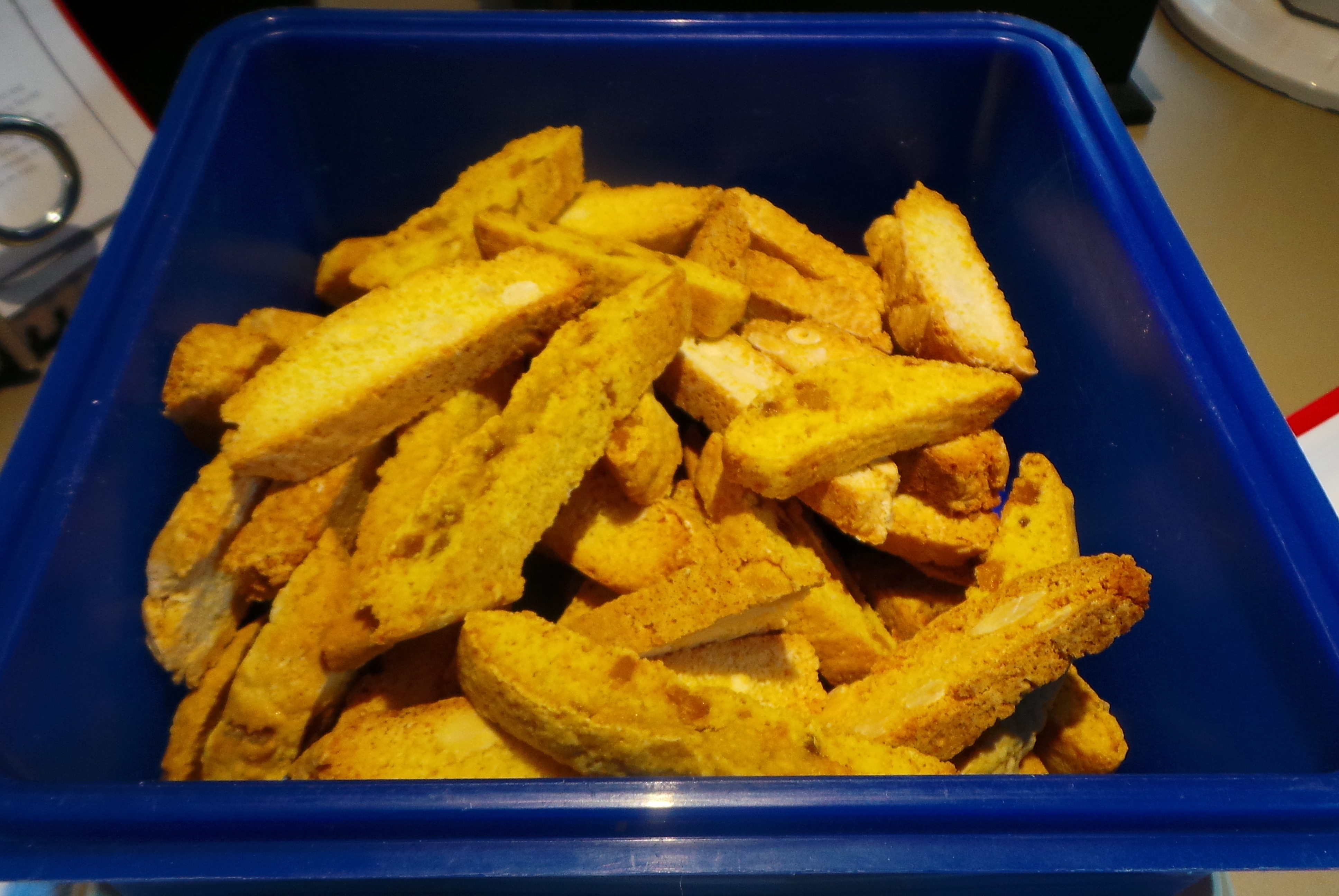
Big box of bikkies

Big box of bikkies

They are easy to mix and shape, but take a lot of time to bake. If you are suffering through one of the sweltering hot versions of the Australian Christmas Season, then do this late at night with all the doors and windows open.

I’ve recently moved away from my friends and can’t give them biscotti this year, so I shall share some of the recipes with them on here instead. 😥

There will be quite a few biscotti posts to come….

Biscotti recipes on Budget Bounty:
Caraway and Lemon Biscotti
Coconut Almond Biscotti
Orange Ginger Biscotti


Basics – Scones (Biscuits)

Devonshire Tea.

Okay. I give in. Just for the Americans among you, I’m going to refer to these as biscuits.

Scones!

Scones!

That’s only going to happen up here, mind!  For the rest of the post they will be known as scones (a word that rhymes with ‘on’, by the way). However, this mere mention at the outset will mean that some of you will find a recipe you are looking for and the rest of the readers will learn that Americans call scones, biscuits.

I don’t know why.

Anyway, these are one of the first things many of us learn to bake – or should. Try making these with your kids, they don’t take a lot of time and are a great way to fill a rainy afternoon.

Scones are also one of those wonderful recipes that lend themselves to variations, both sweet and savoury.

Learn how to make a good scone and you can whip up a batch and serve them within 30 mins of unexpected guests calling, or you can augment the recipe to create a sweet breakfast scroll or a lunch dish along the line of pizza. You could even fill your freezer with quick-bake lunch box fillers and finger food.

Once you’ve made plain scones a few times, then extend your repertoire and give these a go too:

But first, let’s start from the beginning.

Scones are a form of quick bread and may even be considered a type of pastry. They need the bare minimum of ingredients: flour, butter, milk.

They also work best if you handle them as little as possible. Do not use a rolling pin. Ever. I don’t care what you may have seen elsewhere. Just don’t.

Okay?!?!

Ahem.

Let’s just deem them delicious and get stuck in.

Preheat your oven to 230°C or 475°F.

Sift your flour, and a pinch of salt into a largish bowl.

I add a spoonful or two of sugar to my scones following a tip I was given many years ago. It helps to avoid a “floury” taste to the scones when eaten cold in the days after baking. (If any are left.) It really does seem to work, so I keep doing it.

You may, of course, use wholemeal flour if you prefer.

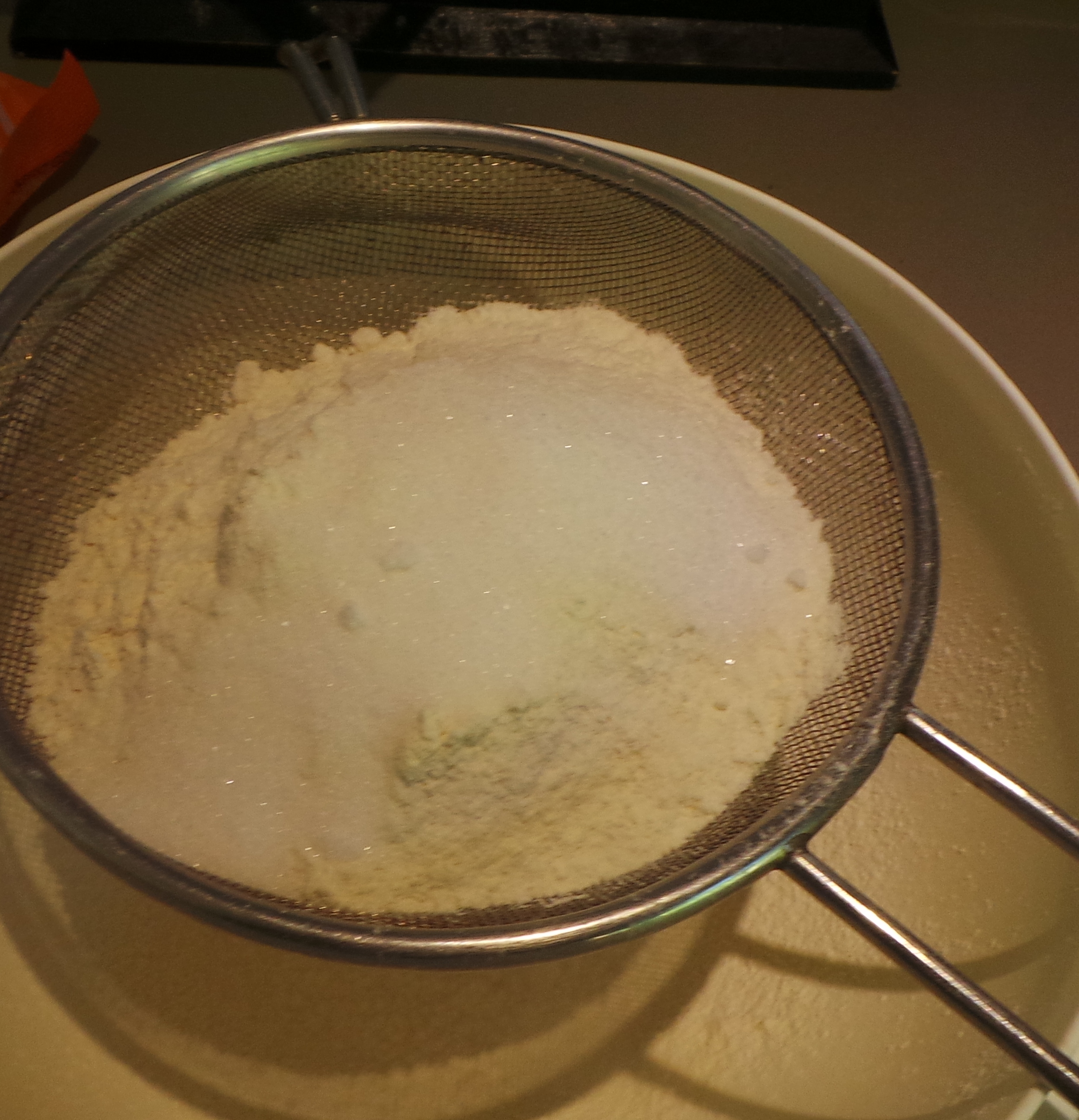
Sift your dry ingredients together

Sift your dry ingredients together.

Cut your butter into small pieces and then rub it into your flour.

add your shortening

Add your butter to your flour.

This stage may be done with something called a pastry blender. I’ve never been in actual physical contact with a pastry blender at any stage in my life, so I can’t tell you how to use one.

You can also use a food processor…apparently. However, this is a very simple, ancient recipe and fingertips are something one usually finds whenever one happens to be in one’s own kitchen – why create more washing up, people? Why??

Rubbing is a technique that is a little hard to describe, and I suspect I may have to make my first foray into YouTube to demonstrate it, however here goes…

Have your butter a little on the soft side, but not too close to melting. Plunge both your hands into the flour and, holding your four fingers together, rub your thumb across them as you lift them out of the flour. Aim to get pieces of butter between your thumb and fingers as you grab the flour. Repeat.

Continue rubbing the flour into the butter until there are no clearly visible pieces of butter left and the contents of your bowl resemble fine breadcrumbs.

Actually a quick questioning of Mr Google has revealed this YouTube clip. It’s not how I would demonstrate it, but it may help 😉

So, now we add our liquid. Milk works well, you may also use buttermilk, a mix of half yoghurt and half milk or all yoghurt.

In the pictures below I have done the latter.

Be aware that the measurement in the recipe is for milk. A greater quantity will be required for the buttermilk/yoghurt options.

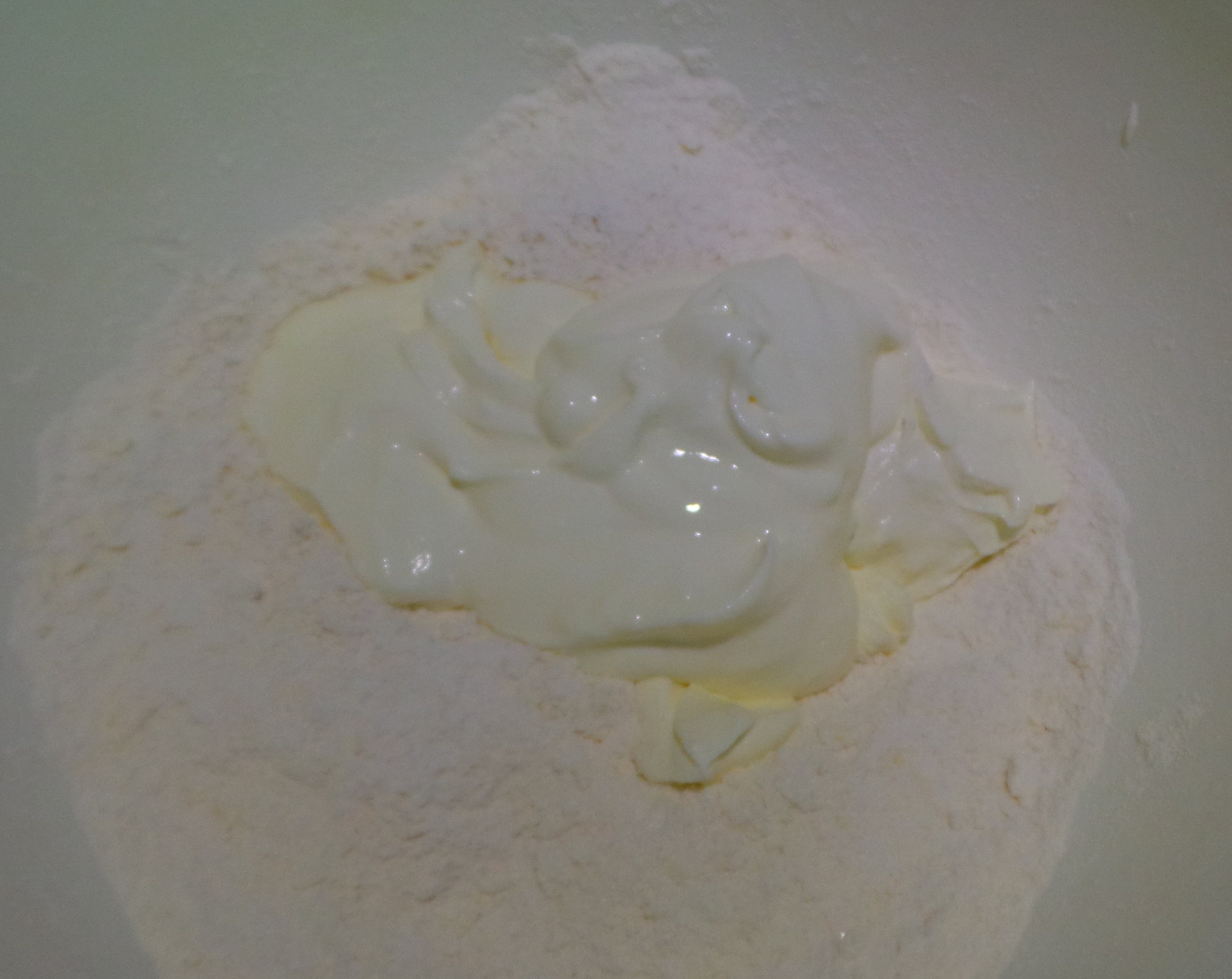
Make a well in your dry ingredients and add 3/4 of the liquid all at once.

add your liquid

Add most of your liquid to the flour.

Now cut the liquid into your dry ingredients using a butter knife. Because my mother said so.

Actually, using a knife to mix in the liquid works a lot better than using a spoon, as it does away with any little hollows for flour to get trapped in.

If there is flour left in the bowl when the liquid has all been incorporated, then add more a tablespoon at a time until you have a bowl of dough and no loose flour.

The mixed scone dough.

The mixed scone dough.

When your dough has all come together – if you are using milk it will be a lot smoother than the dough pictured – turn it out onto a floured surface.

Prepare a surface with flour.

Prepare a surface with flour.

Save yourself a lot of drudge work and cover your work surface first with either a silicon baking sheet -as I have done in the photos -or just with a strip of baking paper. Then, when clean up time comes, you can either shake all the leftover dusting flour into the bin or throw the whole piece of paper in.

No more gluey sponges.

Moving on.

Gently shape your dough into a ball, patting it with flour where it might be sticky, and then gently flatten it with your fingertips into a rough oblong shape about an inch or so thick.

Shape and flatten your dough, using only your hands.

Shape and flatten your dough, using only your hands.

Don’t use a rolling pin, or you will knock all the air out of your dough, making it denser and  tougher.

Place a sheet of baking paper or parchment over a baking tray.

Then, using either a scone cutter or a small drinking glass dipped in some of the flour on your surface, cut the dough into rounds. Re-dip the cutter between scones.

Be as economical as you can with your cutting. Start on the side of the dough nearest to you and cut each piece as close to the last as you can. This way you minimise the need to re-form and re-roll your dough.

Any scones made with dough that has been reshaped will be less smooth than the first cutting, as you can see in the picture below.

The result of reshaped dough.

The result of reshaped dough.

Place each scone on the tray as it is cut, starting in the centre and working your way around. Think in terms of making a daisy shape. Place your scones as close together as you can. This helps them to rise instead of spreading outward.

Any leftover piece of dough that is too small to cut into a scone should be given to any small child who may be “helping” and shaped into their own special creation for baking…

Place closely together on the baking tray.

Place closely together on the baking tray.

Using a pastry brush dipped in milk (or your finger) gently brush the tops of your scones. This will encourage a nice brown finish, but is not necessary.

Bake for 15 mins, until a toothpick inserted in the centre scone comes out clean. Again, yoghurt or buttermilk mixes may take longer to cook.

Now for one of those old-fashioned tricks: Scones wrapped in clean cloth as soon as they are removed from the oven will keep soft as they cool. I have this rather groovy cloth bread basket I bought on clearance at Ikea a few years ago, but two tea towels overlapping in a cross formation should do the trick equally well.

Wrap your hot scones in a cloth to cool.

Wrap your hot scones in a cloth to cool.

Serve your scones. Another tip, don’t cut them in half or they will become doughy. Instead use your fingers and gently break them apart.

And serve..

And serve..

Serve with strawberry jam and whipped cream and a nice pot of Earl Grey for your classic Devonshire Tea, or you can serve them up with butter and any spread you darn well want: marmalade, vegemite, peanut butter. Knock yourself out.

Scones also freeze well and travel quite nicely in packed lunches.

Devonshire Tea.

Devonshire Tea.

Basic Scones

  • Servings: 12 scones
  • Difficulty: easy
  • Print

Ingredients

2 cups self raising flour (250g)

pinch salt

1 tbsp sugar

1 tbsp butter (30g)

¾ cup milk (187ml)

Method

Heat oven to 230°C or 475°F.

Sift dry ingredients into a large bowl.

Cut butter into small pieces and rub into flour until mix resembles fine breadcrumbs.

Add milk and cut in quickly and lightly with a butter knife until a moist dough is formed.

Turn onto a lightly floured board and shape into a smooth oblong about an inch thick using hands and fingertips.

Using a floured scone cutter or drinking glass, cut out scones and place close together on a prepared oven tray.

Glaze with milk.

Bake for 10-15 mins until a toothpick inserted in the centre scone comes out clean.

For soft scones, wrap in a cloth until cold.

 Variations to basic recipe:

Cheese Scones:

Add ¼ tsp mustard or a dash of Cayenne pepper to the flour before sifting. I like using a tablespoon of Old Bay Seasoning.

Add ½ a cup of grated tasty cheese before you add liquid.

Fruit Scones:

Add 2 tbsps of caster sugar to the flour before sifting.

Add 1/3 cup of dried fruit such as sultanas, currants, diced dried apricots or craisins before adding the liquid.


Basics – Pancakes (Drop Scones)

I heart pancakes...

Pancakes are one of those things that always seem special, no matter how they are served.

They really aren’t all that difficult to make, but may require some time on your feet and rather a lot of patience while you get your pan sorted out.

Learn how to make these and then learn to ring the changes and make a savoury version with fritters or a simple variation with sliced apple.

I heart pancakes...

I heart pancakes…

They can be made in adult-sized meal servings or as many ‘baby’ pancakes.

In Australia these baby pancakes are usually served cold and known as pikelets or even drop-scones. As a Queenslander by birth, I grew up calling them pikelets and taking them to school spread with butter and Vegemite. When my family moved to Victoria I discovered them dubbed drop-scones and served with jam and whipped cream

I must confess, I don’t make pancakes very often. They are one of those dishes that starts out a treat but can readily become too much of a good thing as your stomach starts to feel overwhelmingly full…

I’ve also had a lot of frustration with the glass cook top at my new home and had decided that they were just not going to be a thing while we live here. Then, on advice, I bought myself a little butane-powered camp stove and could suddenly fry at a reliable temperature again.

In the meantime there were many tears over many, many failed dishes.

Chocolate was eaten.

Hugs were required.

It doesn’t need to be hard though. If you have a reliable heat source and a good frying pan or skillet, you should be fine. Really truly.

Also, don’t worry about the whole flipping thing. These are pancakes and not crêpes, use a fish slice or spatula and relax.

I’ve made these so many times now that I don’t need a recipe anymore and simply mix everything together in a large Pyrex jug. You, too, can get to that level of confidence following the recipe at the bottom of this post. 😉

Print it off, laminate it and pin it to your fridge. Someone may see it and decide to spoil you with them for a special occasion some time. Ahem.

So, let’s begin.

Sift together your SR Flour, a pinch of salt and some sugar. Feel free to add a pinch of cinnamon or nutmeg, but don’t feel obliged.

Sift your dry ingredients together.

Sift your dry ingredients together.

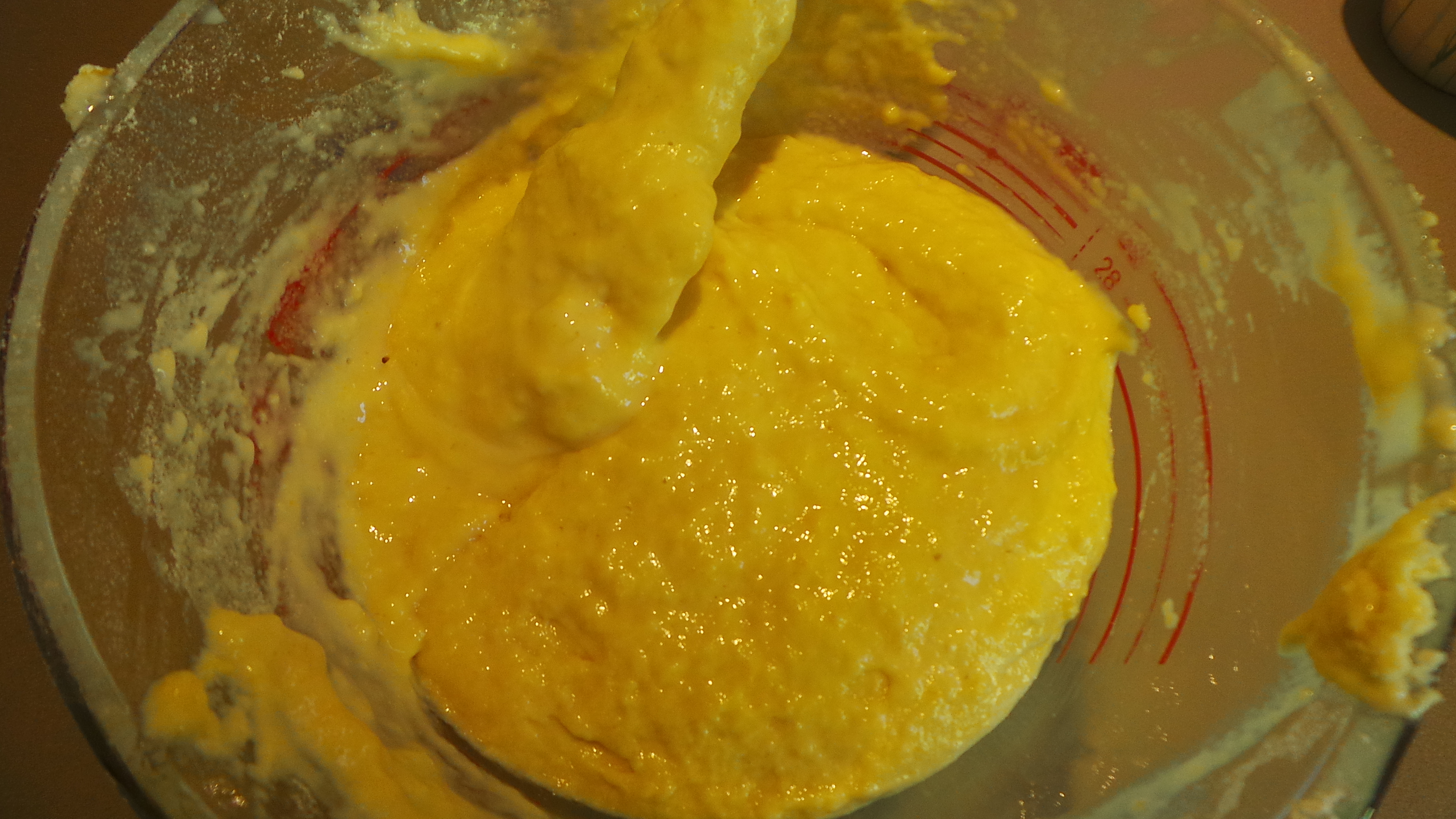
Mix together your egg and milk. You might also try using buttermilk or a mix of half yoghurt and half milk. These last two will give your batter an extra lightness.

Mix in your wet ingredients.

Mix in your wet ingredients.

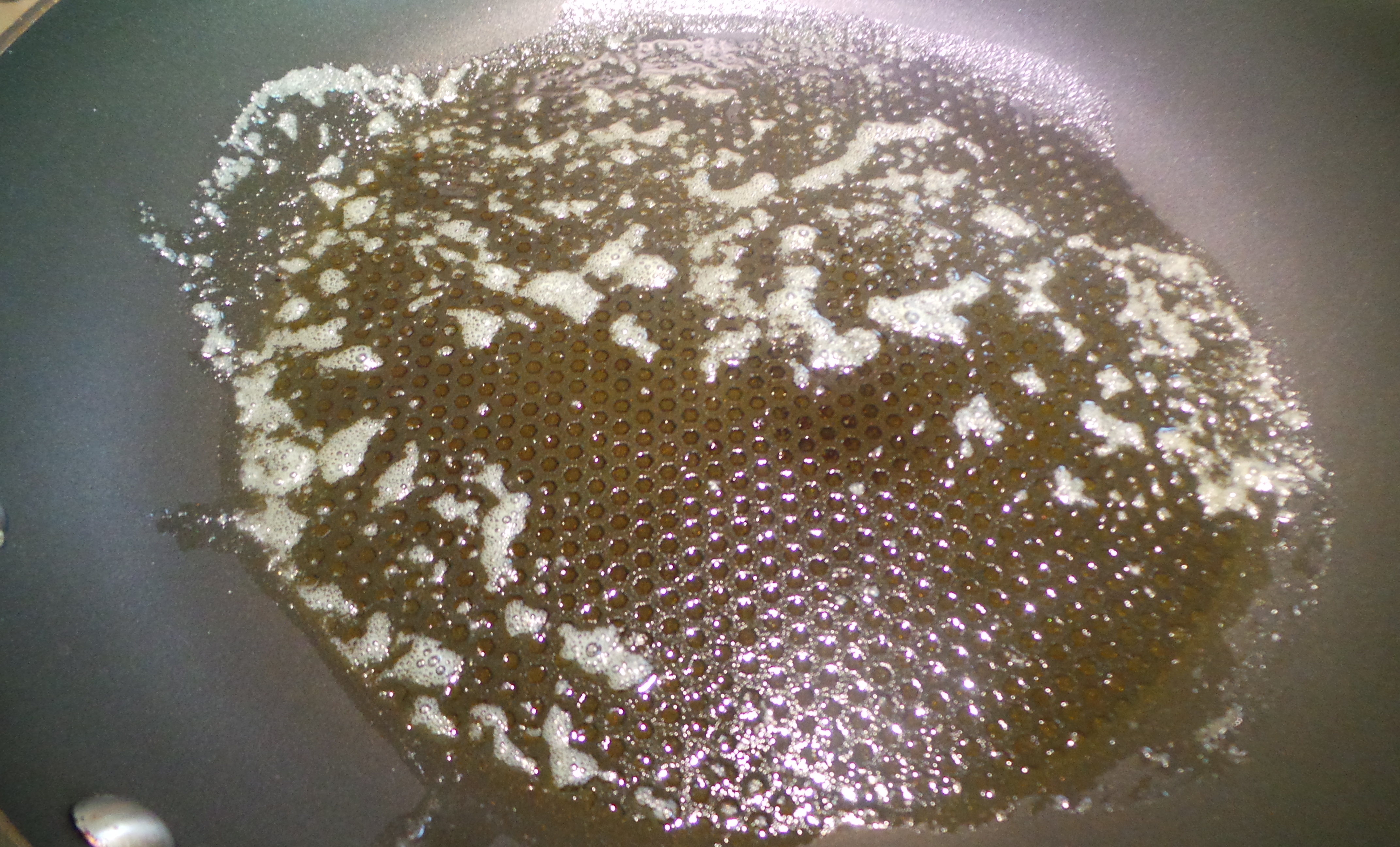
Melt some butter into a hot frypan, adding a dash of oil. The oil will stop the butter from burning.

You can use oil instead, if you wish, but I find butter gives a better result.

I confess to also having a can of spray oil on hand with which to lightly coat the upper surface of the pancakes before I turn them.

Cooking them solely in spray oil is not something I would recommend. Your pan will be on the heat for a longish time and this will change the flavour and scent of the spray oil. You have been warned.

melt your frying fat.

Melt your frying fat.

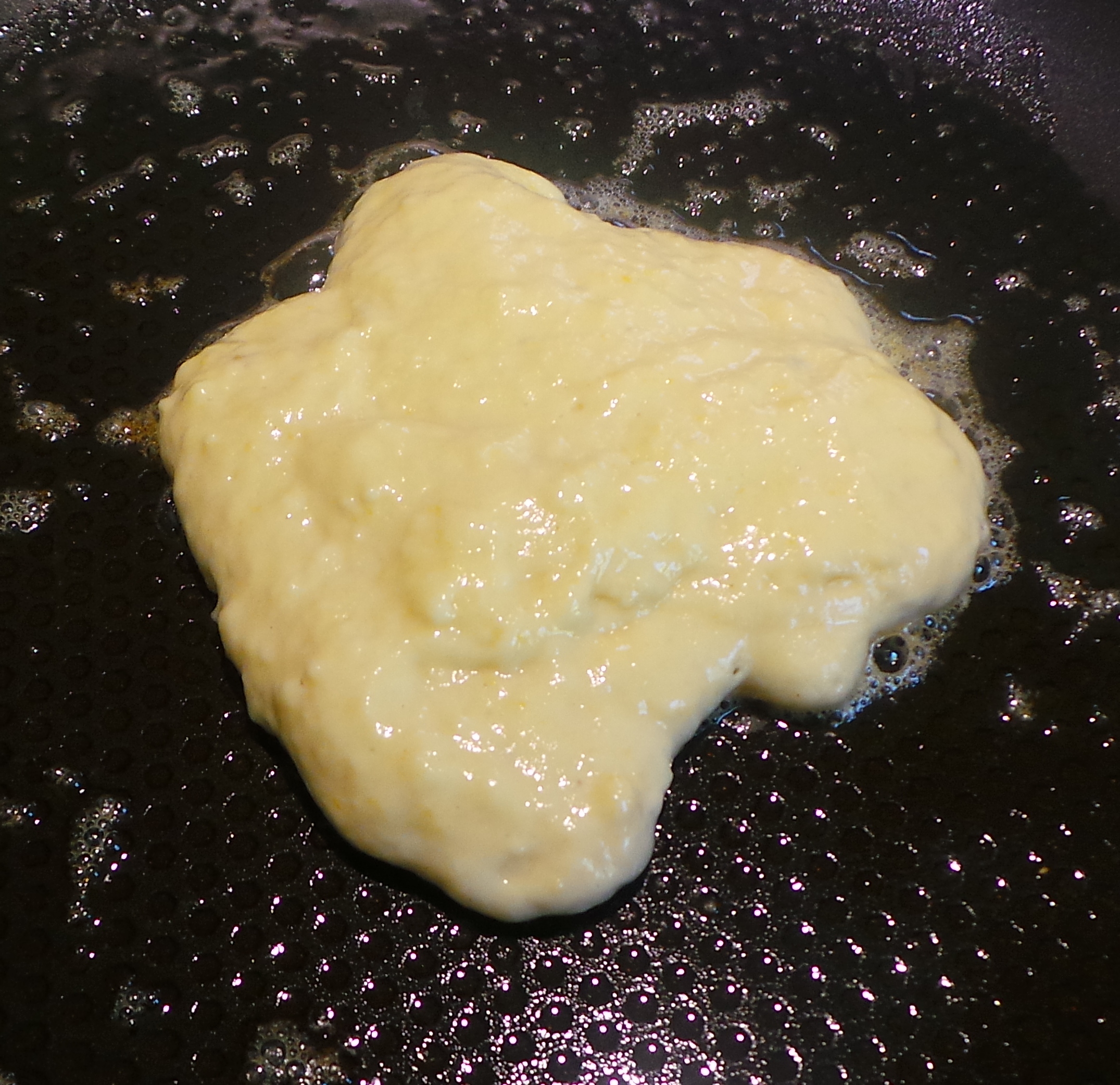
When your butter starts to foam, as pictured, add dollops of batter. If you want pikelets use a dessertspoon to measure it out, if you want pancakes use a ladle.

Dollop your batter into the pan.

Dollop your batter into the pan.

Once in the pan, leave it alone. Make sure the heat is not too high or you will end up with a burned pancake. Everyone burns their first pancake. Really.

First pancake = burnt offering to the breakfast gods.

First pancake = burnt offering to the breakfast gods.

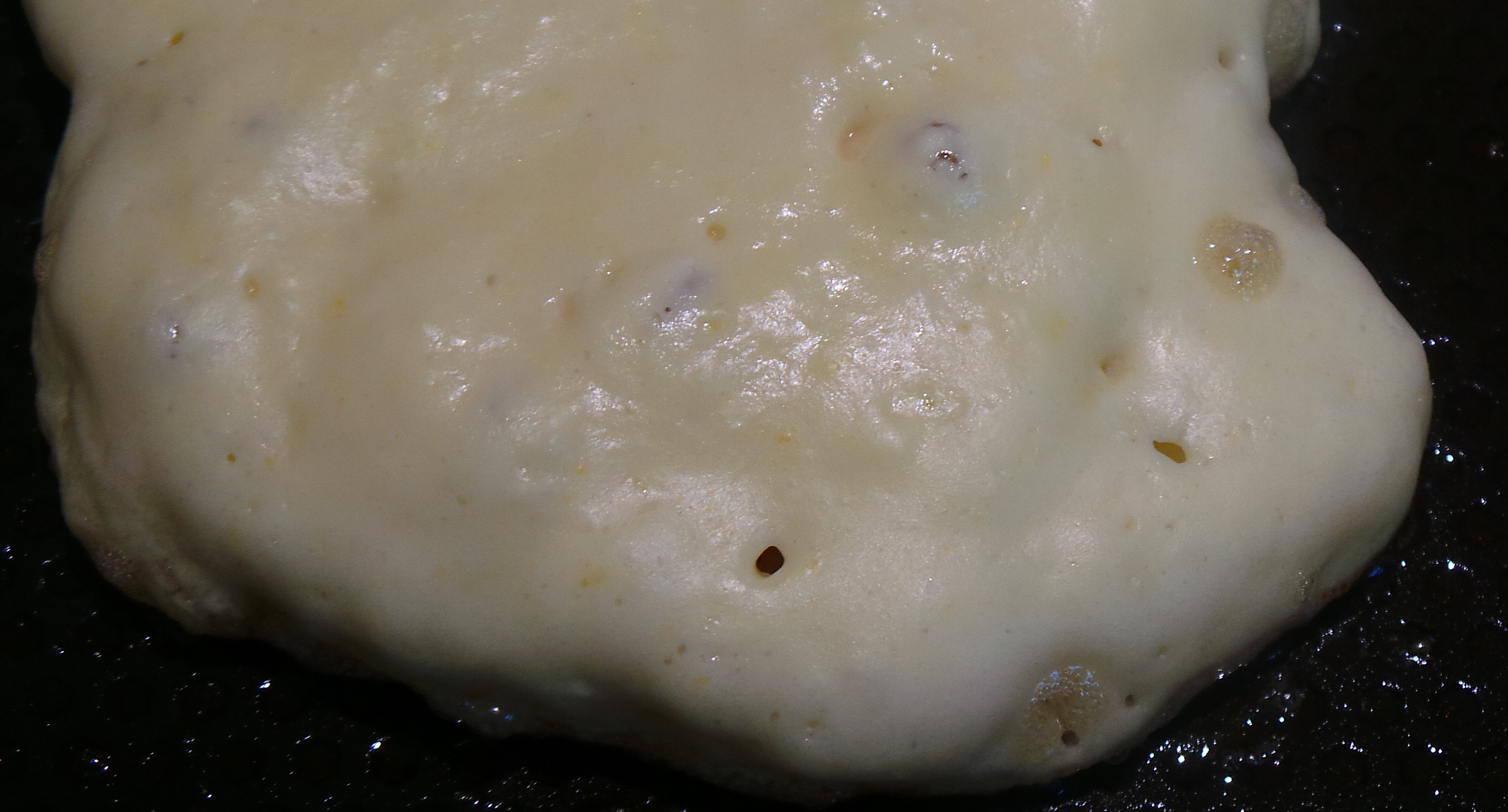
The pancake is ready to turn once small bubbles start to appear on the uppermost surface.

Bubbles will form in the batter.

Bubbles will form in the batter.

As mentioned before you may wish to give them a misting with spray oil, then flip them over. Leave for about three minutes and then remove to paper towel to drain. This won’t take long, basically you just want to absorb any cooking fat sitting on the surface to stop your pancakes from being greasy.

Drain on paper towel.

Drain on paper towel.

Serve immediately or store in one of those wonderful tortilla warmers I’ve spoken of before.

Sprinkle with lemon juice and sugar, douse with maple syrup or spread with your preferred preserves. This is yet another place to use your home-made lemon curd or dulce de leche as well.

This is a recipe that can be added to in many ways. You can try the savoury option and go for fritters (and tidy up the bits and bobs littering your fridge), or you can explore the sweet side of things.

Try adding a few choc chips if you have them, or mixing through dried fruits like sultanas or craisins.  Add these things to the dry ingredients, after sifting and before the milk and egg.

Fresh berries are fabulous additions when in season, but frozen work just as well when their seasons have passed. Again, stir into the flour before adding the liquid.

Try adding some fresh lemon or orange zest to all of the above suggestions and feel like a chef for a bit…

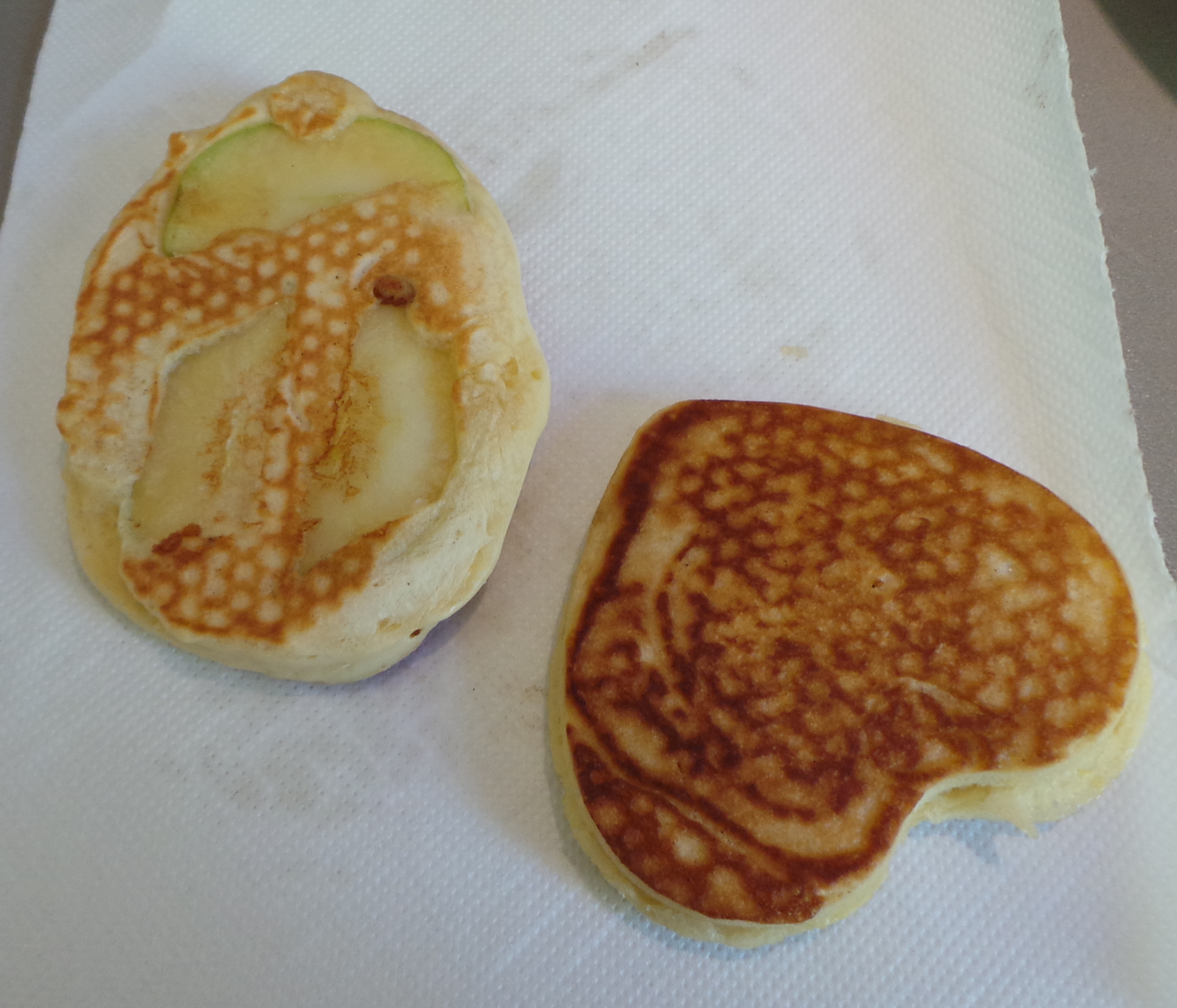
You may have noticed that last photo has a heart-shaped version and one with sliced apple. They’re both going to have their own posts, so stay tuned.

Pancakes

 Ingredients

1¼ cups self-raising flour (156g)

¼ tsp salt

3 tbsp sugar

1 egg

¾ – 1 cup milk or buttermilk

butter or oil for frying

Method

Sift flour, salt and sugar. Make a well in the center.

In a jug mix together the egg and most of the milk. Pour into the dry ingredients and beat together with a wooden spoon. Add remainder of milk if necessary. You are aiming for a thick batter.

The batter will also thicken upon standing.

Heat your frying pan and add butter to grease. To prevent the butter burning, add a touch of oil.

When your butter is melted drop dessertspoonsfull of mixture onto the hot pan – for drop scones or pikelets – or ¼ cup amounts for full pancakes. Try using a small ladle for measuring the batter into the pan.

When bubbles appear on the upper surface of your batter turn to cook the other side. This will take approximately 3 mins.

Remove from the pan onto paper towels to absorb any excess oil on the surface. Keep warm, or serve immediately.

May be served cooled with whipped cream and strawberry jam as a Devonshire Tea.

Basics – How to thicken sauces

You know how it is; you’ve made what is shaping up to be a rather delicious casserole, but the gravy just isn’t all it could be. How can a dish reach true Comfort Food status with a watery jus instead of a thick, unctuous gravy?

What do you do?

You can leave the lid off for a bit and let the liquid evaporate, but then you run the risk of over cooking your dish. Also, if you are using a slow-cooker, this could take some time indeed!

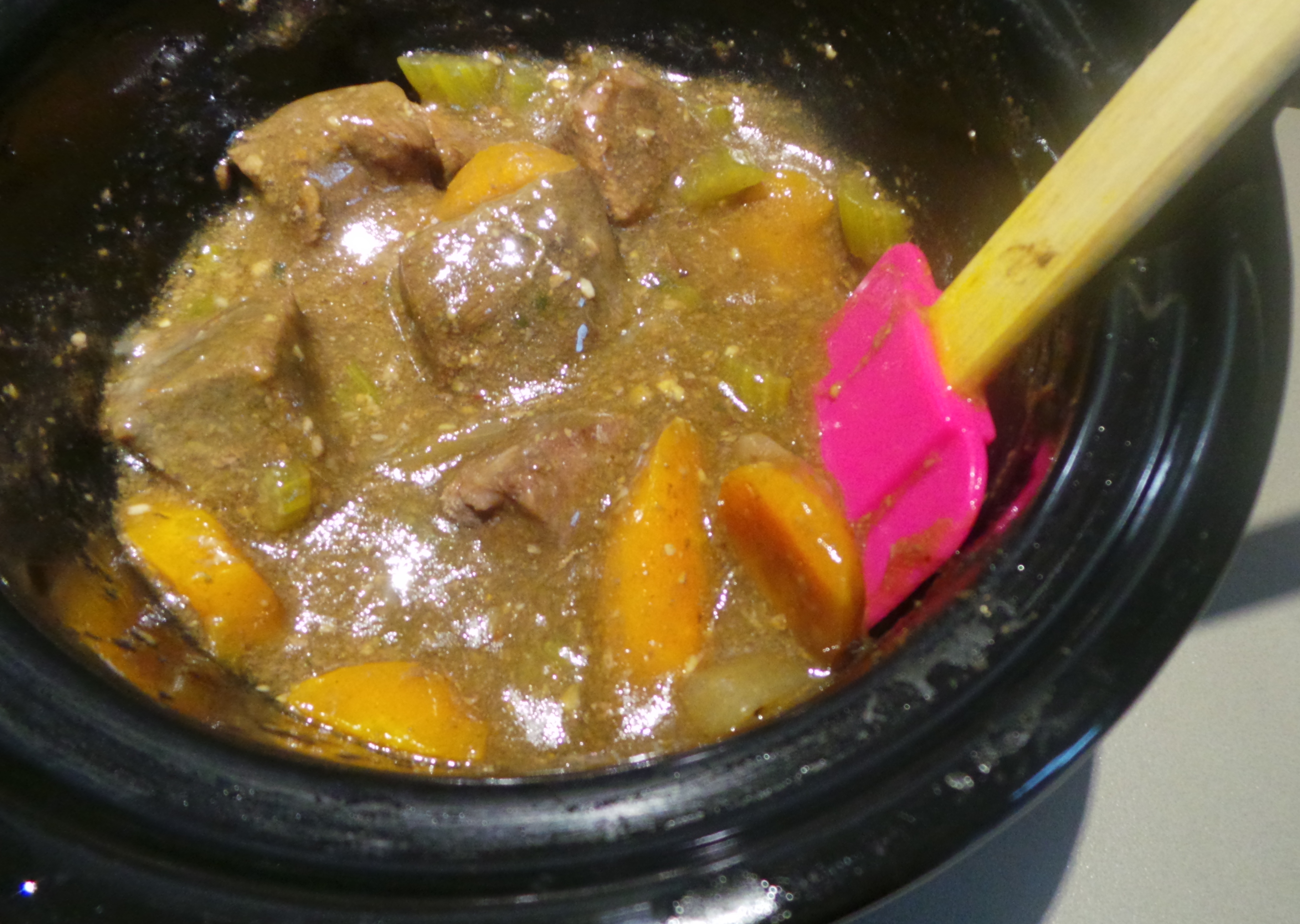
The liquid in this casserole needs thickening to reach "comfort food" status.

The liquid in this casserole needs thickening to reach “comfort food” status.

Try this instead.

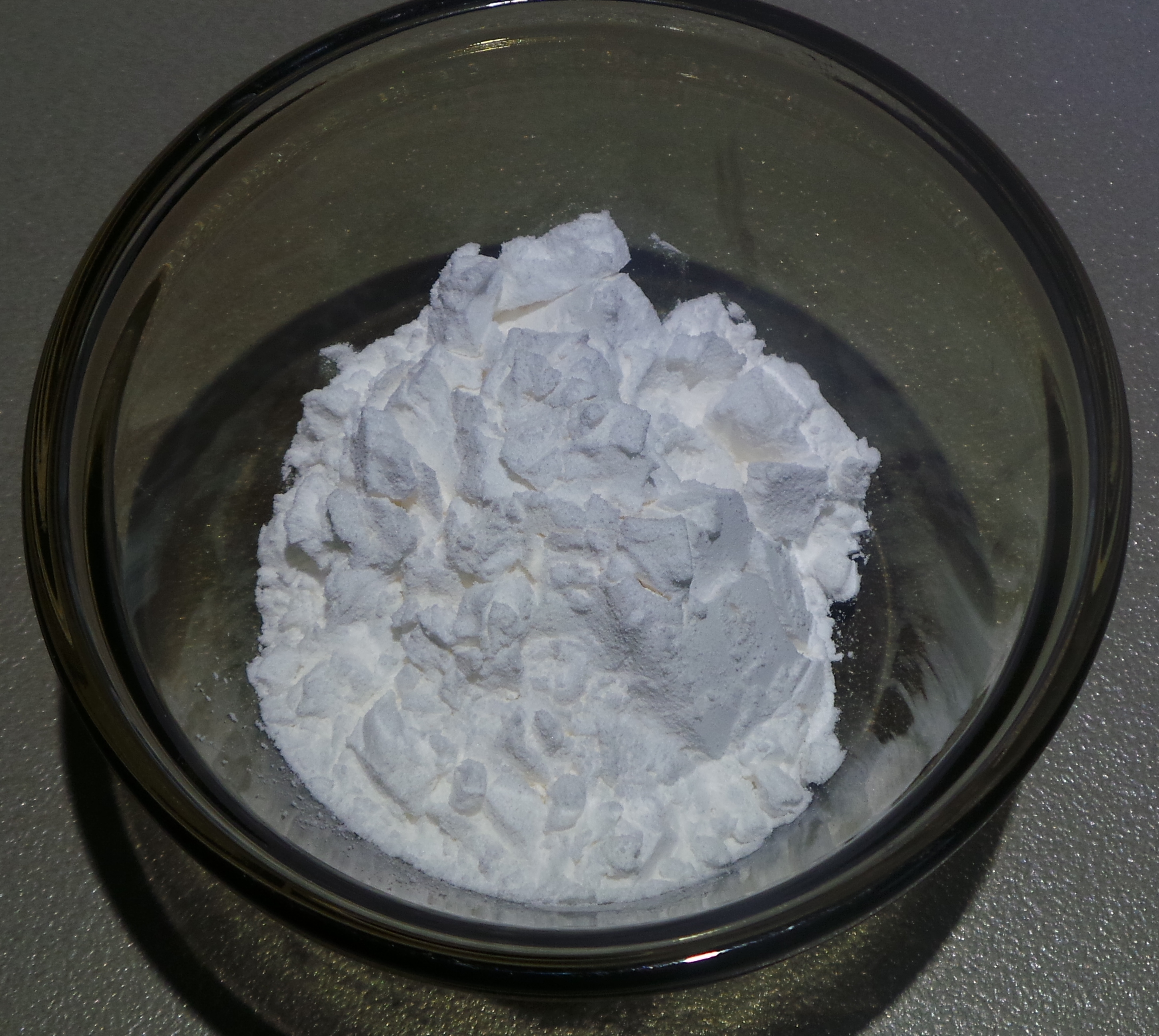
Take a few teaspoons of cornflour and place in a small bowl, glass or coffee cup. Break up any lumps with the back of a teaspoon.

Several teaspoons of cornflour

Several teaspoons of cornflour

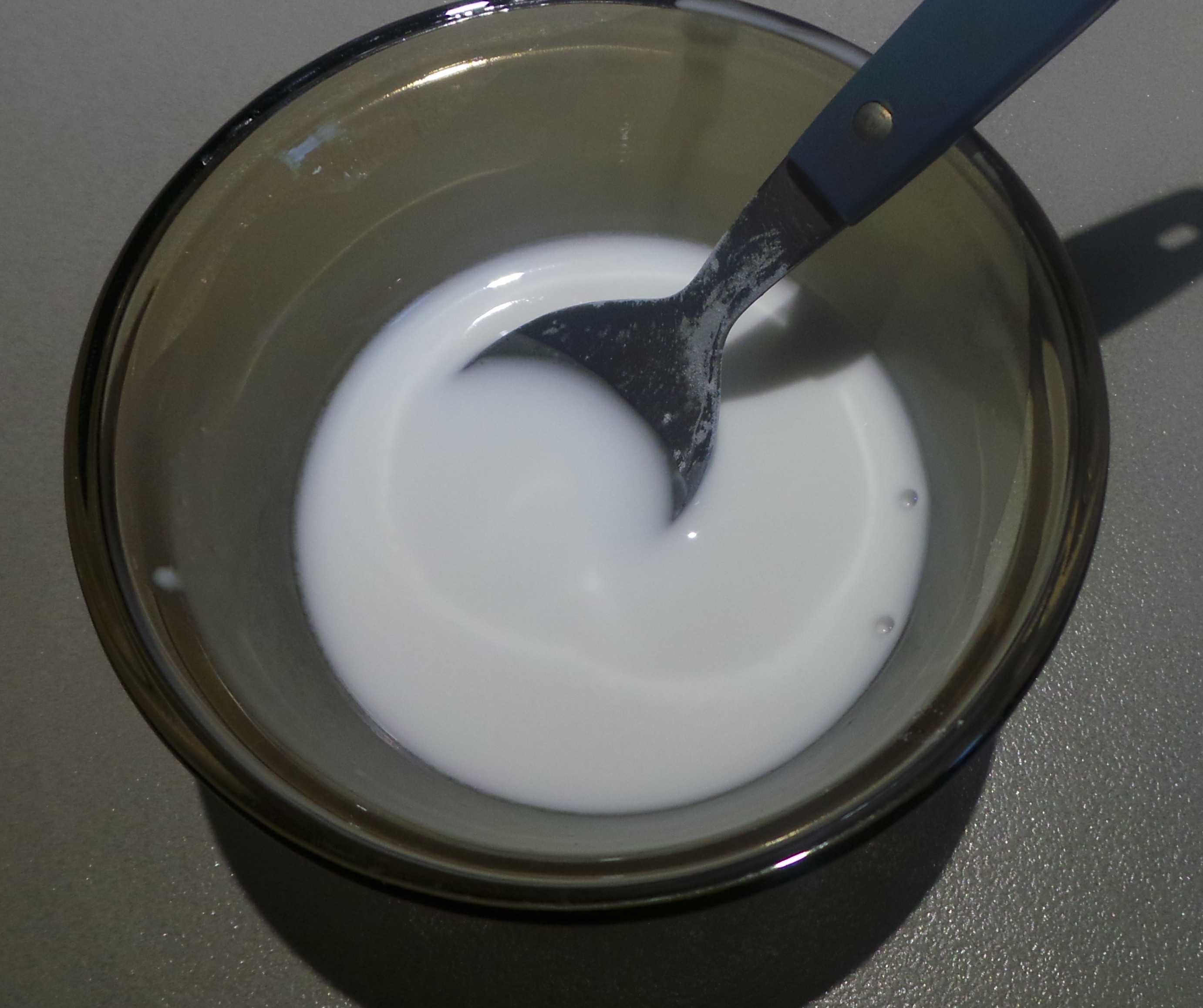
Add some cold water and mix to a paste. Make sure that it is cold or it will start to cook all on its own and you really don’t want that.

Add a little more cold water to loosen into a slurry. Mix well.

Using cold water, mix to a slurry.

Using cold water, mix to a slurry.

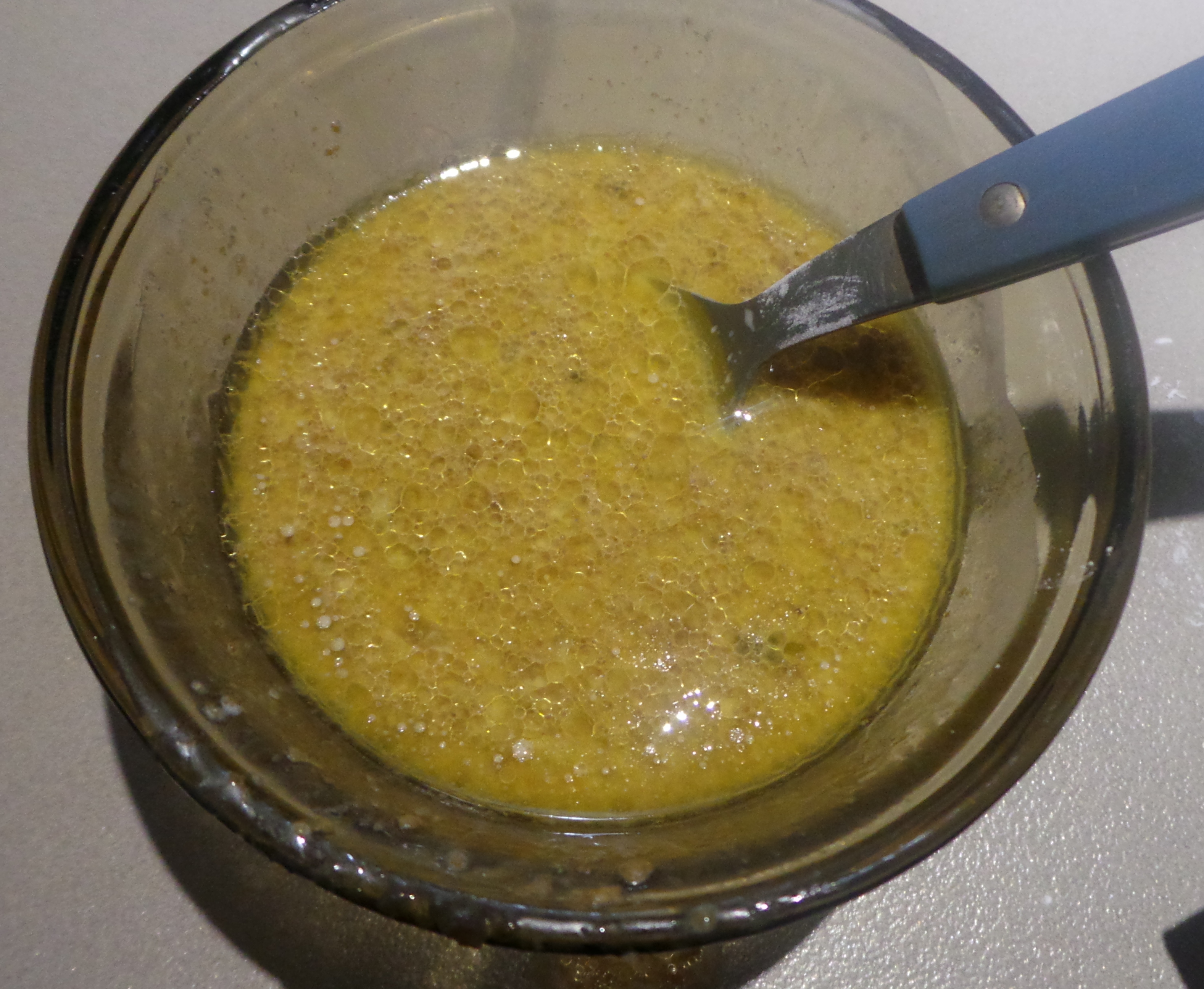
Then take a little of the liquid from your casserole and add it to the cornflour mix. It will start to change colour. You’ll end up with what looks like a really pale gravy.

Add some of the hot liquid from your casserole and mix through.

Add some of the hot liquid from your casserole and mix through.

Add as much of the warmer liquid as you can get into your container and mix well. Use the edge of your teaspoon to scrape any paste off the sides of your bowl and thoroughly incorporate it into your mix.

Now add the whole lot to the casserole and bring to the boil. Once a boil has been achieved (so the flour is cooked) reduce the temperature to wherever you need it to be.

Your sauce will thicken and may be a little lighter in colour, but not much lighter.

Comfort Food status reached. Achievement Unlocked.

Comfort Food status reached.
Achievement Unlocked.

This will not alter the taste of your dish, just make the liquid thicker and more viscous.

If your sauce has not thickened sufficiently, then repeat. However, it is better to start off with a smaller amount of flour and have a slightly ‘looser’ sauce than to use too much and have it turn into wallpaper paste!

Trust me.

If you have no cornflour but do have arrowroot, then that will work as well. The liquid will not become as opaque when cooked, but the flavour will not be altered using this method either.

I don’t enjoy using arrowroot, so I tend to use cornflour exclusively.

 Important!

If you are someone with gluten intolerance issues or are serving your dish to a celiac, then make sure your cornflour is not “Wheaten Cornflour.” You want cornflour that is actually made out of corn (or maize) and nothing else.