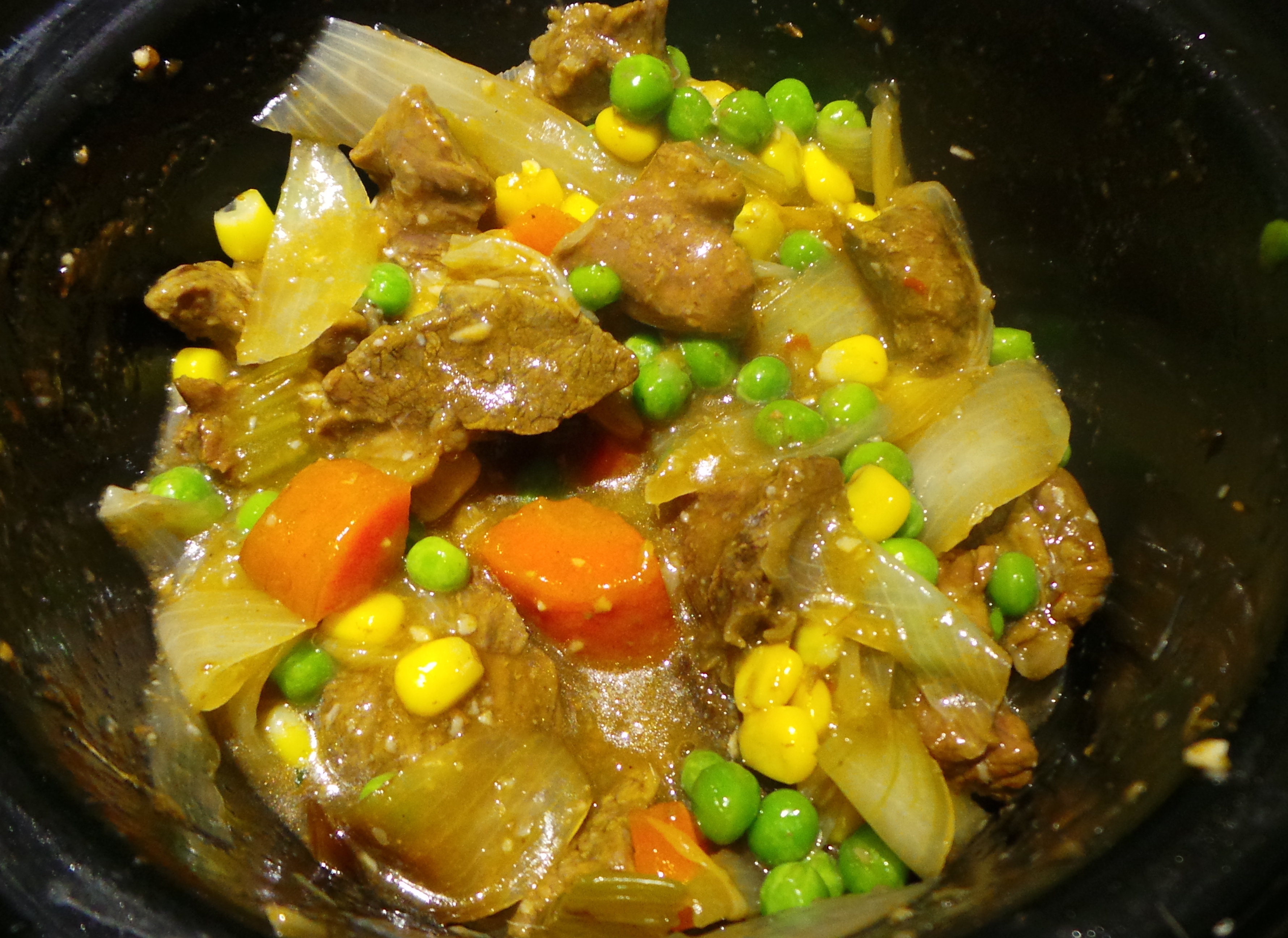
Freeze ahead slow-cooker beef with asian flavors

Asian-flavoured slow-cooked beef

Asian-flavoured slow-cooked beef

You know, sometimes you just can’t be bothered cooking.

Sometimes, you don’t have much to cook with

This is something that can be prepared in minutes and then left to its own devices for several hours, OR prepped in a few minutes and frozen for one of those times when you just can’t be bothered, etc.

It tastes amazing.

It smells divine.

It also costs next to nothing.

All of which is fabulous.

I like to buy chuck steak, toss it with a few spices, stir in some Asian sauces and then walk away and leave it alone.

This is how it’s done:

Firstly, get yourself some nice pieces of chuck steak. You don’t need much, really truly. For today’s efforts I used around 750g or 1½ pounds. That will make 2 meals for us or feed four – whichever math you prefer.

I’m going to cook half now and freeze the rest for a future I-don’t-wanna-cook-day. The rest of this post will be about the preparation for freezing.
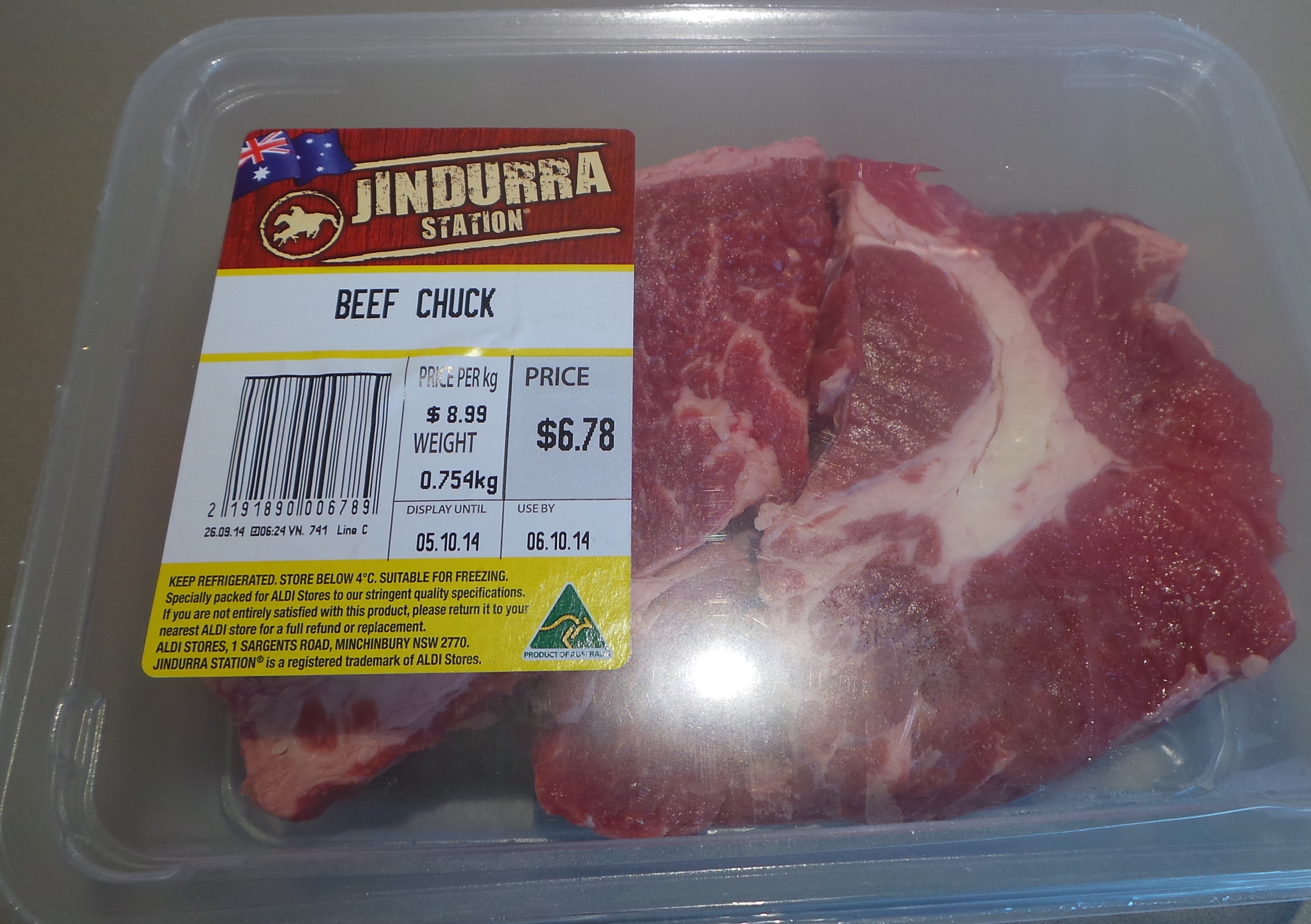
Chuck steak

Chuck steak

I like to buy whole pieces and cube them myself, it saves a little money over buying pre-diced, but also lets me control which bits get kept and which don’t. For example, while I want the marbling in the meat on the left, I really don’t want to keep the thick streak of fat in the piece on the right… so I discard it.

The rest I cut into large cubes (about an inch a side) and divide into two portions.

Cut into large cubes.

Cut into large cubes.

Please use a sharp knife for this, chuck is not a tender cut and it can be frustrating to slice something that just won’t behave nicely on a bluntish blade.

Then I have a little fun.

Half of the meat I pack away into a zip-lock bag for freezing and, as I do this I add a good sprinkling of whatever spices I have to hand and that I think might go well together. In this case I used ground ginger, ground coriander, ground cumin and some chilli flakes.
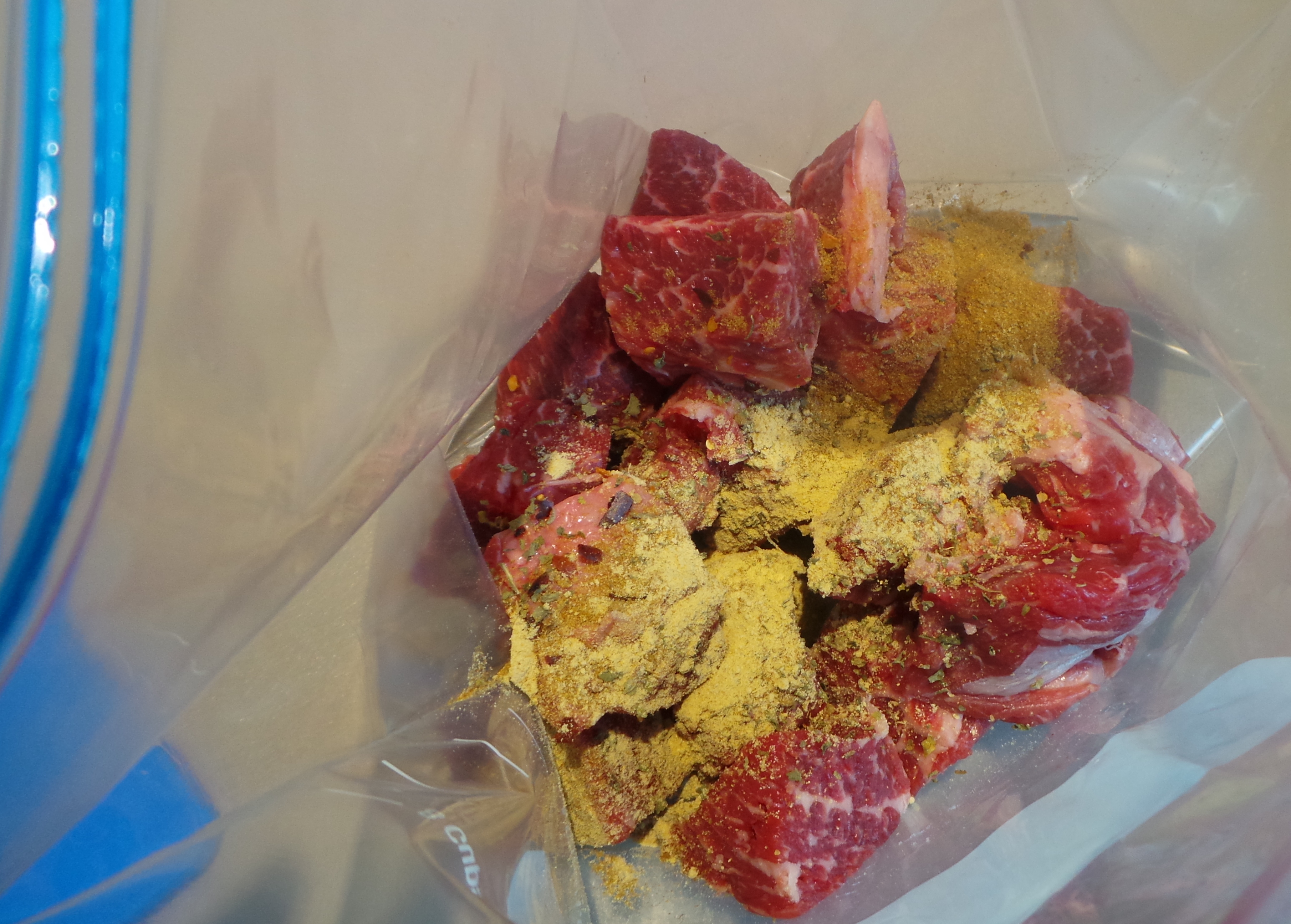
 

Add a good shake of whatever you have.

Add a good shake of whatever you have.

Seal up the bag and massage the spices through. It’s better to do it this way than to use an implement in the bag as you may pierce it and accidentally lay a path for freezer burn. That would be bad.

You can, of course, do this and all the following steps in a bowl and then bag it, but then you’d have to wash the bowl…up to you really!
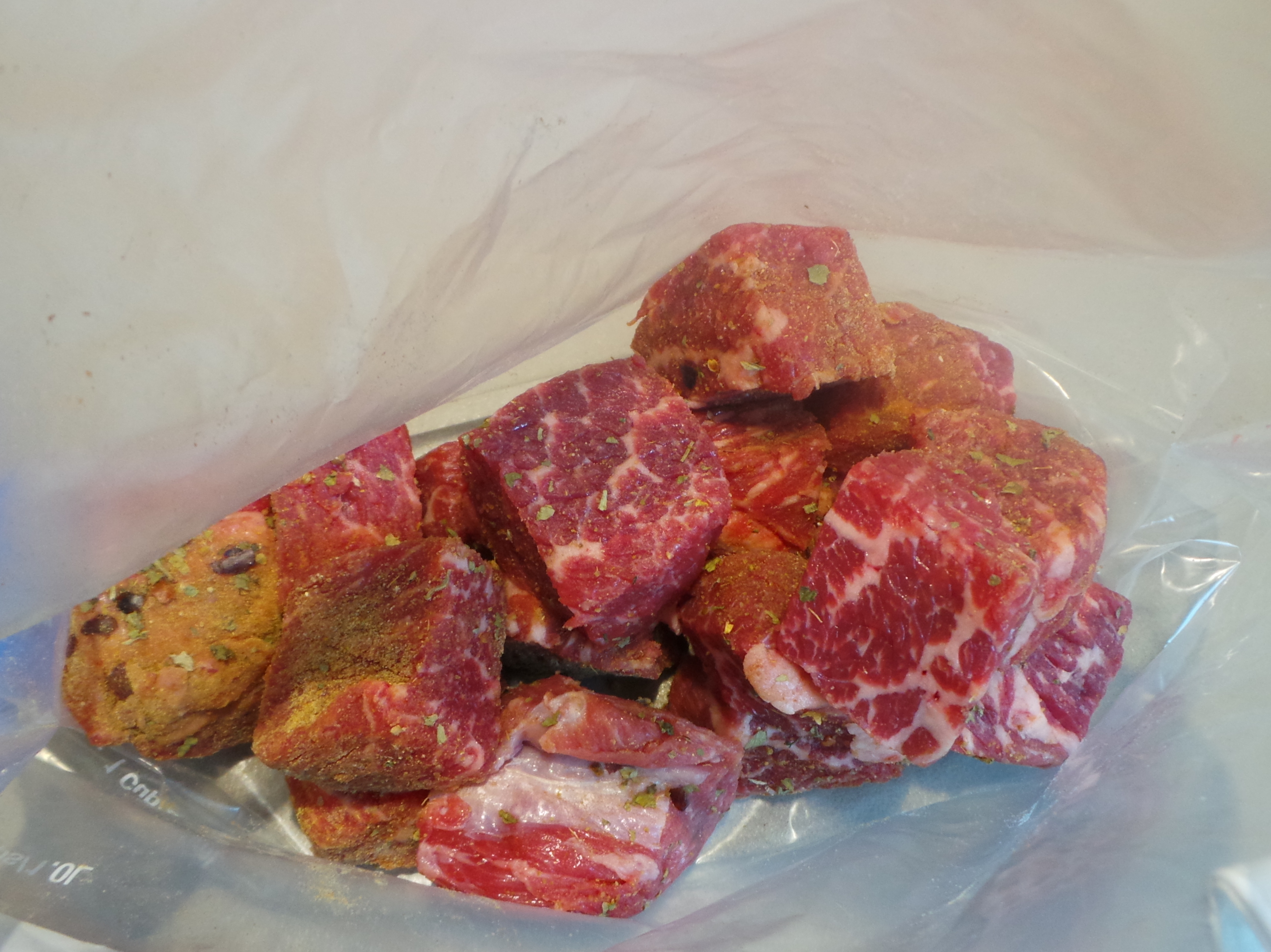
Give the bag a good massage to mix the spices through the meat.

Give the bag a good massage to mix the spices through the meat.

I like to then add a good teaspoon of grated ginger and crushed garlic – out of a jar.  I always have a small jar of each in my refrigerator, it saves time and it saves frustration on those days when my fingers simply won’t behave.
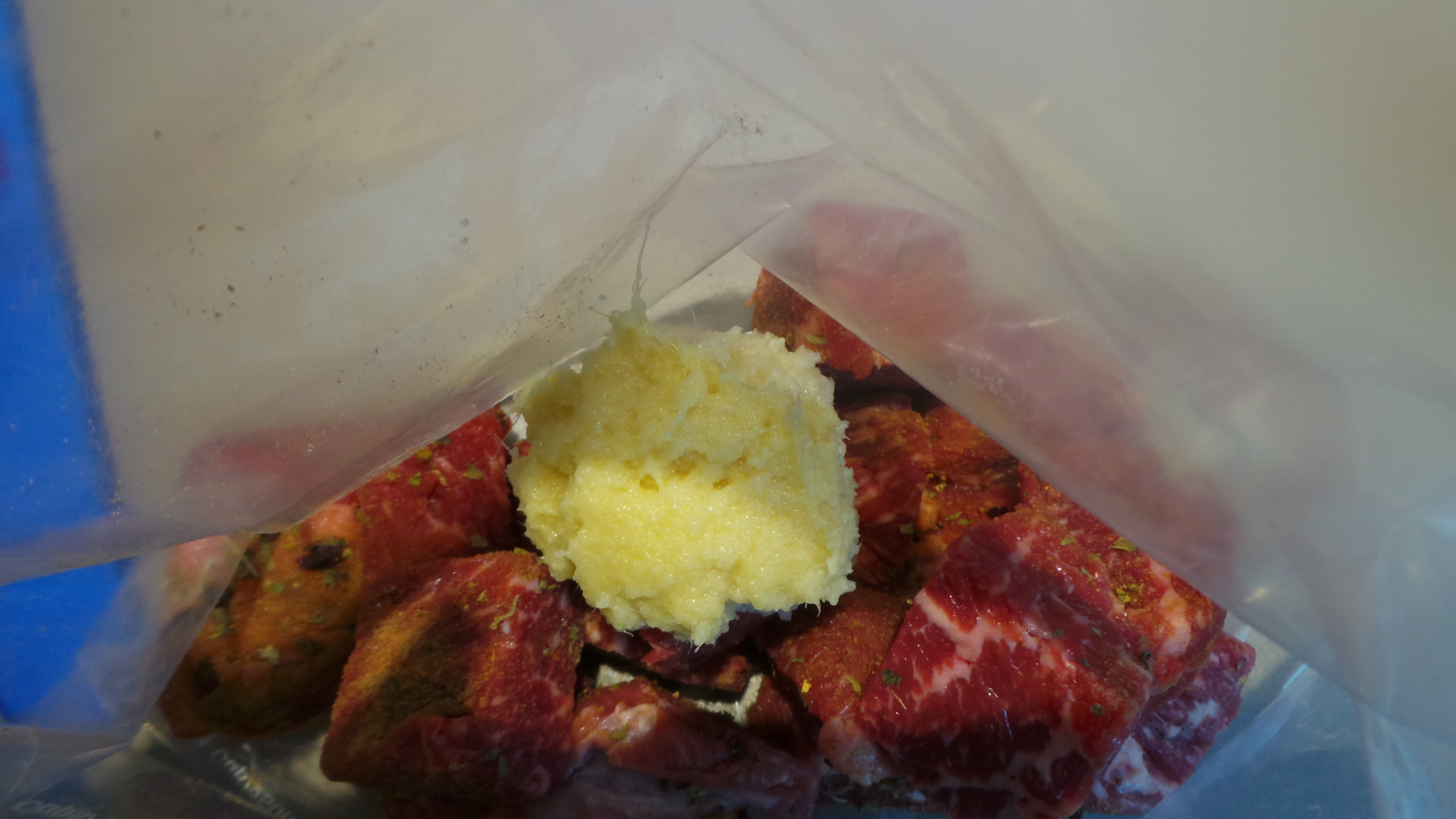
Add a good teaspoon each of grated ginger and crushed garlic.

Add a good teaspoon each of grated ginger and crushed garlic.

Now, grab whatever sauce tickles your fancy. You can use one sauce, or you can use several, It’s completely up to you. I used Honey Soy sauce, Hoi Sin and a glug of toasted Sesame oil; simply put a bit into the bag and repeat the massaging.
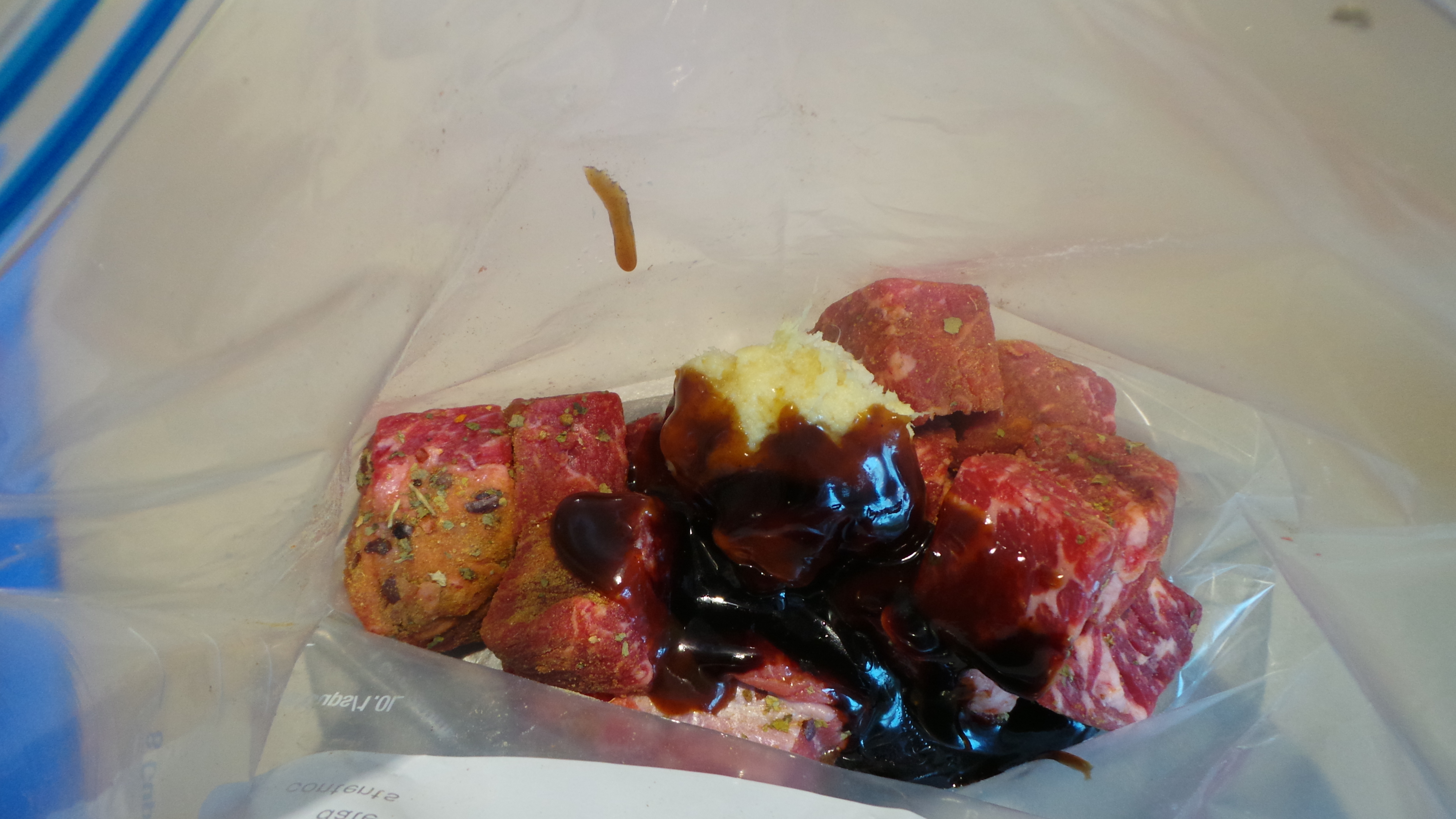
Add some minced ginger, crushed garlic and a few glugs of sauces.

Add a few glugs of sauce.

Seal the bag, excluding as much air as possible, flatten for easier storage, label and freeze.
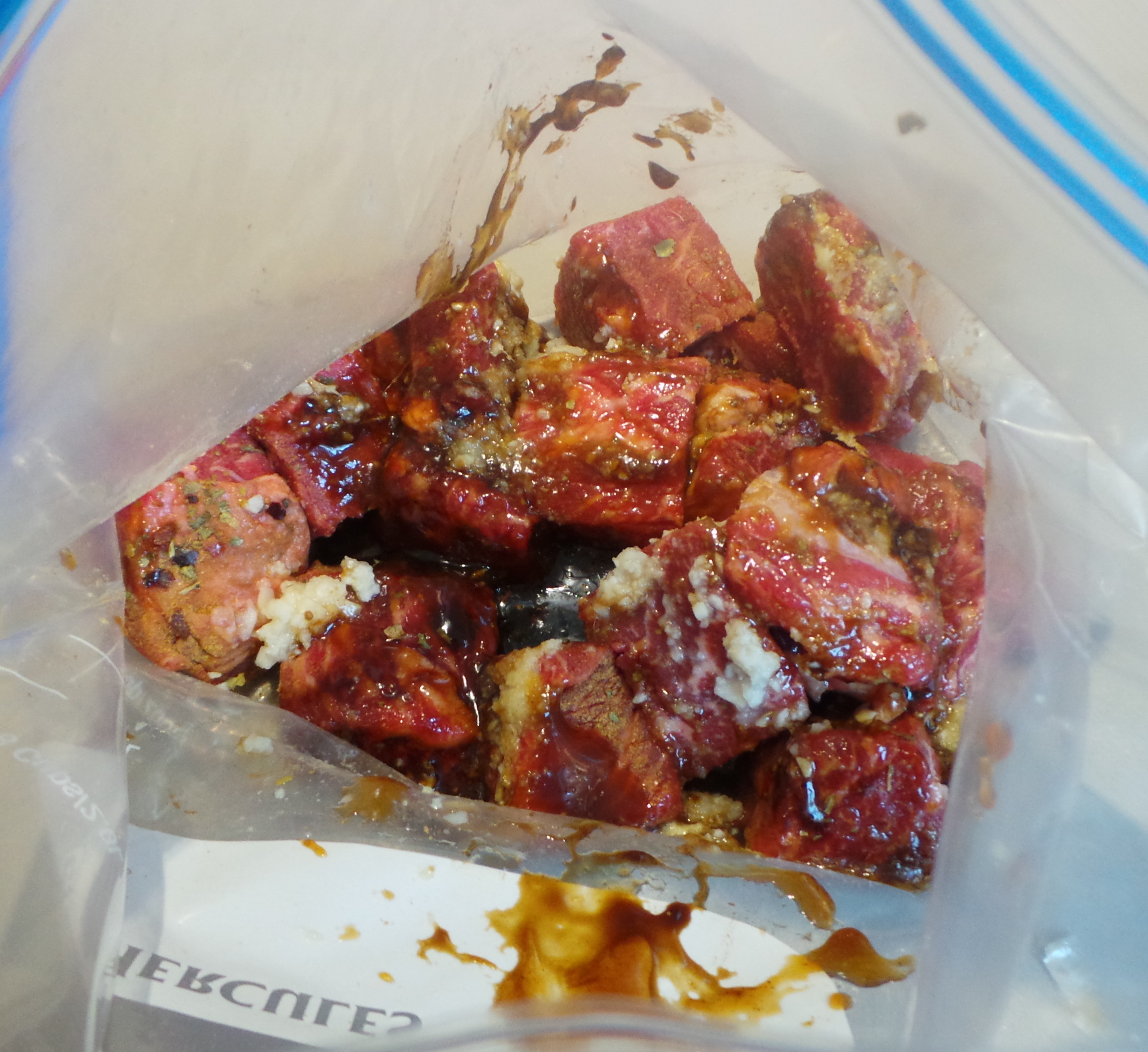
Massage your flavours through.

Massage your flavours through.

That was traumatically difficult, wasn’t it?
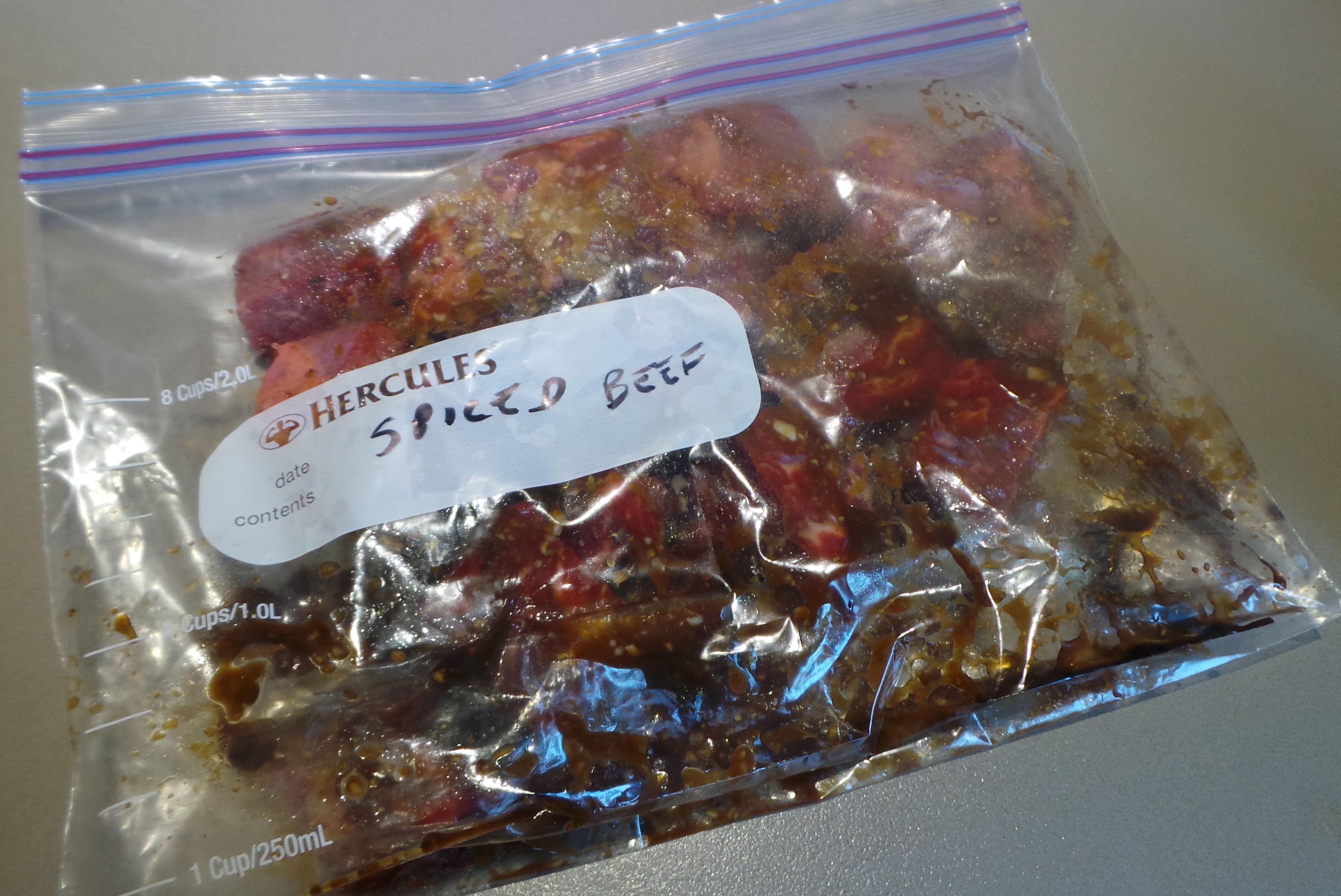
Ready to freeze Asian Spiced beef

Ready to freeze Asian Spiced beef

Then, when you are ready to cook it, add a few chopped veg to your slow cooker, stir in your beef mixture, place it on low heat and leave it for around 3 hours. Serve with plain rice, or mashed potatoes.

You can add the meat mixture frozen, or let it defrost overnight in your refrigerator. The latter option will allow the meat to marinate for a few hours in all the gorgeous spices and sauces you have added.

I was going to include detailed instructions for assembling the casserole, but the post would be rather long… so, there will be another post here that describes the same recipe but cooked from fresh.

Please forgive me and click on. xx

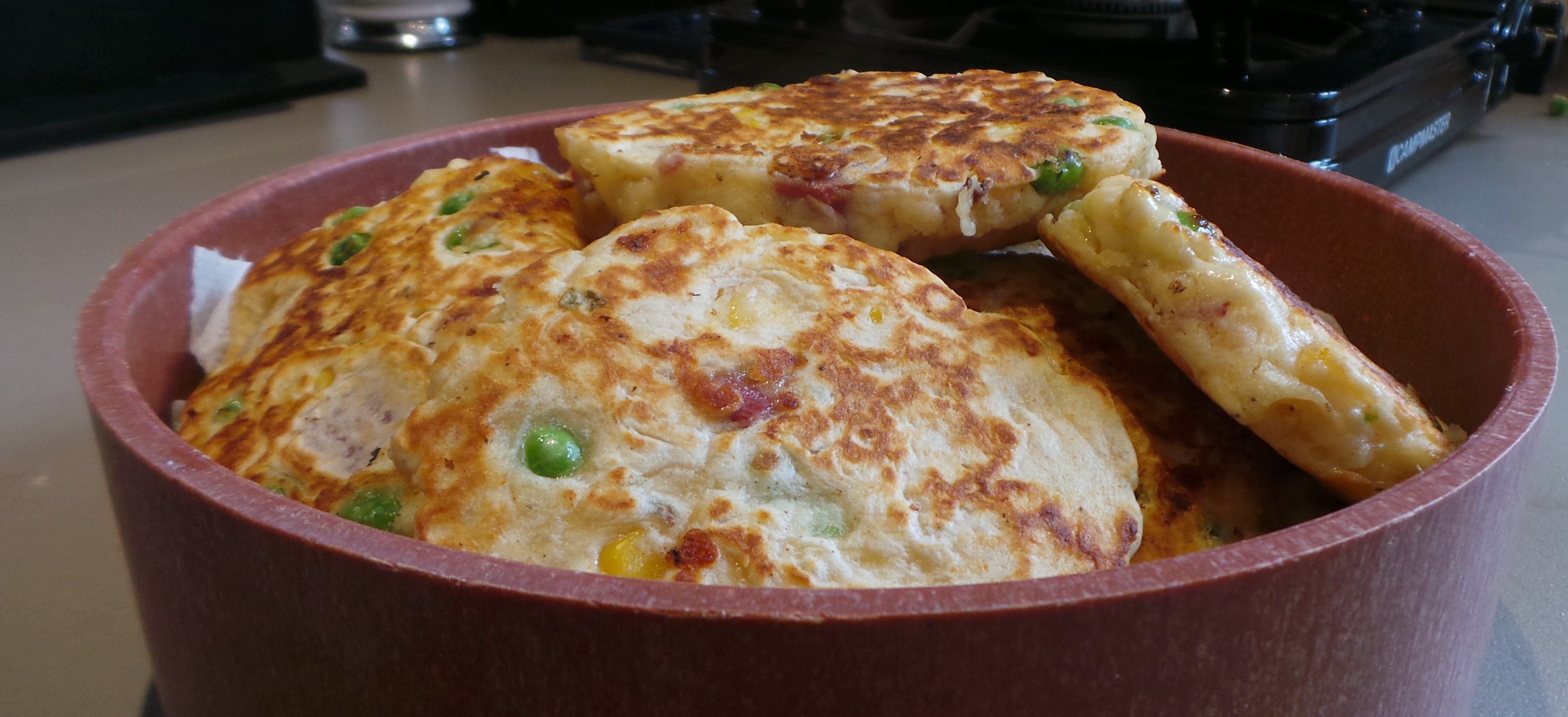
Fritters

Fritters are one of those magical things where you create a substantial meal from next to nothing.

Flour, eggs, milk and those odds and sods cluttering up your fridge + a little time = happy tummies.

My mother introduced me to the art of the fritter.

When I was a kid, they were something that popped up on the school holiday or weekend lunch menu on a regular basis – especially during the long, rainy days that were the wet season in Far North Queensland (otherwise known as the Christmas Holidays).

Frightfully frugal fritters

Frightfully frugal fritters

Easy, frugal and tasty they could be a part of your life too.

You could even put your older kids to work making them during those long, wet-season holiday breaks.

Picture a pancake. Your nice, thick fluffy pancake, not a crêpe. Then add in some of the bits and pieces. Fry. Add a dollop of your condiment of choice and Robert is your Mother’s brother.

In our home, fritters inevitably contained either corned beef or hot dogs. In your home, they can contain whatever you want. Think rustic. Chunky pieces of whatever you have to hand.

We had some leftover corned beef, so fritters came to mind due to my childhood association of the two.

In our home it was always referred to as Cane-Cutters’ Ham, because my brother and I didn’t like corned beef….ahem.

Moving on..

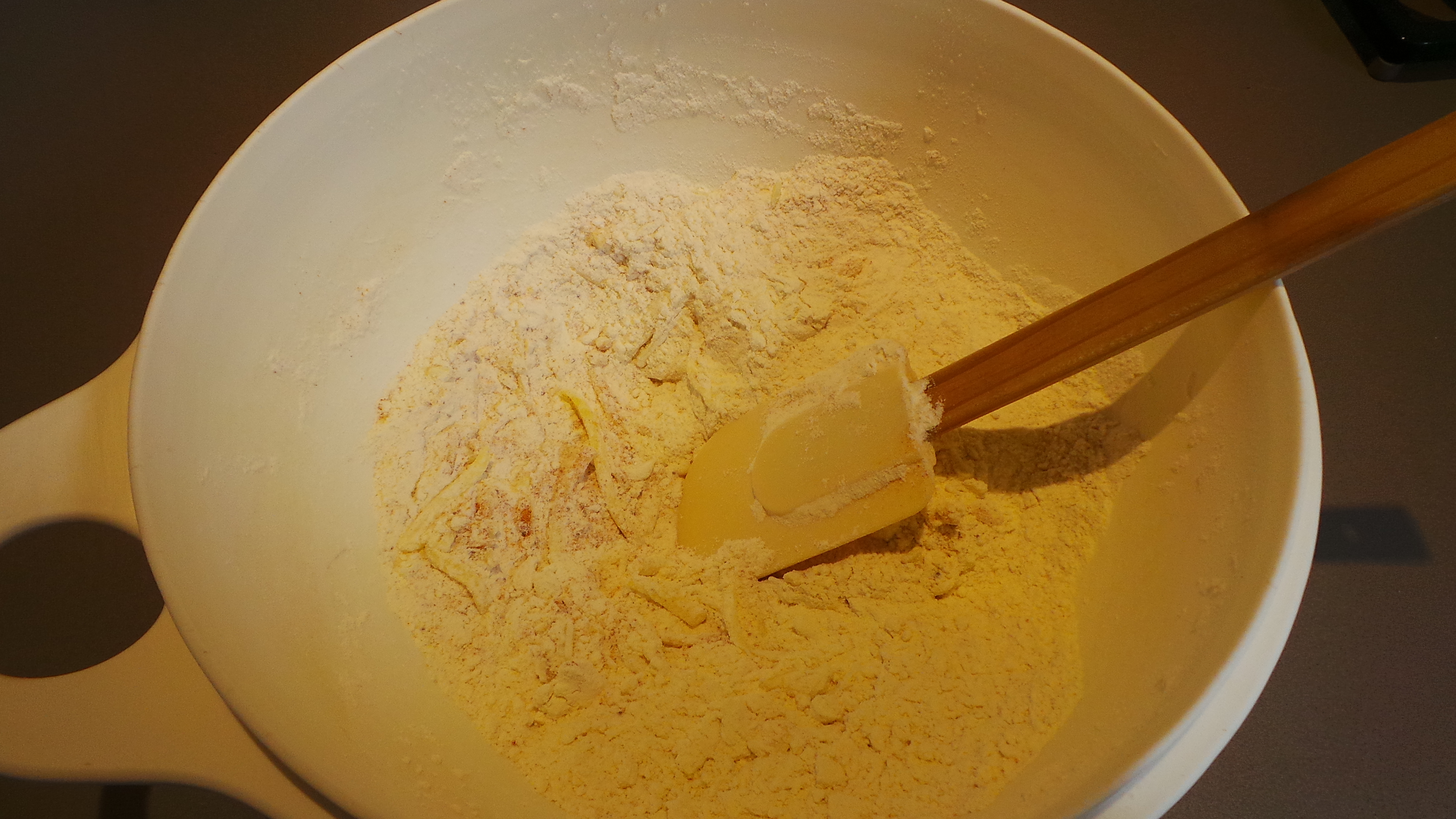
So, to a basic pancake batter was added a handful of tasty cheese,

Add a handful of cheese

Add a handful of cheese

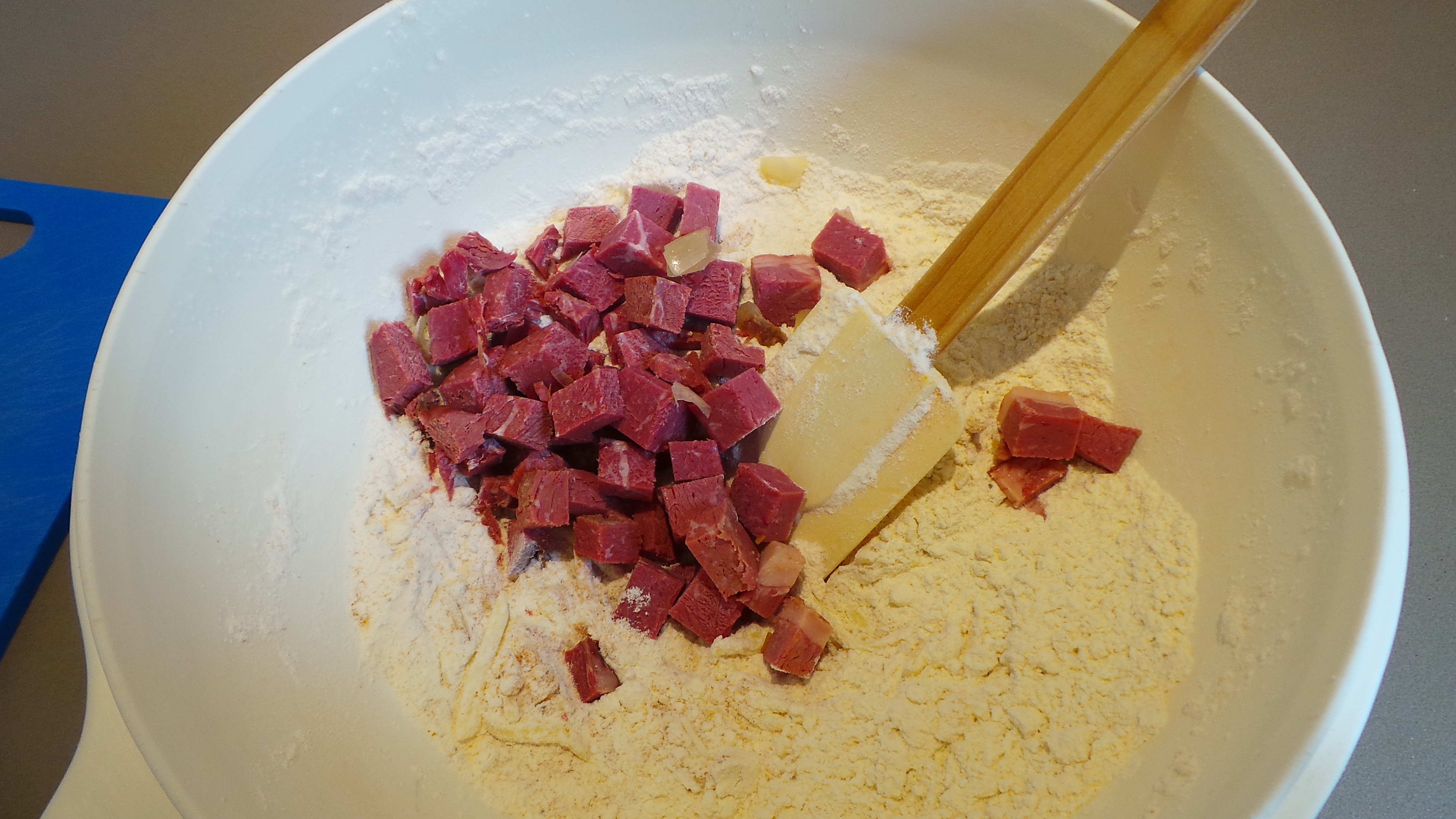
a handful of diced corned beef,

Diced corned beef

Diced corned beef

Add diced corned beef

Add diced corned beef

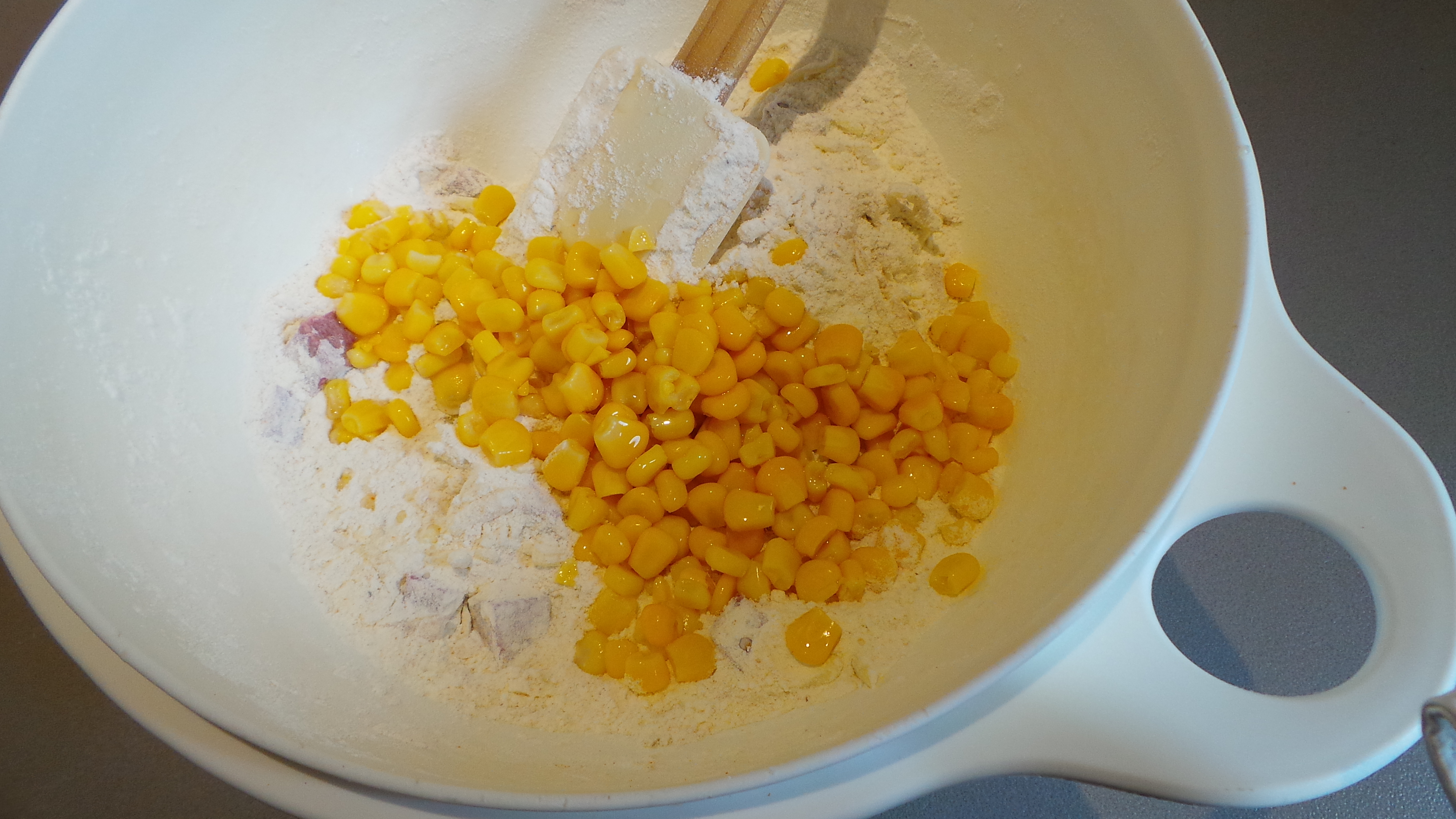
a small can of corn

Add some frozen corn

Add some corn

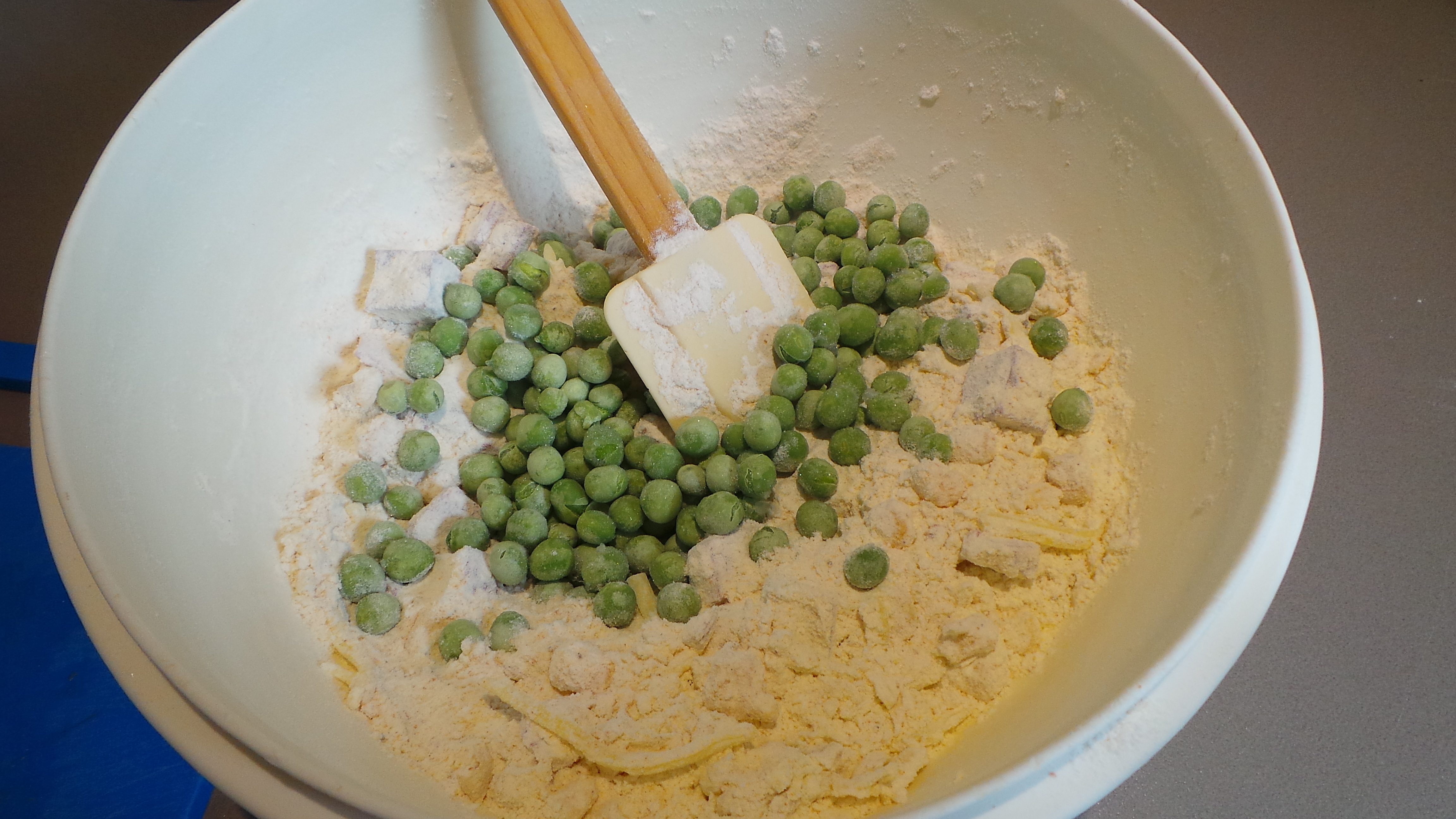
and some frozen peas.

Add frozen peas

Add frozen peas

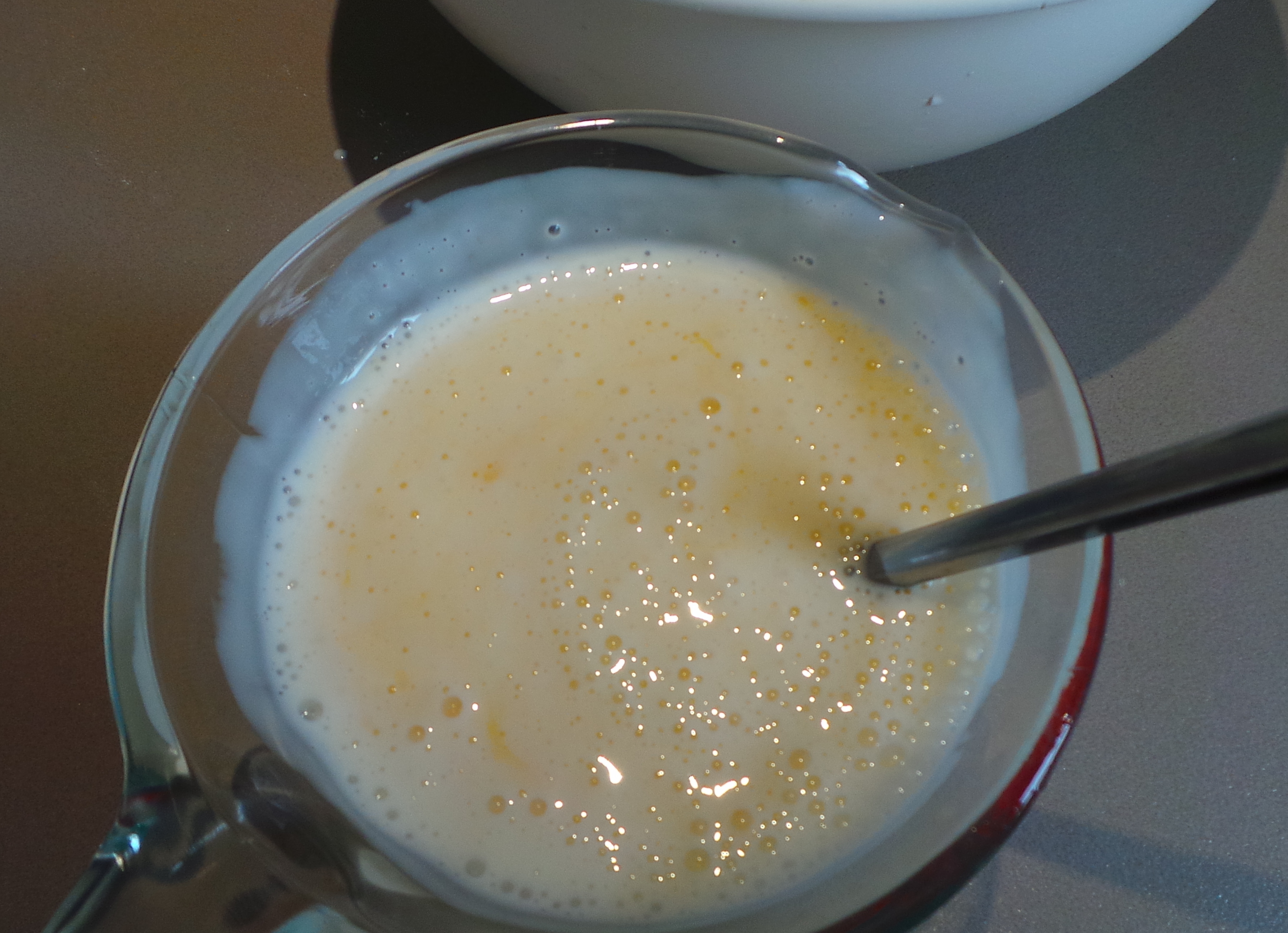
Then an egg was mixed into a jug full of buttermilk,

Whisk an egg into your liquid of choice

Whisk an egg into your liquid of choice

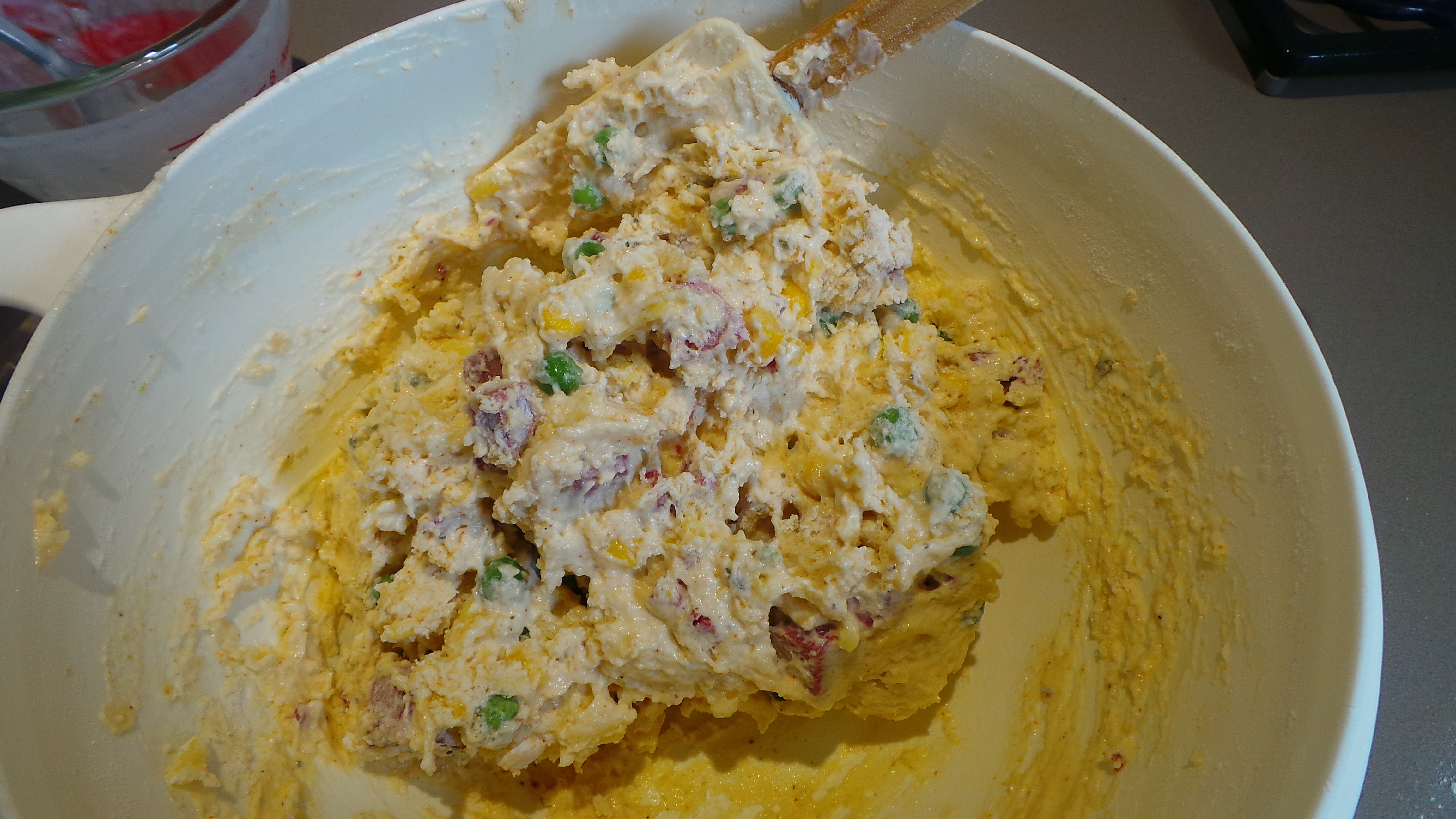
and it was all mixed together to form a stiff batter.

The final batter

The final batter

So what to do with what could be considered a rather intimidating-looking mix?

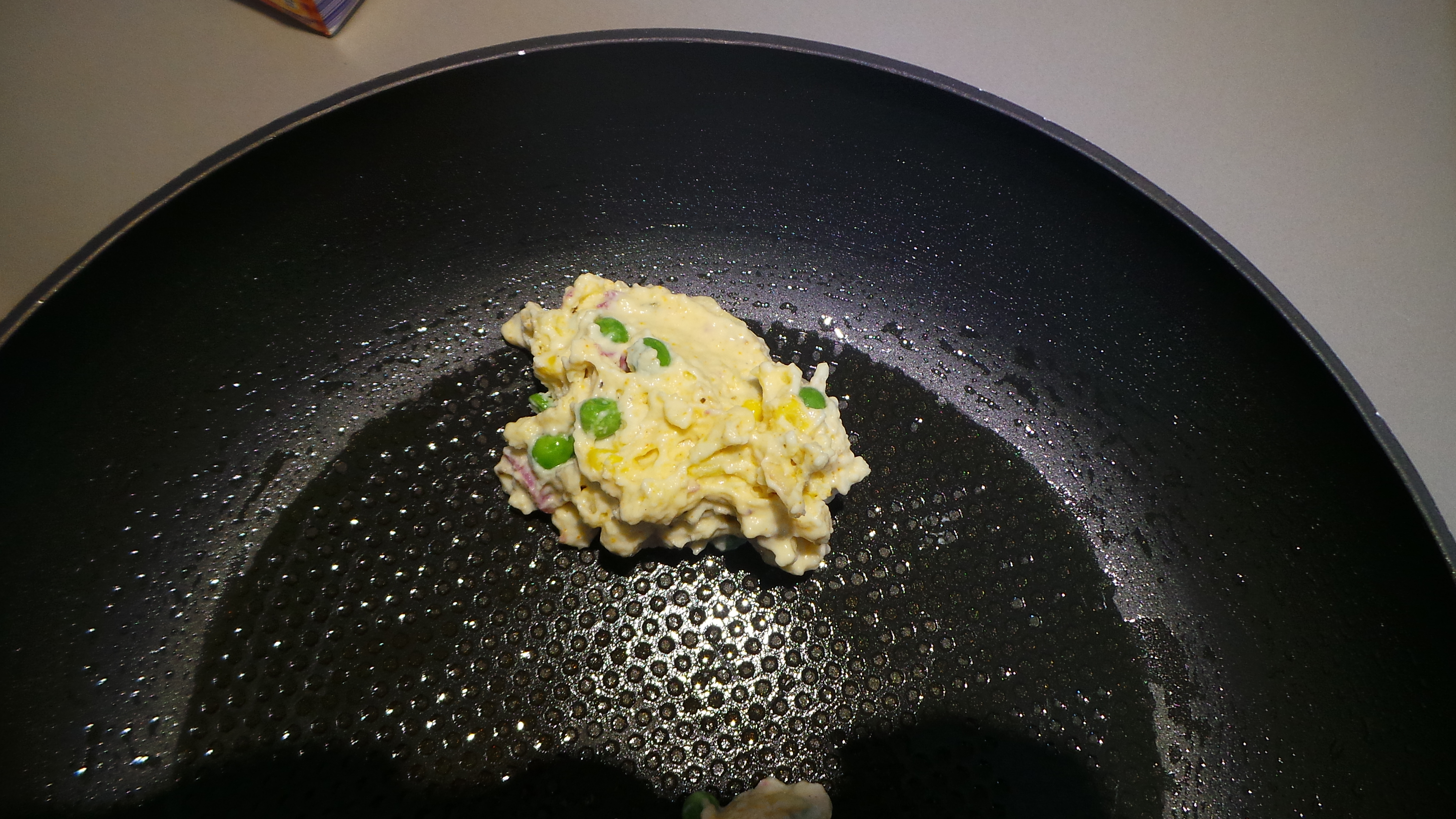
Introduce it in dollops of a tablespoon or so in size to a hot frying pan or skillet. Use the spoon to spread them a little, but don’t fuss too much.

Start with smallish amounts until you are sure of the temperature of your pan. If the mixture sits there and no sizzling can be heard, then your pan is too cold. If it starts to smoke and you smell burning, then it’s too hot and you may as well dispose of that particular dollop.

Add small dollops to the  hot, oiled pan

Add small dollops to the hot, oiled pan

Don’t touch them until they are ready to be turned/flipped. If you try to move them before they are ready, you’ll end up with a mess in your pan and possibly in tears.

I speak from experience.

Let them gently fry until small holes start to appear in the upper surface of the batter. Like this…

Small bubbles will appear when it's time to flip them

Small bubbles will appear when it’s time to flip them

If you possess an oil spray, you may wish to gently mist the upper surface of the fritter before you flip it. 😉

Using an egg flip/fish slice turn the fritters over and press gently on the top to flatten them a little more.

Flipped fritters

Flipped fritters

If you expose rather a large amount of uncooked batter when you press down, then don’t panic. Simply gently slide your fritter over to the edge of the fry pan with your egg slice, and hold the raw underside against the curved wall to cook it.

Push the fritters gently against the wall of the frying pan

Push the fritters gently against the wall of the frying pan

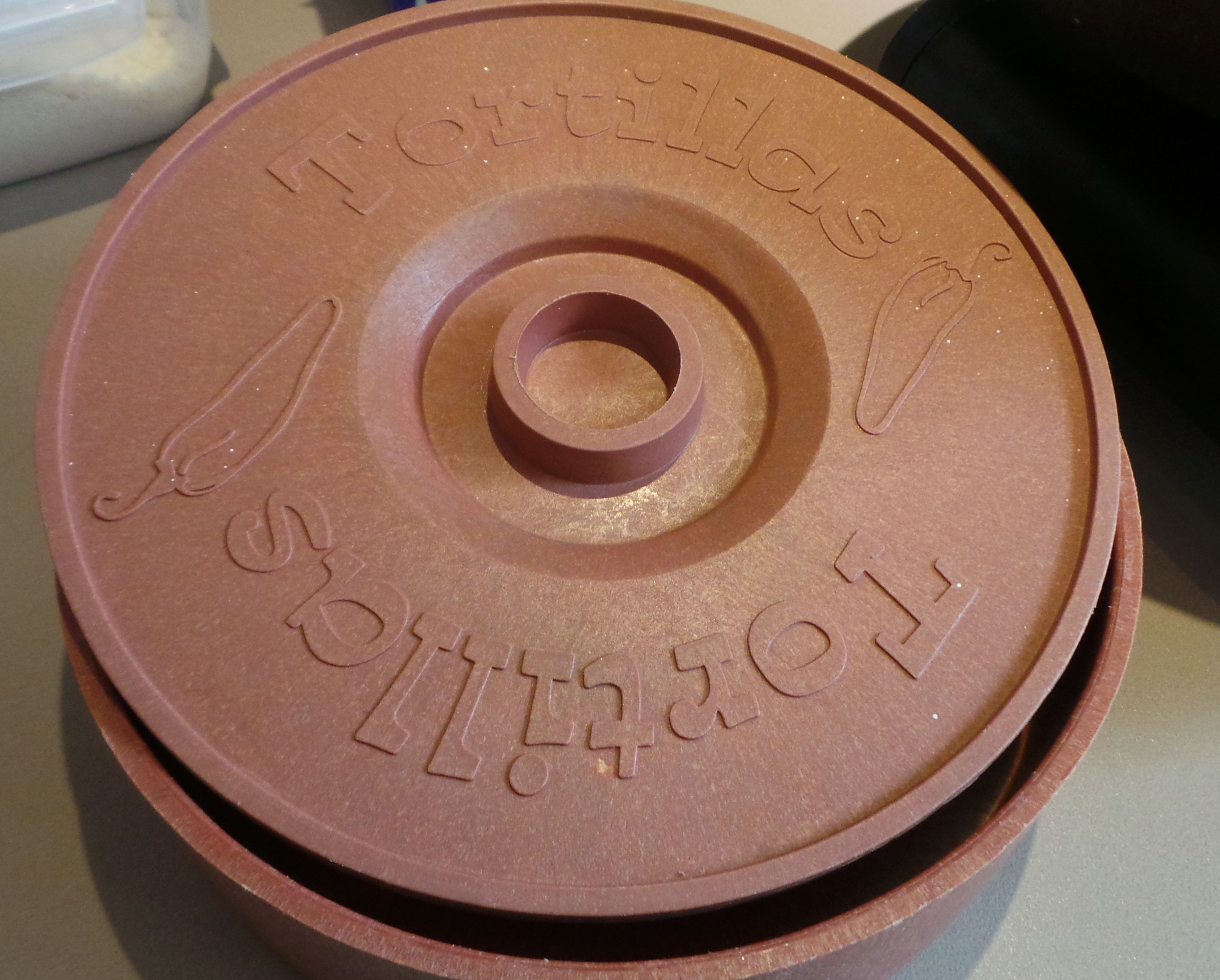
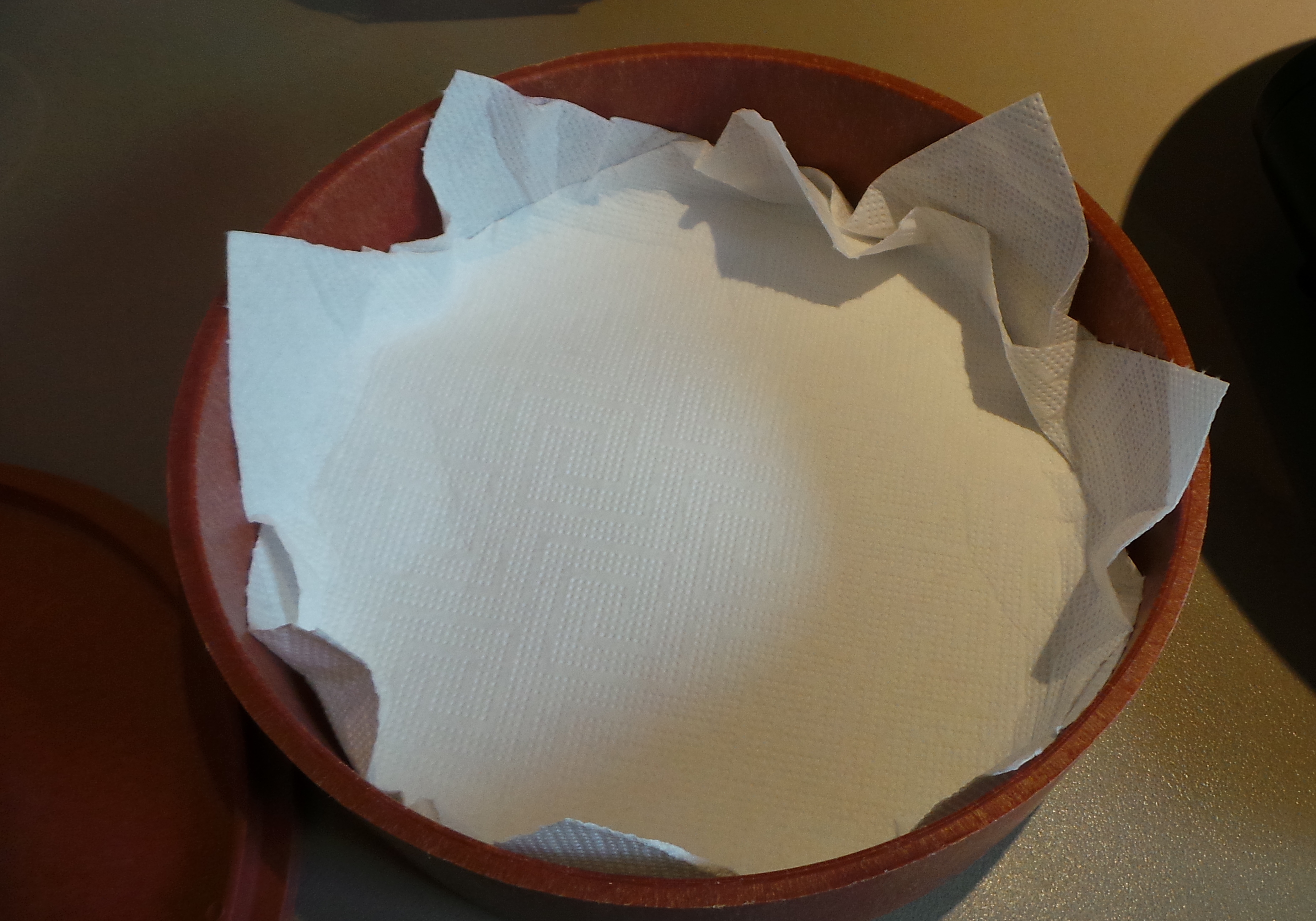
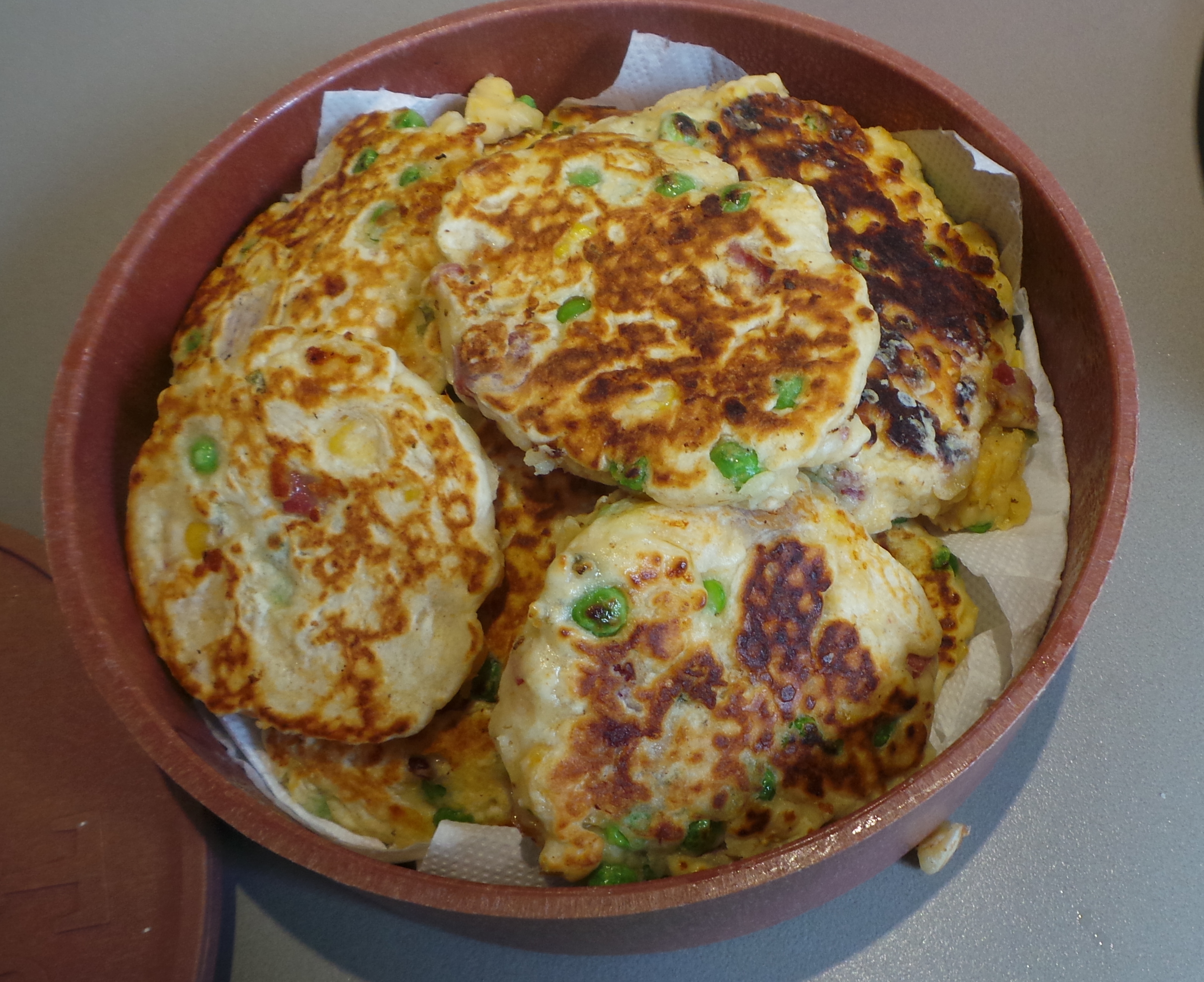
When the fritter is cooked through, you can either serve them immediately to the hungry hordes that will have gathered as the aroma of frying fritters grew (hyperbole? meh), place them on a paper-towel lined plate in a warm oven, or stow them in a tortilla warmer until they are all done.

I have a tortilla warmer I bought in Walmart for about $3 during my Texan sojourn and it’s brilliant. They now pop up in Aldi’s once or twice a year in Australia and I heartily recommend them.

Tortilla warmer

Tortilla warmer

2014-09-17 14.11.45

Fritters, still warm and ready to serve

Fritters, still warm and ready to serve

Eat with your fingers and serve with a dipping sauce of some kind: ketchup, tomato sauce, mayonnaise, sweet chilli sauce, whatever.

These are also great cold as a packed lunch/snack for school or long trips. Keep in an airtight container in the refrigerator for 3 or 4 days.

Enjoy!

Fritters

  • Servings: 3-4
  • Difficulty: easy
  • Print

Ingredients:

1½ cups self-raising flour

¼ tsp salt

1 tbsp sugar

Seasoning of your choice: pepper, chilli flakes, mixed herbs, mustard powder etc or nothing at all.

1 egg

¾ -1 cup milk (Buttermilk or Natural or Greek yoghurt can also be used for a lighter fluffier batter)

Your choice of meat: leftover roast meat, rotisserie chicken, hot dogs (try continental frankfurters for a treat), bacon, spam or even hard tofu and vegetables: peas, corn, onions, capsicums (peppers) mushrooms, grated carrots, celery,  zucchini etc., cut into small dice. Three options should be sufficient, aim for a handful of each.

grated cheese, if desired.

oil for the pan

Method:

Sift flour, sugar and salt into a medium-sized bowl.

If you wish to add herbs or spices, do so now.

Stir in your cheese, meat and veges individually. You will want each piece added to be coated in flour so that they will stick to the mixture.

In another bowl or jug measure your milk, starting with the smaller amount. Add the egg and beat well with a fork.

Make a well in your dry ingredients and add the liquid.

Mix together with a wooden spoon or wide spatula until all ingredients are combined. Add more milk if necessary.
This will form a firm batter.

Heat a frying pan or skillet over medium heat, oiling lightly.

Add batter to pan in spoonfuls, turn only when small holes or bubbles appear in the surface.

Cook for approximately 3 more minutes.

Serve with a sauce of your choice.

Porridge (microwave)

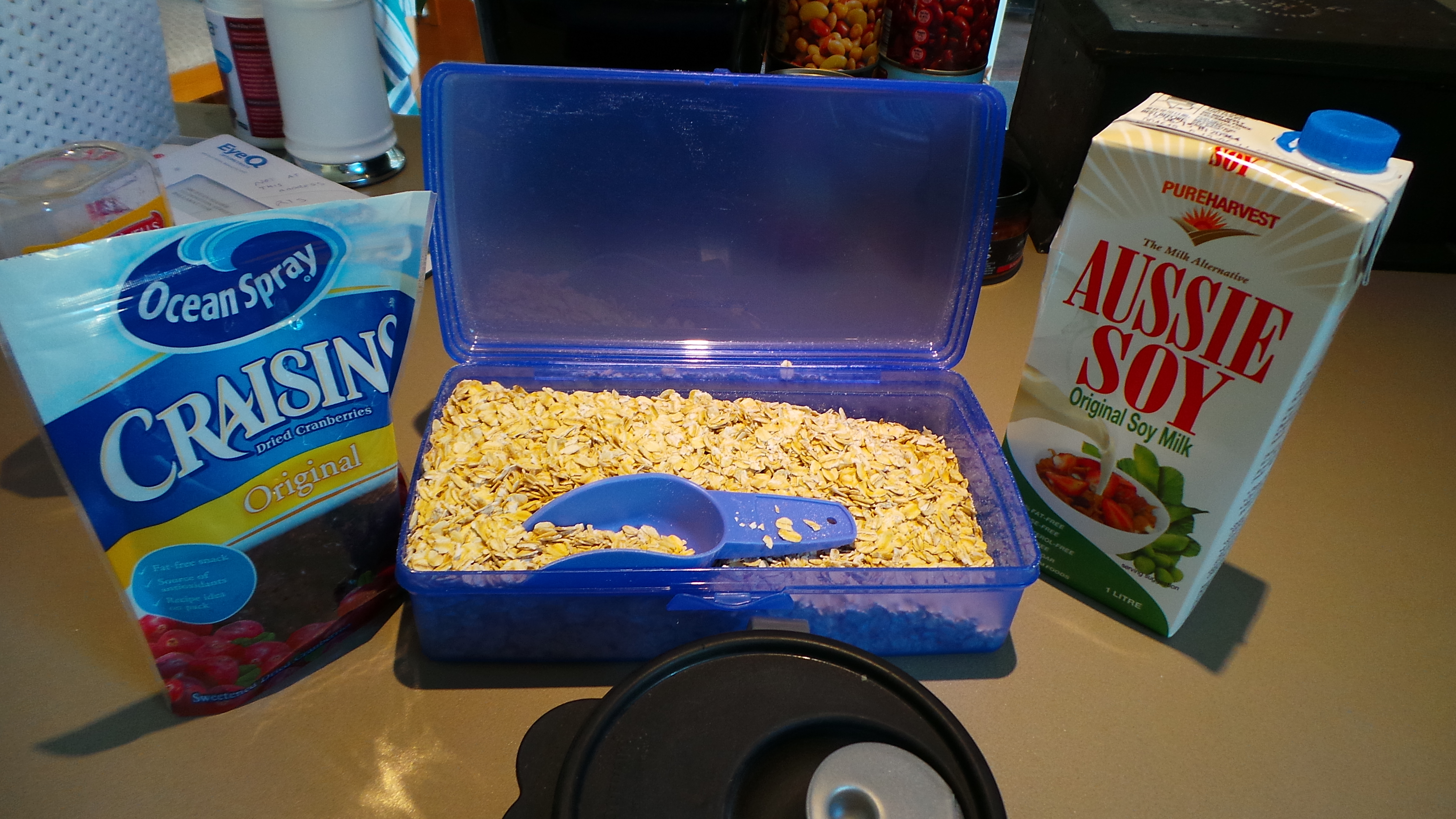
All you need for porridge

Well, I’m back.

I’ve had a number of technological nightmares with the latest being a computer that doesn’t know what to do with .exe files. If you don’t know about computers, then suffice it to say that that’s BAD. If you speak Geek, then you know just how bad it is. And exhausting.

So, to ease myself back into this blogging thingo, and to help ease any withdrawal symptoms you may have been having (Nawww!), I’m going to give you something that is about as simple as it gets.

Porridge. Microwaved porridge to be more specific.

Now I know it’s starting to warm up here in the antipodes, but some of the mornings have enough of a chill about them to still warrant a heartier, tummy-warming breakfast. In the Northern Hemisphere, Autumn has started and nothing more needs to be said.

So I’ll write a bit instead.

During the $30 Challenge, Porridge formed our staple breakfast. It’s quick, inexpensive, nutritious, fibre-laden and filling.

Many years ago, Uncle Toby’s made boxes of porridge with little sachets of different flavoured porridges. My favourite in the box was the apricot and wheat one – then they discontinued it. They kept making the product, but not with that flavour. So I thought I’d make my own.

It was then that I realised just how much more I had been paying for a tiny bit of convenience. Really, with a little planning, it is much better to make your own.

Get yourself a packet of Rolled Oats. Not Minute Oats, but Traditional Rolled Oats.

Then buy some dried fruit. This could be whatever you like; I started with diced, dried apricots and then Craisins came on the market so I used those too. You could use sultanas, dried apples, dried cherries, acai or goji berries if you have a hipster bent… It’s your meal, experiment, find your bliss.

You’ll also need liquid of some kind, be it cow’s milk, soy milk, almond milk or even water if you prefer.

All you need for porridge

All you need for porridge

I bought myself a couple of hinged lunch boxes, like the one in the photo above, and keep my oats in one and my fruit in the other. The hinged lids saved a lot of fumbling in my sleep-addled work day mornings. They aren’t strictly necessary, but they make life more comfortable.

A small scoop lives in the oat box. The one pictured was a Tupperware party favour many years ago but, for something around the same size, try saving (and washing thoroughly) the little scoop you get in boxes of laundry powder. I use two scoops per serve.

Another very useful thing is a microwaveable soup cup. The one you see in the pic is Tupperware. But you can buy much cheaper versions in any supermarket. I like these as they lend themselves to running around the house like a mad thing getting ready for work and still being able to eat breakfast before you leave…

Or make your porridge in a microwaveable bowl covered with a splash screen of some kind. You could use a piece of paper towel, but clear, plastic, reuseable ones can be bought for a dollar or so in most variety stores and supermarkets and will save you money in the long run.

So here goes. Pay attention, or you’ll miss something important.

Like breakfast.

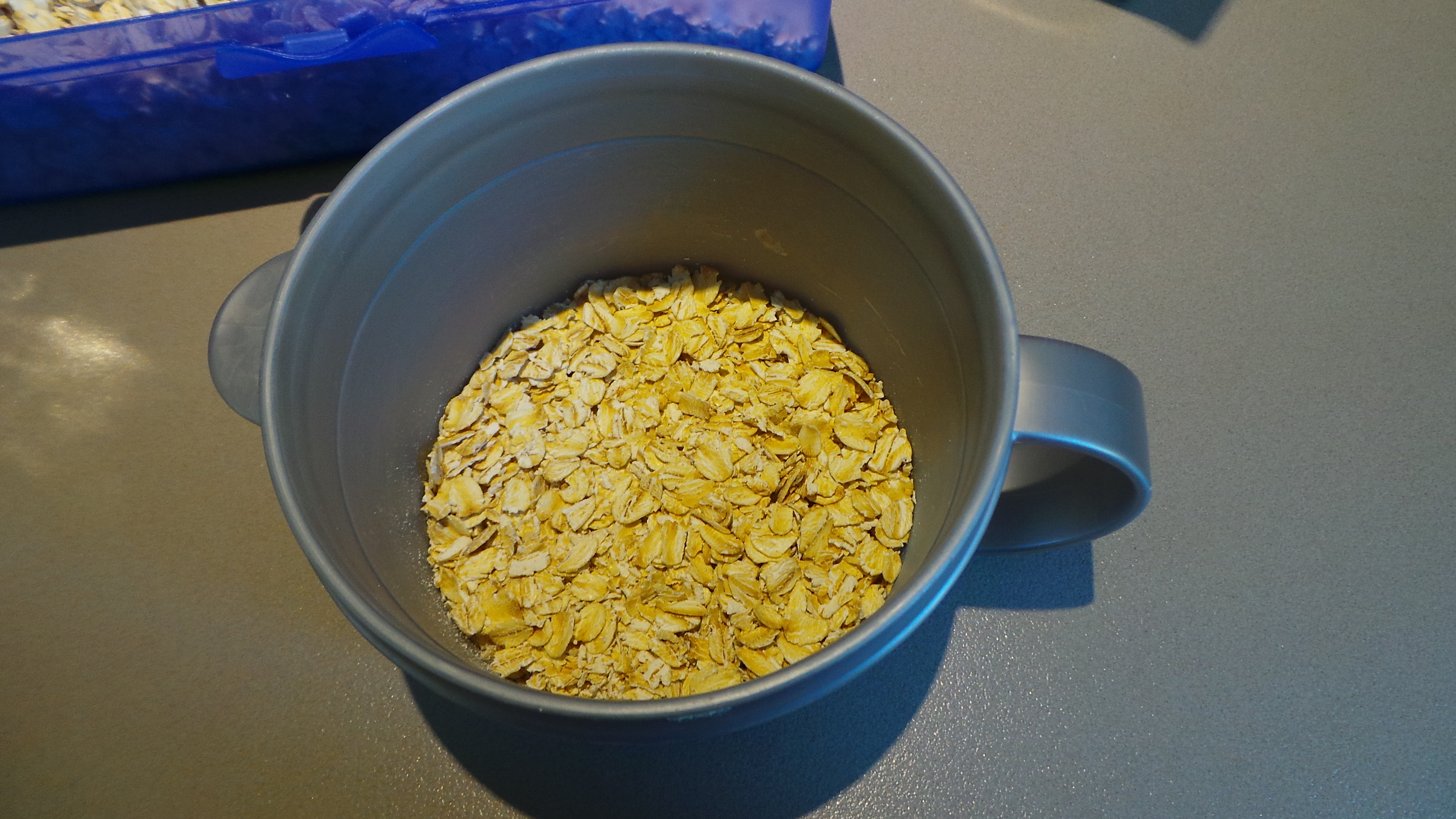
First, place your oats into your mug/bowl/whatever. Use about 1/3 to 1/2 a cup.

1/2 to 1/3 cup of rolled oats.

1/2 to 1/3 cup of rolled oats.

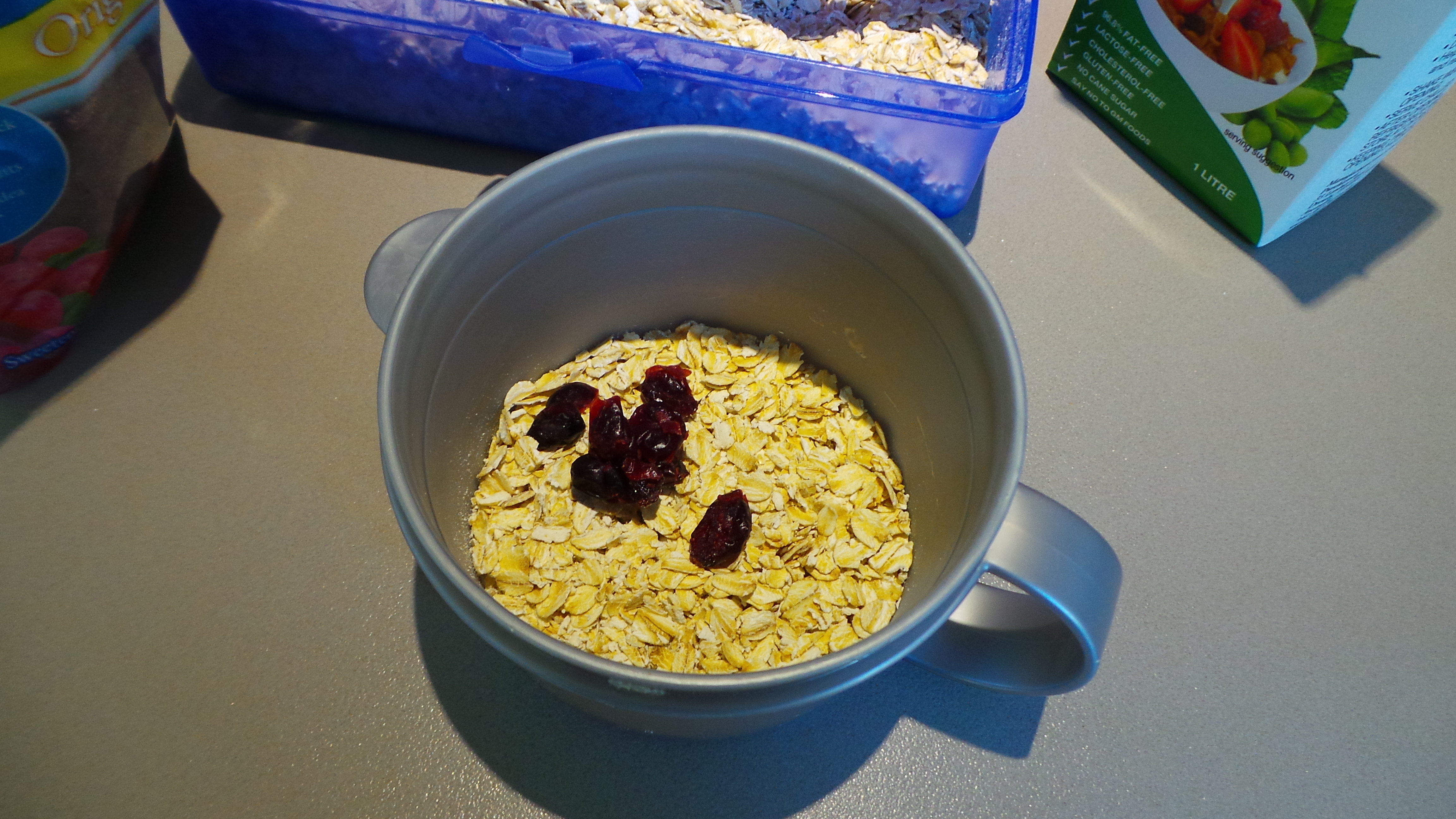
Then add whatever dried fruit you like. This is purely optional, but it does add colour, texture, flavour and sweetness – and makes it yours. You only need a pinch or so, not a huge amount. This photo shows the entire amount of fruit added.

Add a few pieces of dried fruit

Add a few pieces of dried fruit

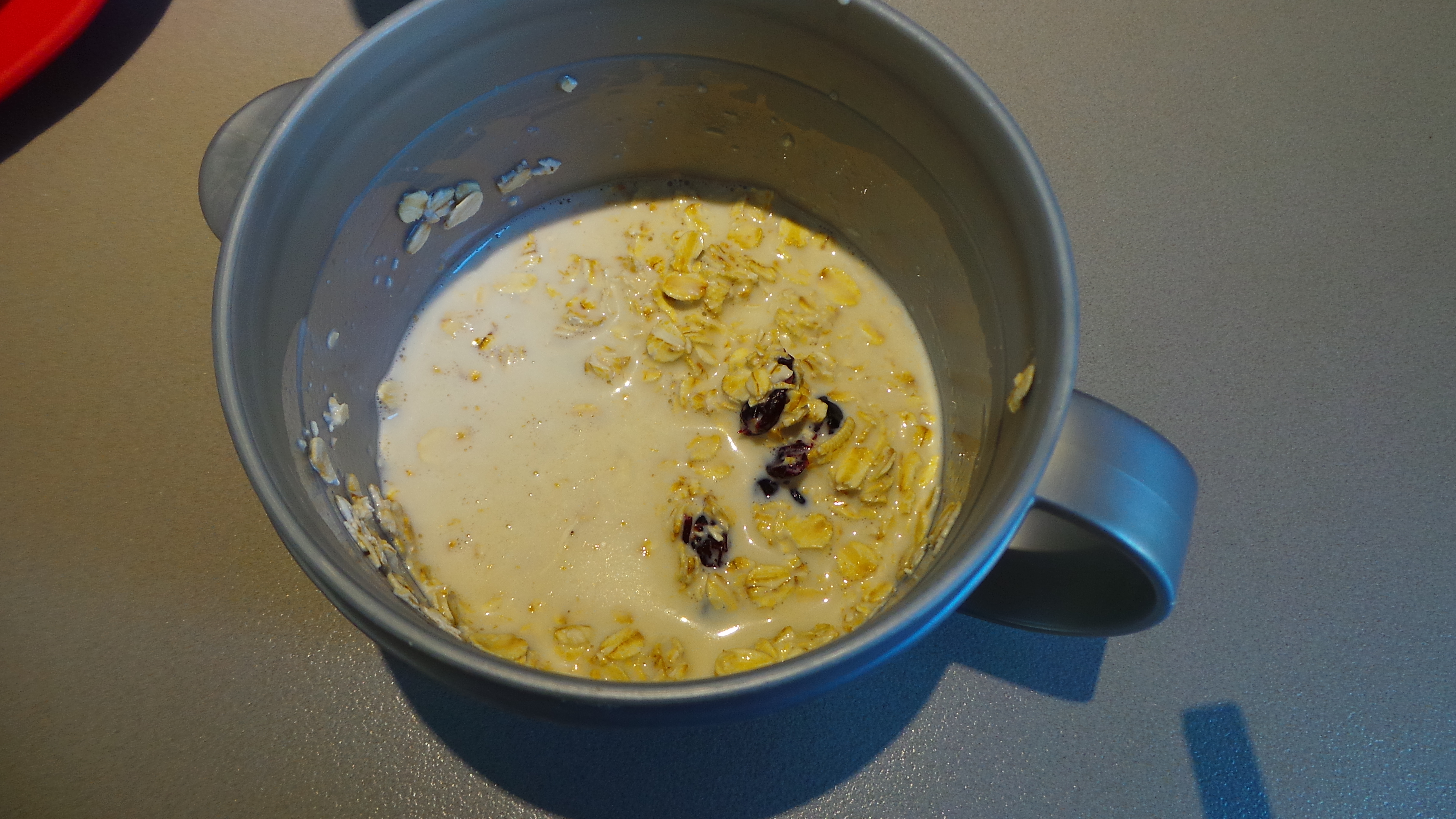
Add just enough liquid to cover the oats, stir, cover the dish and microwave at 80% power for one minute.

Add your milk, stir, cover and nuke.

Add your milk, stir, cover and nuke.

Remove from the oven, stir, add a little more milk and repeat the 80% power for one minute stage.

Done.

If your oats boil over – and this is a definite possibility – try again with either a lower power setting or shorter time. Don’t skip adding the second bit of liquid as it will help to reduce the temperature and the risk of porridge volcanoes.

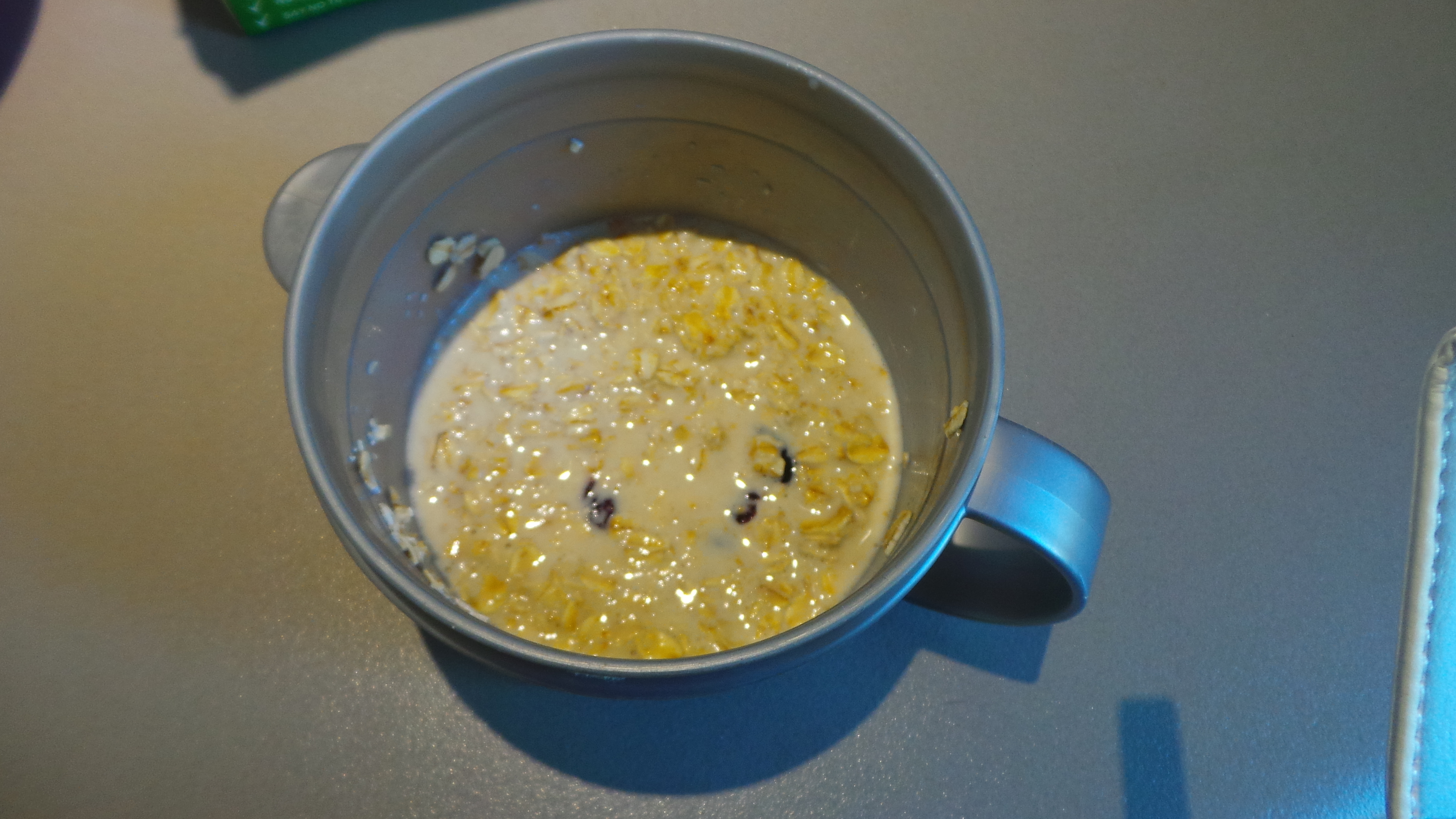
The same oats, now cooked

The same oats, now cooked

The oats will continue to absorb liquid and become creamier on standing.

I used to make my oats and morning cup of tea, then shower. By the time I’d done that, both had cooled sufficiently to consume.

Feel free to add more liquid, stirring well, and some sweetener of your choice; honey, golden syrup or maple syrup work well, as does sugar of any kind – just don’t overdo it.

After you’ve finished, I would suggest filling your container with water before you rush out the door. It will be much, MUCH easier to wash when you get home in the evening.  Trust me.

If you wish to up the fibre content for any reason and you can afford it, try adding a tablespoon or so of chia to the mix. It will absorb a lot more liquid though, so be sure to compensate.

You could also just pop all the dry ingredients into your sealed soup mug and cook them up in the office if you are really pressed for time. Just remember to bring your mug home for tomorrow’s fast breaker!

So there it is.

Better yet, the amount of money that will buy you a box of sachets for 8 meals, will buy you the ingredients for several more weeks worth of home-compiled breakfasts that you can tailor to your preferences. And give you oats and dried fruit for other goodies like Anzac Biscuits and Apple Crumble.

Making Chicken Stock in a slow cooker

So, don’t you hate those people who get all snobby about stock powders that come in cubes and cans and stuff?

You know, the ones who make their own stock and simply can’t understand anyone who doesn’t?

chicken stock (2)

Yeah.

I’ve become one of them. Sorry.

I used to be the person who would reach for the Massel or the Vegeta if stock was necessary, but since I moved at the start of the year I’ve been making my own actual liquid stock and it is soooooo much better than anything I’ve ever bought – even in one of those tetra pack doovers.

The hardest part is storing it. However, since I had to buy a new refrigerator when I moved, I got a wider one with these lovely drawers in the freezer. I lovingly ladle the stock into mason jars, place them in the freezer and forget about them until I need stock for risotto, gravy or soup…

I make my chicken stock in the crock pot or slow cooker overnight.

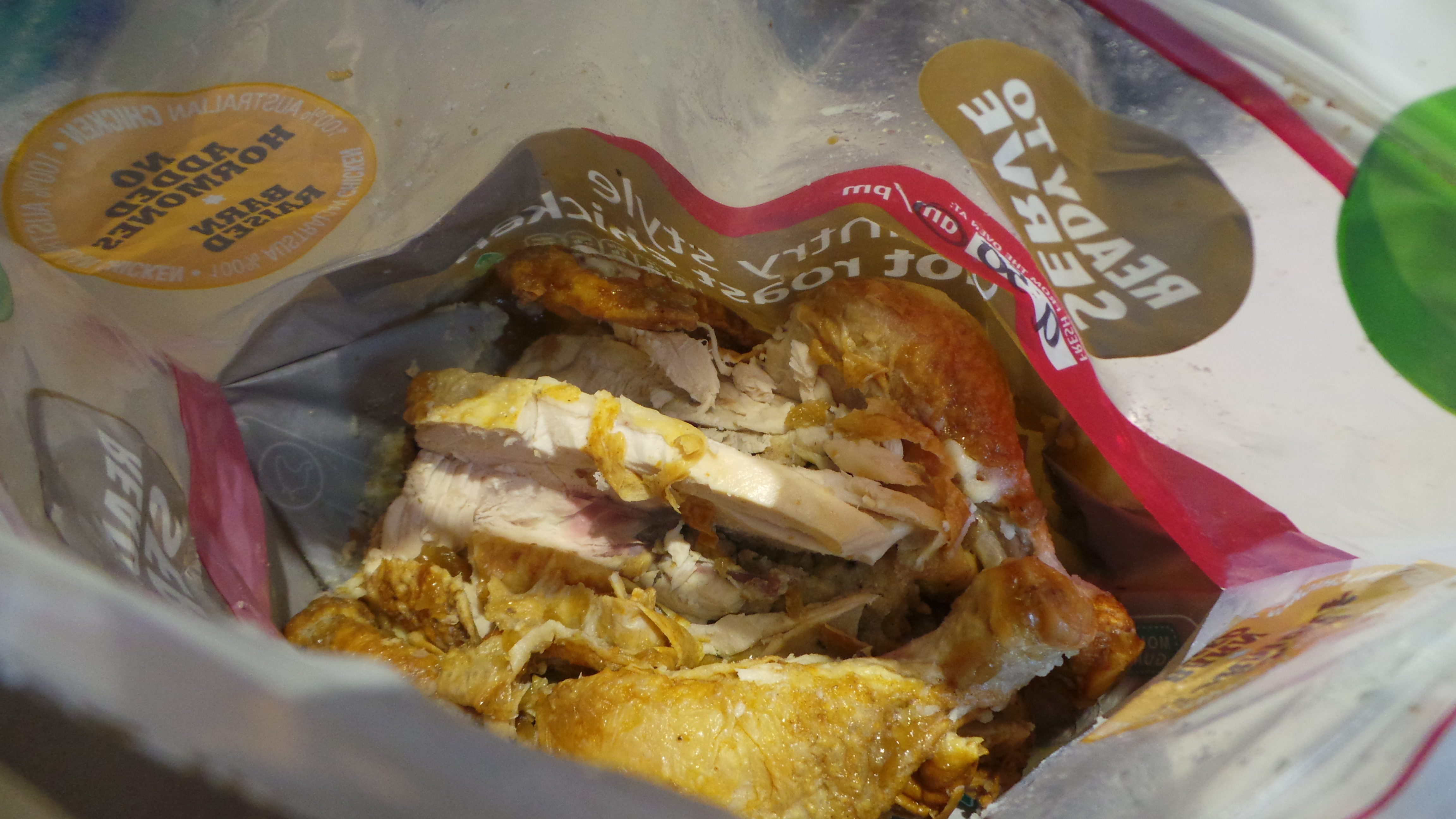
It’s terribly uncomplicated. Every now and then The Boy and I buy a BBQ Chook* from the local supermarket for one reason or another. After we’ve picked as much of the flesh as we can off it, I use it for stock. Now, if the freezer is already well stocked with…um… stock, we simply freeze the carcass until we need to restock the … stock. Follow? Good.

Leftover BBQ Chook

Leftover BBQ Chook

Making the stock goes like this:

Pop your chicken carcass into a slow cooker or crock pot. You can do this with an uncooked chicken, but a cooked one will give you far more flavour. Make sure to remove any stuffing from the cavity and dispose of it. You don’t want that in your liquid.

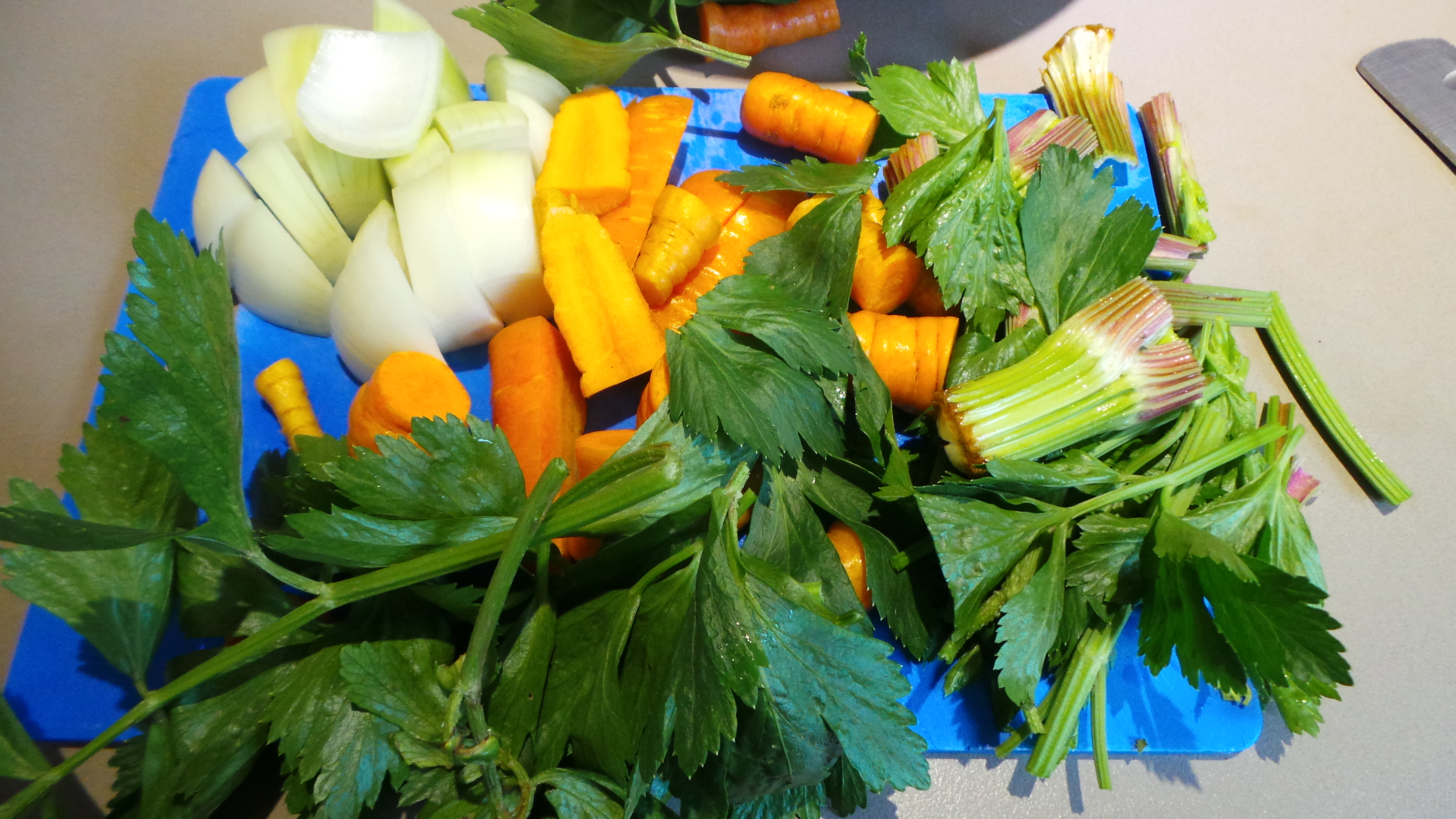
To the slow cooker add a roughly chopped onion, a couple of carrots and some celery. There is no need to add salt or any other seasonings. You want your stock to be as versatile as possible, add other flavours to the final dishes not here.

Roughly chopped vegetables

Roughly chopped vegetables

It honestly doesn’t matter how your vegetables look either. They’re all going to be thrown away at the end of the process — after every skerrick of flavour has been cooked out of them. Basically, you just want to be able to fit them in the pot with the chicken.

Cover the contents with water – you can boil the water first if you wish.

Add water to your stock pot

Add water to your stock pot

Turn the slow cooker on to low and then ignore it for 8 or so hours. Better yet, get this all done after dinner and leave it to cook overnight while you sleep. You’ll wake up to a delicious smelling house and a slow cooker full of something that looks like this…

Cooked chicken stock

Cooked Chicken Stock

And doesn’t that look terribly unattractive? Don’t worry, it’s not the finished product.

Turn your slow cooker off, let the contents cool for a bit, and set a large sieve inside a large bowl. Line the sieve with some cheesecloth or a new kitchen wipe like this:

Line your sieve with a fresh cloth

Line your sieve with a fresh cloth

Then upend the contents of your slow cooker into it. It will look horrendous.

Strain the broth from the solids

Strain the broth from the solids

Walk away from the sink. Shower, dress, have a nice cup of something warm and caffeinated.

Leave it alone.

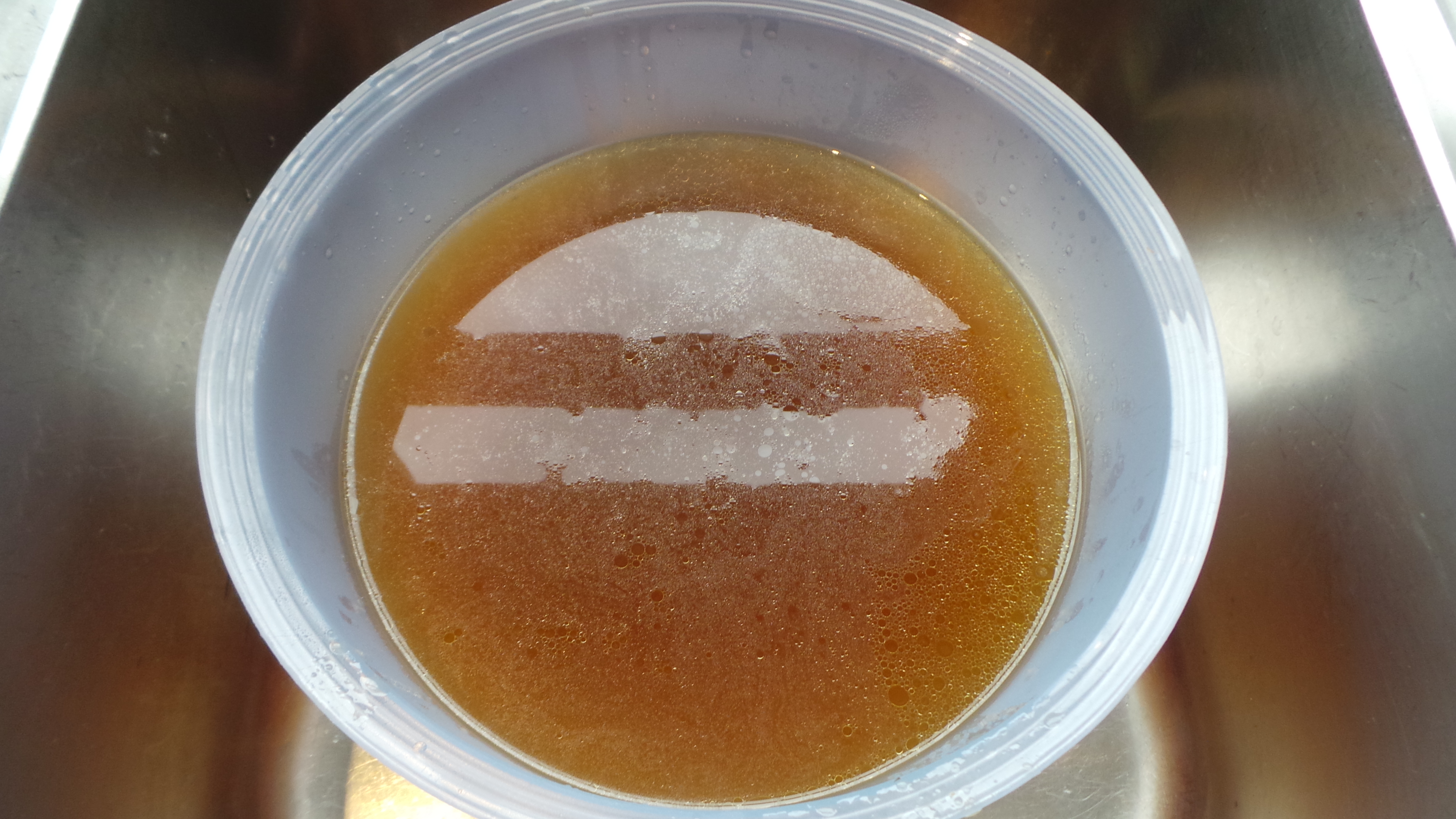
Then, after an hour or so, remove the sieve and discard the contents. Bin them, bury them, place them in your compost or Bokashi bin; you will no longer need them in your kitchen. What you will want is this, this liquid gold. <cue heavenly choir>

Pure chicken stock

Pure chicken stock

Don’t worry about the fine layer of fat you can see in the sheen on the surface. That is pure flavour and, when chilled, will give the stock a gelatinous texture.

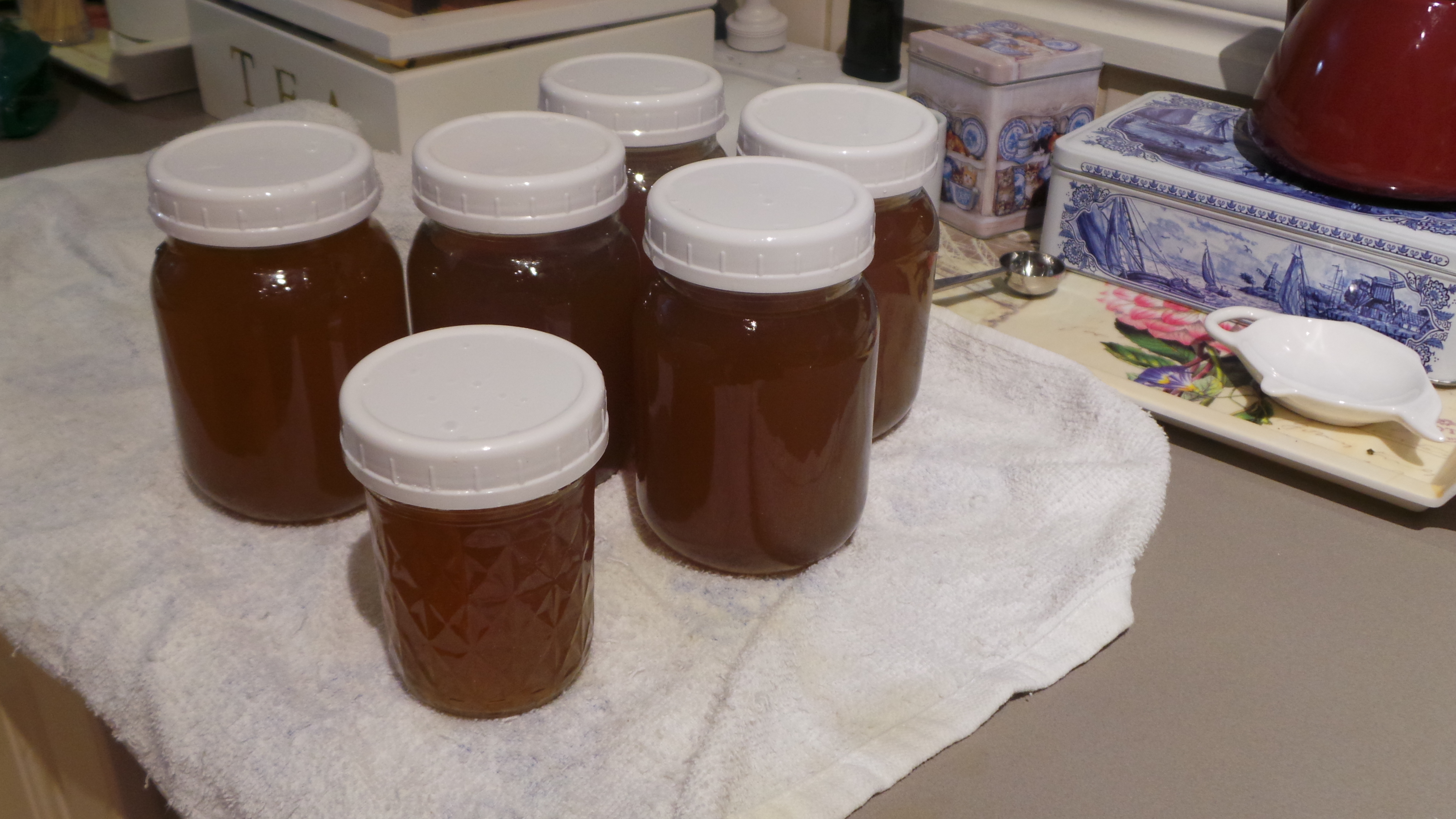
Now, all you need to do is bottle it. Place it in some sterilised mason jars and freeze it as I do.

Mason jar of chicken stock

Mason jar of chicken stock

You could also place it into ziploc bags for freezing.

Alternatively, you can put it in a large saucepan and boil it until it is so reduced that you can freeze it in ice-cube trays as an über concentrate that you add water to when defrosted.

My 3 litre slow cooker made 2 ½ litres of stock. Isn’t it purdy?

A whole batch of chicken stock

A whole batch of chicken stock

Give it a shot, you’ll love the results. I promise. It will also make you feel all chef-y and virtuous (for not throwing food away) at the same time.

Let me know how you go.

*Side note:  Try going into an American supermarket and asking for a BBQ Chook. I dare you. If you happen to be an American reading this, it can be translated as ‘Rotisserie Chicken.”  You’re welcome.

Lemon Curd (Lemon Butter)

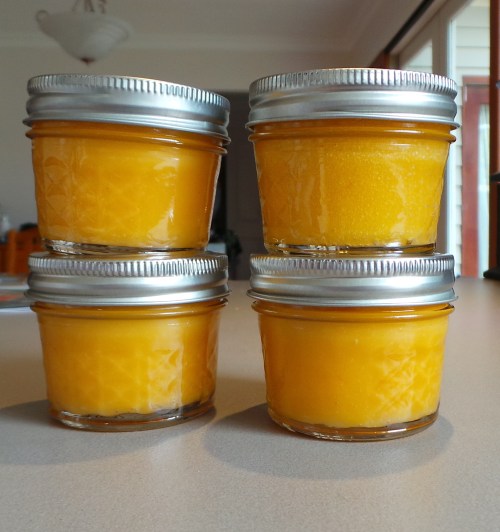
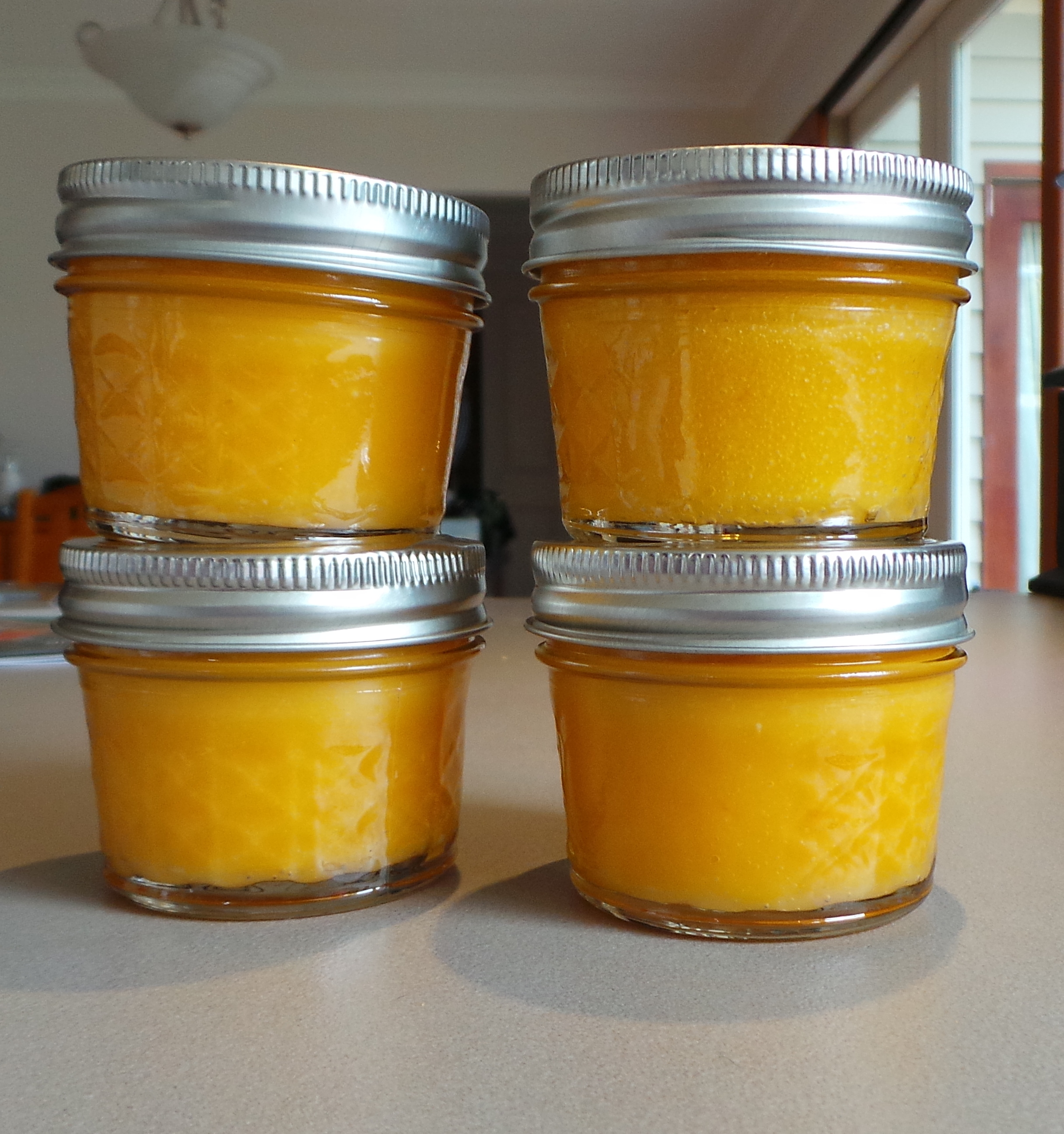
Lemon Butter in tiny quilted jelly jars...

This is a fabulous, old-fashioned little spread which is quite easy to make and can deliver spectacular results.

The gorgeous colours of home made lemon curd

The gorgeous colours of home made lemon curd

It can do so with an investment of only an hour or so (which gets shorter the more often you make it) and very little money.

Even less money if you are given the lemons or own a tree!

But, before you begin, understand that this is not a preserve like a jam or a jelly. It won’t keep indefinitely.

This little jewel contains eggs and – strangely enough – butter. Refrigerate it and use it within 3 months to be safe. If you are giving it away, ensure that the recipient knows this too. Salmonella is not fun.

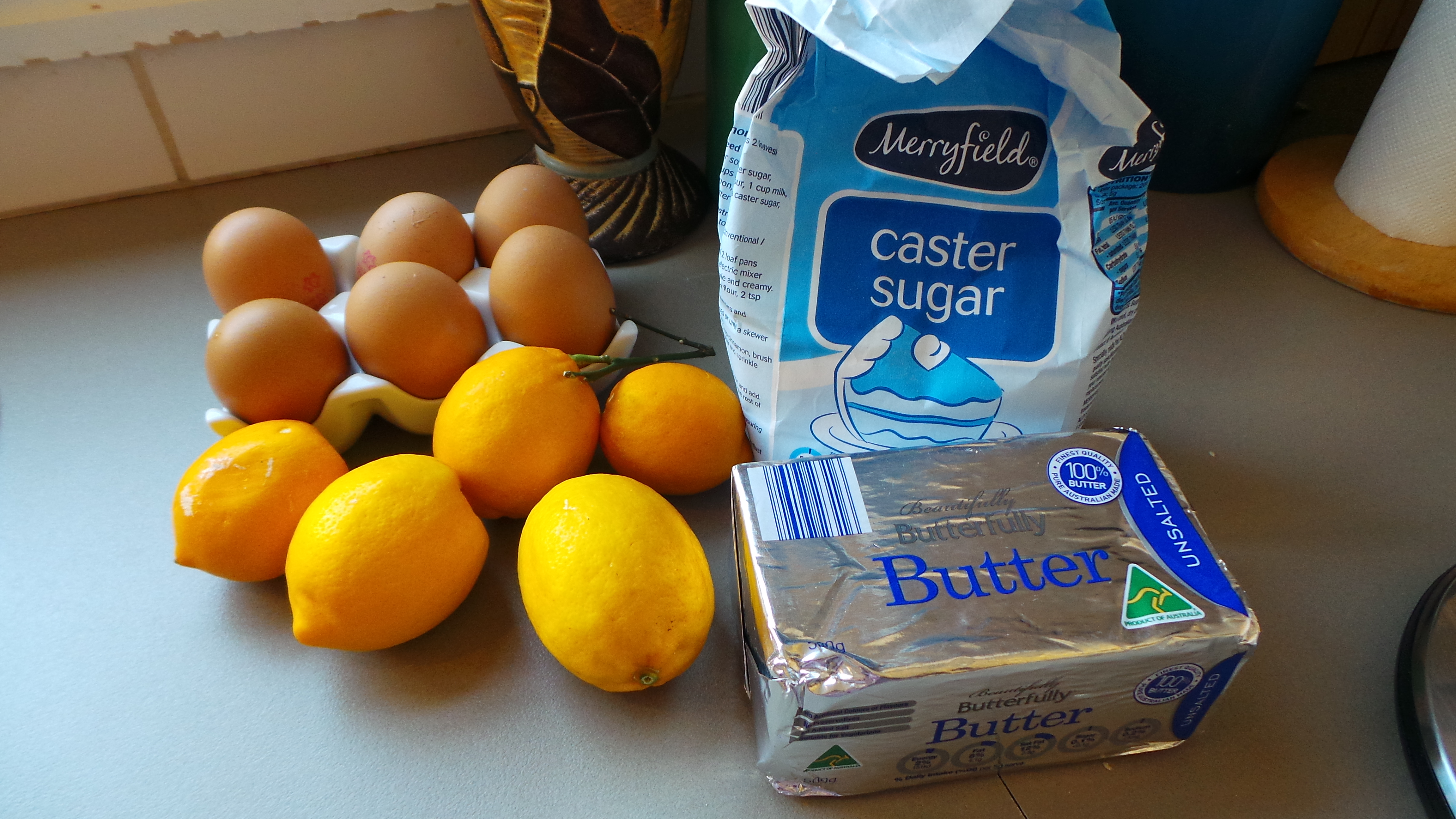
This is all you need to make Lemon Butter or Lemon Curd

This is all you need to make Lemon Butter or Lemon Curd

I like to use small jars when bottling this, it’s one way to make sure the entire jar is either used all at once or in very short order. Ball’s has small, quilted, jelly jars* that I’ve found to be the perfect size for my Lemon Butter needs. One batch of this recipe will fill 3 – 4 of these jars. Keep one, give the others away as gifts or bribes…

Lemon Butter in tiny quilted jelly jars...

Lemon Butter in tiny quilted jelly jars…

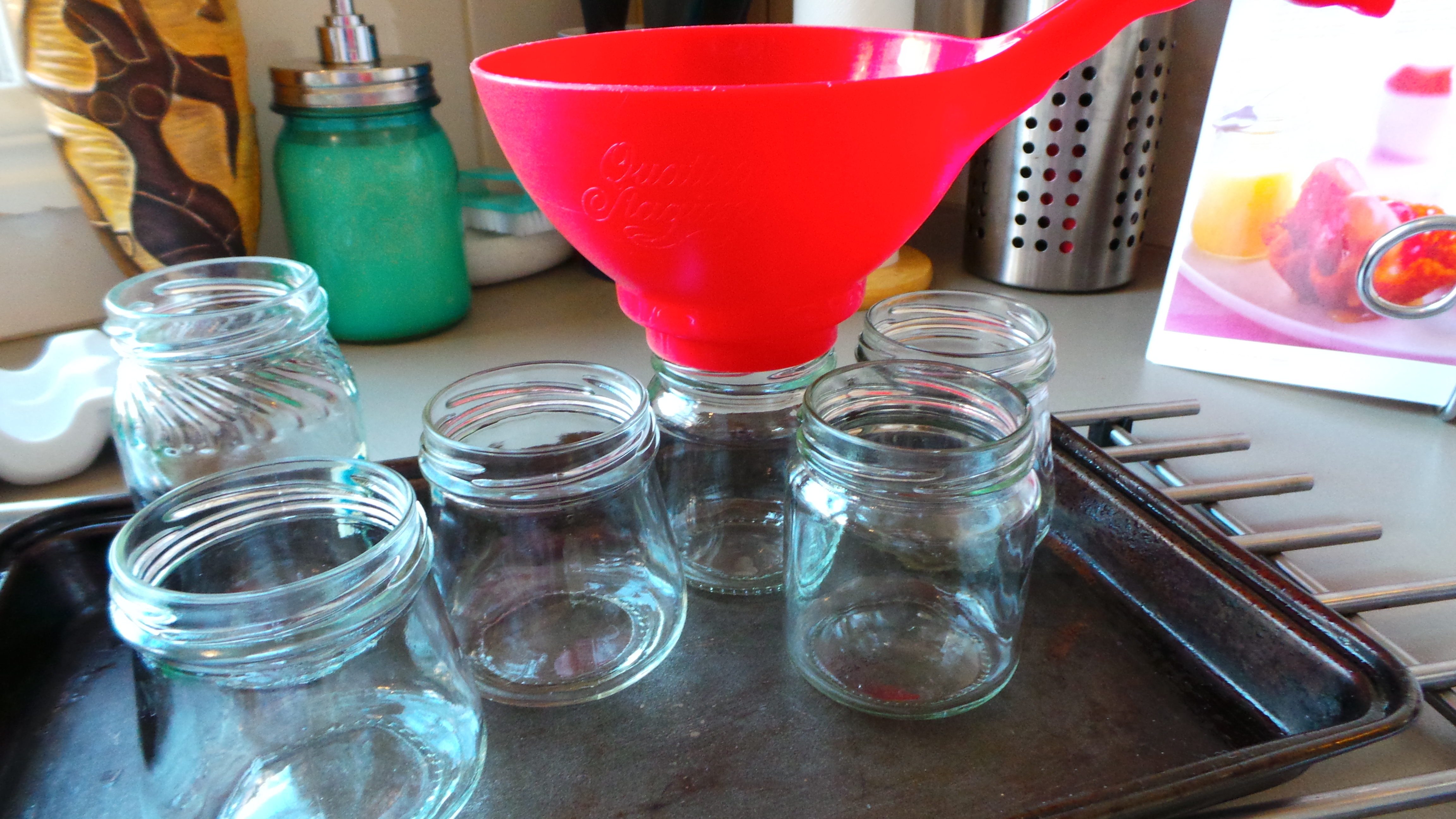
Alternatively, reuse small jam jars that you’ve taken great care to sterilise.

Recycled jars after they've been sterilised

Recycled jars after they’ve been sterilised

(Ask for your jars back when they’ve been emptied too!)

Lemon Curd can be used as a spread on your morning toast, as an accompaniment to tea and scones, or as a filling for pies and slices.

Keep an eye out for recipes like this popping up on this site in the future. *wink*

Combine your sugar, butter, zest and juice

Combine your sugar, butter, zest and juice

When you become more confident with making this, try substituting other citrus for the lemon. It works beautifully with the same number of limes instead of lemons, or try using two oranges or a 2 lemon/1 orange combination. Experiment. Enjoy.

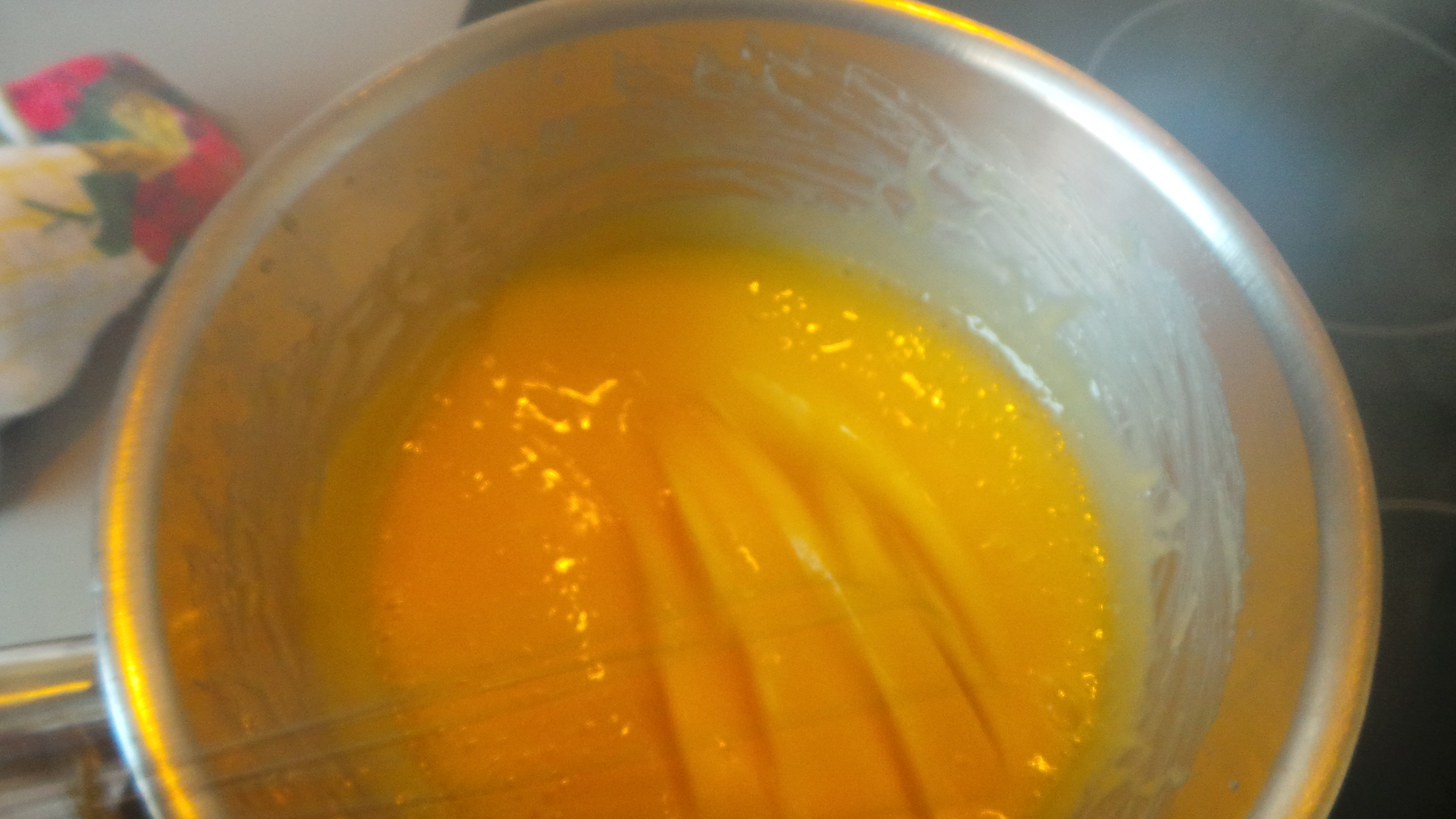
Whisk over low heat until you can see the whisk lines in your mix...

Whisk over low heat until you can see the whisk lines in your mix…

Lemon Curd or Butter

  • Servings: 3-4 small jars
  • Difficulty: easy
  • Print

Ingredients:

3 juicy lemons (zest and juice)

200g/7oz/1 cup caster sugar

115g/4oz/8tbsp unsalted butter, diced

2 large eggs

2 large egg yolks

Method:

Wash the lemons.

Place the first three ingredients into a large heatproof bowl, and set over a saucepan of gently simmering water.

Make sure the water isn’t touching the bowl!

Using a wire whisk, stir gently until the butter is melted and the sugar dissolved.

Break up the eggs and egg yolks with a fork and add to the mix.

Whisk until thoroughly combined.

Stir the mixture constantly until it thickens and looks like a custard. The longer you heat it, the thicker it will get.

Take it off the heat when you are happy with the texture.

Remember that it will become thicker when cooled as well.

Remove from the heat and pour into small, warm sterilized jars.

Cover and seal.

Store in a cool dark place, ideally the fridge.  Once opened, always store in the refrigerator.

Use within 3 months.

* These are available in Australia now in Big W and Woolworths/Safeways stores at very reasonable prices. For some reason though I can’t find them on any of their websites. Which is a massive nuisance really.


Apple Crumble

Scatter your apples with craisins for one variation

It’s cold here.

Technically, we’ve just hit the first day of Spring. It’s still cold though. And wet. And grey. And generally miserable.

A wet footpath

Gray Day

Weather like this demands something along the line of comfort food, and this pretty much ticks that box – along with the boxes for affordability, ease of preparation, wholesome ingredients and the ability to double as breakfast should it ever be necessary.

Let us pray that it is necessary…and often.

While I am all for foods that are prepared from scratch, I don’t think that this is one that has to be – in the strictest sense of the term. Because, sure, you could buy some apples and peel and cook them and then go on and make the crumble topping and bake it – and more power to you if you do.

However, I like to do one of these pretty much every week during the bleaker autumn/winter days and even don’t have the dedication to this that would require the peeling of so many apples. I don’t peel things unless it is absolutely necessary. Ever.

So, I use tinned pie apples. They’re readily available, rarely cost much more than the unpeeled ingredients and when the contents of the can are listed as ‘100% sliced apples’ then there is very little to complain about.

Pie Apple tin label saying it contains 100% apples

100% apples

Open a can, empty contents into baking dish, top with crumble, cook, serve.

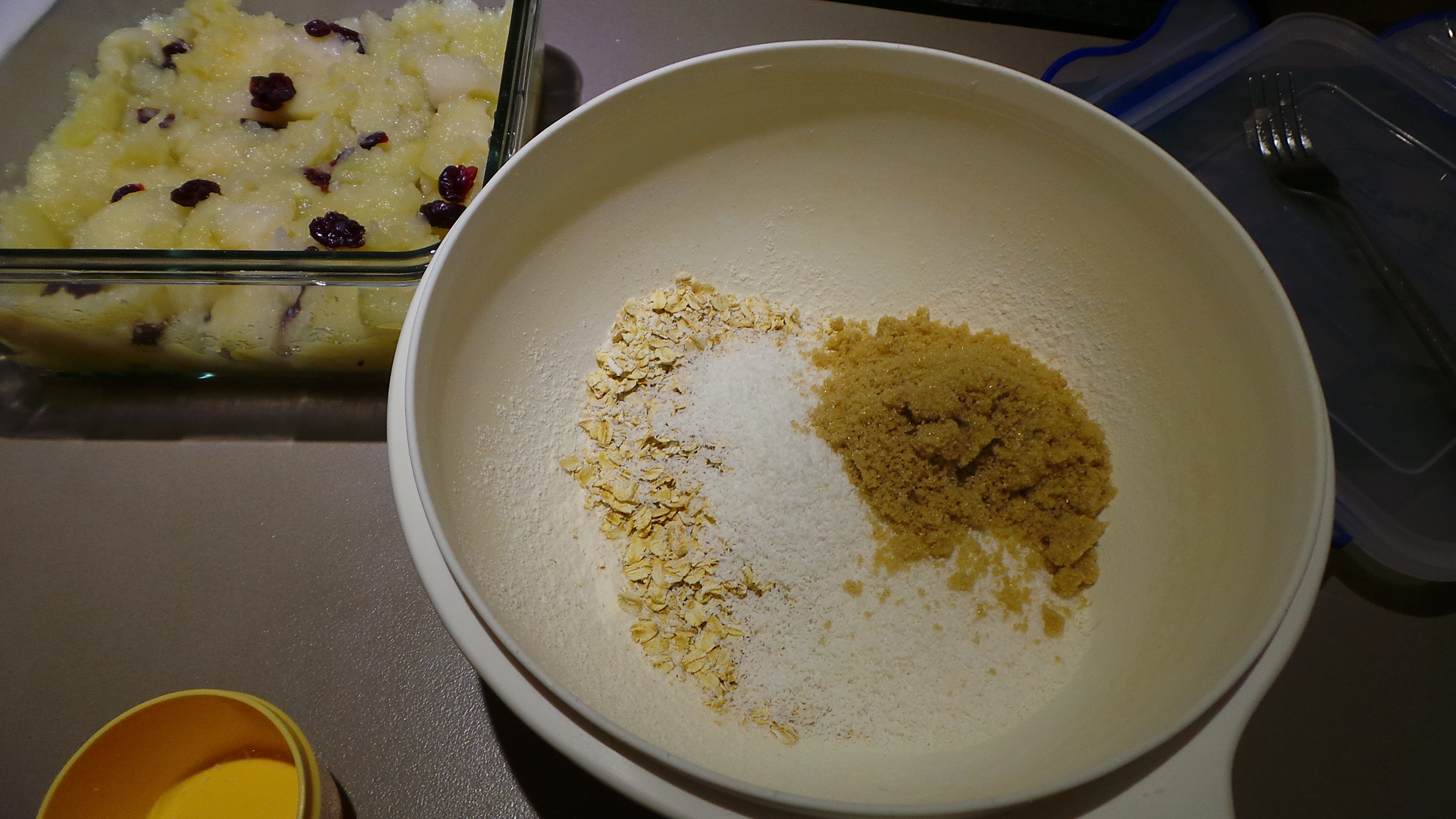
Mix all the dry ingredients in a large bowl

Mix all the dry ingredients in a large bowl

Fab.

However – and there had to be one of those, donchaknow – this is not a low sugar ingredient. Neither is it a low GI one. This dish will affect your blood glucose levels and possibly in ways you had never even considered. Go easy on the serving sizes; make it in a long, shallow dish so that the ratio of oat-filled topping to apple sub-strata is higher. Your insulin levels will be steadier and your children (and significant others) will be less likely to have that sugar high we all dread.

Serve it hot or cold with ice-cream or Greek yoghurt, try it with custard, eat it on its own….

Apple Crumble

  • Servings: 4-6
  • Difficulty: easy
  • Print

Ingredients:

1 x 800g tin Pie Apples

1 cup flour

125 g butter

½ cup rolled oats

½ cup coconut

2 tbsp brown sugar

1 tsp cinnamon

Method:

Heat oven to 180°C/ 375°F.

Place apples in a shallow glass baking dish.

Put all your dry ingredients in a large mixing bowl.

Melt butter in the microwave. Add to dry ingredients and mix through until well combined and crumbly.

Scatter over the top of the fruit and bake in the oven for 50 minutes.


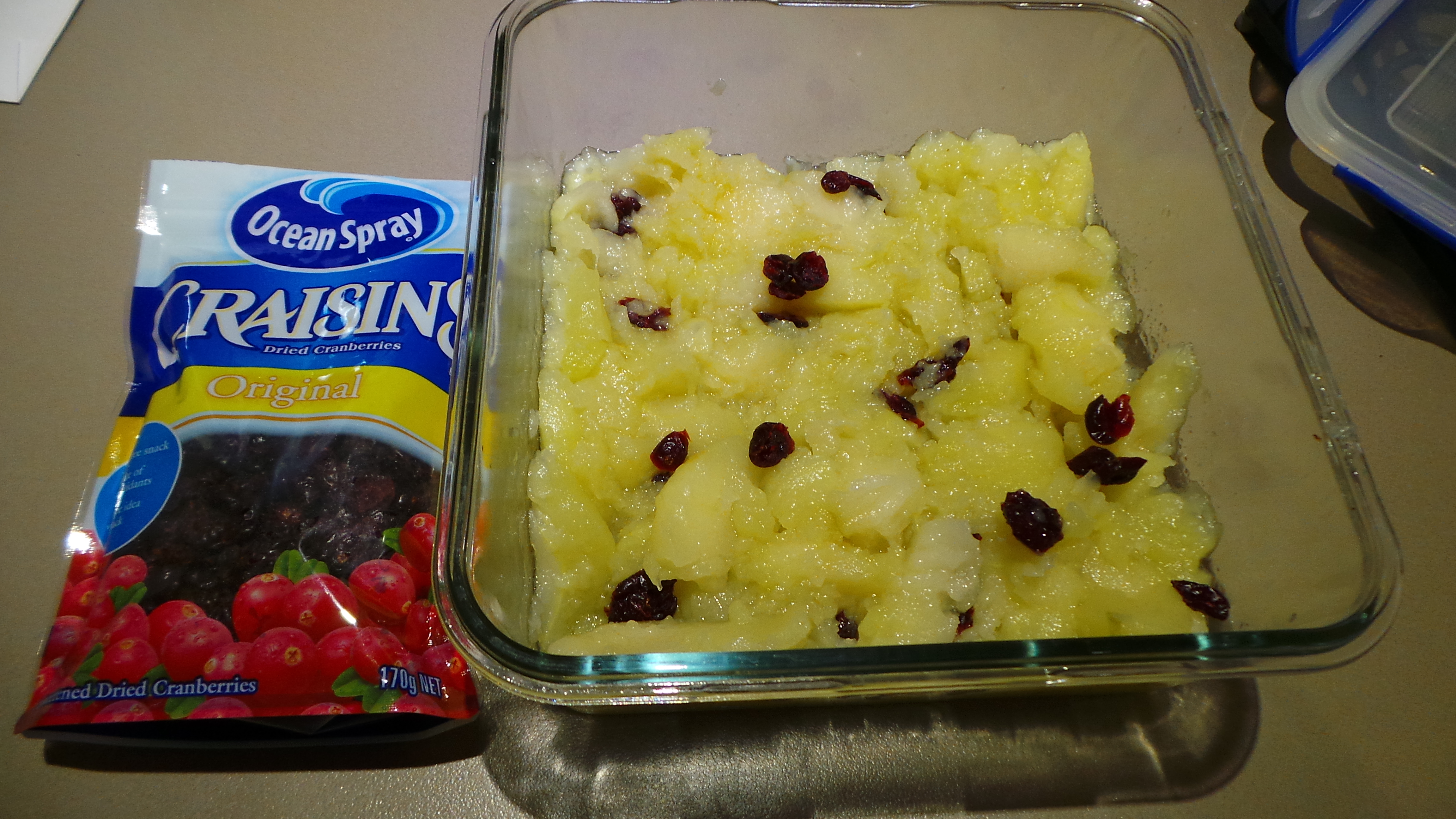
Scatter your apples with craisins for one variation

Scatter your apples with craisins for one variation

Variations:

Try adding slivered almonds or chunks of Macadamia nuts to the crumble topping.

Try also, scattering dried fruit like sultanas or craisins among the apple, diced dried apricot can be an absolute hit used like this.

For a sweeter variation, add some dark choc chips/milk choc chips/caramel choc chips to the apple mixture or just scatter them over the top of it before adding the crumble mix.

I wouldn’t advise putting them in the crumble itself to avoid scorching them in the oven.

You can, of course just add chunks of whatever chocolate you prefer, it doesn’t have to be in chip form!

Eat slowly, with a small spoon for maximum savourousity*.

(*Actual word that I just made up.)


Anzac Biscuits

Anzac biscuits are pretty much a part of every Australian child’s culinary vocabulary. We’ve all had them and we’ve pretty much all made them.

Some are woeful, some are good and some are extraordinary. It really just depends on the cook and the preference of the muncher.

These biscuits are so-called because they were sent to the ANZACs in their Turkish trenches nearly a century ago. As such, they were needed to last during long storage on sea voyages and in less than optimal food storage conditions in the war zone.

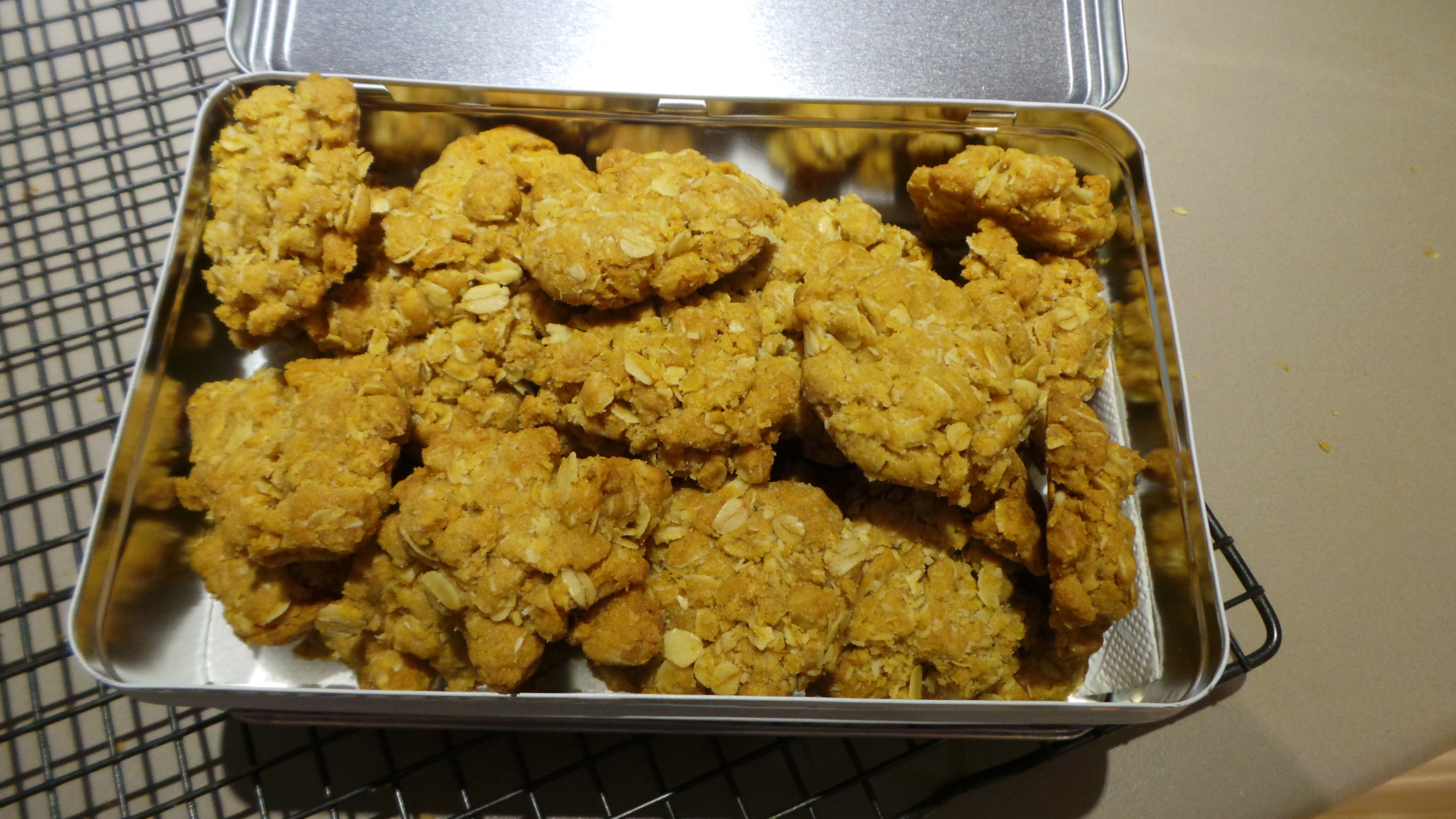
A tin full of freshly baked Anzac Biscuits

A treasure trove of Anzac Biscuits

This meant they were often rock hard. My brother famously christened my mother’s as “Bathroom Floor Biscuits” because he said they needed to be smashed on the tiles in order to eat them!

(He wasn’t wrong.)

Thankfully things have changed. We no longer bake the life out of them for a start.

This is the recipe that I use for Anzac biscuits, it came originally from The Australian Womens Weekly’s The Basic Cookbook and I’ve been using it for over 20 years. It works.

Make them with your kids today.

Just remember that these are biscuits and not cookies. They will be crunchy all the way through, and not chewy in the middle.

If you don’t have, or can’t get, Golden Syrup (you poor, poor thing!) you can substitute honey or corn syrup at a pinch…

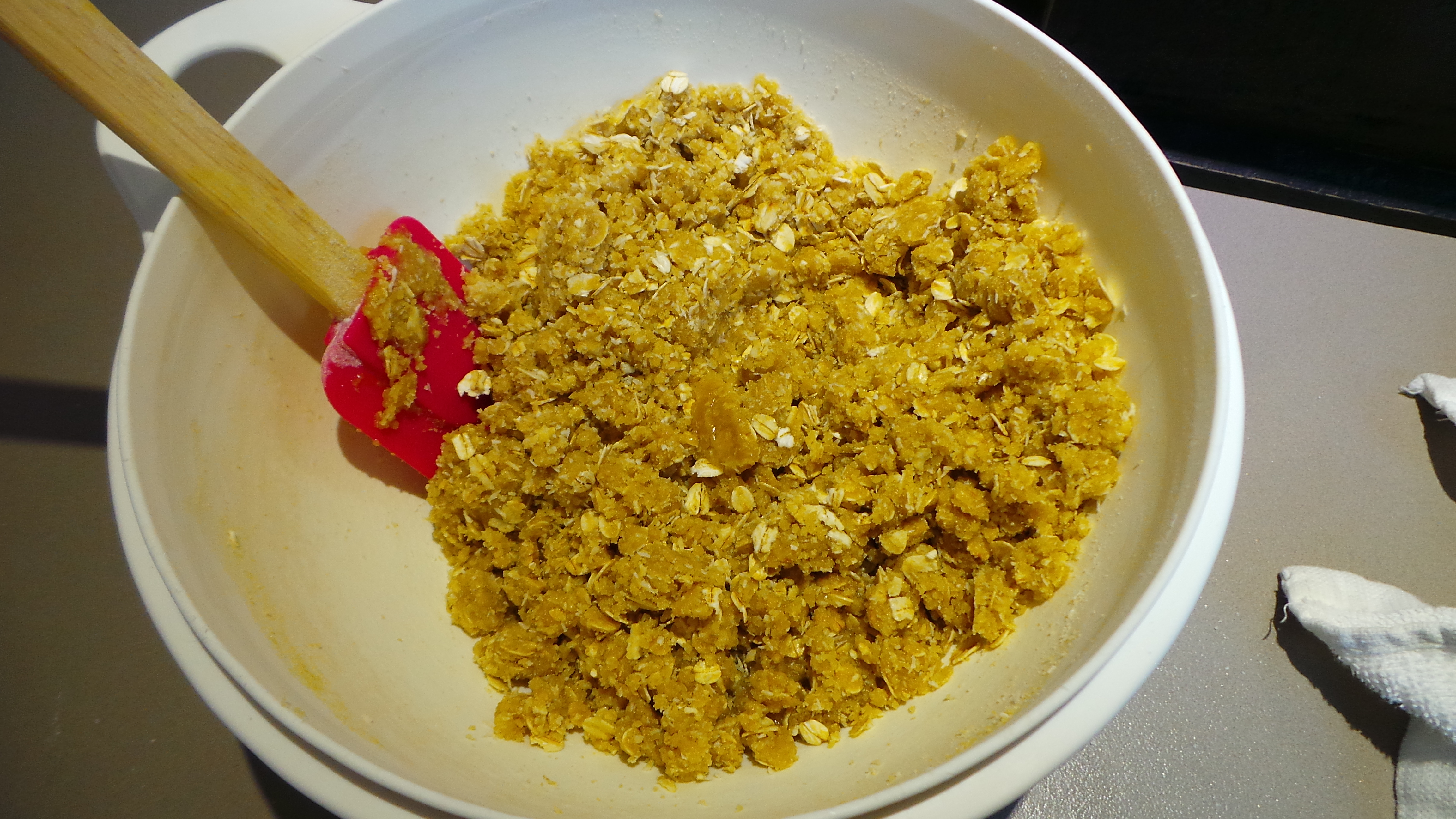
A bowl of Anzac Biscuit mix before it's divided into biscuits

Anzac Biscuits in the bowl

Anzac Biscuits

Ingredients:

1 cup rolled oats (not minute oats)

1 cup plain flour

1 cup brown sugar, firmly packed

½ cup desiccated/shredded coconut

125 g butter

2 tablespoons golden syrup

1 tablespoon water

½ teaspoon bicarbonate of soda.

Method:

Heat oven to 160°C/325°F (Moderately slow.)

Lightly grease or line several baking trays.

Combine oats, sifted flour and sugar together in a large bowl.

In a small saucepan, combine butter, golden syrup and water and stir over low heat until butter is melted. (This step may be done in a microwave oven.)

Stir in soda.

Add mixture to dry ingredients and stir until combined.

Place rounded teaspoonfuls of mixture onto trays 5 cm or two inches apart. These biscuits will spread!

Bake for about 20 mins or until biscuits feel slightly firm.

Cool on trays.

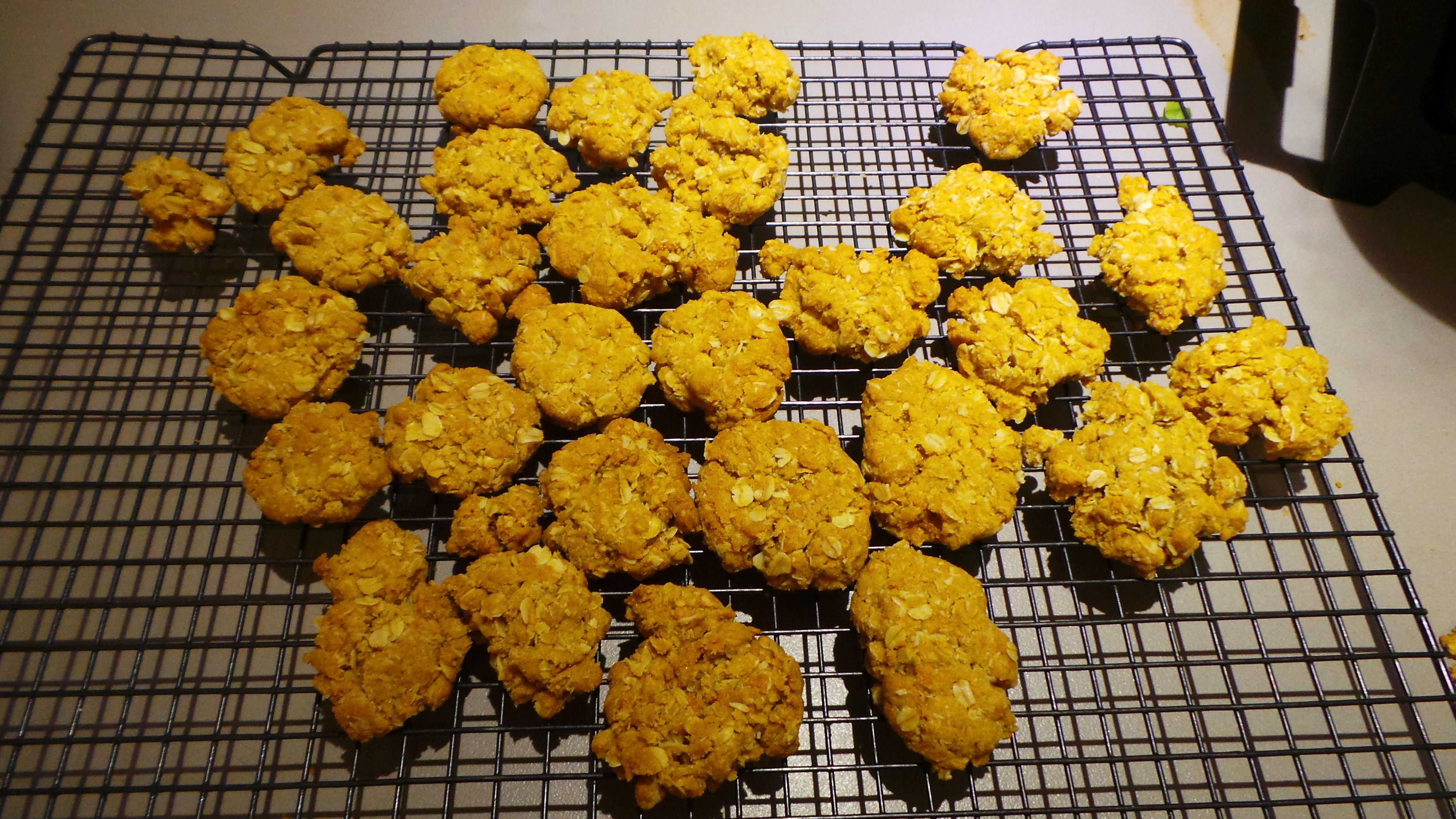
Anzac Biscuits cooling on a rack after baking

Try not to eat them all at once

Also, don’t panic if your biscuits lose bits as you transfer them from the trays. Save all these little crumbs of oaty, golden-syrupy goodness and store in an air tight container. They are excellent scattered over plain Greek yoghurt or ice-cream. Trust me on this.

Some years ago Heidi Swanson did a piece on Anzac “Cookies” on her fabulous site 101 Cookbooks, where she talked about them being a type of flapjack. Unfortunately, the post appears to have been reworked and this info has gone. However, she has posted a variation using the addition of orange zest and orange blossom water which looks almost worth forgiving her for calling them cookies…

Let me know how you go with this fine old Aussie tradition, or if your family does a different version. My grandmother always added ground ginger to hers…

Enjoy!

IMG_0172.JPG

Challenge Accepted

Hey All,

I’m currently sitting in a moderately comfy chair, attached to an IV.

DON’T PANIC!

This is routine. I have a monthly infusion for my MS, and it seems to be doing the trick. Touch wood.

Anyway…The Boy has suggested that I dive into things head first (while I’m busy putting together set up guides for absolute beginners) and show my peeps that it’s possible to eat well on next to nothing.

His budget at University was around $30 AUD a week.

SOOOOOOOO, he has challenged me to feed us on that amount (each) and share the meals and planning processes with you all.

What can I say? I’m a sucker.

A new page will soon appear titled $30 challenge. You’ll be able to follow our adventure in this, from purchases to recipes. I just hope you can handle my photography…

So here goes, looking forward to getting the magical “Achievement Unlocked” seal of approval.